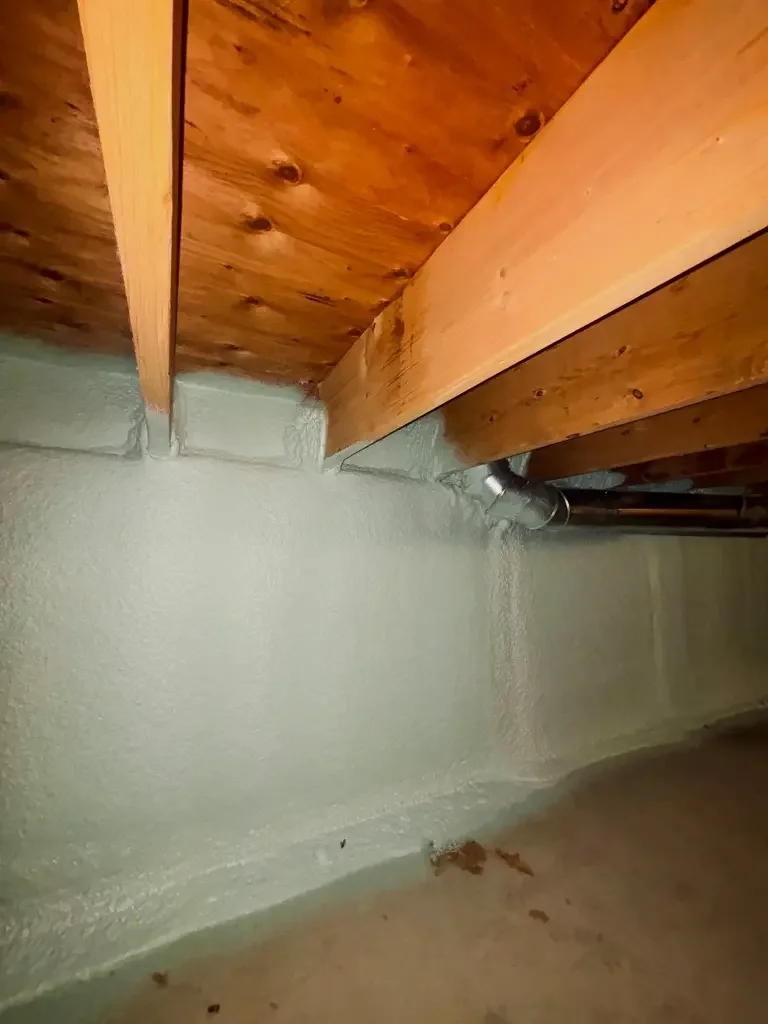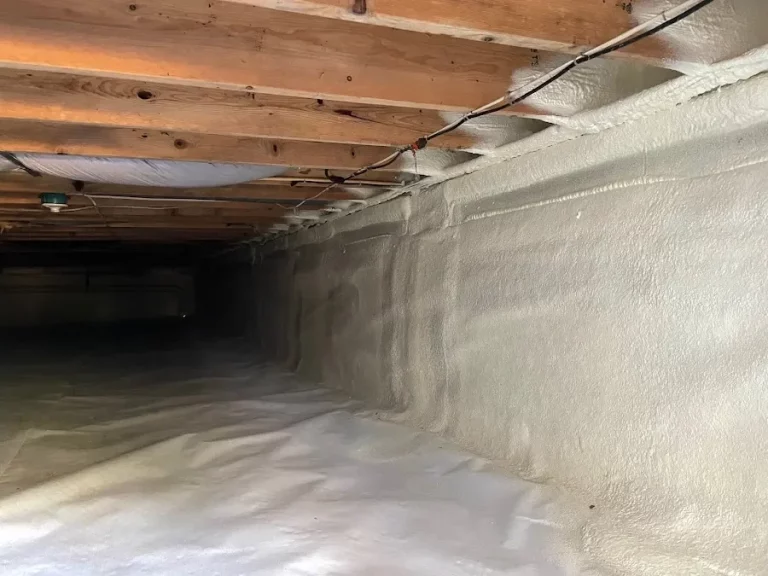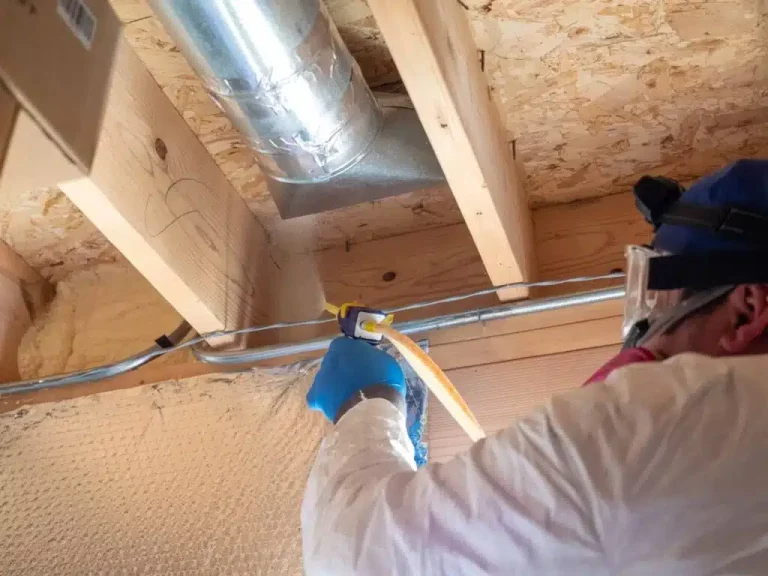

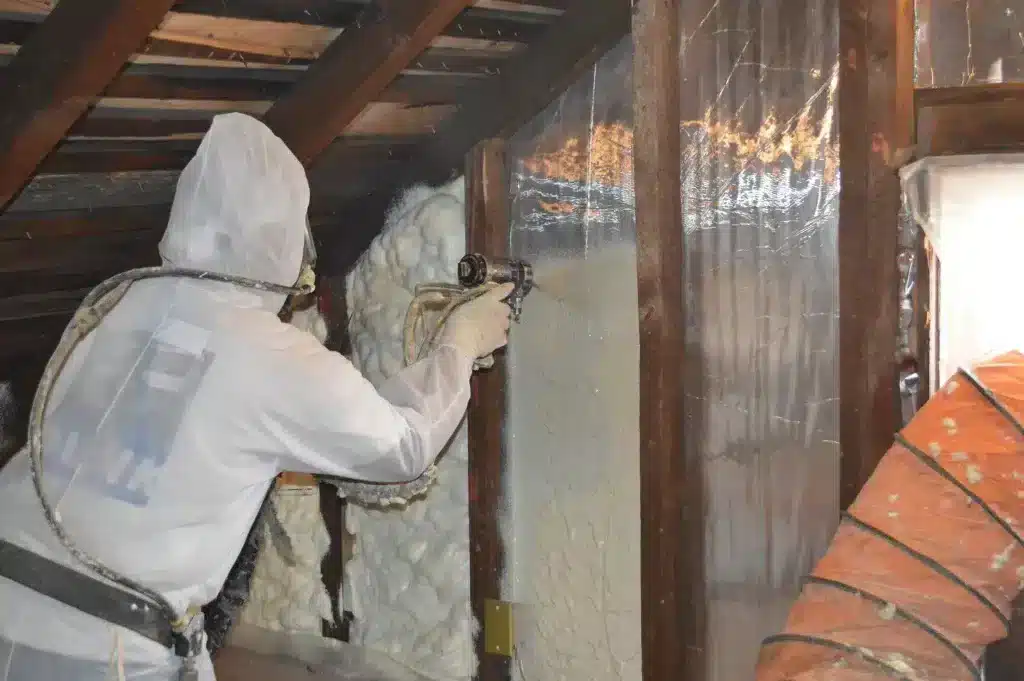
Yes, properly selected and installed insulation can significantly help prevent attic moisture issues, but it must be combined with air sealing and appropriate ventilation strategies. The key is understanding that insulation works alongside, not instead of, proper moisture management practices. According to the Department of Energy, controlling moisture can make your home more energy-efficient, less costly to heat and cool, more comfortable, and prevent mold growth.
The relationship between insulation and moisture control is bidirectional. Insulation reduces heat transfer, which helps moderate temperature differences that cause condensation. However, without proper air sealing, warm, moisture-laden air will leak through gaps and cracks into the attic, where it can condense on cold surfaces regardless of insulation levels.
TL;DR
- Insulation reduces heat transfer that causes surface condensation, but air sealing is equally critical for moisture prevention
- Over 98% of water vapor movement in buildings occurs through air movement, not diffusion through materials
- Spray foam insulation provides both thermal resistance and air sealing in one product, making it highly effective for moisture control
- Ventilation requirements change based on whether a vapor retarder is present in the attic assembly
- Closed-cell spray foam can serve as both insulation and a vapor barrier in climate zones 5 and higher
- Interior relative humidity levels should be maintained between 30% and 50% to minimize condensation risk
- The dew point temperature of interior air determines whether condensation will occur on cold surfaces
Understanding How Attic Moisture Enters
Attic moisture primarily enters through air leakage from living spaces below. When warm, humid air rises and escapes through gaps in the ceiling plane, it contacts cold roof surfaces and condenses. This process accelerates during winter months when temperature differences between interior and exterior environments are most extreme.
The three primary pathways for moisture movement are air movement, diffusion through materials, and heat transfer. Air movement accounts for the vast majority of moisture transport in residential construction, according to building science research. This is why air sealing around penetrations, light fixtures, and attic access points is so important before adding insulation.
Common sources of attic moisture include bathroom and kitchen exhaust fans vented into the attic space, dryer vents, leakage from ductwork, and natural air infiltration through ceiling cracks. Each of these sources can introduce significant amounts of water vapor that will condense if the roof deck temperature falls below the dew point of that air.
Insulation Types and Their Moisture Performance
Different insulation materials handle moisture differently, and your choice affects long-term attic performance.
| Insulation Type | R-Value per Inch | Air Barrier | Vapor Retarder | Moisture Resistance |
|---|---|---|---|---|
| Closed-cell spray foam | 6.0-7.0 | Yes | Yes | Excellent |
| Open-cell spray foam | 3.5-4.0 | Yes | No (requires coating) | Good |
| Fiberglass batts | 3.1-4.0 | No | Varies | Fair (can hold moisture) |
| Cellulose (blown) | 3.1-3.8 | No | No | Fair (can hold moisture) |
| Mineral wool | 3.0-4.0 | No | No | Good |
Closed-cell spray foam insulation provides the most comprehensive moisture protection because it creates both an air barrier and a vapor retarder in a single application. When installed at the roofline, it keeps the roof deck warm enough that condensation cannot form, even when interior humidity levels spike temporarily. Open-cell spray foam also provides excellent air sealing but requires an additional coating or membrane to function as a vapor retarder in colder climates.
Fiberglass and cellulose insulation are air-permeable materials that can actually absorb and hold moisture, which reduces their thermal performance and can promote mold growth if they become damp. These materials work best in vented attic assemblies where air circulation helps maintain dry conditions.
Why Exterior Insulation Placement Matters
Building science research demonstrates that exterior insulation placement provides superior condensation control compared to interior-only insulation strategies. When insulation is installed on the exterior side of structural framing, it keeps the entire structural assembly warmer, reducing the risk of condensation on any surface within the wall or roof cavity.
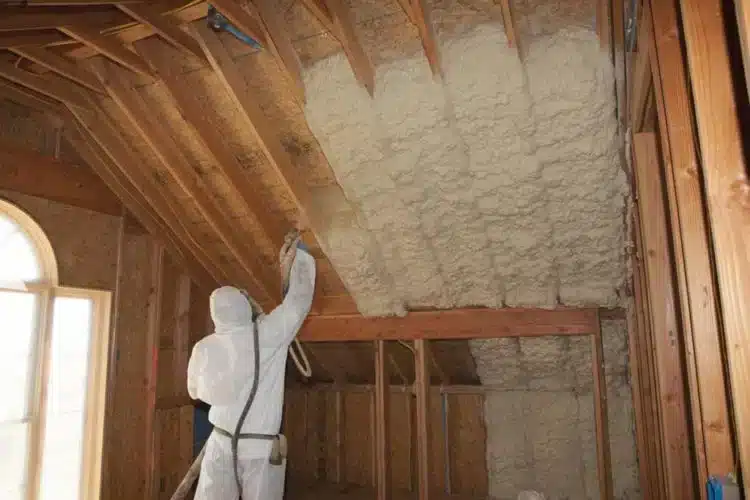
For attics, this principle translates to roofline insulation applications. When spray foam is applied directly to the underside of the roof deck, the wood remains warmer and closer to interior temperatures. This prevents the deck from reaching dew point temperatures that cause condensation, even during extreme cold snaps when interior humidity is highest.
Research from Building Science Corporation shows that adding exterior insulation reduces condensation risk, while adding interior air-permeable insulation can actually increase condensation risk in some assemblies. This counterintuitive finding emphasizes why proper insulation specification matters for long-term moisture management.
Real-World Contractor Scenarios
| Scenario | Home Type | Problem | Solution | Outcome |
|---|---|---|---|---|
| 1970s tract home | Single-story ranch | Frost on roof nails during winter, staining on ceiling | Air seal ceiling penetrations, add blown cellulose to R-38, add attic baffles for ventilation | Eliminated frost formation, reduced heating bills by 18% |
| Custom home 2015 | Two-story colonial | Humidity complaints despite new HVAC | Found unvented attic with open-cell foam lacking vapor retarder | Applied vapor-retardant coating, added whole-home dehumidifier |
| Historic home | Victorian two-story | Sagging ceiling, mold on attic trusses | Removed wet insulation, found bathroom vent venting into attic | Installed proper exterior vents, sealed all penetrations, applied closed-cell foam |
| New construction | Modern farmhouse | Builder used unfaced batts with gaps | Full air sealing package, supplemented with blown fiberglass | Met performance targets, passed blower door test |
| Condo complex | Multi-unit mid-rise | Inter-unit moisture transfer through shared attic | Spray foam at unit separations, improved HVAC dehumidification | Eliminated cross-unit moisture complaints |
These scenarios illustrate that moisture problems have multiple causes and require systematic diagnosis. Insulation alone rarely solves attic moisture issues; the surrounding air sealing, ventilation, and humidity management systems must all function properly.
Actionable Strategies for Contractors
- Conduct air leakage testing before specifying insulation: Use a blower door test to quantify air leakage rates and identify priority sealing locations. This data helps determine whether air-permeable insulation will perform adequately or if spray foam is needed.
- Seal all ceiling penetrations before adding insulation: Focus on the five priority air sealing locations: duct penetrations, flue penetrations, light fixtures, attic access, and plumbing vent stacks. These gaps often account for the majority of air leakage in older homes.
- Specify closed-cell spray foam for unvented attics in cold climates – In climate zones 5 and higher, closed-cell foam applied at the roofline provides the most reliable moisture control without requiring additional ventilation strategies.
- Install proper ventilation baffles when using floor-level insulation. When insulating at the ceiling level in vented attics, baffles maintain a clear air channel from soffit vents to ridge or gable vents. Without baffles, insulation blocks airflow and creates moisture accumulation zones.
- Include dehumidification capacity for high-humidity homes – Homes with multiple occupants, aquariums, or humidity-generating activities may need supplemental dehumidification regardless of insulation quality. Size dehumidifiers based on attic volume and expected moisture loads.
- Educate homeowners on humidity management – Recommend maintaining interior relative humidity between 30% and 50% during winter months. Use exhaust fans during cooking and bathing, and ensure clothes dryers vent to the exterior.
Factors That Affect Moisture Performance
Several variables influence how well insulation performs in preventing attic moisture:
- Climate Zone Classification: Colder climates with more extreme consistent temperature swings require more robust moisture control strategies. In northern regions, roof deck temperatures can drop significantly below interior dew points during winter nights, increasing condensation risk.
- Insulation Thickness and Coverage: Complete coverage with proper thickness is essential. Gaps, compressions, and thin areas create thermal bridges where condensation can occur. All accessible areas should receive uniform insulation depth.
- Installation Quality: Poor installation compromises even the best insulation materials. Gaps around penetration, incomplete contact with surfaces, and damage during installation all reduce moisture control performance.
- Building Age and Construction Type: Older homes often have more air leakage pathways and may lack modern vapor retarders. Historic construction methods used different materials and may require specialized approaches.
- Occupant Behavior: Interior humidity generation varies significantly between households. Large families, frequent cooking, and certain hobbies or activities can introduce more moisture than typical ventilation systems handle.
- Mechanical System Integration: HVAC systems, exhaust fans, and whole-house ventilators all affect attic moisture levels. Proper duct sealing and ventilation fan operation are essential components of moisture management.
Vented vs. Unvented Attic Approaches
Two main strategies exist for attic moisture control, each with distinct advantages.
Vented Attics keep the attic space cold during winter by allowing outdoor air to circulate through the soffit and ridge vents. Insulation is installed at the ceiling level, separating the conditioned living space from the vented attic. This approach has decades of proven performance but requires careful attention to air sealing at the ceiling plane and proper ventilation balance.
Unvented Attics use spray foam insulation at the roofline to create a conditioned or semi-conditioned attic space. By keeping the roof deck warm with interior heat, condensation cannot form. This approach eliminates attic ventilation requirements but demands high-quality air sealing and appropriate vapor retarder specification.
Building science research increasingly supports unvented attic approaches for many climate zones, particularly when spray foam insulation is used. The eliminated ventilation openings improve energy performance and reduce air leakage from the attic to living spaces.
Long-Term Benefits of Proper Moisture Control
Investing in quality insulation and air sealing delivers returns beyond moisture prevention. Homes with proper attic insulation typically see 15% to 25% reductions in heating and cooling costs, according to Department of Energy analysis. These energy savings compound over the life of the home while protecting structural components from moisture damage.
Moisture-related repairs in attics can cost thousands of dollars in structural damage, mold remediation, and re-insulation. Prevention through proper initial installation costs a fraction of these remediation expenses and eliminates the disruption of major repairs.
Professional installation also ensures code compliance and warranty coverage. Many spray foam manufacturers require certified installers to validate product warranties, protecting homeowners from defects or performance issues. Homeowners seeking performance standards can reference the Energy Star – Well-Insulated and Sealed Attic recommendations.
Ready to Eliminate Attic Moisture Problems?
Our team at Supreme Spray Foam Fresno specializes in diagnosing and solving attic moisture issues throughout the Central Valley region. We combine thorough air leakage testing with expert insulation installation to deliver lasting moisture control and energy performance improvements.
Whether your home needs air sealing, new insulation, or a complete roofline insulation system, our certified professionals will assess your specific situation and recommend the most effective solution. We understand the unique climate challenges of the Fresno area and tailor every installation to local conditions.
Contact us today for a comprehensive attic moisture assessment and quote.
Frequently Asked Questions
Does spray foam insulation prevent attic condensation?
Closed-cell spray foam applied at the roofline prevents condensation by keeping the roof deck warm enough that moisture cannot condense on wood surfaces. Open-cell spray foam provides excellent air sealing but may require additional vapor retarder treatment depending on the climate zone.
Can I add insulation to fix my attic moisture problem?
Adding insulation alone rarely solves moisture issues. The underlying causes, including air leakage through ceiling penetrations, inadequate ventilation, and excessive interior humidity, must be addressed first. Otherwise, insulation may trap moisture and worsen problems like mold growth.
How much ventilation does my vented attic need?
The Insulation Institute recommends net free ventilating area of at least 1/150 of attic floor area without vapor retarders, or 1/300 with a vapor retarder having a perm rating of 1 or less. Half the ventilation area should be at the eave and half at the ridge or roof peak.
Should I use a dehumidifier in my attic?
Attic dehumidifiers can help manage humidity in sealed or unvented attics, particularly in humid climates or homes with high moisture generation. They work best as a supplement to proper insulation and air sealing, not as a replacement for these measures.
What interior humidity level is safe during winter?
Maintaining interior relative humidity between 30% and 50% during winter minimizes condensation risk while keeping living spaces comfortable. Humidity above 50% significantly increases attic condensation probability, especially during cold weather when roof deck temperatures drop.
Sources
- Building Science Corporation – BSD-163: Controlling Cold-Weather Condensation Using Insulation – Technical guidance on using insulation to prevent condensation in cold climates, including design calculations and climate-specific recommendations.
- Department of Energy – Moisture Control – Official DOE guidance on residential moisture management strategies, air sealing importance, and climate-specific approaches.
- Insulation Institute – Moisture Management – Industry guidance on vapor retarders, ventilation requirements, and attic moisture control best practices.
- Energy Star – Well-Insulated and Sealed Attic – Home upgrade recommendations for attic insulation and air sealing performance standards.
- Department of Energy – Guide to Durable Attics – Comprehensive guidance on attic construction durability, insulation requirements, and moisture management for various climate zones.

- How Can Homeowners Prepare a Crawl Space for Spray Foam Installation in Parkwood, CA? - October 15, 2026
- Why Does Crawl Space Access Matter When Installing Spray Foam Insulation? - October 15, 2026
- What Makes Crawl Space Spray Foam a Choice for Better Air Quality in Oakhurst, CA? - September 22, 2026