

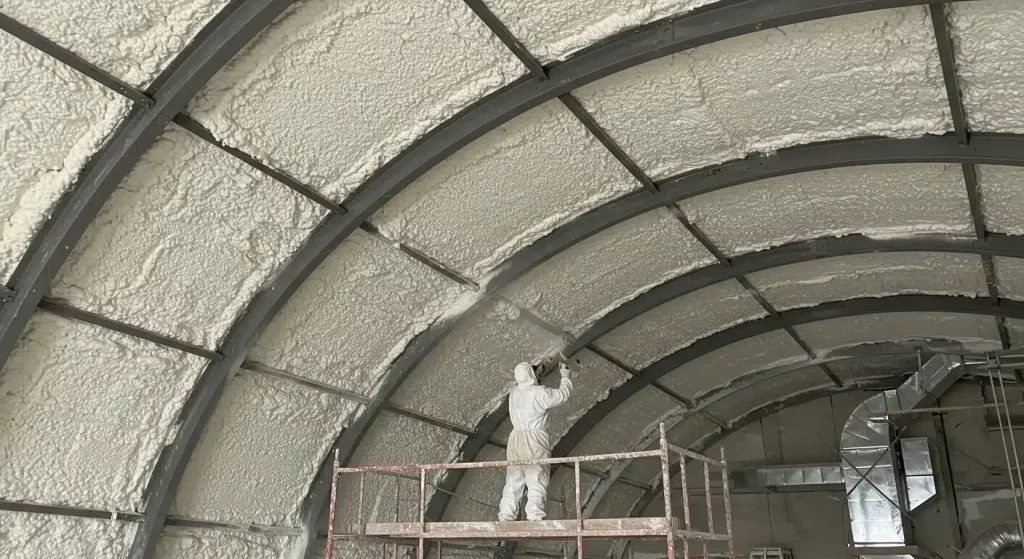
If you need a Commercial Insulation Contractor Fresno, CA owners can reach directly, Supreme Spray Foam Fresno installs open cell and closed cell spray foam in warehouses, offices, retail spaces and other business buildings. The right product depends on your roof and wall type, how the space is used, and whether the work needs a permit under California’s current energy code.
TL;DR
Most commercial jobs come down to open cell spray foam insulation, closed cell, or a mix of both. The building’s structure and use decide it more than price does. Here’s how the choice usually breaks down:
Building situation | Usually fits | Why |
Metal warehouse or shop roof | Closed cell | Bonds to steel, resists moisture, seals panel seams |
Offices and meeting rooms | Open cell | Softer foam absorbs sound and costs less per inch |
Roof deck over a cooled retail floor | Either | Code limits and budget set the choice |
Code limits and budget set the choice | Air sealing plus targeted foam | Full replacement isn't always needed |
On bare metal roofs, closed-cell foam sprayed straight onto the steel can stop the condensation drip that forms on uninsulated panels, because humid indoor air no longer touches the cold metal. If your building needs better thermal performance, commercial building insulation solutions may be worth considering. And if your insulation is in decent shape and the real problem is air leaking around pipes, vents and roof penetrations, a smaller sealing job may fix it for less. Ask us to check that first.
Our commercial insulation services in fresno, CA cover new construction, retrofits and repairs. Each job starts with how the building is put together, not with a favorite product.
We spray foam on roof decks, walls and ceilings in offices, warehouses and retail spaces. Foam expands into gaps and cracks, so commercial building insulation and air sealing happen in the same step. See our commercial spray foam insulation page for more.
Open cell foam is lighter and absorbs sound, which suits interior partitions and office ceilings. Closed cell foam is denser, adds rigidity and resists moisture, which suits metal buildings, exterior walls and areas near water lines.
Foam that’s been cut for new wiring, ductwork or plumbing leaves open paths for heat and air. Our spray foam repairs close those gaps, and we also handle attic insulation in buildings with an attic above the ceiling.
Heat is the main load here. national weather service records for Fresno put the average first 100-degree day around June 4 and the last around September 10, so a typical year brings about three months of triple-digit risk. During that stretch, large flat and metal roofs soak up sun and push heat into the space below. A continuous layer of spray foam under the roof deck slows that heat flow and seals the leaks that let hot air into work areas, which can take load off cooling equipment on the longest days.
Code is the other local condition. The california energy commission put the 2025 Energy Code into effect on January 1, 2026, for permit applications filed on or after that date, and it updated maximum roof, ceiling and wall U-factors for nonresidential buildings. For metal buildings, the roof limit is U-0.038 in every climate zone. If your project needs a permit, foam thickness has to be sized to those limits before work starts, so bring your plans to the assessment.
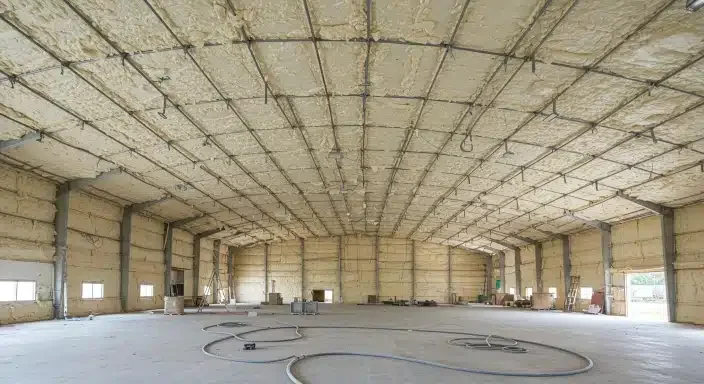
Our insulation installation services are planned around your operating hours, because spraying affects anyone working in the space.
We don’t post a per-square-foot price, because a warehouse roof and an office remodel can differ a lot. These are the things that move a commercial quote:
Factor | How it affects price |
Foam type | Closed cell is denser and usually costs more per inch |
Thickness | Code limits or your goals set how many inches go on |
Area and height | High ceilings may need lifts or extra setup |
Surface prep | Removing old insulation or cleaning adds labor |
Scheduling | After-hours work to avoid shutdowns changes the plan |
How long does a commercial spray foam job take?
It depends on square footage, ceiling height and foam thickness. A small office may take a few days, while a large warehouse takes longer. We give you a schedule after the assessment.
Can you insulate while our business stays open?
Often, yes. We can work in sections or after hours, but sprayed areas must stay closed to staff and customers until the re-entry time has passed.
Is closed cell or open cell better for a metal building?
Closed cell is usually the better fit. It sticks to steel, resists moisture and helps prevent condensation on the underside of the roof.
Will spray foam lower our cooling costs?
It can. Sealing air leaks and slowing roof heat gain are two main steps toward energy efficient commercial buildings, but results depend on your HVAC system, roof and operating hours, so we don’t promise a set percentage.
How do I check an insulation contractor's license?
Search the contractor’s name or license number on the Contractors State License Board website. The C-2 Insulation and Acoustical classification covers installing insulating materials for temperature and sound control.