
If you have noticed cold spots near your kitchen cabinets, unexpected temperature changes while cooking, or higher-than-expected energy bills during winter months, your kitchen likely has air leaks that spray foam insulation can permanently seal. Spray foam expands to fill gaps, cracks, and penetrations where other insulation materials cannot reach, creating an airtight barrier that eliminates drafts at their source rather than simply covering them. For homeowners in Fresno and the Central Valley region, where temperature fluctuations between seasons can be significant, addressing kitchen drafts with durable spray foam insulation is one of the most cost-effective improvements you can make to your home.
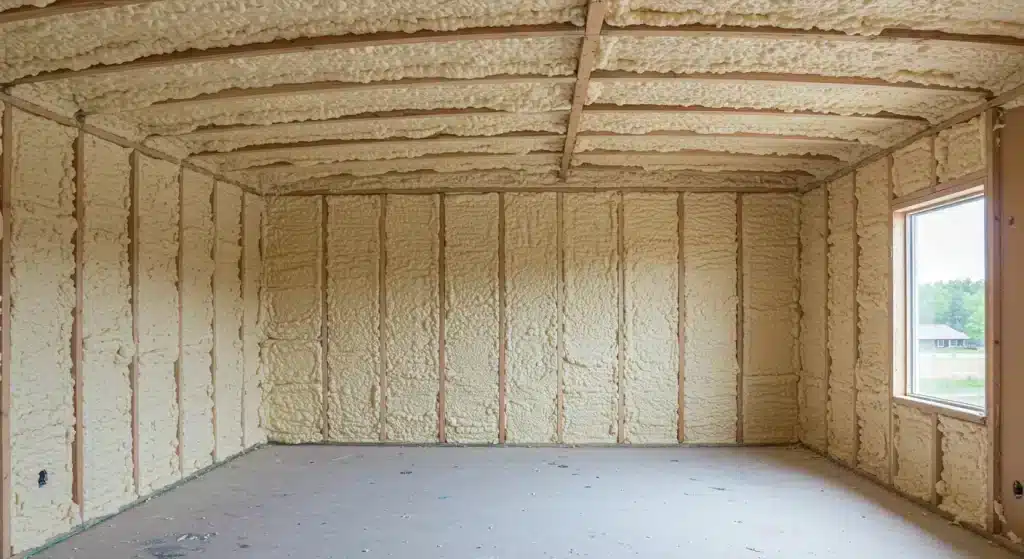
Unlike traditional batt insulation or cellulose, which merely sit in cavities and allow air to pass around them, spray foam performs as both insulation and an air sealant simultaneously. This dual action means that once our team applies spray foam around kitchen cabinet bases, behind sink plumbing, and along exterior wall penetrations, you get immediate and lasting protection against drafts. The material adheres directly to surfaces, expanding into every void and crack to create a continuous thermal envelope that keeps conditioned air inside and unconditioned air outside where it belongs.
TL;DR
- Spray foam insulation stops kitchen drafts by sealing gaps and cracks that traditional insulation cannot reach, including spaces behind cabinets, around plumbing, and along exterior walls.
- Homes can lose up to 40% of energy through air leaks, and the U.S. Department of Energy estimates that 56% of home energy consumption goes toward heating and cooling, making draft elimination a priority for cost savings.
- Energy Star estimates that air sealing combined with proper insulation can reduce monthly energy bills by up to 20%.
- Spray foam insulation has an expected lifespan of 80 to 100 years when properly installed, significantly outperforming fiberglass batting, which typically requires replacement every 15 to 30 years.
- Closed-cell spray foam provides higher R-values (up to R-6.5 per inch) compared to open-cell alternatives (approximately R-3.7 per inch), making it more effective for kitchen applications where space is limited.
- Professional installation ensures proper adhesion, correct expansion rates, and complete coverage of all draft sources around kitchen fixtures and cabinetry.
Common Sources of Kitchen Drafts You Need to Address
Kitchens present unique challenges for air sealing because they contain numerous penetrations, appliances, and water fixtures that create pathways for uncontrolled air movement. Identifying where these leaks originate is the first step toward eliminating them effectively.
Behind Kitchen Cabinets
The spaces behind base cabinets and along upper cabinet installations often contain significant gaps between the cabinet framing and the exterior wall sheathing. These gaps develop during construction when multiple building materials intersect, and they create direct channels for outdoor air to enter your living space. Cold air from unconditioned attics or crawl spaces can flow through these passages and emerge as noticeable drafts near your kitchen workspace.
Plumbing Penetrations Around Sinks
Every kitchen sink requires water supply lines and drain pipes that penetrate the walls and floor. These penetrations rarely seal completely during installation, leaving small gaps that allow air leakage year-round. During winter months, you may feel cold air radiating from cabinet base areas near sink plumbing, and during summer, warm, humid air can enter through these same pathways, affecting your air conditioning performance.
Electrical Outlets and Switch Plates
Outlets and switches installed on exterior kitchen walls create openings in the thermal envelope that extend from the interior to the exterior of your home. Even with cover plates in place, these openings allow air to bypass insulation and move freely between conditioned and unconditioned spaces. Installing foam gaskets behind outlet and switch plates helps, but for complete sealing, spray foam applied during a comprehensive air sealing project delivers superior results.
Recessed Lighting and Ventilation Openings
Recessed canister lights installed in kitchen ceilings create cavities that connect to attic spaces, which are typically unconditioned. Similarly, kitchen exhaust vents that penetrate to the exterior create gaps in exterior walls that can leak significant amounts of air if not properly sealed. These hidden pathways often contribute to kitchen drafts that seem mysterious because they do not correspond to obvious gaps or cracks you can see.
Rim Joists and Foundation Penetrations
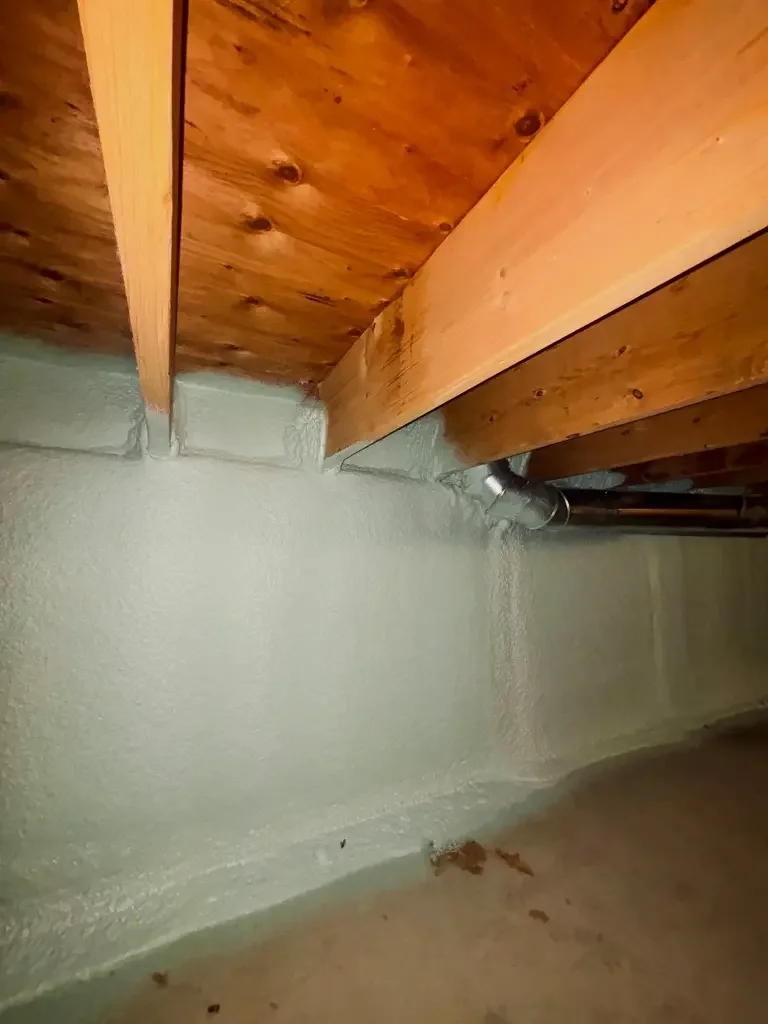
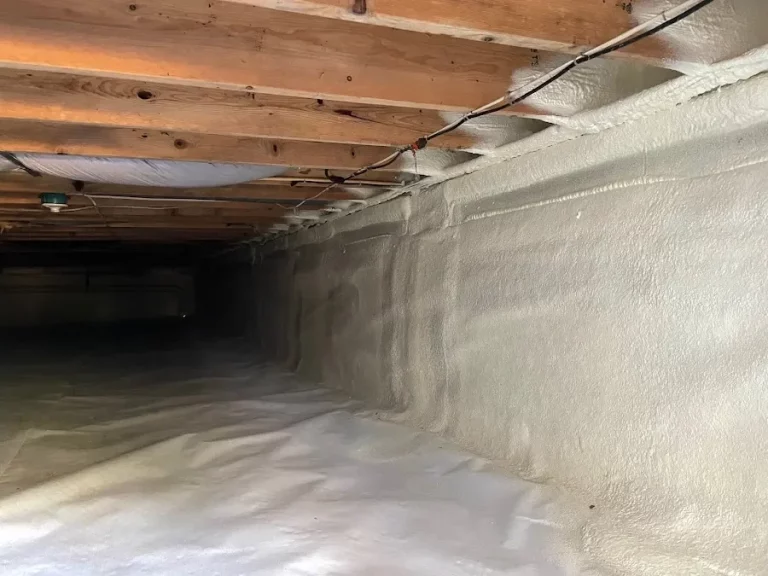
Where your kitchen floor meets exterior walls, the rim joist area contains multiple cavities that often communicate with basements or crawl spaces. Air from these areas can rise through the home structure and emerge in your kitchen as drafts near the floor or baseboards. Spray foam applied to rim joist cavities during a comprehensive insulation project seals these pathways completely.
Spray Foam vs. Traditional Insulation for Kitchen Applications
When deciding how to address kitchen drafts, understanding the performance differences between spray foam and traditional insulation materials helps you make an informed investment. The right choice depends on your specific situation, budget, and long-term goals for your home.
| Factor | Spray Foam Insulation | Fiberglass Batt Insulation | Cellulose Insulation |
|---|---|---|---|
| R-value per inch | R-3.7 to R-6.5 | R-3.1 to R-4.0 | R-3.2 to R-3.8 |
| Air sealing ability | Creates a complete air barrier | No air barrier properties | Minimal air blocking |
| Lifespan | 80 to 100+ years | 15 to 30 years | 20 to 30 years |
| Moisture resistance | Closed-cell resists water; open-cell allows drying | Can trap moisture, promotes mold | Can absorb moisture |
| Installation complexity | Requires professional equipment | DIY-friendly | Professional or DIY |
| Long-term energy savings | 30% to 50% reduction | 10% to 15% reduction | 10% to 15% reduction |
According to the U.S. Department of Energy, air leakage occurs when outside air enters and conditioned air leaves your house uncontrollably through cracks and openings, contributing to moisture problems and comfort issues that affect occupants’ health and the structure’s durability. Sealing cracks and openings reduces drafts and cold spots, improving comfort significantly.
Why Durable Spray Foam Outperforms Other Solutions
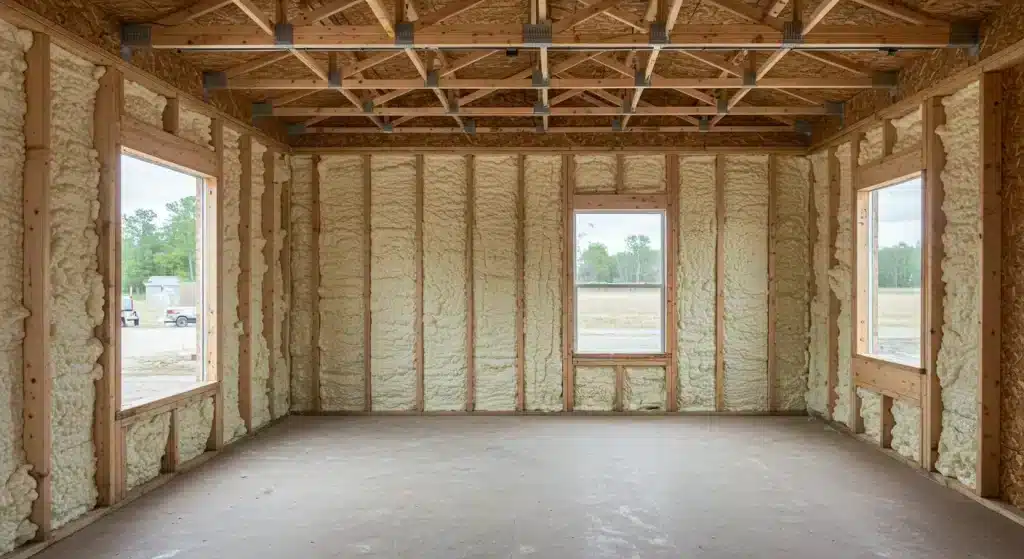
Spray foam insulation offers advantages that make it particularly well-suited for kitchen draft elimination. Its unique expanding properties allow it to fill gaps, cracks, and irregular spaces that other insulation materials simply cannot reach or seal effectively. When applied, the foam expands to fill the entire cavity, adhering directly to surrounding surfaces and creating a permanent bond that will not settle, shift, or degrade over time.
The material’s durability means you will not face recurring problems with drafts returning years after treatment. Traditional insulation materials like fiberglass batts can shift, compress, or become displaced, creating new pathways for air leakage. Spray foam maintains its shape and sealing properties for decades without any maintenance or adjustment, making it a one-time solution that pays dividends throughout the life of your home.
Additionally, spray foam provides moisture resistance that protects your kitchen structure from damage. In kitchen environments where water pipes, sinks, and cooking activities create humidity, insulation that can manage moisture is essential. Closed-cell spray foam specifically acts as a vapor barrier, preventing moisture from penetrating wall cavities where it could cause mold growth or structural damage over time.
The Installation Process for Kitchen Draft Control
When you work with our team to address kitchen drafts using spray foam, we follow a systematic approach that ensures complete coverage and lasting results. The process begins with a thorough inspection to identify all potential air leakage pathways in and around your kitchen, including areas that may be hidden behind existing cabinetry or finished walls.
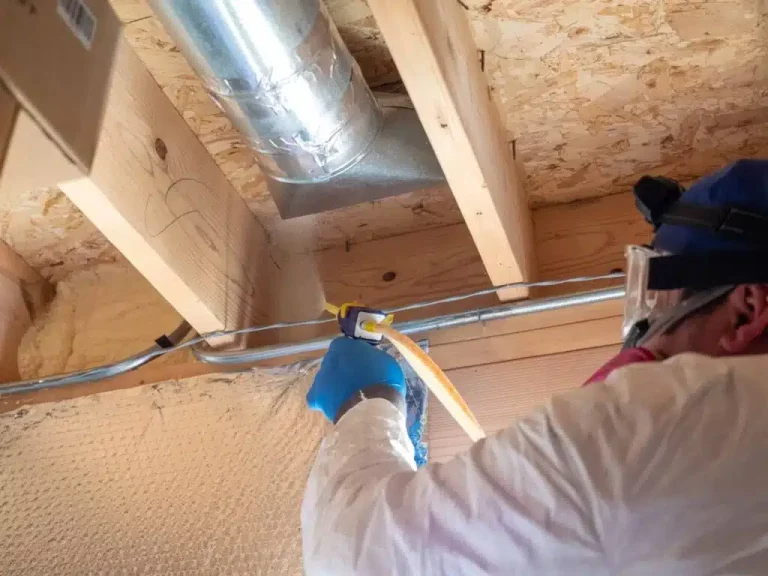
Our professionals then prepare the application areas by cleaning surfaces and ensuring proper conditions for foam adhesion. We apply spray foam to rim joists, behind cabinet bases, around plumbing penetrations, and along any gaps identified during the inspection. For areas requiring limited expansion, such as around existing finished surfaces, we use low-expansion formulations that will not damage cabinetry or fixtures.
After application, the foam cures and expands fully within 24 hours, creating a complete air seal throughout the treated areas. You will notice the difference immediately, with reduced drafts, more consistent temperatures, and lower energy bills as your heating and cooling systems no longer need to compensate for continuous air loss. According to Energy Star, the most significant air leaks in most homes are hidden in attics and basements, but kitchens also contain substantial leak points that deserve attention for optimal comfort and efficiency.
Signs You Have Found the Right Approach
Recognizing whether your kitchen draft problem is being addressed effectively requires understanding what quality spray foam insulation should accomplish. A proper spray foam application creates a seamless, continuous layer that fully fills cavities without gaps or voids. You should not see any visible settling or shrinking as the foam ages, and the material should remain firmly adhered to all surrounding surfaces without pulling away over time.
Professional Spray Foam installation matters significantly for kitchen applications because of the precision required around existing fixtures, plumbing, and cabinetry. Our team understands how to apply spray foam around sensitive components without causing damage, and we have the equipment and expertise to reach challenging areas like the spaces behind built-in cabinets or along rim joists that connect to your foundation.
Effective communication throughout the project indicates a quality provider. Our team explains what areas we will treat, why those locations contribute to your kitchen drafts, and what results you should expect after installation. We provide documentation of the work completed and offer guidance on maintaining your newly sealed kitchen environment.
Long-Term Benefits Beyond Draft Elimination
Addressing kitchen drafts with spray foam insulation delivers benefits that extend well beyond eliminating cold spots and improving comfort. When your kitchen no longer loses conditioned air through leaks and gaps, your HVAC system operates more efficiently because it does not need to constantly compensate for air loss. This efficiency translates directly to lower monthly utility bills, and the Spray Foam Coalition reports that homeowners frequently report savings of 30% to 50% on monthly utility bills after proper spray foam installation.
The improved air sealing also enhances indoor air quality by reducing the amount of outdoor contaminants that can enter your home. Pollen, dust, exhaust fumes, and humidity that typically enter through air leaks are blocked when spray foam creates a complete air barrier. Your kitchen becomes a more comfortable and healthier environment for cooking, gathering, and everyday family activities.
Additionally, spray foam insulation adds structural strength to your home. The material bonds directly to surrounding surfaces, creating a rigid matrix that helps hold walls and floors in place. This structural benefit of spray foam proves particularly valuable in areas prone to seismic activity or high winds, making spray foam an investment in your home’s long-term resilience as well as its comfort and efficiency.
Schedule Your Kitchen Draft Assessment
If you are experiencing drafts, cold spots, or inconsistent temperatures in your kitchen, our experienced team at Supreme Spray Foam Fresno can diagnose the source of your air leakage and apply durable spray foam insulation that eliminates the problem permanently. We serve homeowners throughout Fresno and the Central Valley with professional insulation services backed by years of hands-on experience and a commitment to quality craftsmanship.
Our team will evaluate your kitchen’s specific situation, identify all draft sources, and apply the appropriate spray foam solution for lasting results. We use only high-quality materials and proven installation techniques to ensure your complete satisfaction with the finished work. For a detailed assessment of your kitchen insulation needs, contact us today to schedule your consultation and discover how spray foam can transform your home’s comfort and efficiency.
Contact Supreme Spray Foam Fresno
Phone: (559) 545-0800
Email: [email protected]
Take the first step toward a draft-free kitchen by reaching out to our team. We will answer your questions, provide honest recommendations, and deliver results that make a measurable difference in your home’s comfort and energy performance.
Frequently Asked Questions
How do I know if spray foam is the right solution for my kitchen draft problem?
Spray foam works best for drafts caused by air leakage through gaps, cracks, and penetrations in your kitchen walls, floors, and cabinetry. If you feel cold air near base cabinets, around your sink, or along exterior walls, spray foam can seal these pathways permanently. Our team can assess your specific situation and recommend the most effective approach for your home.
Will spray foam damage my existing kitchen cabinets or countertops?
When applied correctly by trained professionals, spray foam will not damage cabinets, countertops, or fixtures. We use low-expansion formulations near finished surfaces and take precautions to protect your kitchen during application. The foam adheres to surfaces without creating pressure that could cause damage.
How long does spray foam insulation take to cure in a kitchen application?
Spray foam typically cures within 24 hours after application, though the exact time depends on temperature and humidity conditions. During this period, we recommend keeping the kitchen ventilated and avoiding contact with uncured foam. Once cured, the material is completely safe and requires no maintenance.
What is the difference between open-cell and closed-cell spray foam for kitchen use?
Closed-cell spray foam provides higher R-values (up to R-6.5 per inch) and acts as a moisture barrier, making it ideal for kitchen applications near water sources. Open-cell foam offers excellent sound dampening and costs less but does not provide moisture resistance. For most kitchen draft elimination projects, closed-cell foam delivers the best combination of performance and durability.
How much can I expect to save on energy bills after eliminating kitchen drafts with spray foam?
While individual savings vary based on your home’s overall efficiency and local energy costs, the EPA’s Energy Star program estimates that air sealing combined with proper insulation can reduce heating and cooling costs by an average of 15%. Many homeowners see even greater savings, particularly when spray foam addresses significant leak points that existed for years.
Sources
- Energy Star – Locating Air Leaks – Official EPA guidance on identifying common household air leak sources, including attic hatches, plumbing vents, and basement rim joists that contribute to energy loss.
- Department of Energy – Air Sealing Your Home – Government resource explaining how air leakage contributes to energy waste and providing tips for sealing penetrations where plumbing, ducting, and electrical wiring pass through walls and floors.
- Why Spray Foam – Energy Efficiency – Industry coalition resource detailing how spray foam acts as both insulation and air sealant, with statistics showing up to 40% of building energy lost through air infiltration.
- Energy Star – Methodology for Estimated Energy Savings – EPA documentation estimating that homeowners can save an average of 15% on heating and cooling costs through air sealing and insulation improvements.
- North Central Insulation – How Spray Foam Boosts Energy Efficiency – Industry resource citing the U.S. Department of Energy finding that structures with spray foam insulation experience approximately 35% to 40% better energy efficiency.

- How Can Homeowners Prepare a Crawl Space for Spray Foam Installation in Parkwood, CA? - October 15, 2026
- Why Does Crawl Space Access Matter When Installing Spray Foam Insulation? - October 15, 2026
- What Makes Crawl Space Spray Foam a Choice for Better Air Quality in Oakhurst, CA? - September 22, 2026