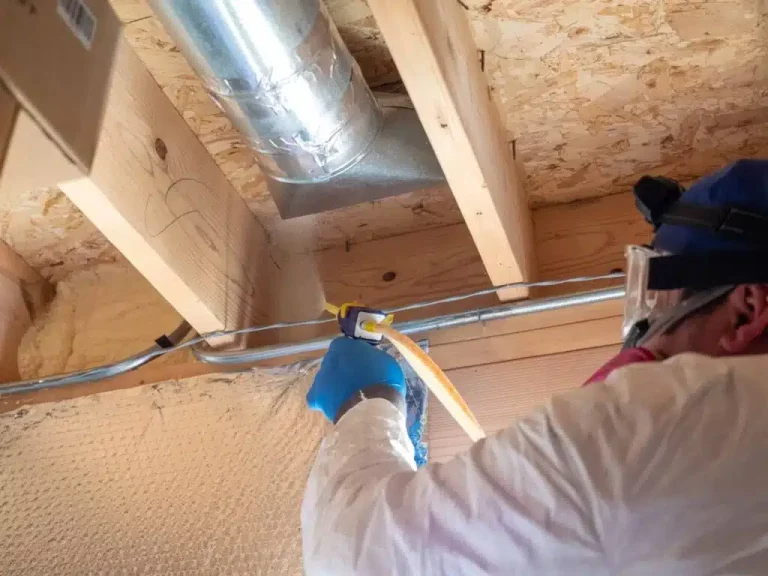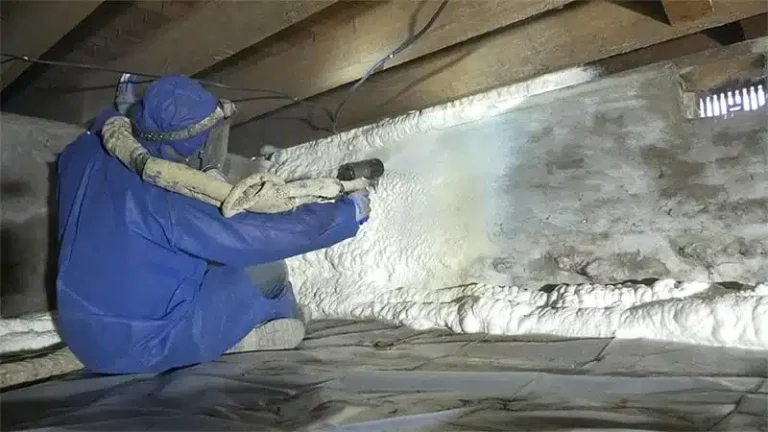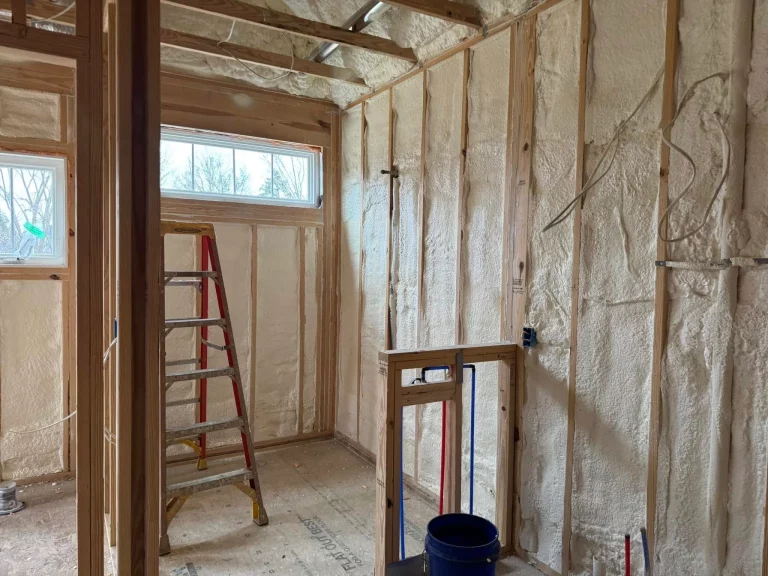

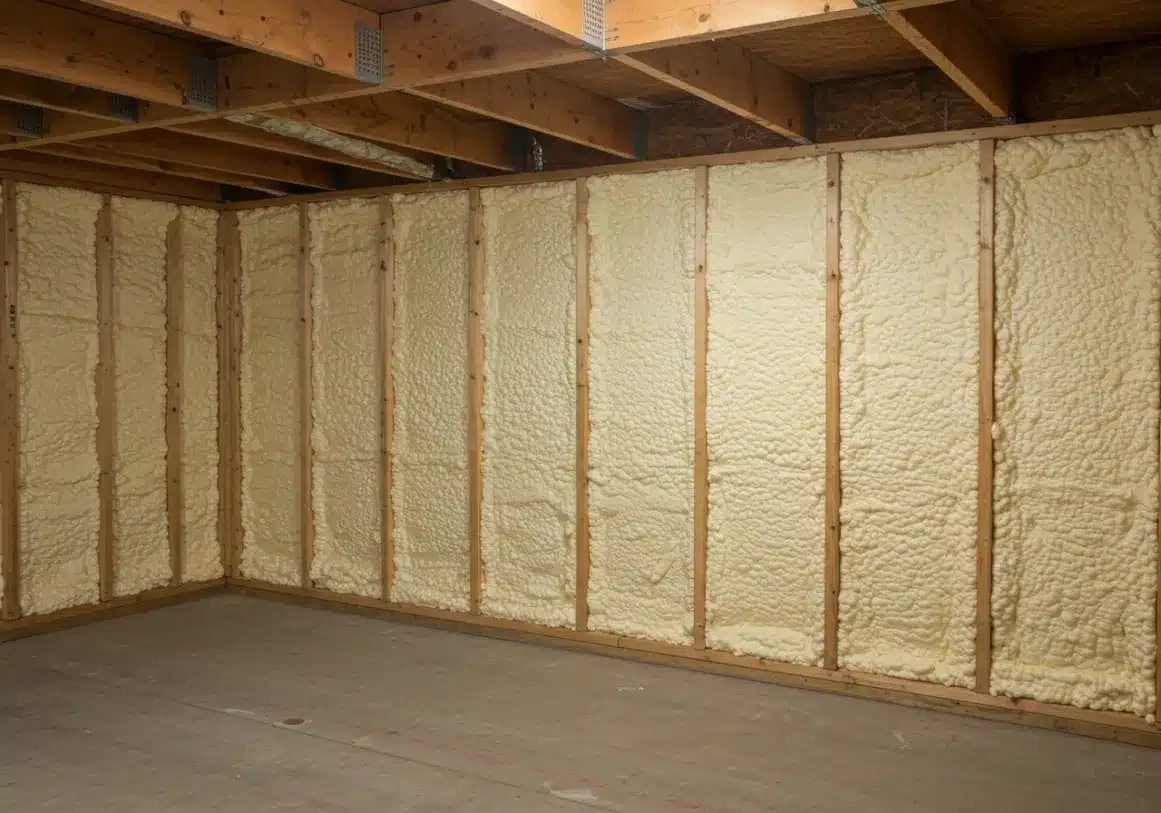
Spray foam repair is the better long-term value for most properties in 2026, as long as the existing insulation covers the majority of the building envelope and the damage is localized. Spray foam delivers airtight sealing and thermal resistance that far outperforms conventional insulation materials like fiberglass and cellulose, which makes preserving it worthwhile when possible (Building Science Corporation – Residential Spray Foam Guide). Full replacement becomes the smarter investment when the foam covers less than 60% of the target area, has suffered widespread moisture damage, or was improperly installed from the start. The deciding factor comes down to what percentage of the installation is still performing and whether the substrate, the wood framing or roof deck beneath it, has been compromised.
TL;DR
- Spray foam insulation provides continuity of water, air, vapor, and thermal control layers that other insulation systems cannot match when properly installed, making preservation a priority
- Localized repair works best when damage covers less than 20% of the total insulated area and the surrounding foam maintains full adhesion
- Closed-cell spray foam delivers approximately R-6.5 per inch while open-cell delivers R-3.6 per inch, meaning even partial insulation outperforms most alternatives
- Full replacement is warranted when moisture infiltration has rotted substrate materials or when the original installation failed to meet minimum code depths for the climate zone
- Buildings in IECC Climate Zones 4 and higher require closed-cell foam for roof applications, which makes proper repair technique more specific to foam type
- ENERGY STAR recommends attic insulation levels of R-38 to R-60 depending on climate zone, and achieving those targets is easier and cheaper through targeted repair than total removal and reinstall
- R-values for closed-cell polyurethane foam can degrade by 15% to 27.5% over decades due to blowing agent loss and moisture absorption, which means aged foam may already underperform and replacement could restore full rated performance
What Spray Foam Repair Actually Involves
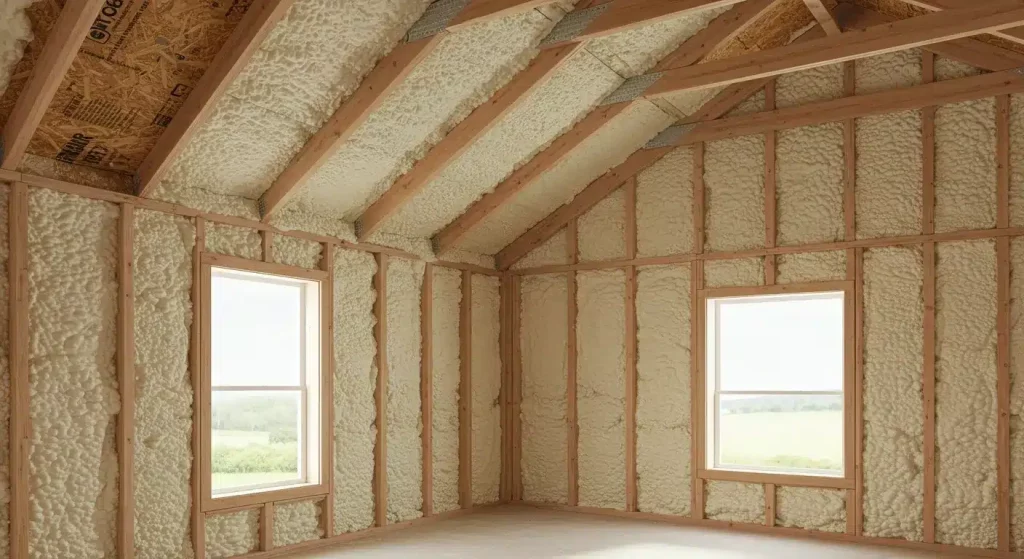
Spray foam repair targets specific areas where the insulation has separated from the substrate, cracked, shrunk, or been damaged by moisture, pests, or construction work. Our technicians cut out the compromised section, assess the underlying wood or concrete for damage, and spray new foam to bond with the existing material at the edges. This approach preserves the airtight seal and vapor control properties of the surrounding installation.
According to Wikipedia – Building Insulation , spray foam is unique in its ability to handle all four control layers: water, air, vapor, and thermal. When we repair rather than replace, we maintain that continuity across the vast majority of the envelope. The repair area gets fresh foam with full R-value, and the bond between old and new material restores the air barrier.
The catch is that repair only works when the majority of the existing foam is still adhered and performing. If separation has spread across large sections, or if moisture has been trapped between the foam and the roof deck for months or years, repair becomes a band-aid on a structural problem.
When Full Replacement Is the Only Responsible Choice
Full replacement means removing all existing spray foam, inspecting and repairing the substrate beneath it, and reinstalling fresh insulation. The RICS consumer guide on spray foam insulation highlights that spray foam can conceal serious problems, including hidden roof leaks that lead to timber rot. When a roof leak goes undetected behind spray foam insulation, the damage to structural members can be severe and widespread before anyone notices. Professional spray foam repair services can help address damaged insulation and underlying issues before they worsen.
Full replacement is the right call under these conditions:
- The roof deck or wall studs show evidence of rot, mold, or water staining across multiple bays
- The original installation was applied to a damp or defective roof, which RICS explicitly warns against
- The foam was installed at insufficient depth to meet the IECC minimum R-values for the property’s climate zone
- More than 40% of the foam has separated from the substrate or shows visible cracking and shrinkage
- The property owner needs to refinance or sell, and the existing installation lacks proper documentation, warranties, or certification, which RICS notes can affect valuation
Head-to-Head Comparison
| Factor | Spray Foam Repair | Full Replacement |
|---|---|---|
| Scope of work | Targeted removal and re-spray of damaged sections | Complete tear-out, substrate repair, and reinstall |
| Building envelope disruption | Minimal, confined to damaged areas | Extensive, entire insulated assembly exposed |
| Air barrier continuity | Maintained across untouched areas | Fully restored with new material |
| Ideal damage threshold | Under 20% of total area affected | Over 40% affected or substrate compromised |
| Long-term thermal performance | Matches original R-value in repaired zones | Uniform R-value across entire assembly |
| Code compliance | Must match foam type and depth of original install | Opportunity to upgrade to current IECC standards |
| Moisture risk during process | Low, building remains mostly sealed | Higher, envelope is open during demolition phase |
| Structural inspection | Limited to repaired zones | Complete, every bay becomes visible |
How Climate Zone Affects the Decision
The International Energy Conservation Code specifies different insulation requirements by climate zone, and those requirements directly influence whether repair or replacement makes more sense. The ENERGY STAR recommended insulation R-values for retrofitting existing buildings call for R-38 to R-60 in attics and R-13 to R-38 in floors depending on zone.
Fresno falls within IECC Climate Zone 3, where attics need R-38 for existing construction with some insulation and floors need R-19. If a property has closed-cell spray foam installed at the correct depth to meet those targets, repair is almost always the better value. If the existing foam was installed thin or only covers part of the assembly, replacement gives us the chance to bring the entire envelope up to code in one pass.
In Climate Zones 5 and higher, the Building Science Corporation notes that only high-density closed-cell spray foam should be used in unvented conditioned attics. If an existing installation in a colder climate used open-cell foam where closed-cell was required, full replacement with the correct foam type is not optional, it is a building science necessity to prevent condensation damage.
R-Value Degradation and the Aging Factor
Research cited in the Wikipedia article on R-value notes that closed-cell polyurethane foam can lose 15% to 27.5% of its initial R-value over time due to blowing agent diffusion and moisture absorption. Open-cell foams blown with water show significantly less degradation because they contain no trapped high-performance gases to begin with.
This matters for the repair-versus-replacement decision because a 20-year-old closed-cell foam installation may already be operating at 75% of its rated thermal resistance. In that scenario, a property owner paying for repair of a small section gets fresh foam at full R-value next to aged foam at reduced R-value. The thermal performance across the assembly becomes uneven.
For property owners pursuing maximum energy efficiency, full replacement of aged closed-cell foam delivers a uniform R-value across the entire envelope and can be combined with an upgrade to current IECC standards. For those prioritizing budget over peak performance, targeted repair still addresses the most common failure points, air gaps and separation, which have a larger impact on energy loss than slight R-value reductions.
Real-World Scenarios
| Scenario | Property Type | Recommended Option |
|---|---|---|
| 10-year-old closed-cell attic foam with 2-foot separation along one rafter bay | Single-family home, Climate Zone 3 | Spray foam repair |
| 20-year-old open-cell foam throughout attic, widespread shrinkage and pest damage | Ranch home, Climate Zone 4 | Full replacement |
| Closed-cell crawl space foam with moisture damage limited to one wall section | Commercial building, Climate Zone 3 | Spray foam repair |
- Original foam installed at 1 inch on roof deck, needs R-38 for code compliance | Renovated bungalow, Climate Zone 3 | Full replacement |
- Post-storm roof repair requiring sheathing work behind foam on three faces | Warehouse, Climate Zone 4 | Full replacement |
Factors That Influence the Decision
Several variables determine which path delivers better long-term value:
- Percentage of damage: Under 20% favors repair, over 40% favors replacement
- Foam type and age: Aged closed-cell foam with blowing agent loss may justify full replacement for performance recovery
- Climate zone: Higher zones have stricter condensation control requirements that may mandate foam type changes
- Substrate condition: Any rot, mold, or water damage to wood framing pushes toward replacement for full inspection
- Documentation: Lack of installation records, warranties, or independent test certificates reduces repair viability for resale
- Future plans: Properties being prepared for sale or refinancing benefit from full replacement with documented compliance
- Budget and timeline: Repair is faster and less disruptive, replacement requires full building exposure
Who Repair Is Best For (and Who It Is Not)
Repair is the right choice for:
- Properties with localized damage from pests, minor leaks, or construction activity
- Installations less than 15 years old with documented quality and proper depth
- Buildings in Climate Zones 1 through 4 where condensation risk is lower
- Property owners who need a fast turnaround with minimal disruption
Repair is not the right choice for:
- Properties with widespread foam separation or adhesion failure across multiple areas
- Installations where the wrong foam type was used for the climate zone
- Any situation where substrate rot or mold is suspected beneath the foam
- Properties being prepared for sale where buyers or lenders will require full documentation
Get a Professional Assessment for Your Property
The decision between spray foam repair and full replacement is not one you should make based on a visual inspection alone. Our team at Supreme Spray Foam Fresno provides detailed assessments using moisture readings, adhesion testing, and thermal imaging to determine exactly how much of your existing insulation is still performing. We evaluate the substrate condition, check foam depth against current IECC requirements, and provide a clear recommendation backed by building science, not guesswork.
Reach out to us at [email protected] or call us directly at (559) 545-0800 to discuss your specific situation. The right answer depends on what is actually happening inside your walls and attic, and we will help you find it.
FAQs
What are the most common signs that spray foam needs repair?
Visible separation from the substrate, cracks or shrinkage in the foam, musty odors indicating trapped moisture, and higher-than-normal energy bills pointing to air barrier breaches.
Can spray foam be patched if only a small section is damaged?
Yes, our technicians can cut out damaged sections, prepare the substrate, and spray new foam that bonds seamlessly with the existing material. The repair restores both thermal resistance and the air barrier at the affected area.
How do I know if the wood behind my spray foam has been damaged by moisture?
This requires professional assessment. Our team uses moisture meters, visual inspection of exposed framing at repair boundaries, and thermal imaging to identify potential moisture issues without removing foam unnecessarily.
Does closed-cell spray foam lose R-value over time?
Research shows that closed-cell polyurethane foam can lose 15% to 27.5% of its initial R-value over time as blowing agents diffuse out and are replaced by air. Open-cell foams blown with water show minimal degradation.
Is full spray foam replacement ever required by building code?
Building codes do not require replacement of existing insulation simply because it is old. However, if the existing installation does not meet current minimum R-values for the climate zone, replacement may be required when renovating or when code compliance is triggered by permit work.
Sources
- Building Science Corporation – GM-2102: Residential Spray Foam Guide – Comprehensive technical guide covering spray foam applications in walls, roofs, and foundations, including climate zone requirements and condensation control specifications per the IRC and IECC.
- RICS – Spray Foam Insulation Consumer Guide – Professional guidance on risks associated with spray foam insulation, including hidden moisture damage, impact on property valuation, and documentation requirements for installations.
- Wikipedia – Building Insulation – Reference article covering thermal insulation materials, ASHRAE 90.1 prescriptive R-value requirements by climate zone, and the role of insulation in building envelope performance.
- Wikipedia – R-value (Insulation) – Detailed article on thermal resistance measurement including R-value deterioration data for closed-cell polyurethane foam from the U.S. Army Engineer Research and Development Center.
- ENERGY STAR – Recommended Home Insulation R-Values – Climate zone-specific insulation recommendations for retrofitting existing wood-framed buildings, based on the 2021 IECC Residential Provisions.

- What Makes Crawl Space Spray Foam a Choice for Better Air Quality in Oakhurst, CA? - September 22, 2026
- Crawl Space Spray Foam: Types, Benefits, Costs, Installation, and Guide - September 22, 2026
- How Long Should Spray Foam Insulation Last Before It Needs to Be Repaired in Ahwahnee, CA? - September 11, 2026