
Crawl space spray foam earns its reputation as an air quality upgrade because it attacks the source of the problem: the air that rises out of your crawl space and into the rooms you live in. Every time your heating or cooling system runs, your home pulls air upward from the lowest openings, and whatever is in that crawl space moisture, mold spores, soil gases, dust travels with it. For Oakhurst homeowners dealing with wet Sierra foothill winters, dry summers, and smoke-heavy fire seasons, using crawl space spray foam solutions to seal this zone is one of the most direct forms of source control available. The right setup depends on your home’s condition, drainage, and layout, but the two main paths are clear: full crawl space encapsulation with closed-cell foam on the foundation walls, or targeted foam sealing at the rim joist and penetrations for homes with milder issues.
TL;DR
- Stack effect is the mechanism: air in a crawl space naturally rises into the living space, so unsealed crawl spaces feed dust, moisture, and soil gases directly into the air your family breathes.
- Closed-cell spray foam does three jobs at once: it insulates, air-seals, and, at roughly two inches of thickness, acts as both a vapor barrier and an air barrier
- Mold control starts with moisture control, according to the EPA, and a sealed crawl space is one of the most reliable ways to keep crawl space humidity out of the house.
- A complete system is more than foam: proper jobs include a sealed ground vapor barrier, closed vents, wall insulation, and a drying mechanism, following Department of Energy building science guidance (PNNL – Unvented, Insulated Crawlspaces).
- Oakhurst’s four-season climate matters: cold winters intensify stack effect, while wildfire smoke season rewards a tightly sealed building envelope.
- Timing matters: most residential crawl space encapsulation projects wrap up within days, but only after drainage, standing water, or existing mold are corrected first.
Why Crawl Space Air Becomes Your Indoor Air
Many Oakhurst homes sit on raised foundations with a crawl space underneath, a practical design on sloped foothill lots. The problem is physics. Warm air rises, and as it escapes through the upper levels, the house pulls replacement air in from below, a process called the stack effect. Encapsulation is specifically used to stop the passage of air from the crawl space into the living environment, improving indoor air quality in the process.
The stakes are higher than most homeowners realize:
- We spend about 90% of our time indoors, and the EPA identifies source control, ventilation, and filtration as the three pillars of cleaner indoor air. Sealing a crawl space is source control in its purest form.
- Relative humidity above 80% can support mold growth and rot wooden floor joists, even without visible standing water .
- The EPA is blunt about mold: the key to mold control is moisture control, and mold has a significant impact on indoor air quality (EPA – Mold).
In winter, Oakhurst homes are closed up tight and the stack effect is strongest, which means crawl space air circulates through bedrooms and living rooms all season long.
What Crawl Space Spray Foam Actually Does
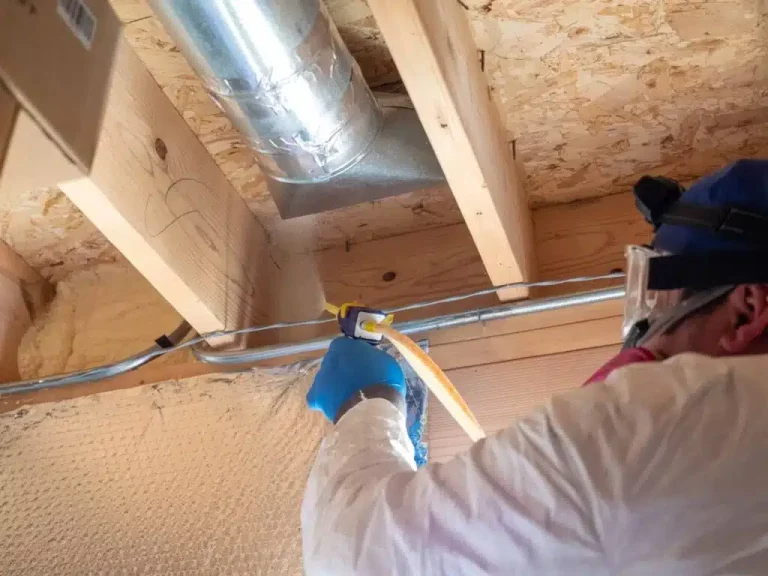
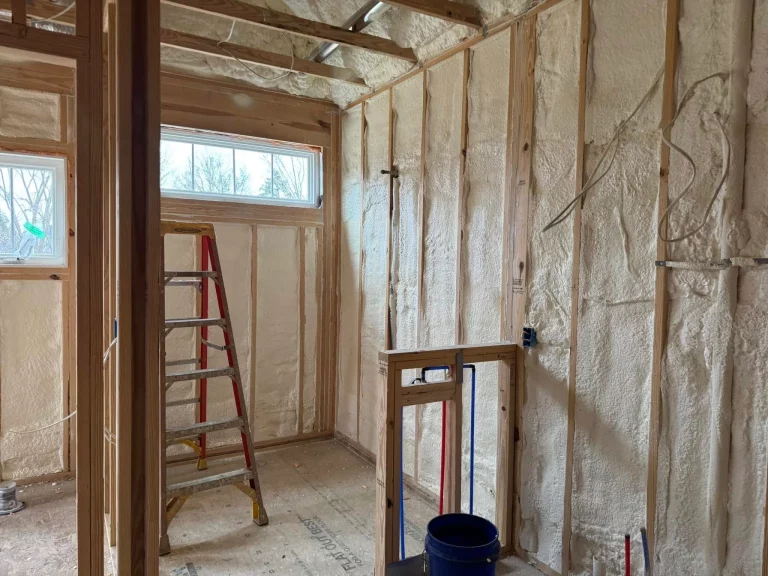
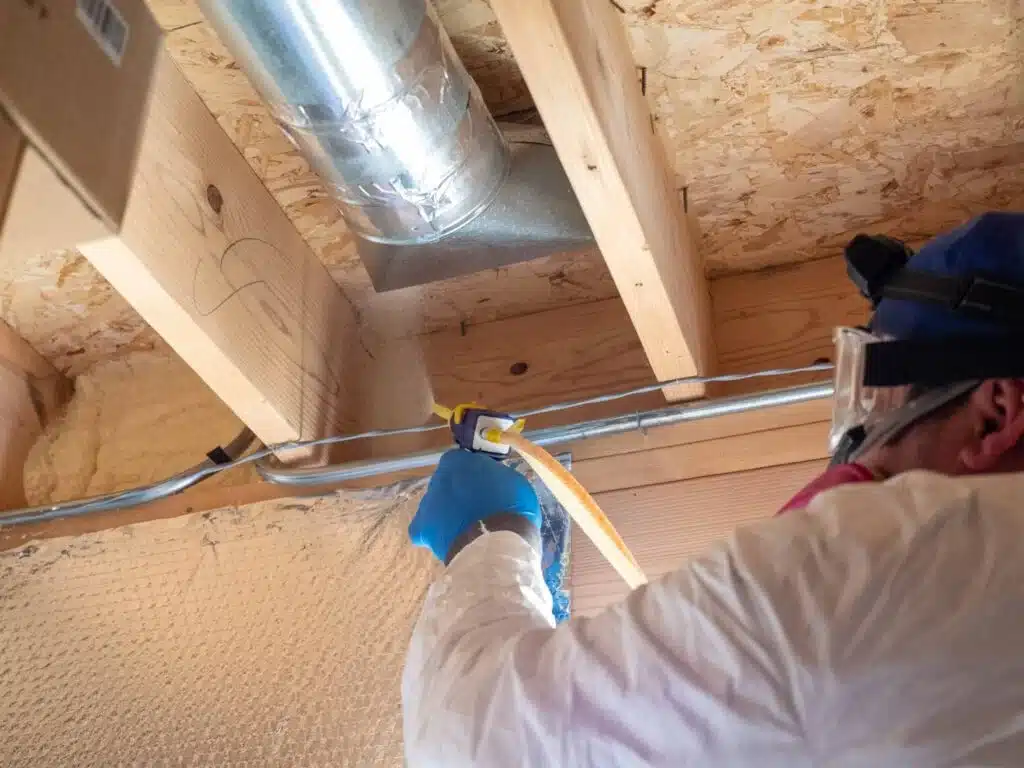
Spray polyurethane foam is applied as a liquid that expands in place, filling gaps that fiberglass batts and rigid board simply cannot reach. For homeowners who want to understand the process and key considerations in more detail, our crawl space spray foam guide explains the different approaches, benefits, and factors to consider before installation. Closed-cell foam carries an R-value in the range of R-5 to R-6 per inch, and once installed at roughly two inches, it functions as both an air barrier and a vapor barrier in one layer.
That combination matters for air quality. Air sealing blocks the convective movement that carries humidity, soil gases, and particulates upward, and Department of Energy studies attribute roughly 40% of a home’s energy loss to air infiltration through the envelope (Wikipedia – Spray foam). Open-cell foam, at about R-3.8 per inch, is better suited to interior sound control; closed-cell is the standard for below-grade-adjacent applications because it manages moisture as well as temperature.
Comparing Crawl Space Treatment Options
| Approach | Best For | Key Tactics | Air Quality Outcome | Limitations |
|---|---|---|---|---|
| Vented crawl space with fiberglass batts | Legacy construction as-built | Batts between floor joists, open vents | Minimal; moist outside air and soil gases still enter freely | Batts sag, hold moisture, and do nothing to stop airflow |
| Ground liner only | Budget-level moisture concern | Plastic sheeting over soil | Moderate improvement; walls and rim joist still leak air | Does not address the largest air pathways |
| Closed-cell spray foam encapsulation | Four-season homes like those in Oakhurst | Sealed vents, full ground barrier, foam on walls, drying mechanism | Most complete: air, vapor, and thermal control in a single system | Requires correct installation, code compliance, and upfront moisture repairs |
A 2005 Department of Energy study in the southeastern United States found that closed crawl spaces with sealed vents, sealed liners, and proper insulation delivered significantly reduced conditioning energy use compared to traditionally vented spaces (Wikipedia – Crawl space). That finding holds up anywhere humid or damp outside air can condense on cool joists.
Why Oakhurst Conditions Make This Decision Different
Oakhurst’s foothill setting near the Yosemite gateway brings a specific mix of conditions that shape how crawl spaces behave. Homeowners dealing with seasonal moisture, temperature changes, and wildfire smoke can benefit from professional spray foam insulation services designed to improve air sealing and moisture control:
- Wet winters, dry summers. Seasonal rain soaks the soil around foundations, then summer heat bakes it. Vented crawl spaces swing with the weather, and damp wood plus fluctuating humidity invites rodents, termites, and carpenter ants.
- Cold snaps and large day-night swings. When the heat runs and windows stay shut, stack effect is at full strength and crawl space air dominates the indoor mix.
- Wildfire smoke season. EPA guidance on wildfires stresses keeping smoke particles out of the home, and a sealed, foam-insulated foundation supports that goal by tightening the envelope from the bottom up (EPA – Indoor Air Quality).
- Ductwork in the crawl space. Any leaky return duct under the house pulls unconditioned crawl space air straight into your supply registers. Sealing the space protects every room the ducts serve.
How a Proper Crawl Space Spray Foam System Comes Together
Following Department of Energy building science guidance, a durable encapsulation follows this sequence :
- Assess and correct first. Standing water, drainage problems, mold, or rotten wood must be addressed before sealing anything in.
- Install the ground vapor barrier. A 6-mil polyethylene liner covers the soil and laps up the walls, with seams overlapped about 12 inches and sealed.
- Close and seal vents. Vent openings are blocked and sealed with foam or caulk to stop humid outside air from entering.
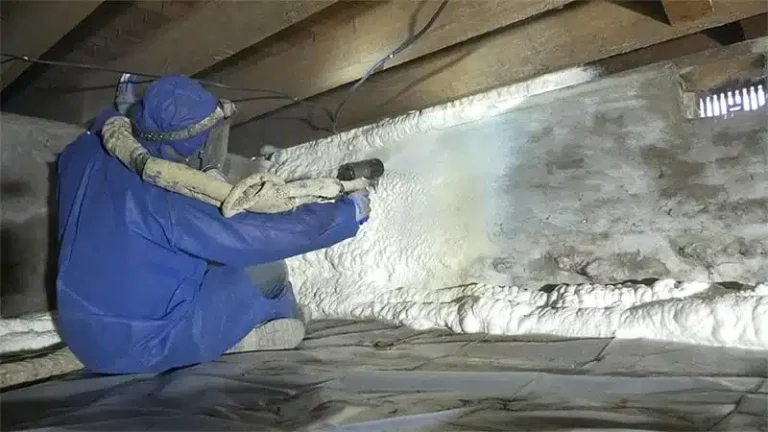
- Apply closed-cell foam to the walls. Foundation walls and the rim joist area get the foam treatment, with any required pest inspection strip left exposed per local code.
- Provide a drying mechanism. Code (IRC R408.3) calls for conditioned air supply or exhaust ventilation, roughly 1 cfm per 50 square feet of crawl space or 50 cfm minimum, and a dehumidifier where conditions call for one.
- Respect combustion safety. Furnaces or water heaters that draw air from the crawl space should never sit inside a sealed space; sealed-combustion units are the right fit.
- Plan for radon where relevant. A radon venting path beneath the liner can be incorporated, and testing confirms results.
Recommended Strategies by Home Situation
| Home Situation | Recommended Approach | Key Notes |
|---|---|---|
| Older raised-floor home with musty odors | Full encapsulation with closed-cell foam on walls | Fix drainage and wood rot before sealing |
| HVAC or ductwork in the crawl space | Wall encapsulation bringing ducts inside the envelope | Protects efficiency and keeps duct air clean |
| Household with asthma or smoke sensitivity | Encapsulation plus verified rim joist sealing | Pairs well with filtration during fire season |
| Seasonal cabin or rental | Wall encapsulation with a drying mechanism | Keeps conditions stable during long vacancies |
| Sloped lot with drainage issues | Water management first, then foam | Foam is never a substitute for grading and guttering |
Common Mistakes That Undermine Results
- Spraying foam over active problems. Foam seals in whatever it covers. Water intrusion and mold get fixed before application, always.
- Skipping the drying mechanism. A sealed space without conditioned air or dehumidification can hold humidity; code requirements exist for a reason.
- Ignoring fire and pest codes. Foam plastics require thermal or ignition barriers in living-adjacent locations, and many jurisdictions require an exposed inspection strip for termites.
- Forgetting the access door. An uninsulated, unsealed hatch undoes the air barrier you just paid for.
Signs You’ve Chosen the Right Approach
- The assessment came before the quote, with moisture readings and drainage documented in writing.
- The scope includes the ground liner, vent sealing, wall foam, and a drying plan, not foam alone.
- Your installer explains code items unprompted: pest strips, ignition barriers, and radon provisions.
- The crew works with respiratory protection and ventilation during application, and re-entry follows full curing. Once cured, the foam is inert.
- Communication stays clear from first visit through post-completion humidity verification.
Talk With Our Oakhurst Crawl Space Team
Supreme Spray Foam Fresno brings the materials, training, and building science this work demands to homeowners in Oakhurst and throughout the Sierra foothills. Our crew assesses your crawl space, corrects moisture issues first, and installs closed-cell spray foam systems built for four-season performance. Call us at (559) 545-0800 or email [email protected] to get started.
Breathe the difference a sealed foundation makes. Reach out today and let our team show you what your crawl space has been doing to your air.
FAQs
Is spray foam in a crawl space safe for my family?
Yes, once it cures. Spray foam cures quickly and becomes completely inert after curing; during application, our crew uses respiratory protection and ventilation, and family re-entry happens after the cure window.
Should foam go on the crawl space walls or the ceiling between floor joists?
For encapsulation, the walls and rim joist get the foam while the floor stays open to the conditioned space, which keeps pipes and ducts protected and mechanical equipment efficient.
Will sealing the crawl space trap moisture?
Not when it is done correctly. A complete system pairs the foam with a sealed ground barrier and an active drying mechanism such as conditioned air supply or a dehumidifier, per IRC R408.3.
Does a sealed crawl space help with radon?
It can help. Proper sealing with an adequate ground barrier supports radon mitigation strategies, and a passive radon vent can be installed beneath the liner where testing indicates a need.
How long does a typical Oakhurst crawl space project take?
Most residential encapsulations are completed within a few working days after the assessment, though the schedule extends if drainage repairs, wood treatment, or mold remediation must happen first.
Sources
- Wikipedia – Crawl space – Encyclopedia entry covering stack effect, crawl space encapsulation, humidity thresholds for mold, and a 2005 Department of Energy study on closed crawl spaces.
- Wikipedia – Spray foam – Reference on spray polyurethane foam R-values, closed-cell versus open-cell properties, vapor barrier performance, and curing safety.
- EPA – Mold – Environmental Protection Agency guidance stating that moisture control is the key to mold control and that mold significantly affects indoor air quality.
- EPA – Indoor Air Quality (IAQ) – EPA resource on time spent indoors, source control, ventilation, filtration, and wildfire smoke impacts on home air.
- PNNL – Unvented, Insulated Crawlspaces – Department of Energy Building America Solution Center technical guide detailing vapor barriers, vent sealing, IRC drying requirements, pest inspection strips, and combustion safety for sealed crawl spaces.