
Crawl space access decides whether a crew can get hoses, lights, and people under your home safely, prep the surfaces, and spray every rim joist and wall evenly. A tight, blocked, or missing opening can lead to missed spots, extra labor, and harder inspections later. Learn more about Crawl Space Spray Foam and how its types, benefits, costs, and installation requirements affect your project.
TL;DR
- Spray foam needs a clean, dry surface and a clear hose path. Both depend on access.
- California’s residential code requires at least 18 x 24 inches for floor access.
- Poor access raises safety risks and slows ventilation after spraying.
- Small or blocked openings can often be fixed, but it adds time and cost.
- The access should stay usable after the job for future inspections.
What Crawl Space Access Means for a Spray Foam Job
Access isn’t just the little door. It’s the opening plus the path to every wall, joist bay, and pipe under your floor.
We check three things: the opening size, the height of the space, and what’s in the way. Ducts, plumbing, old insulation, and stored items can turn a one-day job into a two-day job.
Why Crawl Space Access Matters for Spray Foam Installation
Good access affects nearly every stage of the install. Here’s where it shows up.
Getting Hoses and Equipment Inside
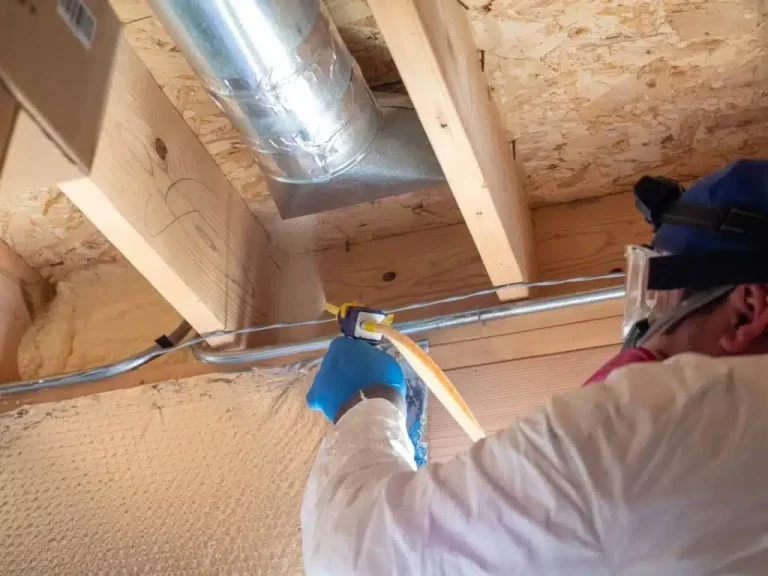
Spray foam travels from a rig outside, through a heated hose, to the installer’s gun. That hose has to reach every corner without kinking. A cramped opening makes the far walls harder to reach, and those spots often end up with thin coverage.
Prep Work and Cleanup
Foam only bonds well to clean, dry surfaces. The U.S. Department of Energy weatherization job aid says rim joists, sill plates, and walls should be cleaned and cleared of debris so spray foam sticks properly. That usually means hauling out old fiberglass and trash, and every bag leaves through the access opening.
Installer Safety
Crawl spaces are tight, dark, and hard to exit quickly. OSHA lists crawl spaces as examples of confined spaces in construction, though residential crawl spaces usually don’t trigger its stricter permit rules. Even so, a clear exit path matters if a worker needs to get out fast.
Ventilation and Re-Entry
Spray foam gives off vapors while it cures, so fans need room at the opening without blocking the way in or out. The EPA advises occupants to stay out during installation and until the foam has cured and the space is ventilated, and notes some manufacturers recommend 24 hours for professional two-part foam. Times vary by product, so ask your installer.
Future Inspections
Plumbers, pest inspectors, and HVAC techs all need a way in later. If the opening gets foamed shut or buried, small leaks or pest problems can grow before anyone spots them.
How Big Does a Crawl Space Access Opening Need to Be?
Code sets the minimum size. In California, the rules sit in Section R408 of the residential code.
| Access Type | Minimum Size |
|---|---|
| Through the floor | 18 x 24 in |
| Through a perimeter wall | 16 x 24 in |
| Areaway (below-grade wall access) | 16 x 24 in |
The 2025 California Residential Code, Section R408 requires access to every under-floor space and bars through-wall access from sitting under a door to the home. Your local building department has the final say on what applies.
These are minimums. A crew in protective gear, dragging a hose and lights, works faster and safer through a bigger opening.
What If Your Crawl Space Access Is Too Small or Blocked?
Many older homes have tiny hatches or none at all. That doesn’t rule out spray foam, but it changes the plan.
Common fixes include:
- Enlarging the hatch. Homeowners on building forums mention this often, though it adds cost.
- Cutting a new access in the floor or foundation wall to code size.
- Spraying from above. For very shallow spaces, some contractors cut strips along the room’s edge, spray the walls below, then replace the flooring.
- Clearing the path by moving stored items, loose cables, or old insulation first.
Each option trades off price, mess, and time, so get them explained before you sign.
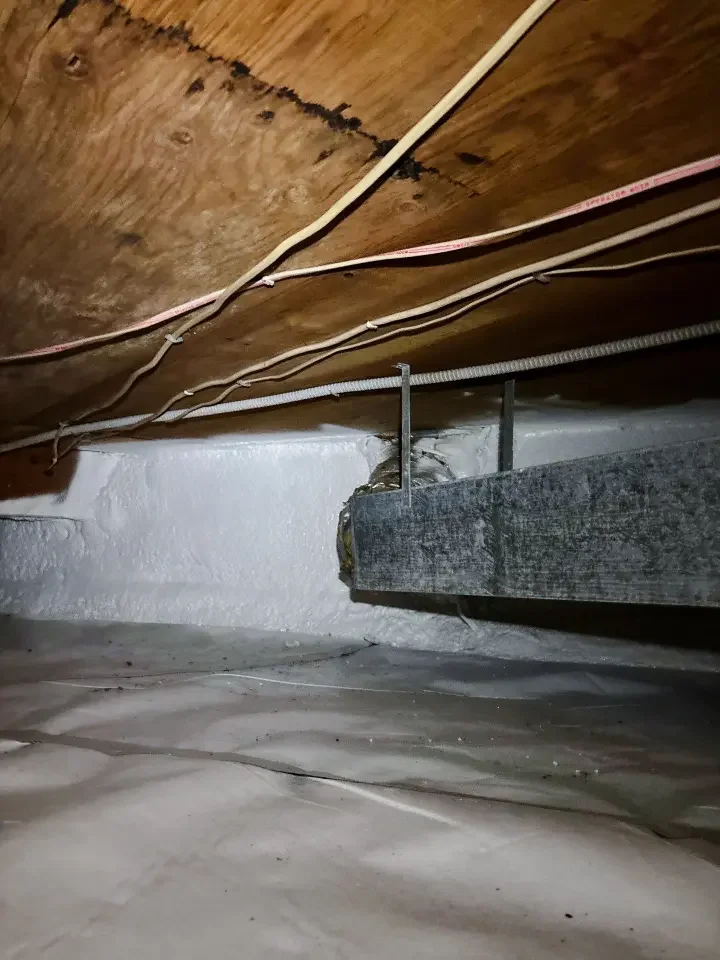
How Access Affects Moisture Control and Air Sealing Solutions
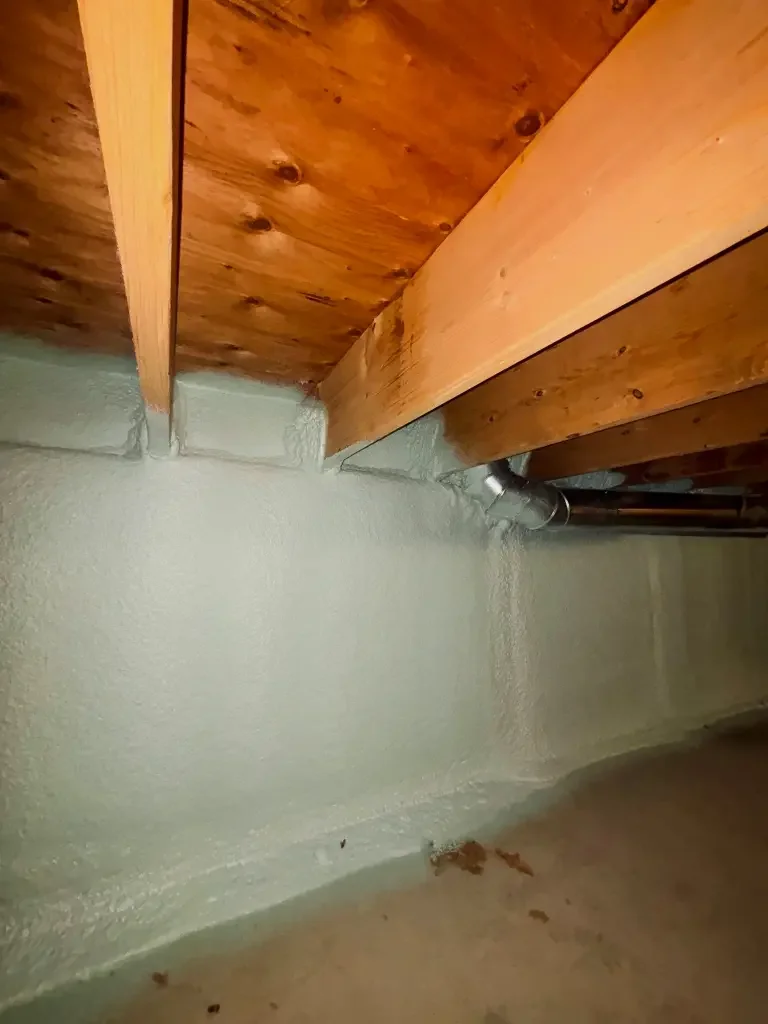
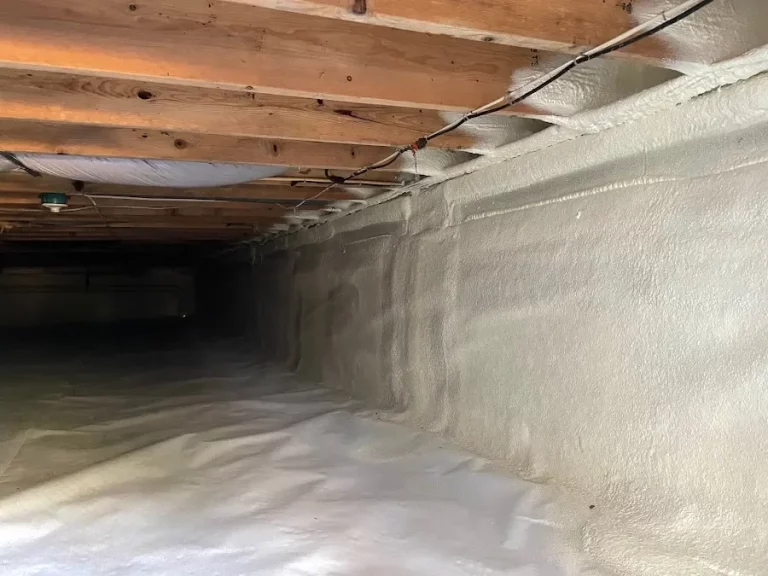
Spray foam is popular in crawl spaces because it seals air leaks and resists moisture. That only works if the crew can reach every gap. Proper access is essential for spray foam insulation in crawl spaces, helping installers reach the areas that need sealing.
The rim joist and pipe, wire, and duct penetrations are the usual leak points. Miss them, and damp ground air keeps slipping in. The DOE job aid also calls for filling penetrations wider than a quarter inch with pest-proof material, using fire-rated material where insulation stays exposed, and leaving a 3-inch termite inspection gap where required. Those details all take working room.
If there’s standing water or an active leak, fix it first. Foam won’t solve a drainage problem, and wet surfaces weaken adhesion.
Crawl Space Preparation Checklist Before Install Day
A little prep saves time and keeps the job on budget. Run through this list a few days ahead.
Clear the area around the access door, inside and out.
Remove stored boxes, tools, and pet items from the crawl space.
Make sure the hatch opens fully and isn’t painted or nailed shut.
Plan for people and pets to leave during spraying and curing.
Ask about fan setup and re-entry time for the foam being used.
Confirm the access will be sealed but still usable afterward.
Get Your Crawl Space Checked Before You Commit
Not sure your crawl space access will work for spray foam? We’ll check the opening, the space height, and what needs clearing, then walk you through your options.
Call Supreme Spray Foam Fresno at (559) 545-0800 or email [email protected] to set up a crawl space check in Fresno.
FAQs
Can you spray foam a crawl space with no access?
Sometimes. A code-sized opening can be cut, or installers may spray through strips cut in the floor. Both add cost.
How long until I can go back to my house after spray foam?
It depends on the product. Some manufacturers recommend about 24 hours for professional two-part foam. Your installer should give you the exact time.
Does a crawl space need an outside access door?
No. Code requires access but doesn’t require it to be outside. It can be through the floor or a perimeter wall if it meets the minimum size.
Should the crawl space access door be insulated?
If your crawl space walls are sealed and insulated, yes. The door is part of that boundary, and leaving it bare lets air leak around the rest of the work.
Sources
- 2025 California Residential Code, Section R408 – Access sizes and placement.
- EPA – Vacating and re-entry timing.
- OSHA – Crawl spaces as confined spaces in construction.
- U.S. Department of Energy – Surface prep, sealing, and termite gap.

- How Can Homeowners Prepare a Crawl Space for Spray Foam Installation in Parkwood, CA? - October 15, 2026
- Why Does Crawl Space Access Matter When Installing Spray Foam Insulation? - October 15, 2026
- What Makes Crawl Space Spray Foam a Choice for Better Air Quality in Oakhurst, CA? - September 22, 2026