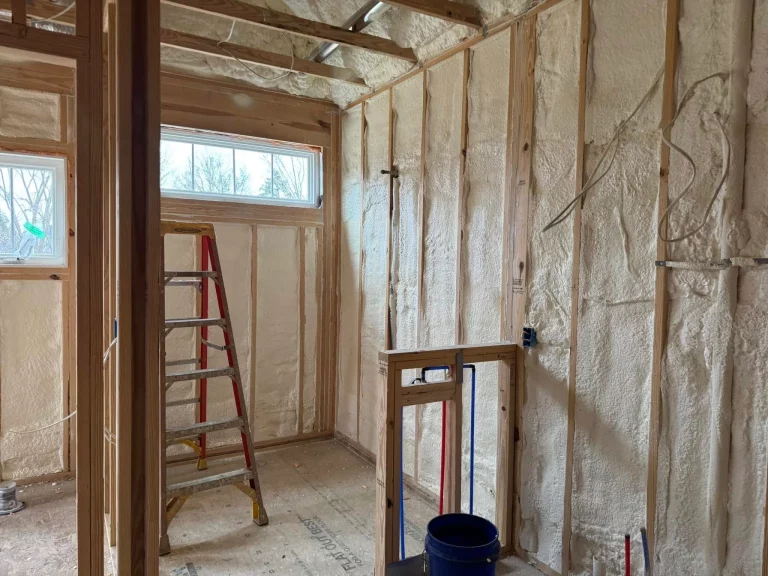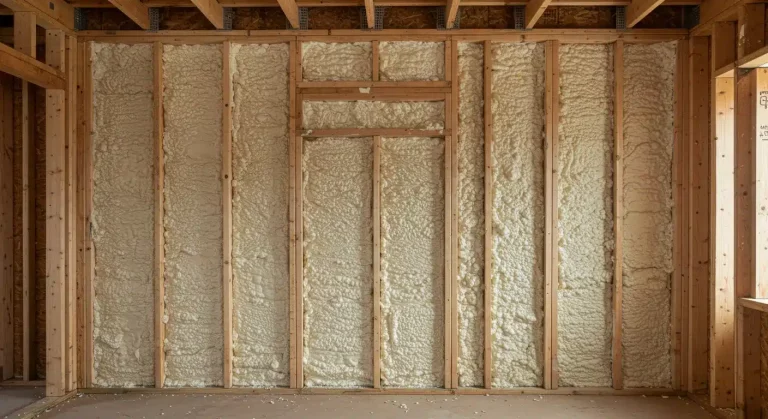

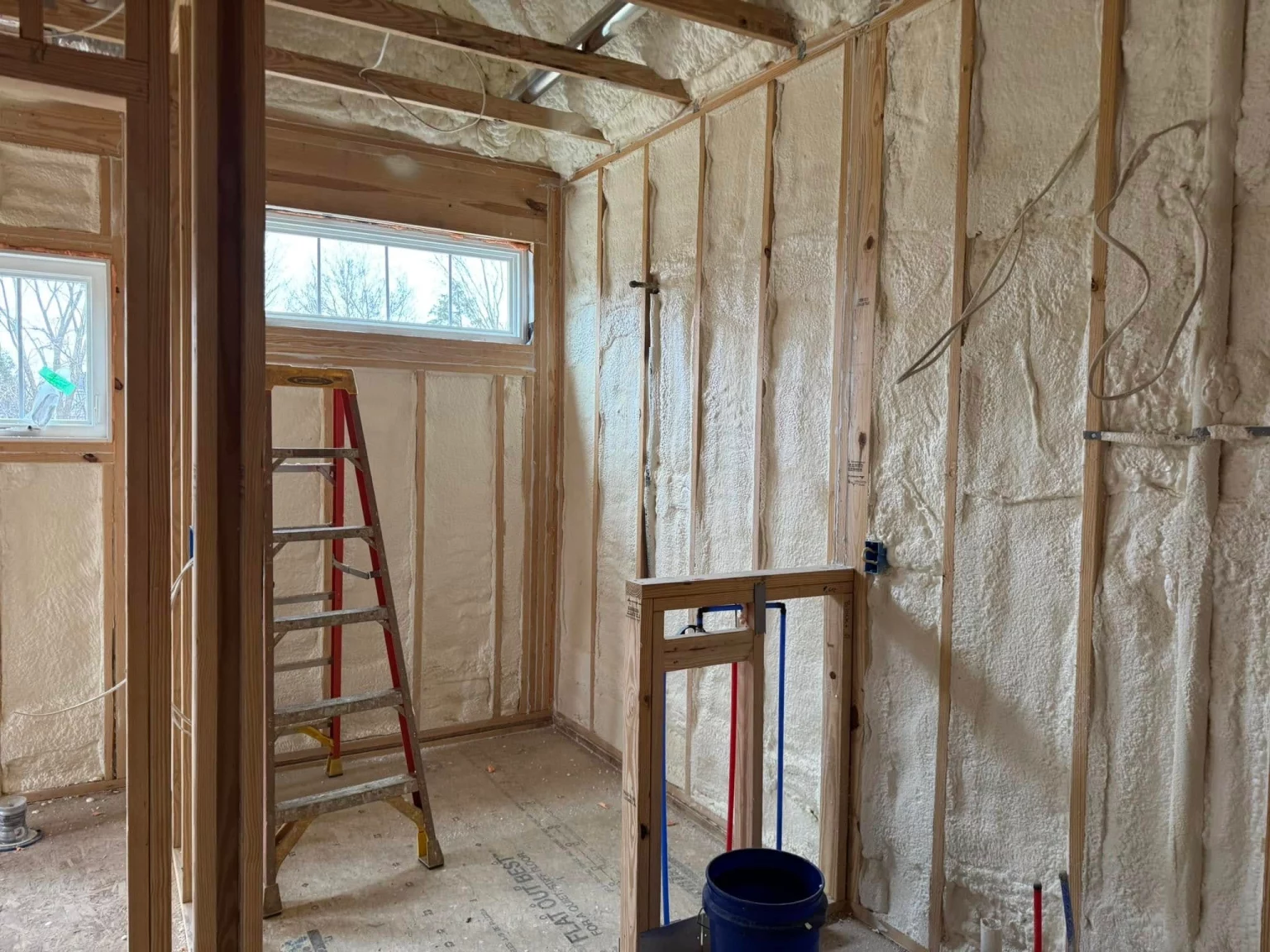
Properly installed spray foam insulation should last for decades without a scheduled repair date, often matching the service life of the building itself. Open-cell foam has shown no measurable shrinkage or R-value loss in twenty-year tests, while closed-cell foam loses some thermal performance gradually as its blowing agent diffuses out, yet it remains functional over a 50 to 100 year building life. In practice, spray foam rarely needs repair because of age alone. Spray Foam Insulation Repair is almost always triggered by moisture intrusion, application errors, physical damage, or pest activity, all of which are manageable with routine inspections. For homeowners in Ahwahnee, a rural Sierra Nevada foothill community at 2,326 feet elevation in Madera County, we recommend a professional inspection every 3 to 5 years, plus checks after roof work, leaks, or wildlife intrusion.
TL;DR
- Spray foam has no fixed expiration date. Open-cell foam showed no reduction in insulating value over twenty-year tests, while closed-cell foam ages on a slow, stabilizing curve.
- Closed-cell spray foam can lose up to 27.5% of its initial R-value in laboratory aging tests as blowing agents escape and moisture is absorbed, according to U.S. Army Engineer Research and Development Center findings.
- Most repairs trace back to installation defects, trapped moisture, or physical damage, not foam age.
- Inspect every 3 to 5 years, and immediately after roof repairs, storms, or pest activity.
- Rising energy bills are an early warning sign. DOE-cited studies attribute up to 40% of a home’s energy loss to air infiltration, which failed foam no longer blocks.
- ENERGY STAR recommends attic insulation between R-49 and R-60 and floor insulation between R-19 and R-30 for the climate zones covering Central California and its foothills.
- Ahwahnee’s housing stock is more than 80% owner-occupied, which favors long-life insulation strategies over short-term fixes.
What Determines How Long Spray Foam Lasts
Four factors drive spray foam longevity more than the calendar does:
- Installation quality. Spray foam is a two-part chemical product that expands 30 to 60 times its liquid volume and must be mixed and applied under the right conditions. Foam applied incorrectly or in damp spaces can trap moisture against wood framing and contribute to structural damage, a documented failure mode in the Wikipedia spray foam overview.
- Foam type. Open-cell and closed-cell foam age differently because closed-cell foam relies on trapped low-conductivity gases for part of its performance.
- Moisture exposure. Research on long-term degradation found that moisture absorption is one of the two major causes of R-value loss in closed-cell spray polyurethane foam.
- Physical protection. Puncture damage, rodent chewing, and rework after plumbing or electrical projects break the airtight seal that makes foam effective.
Expected Service Life by Foam Type
| Foam Type | R-Value Per Inch | Aging Behavior | Common Repair Triggers | Best Applications |
|---|---|---|---|---|
| Open-cell (half-pound) | ~R-3.6 to R-3.8 | Water-blown, contains no trapped gases; twenty-year tests show no shrinkage or R-value loss | Puncture damage, pest intrusion, concealed leaks | Interior walls, attic assemblies, sound dampening |
| Closed-cell (two-pound) | ~R-5.1 to R-6.5 | Blowing agent slowly diffuses out; R-value declines on an exponential curve that stabilizes over time | Moisture absorption, substrate failure, roof leaks | Crawl spaces, raised floors, metal buildings, barns, damp-prone cavities |
The industry rates closed-cell foam using the Long Term Thermal Resistance method, a 15-year weighted average that reflects how the R-value settles in the first years after installation. That number describes thermal drift, not the end of service life. Buildings themselves are designed for 50 to 100 years, and closed-cell foam that stays dry and undamaged keeps performing within that window, according to the Wikipedia R-value reference. For proper installation and long-term performance, a professional insulation contractor can help assess your insulation needs.
Why Foothill Homes in Ahwahnee Age Differently
Ahwahnee Home Insulation Services are especially important in this western foothill community, which sits at 2,326 feet in the Sierra Nevada. The 2020 census counted just under 2,300 residents living entirely in rural areas, with 80.3% of homes owner-occupied, per the Wikipedia profile of Ahwahnee, California. That combination shapes insulation wear in three ways:
- Wide temperature swings between hot foothill summers and cool winters put continuous expansion and contraction stress on the building envelope.
- Rural structures such as barns, workshops, well houses, and detached garages often lack conditioned interiors, making closed-cell foam the better choice because it doubles as a vapor barrier and air barrier at adequate thickness.
- Older ranch housing stock frequently hides retrofit cavities where previous insulation failed, so moisture events can go unnoticed for seasons before foam damage becomes visible.
Warning Signs Your Spray Foam Needs Repair
Watch for these indicators between scheduled inspections:
- Drafts near walls or attic hatches, or energy bills that climb without a rate change
- Visible gaps, shrinkage, or foam pulling away from studs or roof decking
- Musty odor or discoloration, which suggests moisture trapped behind the foam
- Water stains on ceilings or walls adjacent to roof-deck applications
- Evidence of rodents or other wildlife in the attic or crawl space
- Rooms that heat or cool unevenly compared with the rest of the house
Recommended Inspection and Repair Schedule
| Interval or Event | What to Check | Likely Cause of a Problem | Action Threshold | Typical Fix and Who Handles It |
|---|---|---|---|---|
| Annually (self-check) | Energy bills, visible foam, attic odor | Rising bills point to shrinkage gaps or compressed foam, while a sour or chemical odor points to degrading foam or hidden moisture | Any unexplained change in bills or smell | Inspect attic and walls yourself, note findings, and schedule a professional visit if anything looks or smells off |
| Every 3 to 5 years | Professional visual and moisture inspection (moisture meter on sheathing and framing) | Gaps along rafters or joists come from natural shrinkage, and damp or discolored sheathing points to a roof or flashing leak | Gaps, damp sheathing, discoloration, or wood moisture content of 20 percent or higher | Small gaps can be sealed with compatible caulk or one-part foam by a careful homeowner, while damp areas need a roofer plus an insulation contractor |
| After roof work | Foam adhesion at the roof deck | Separation or compression from vibration, foot traffic, or heat during the roofing job | Any separation or compression | Remove and re-spray affected areas, handled by a certified SPF contractor |
| After leaks or heavy storm seasons | Moisture survey of cavities and crawl space using a moisture meter or borescope | Standing water, high humidity, or storm-driven rain entering through weak seals | Elevated moisture readings near foam, or crawl space humidity sustained above 70 percent | Fix the leak first, dry the cavity fully, then assess removal with a roofer plus an insulation contractor |
| At the 10 to 15 year mark | Thermal imaging of the building envelope, often paired with a blower door test | Cold spots on interior walls come from failed seals or thermal bridging | Cold spots or thermal bridging at seals | Re-spray failed seals with a certified SPF contractor, and pair the work with air sealing . |
| Any time odor persists | Foam condition inside closed cavities | Off-ratio foam applied during the original install can degrade and release odor over time | Chemical odor that does not fade within days | Full testing, removal, and replacement by a certified SPF contractor, such as one certified through the Spray Polyurethane Foam Alliance |
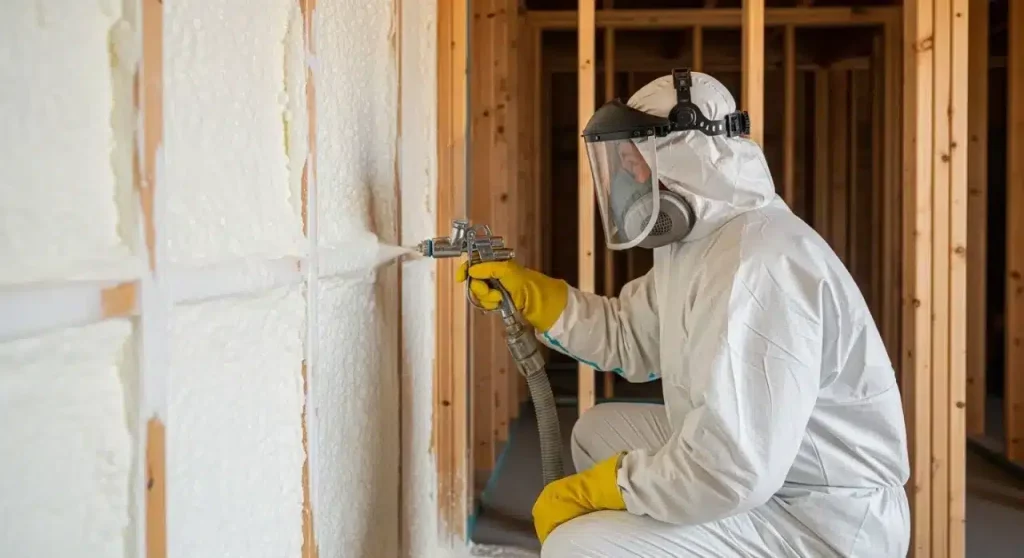
Thermal imaging identifies thermal bridges and inconsistent insulation coverage, making it a practical way to verify the envelope decades after installation.
Recommendations by Property Type
- Owner-occupied primary homes: Pair open-cell foam in interior walls and ceilings with closed-cell foam wherever moisture is possible. Ahwahnee’s high ownership rate means insulation decisions pay off over decades.
- Older ranch homes: Prioritize closed-cell foam in crawl spaces and raised floors. ENERGY STAR’s recommended insulation R-values call for floor insulation between R-19 and R-30 and attic levels between R-49 and R-60 across the relevant California zones.
- Metal barns and outbuildings: Use closed-cell foam exclusively, since it functions as both vapor barrier and air barrier and tolerates unconditioned spaces.
- New construction: Specify foam types and target R-values in writing before work begins, and verify the sealed envelope before drywall closes the walls.
How to Evaluate a Spray Foam Contractor
Strong providers make longevity verifiable rather than promised. The Federal Trade Commission’s R-Value Rule legally requires installers, retailers, and manufacturers to disclose R-value information based on standard tests, so a contractor should provide tested numbers without hesitation. Look for documented installer training, since national application standards elsewhere require licensed installers for closed-cell work, and expect a written scope naming foam type, thickness, and target R-value. The best contractors also offer post-installation verification, explain how they handle moisture conditions on spray day, and give you a clear path for future inspections and spray foam repairs.
Get a Long-Lasting Spray Foam Assessment in Ahwahnee
At Supreme Spray Foam Fresno, we help Ahwahnee homeowners protect their insulation investment for the long haul. Our team evaluates existing foam, identifies moisture risks before they become repairs, and installs open-cell and closed-cell systems built to hold their seal for decades. Call us at (559) 545-0800 or email [email protected] to get started.
The right foam, installed correctly the first time, is the difference between insulation that lasts the life of your home and insulation that needs repairs in five years.
Frequently Asked Questions
How long should spray foam insulation last before it needs repair?
Properly installed foam should perform for decades without repair. Open-cell foam has shown no insulating-value loss over twenty-year tests, and closed-cell foam remains serviceable across a 50 to 100 year building life.
Does closed-cell spray foam lose R-value over time?
Yes, gradually. Lab aging research found closed-cell polyurethane can lose up to 27.5% of initial R-value as blowing agent diffuses out and moisture is absorbed, though the decline stabilizes rather than continuing indefinitely.
How often should spray foam insulation be inspected?
Schedule a professional inspection every 3 to 5 years, and inspect sooner after roof repairs, leaks, storms, or signs of pest activity.
Which foam type is better for homes in Ahwahnee, CA?
Closed-cell foam suits crawl spaces, raised floors, and outbuildings because it acts as a vapor barrier and air barrier. Open-cell foam works well for interior walls and attic assemblies in conditioned space.
What are the first signs that spray foam needs repair?
Drafts, rising energy bills, gaps or shrinkage away from framing, musty odors, and water stains are the most common early indicators that the air seal has been compromised.
Sources
- Wikipedia – Spray Foam – Reference overview of spray polyurethane foam types, R-values per inch, air-sealing properties, and failure risks when foam is applied incorrectly or in damp spaces.
- Wikipedia – Ahwahnee, California – Census and geographic profile of Ahwahnee, including its Sierra Nevada foothill location, 2,326-foot elevation, and owner-occupied rural housing data.
- Wikipedia – R-value (Insulation) – Technical reference covering insulation aging, Long Term Thermal Resistance rating methods, and U.S. Army research on long-term R-value degradation in closed-cell polyurethane foam.
- ENERGY STAR – Recommended Home Insulation R-Values – Federal guidance on climate-zone-based insulation targets for attics, walls, and floors, based on the 2021 International Energy Conservation Code.
- Federal Trade Commission – R-Value Rule – Official summary of 16 CFR 460, which requires insulation manufacturers, installers, and retailers to disclose tested R-value information to consumers.