
If your floors feel cold in winter, if your air conditioner fights all summer to keep up, or if a musty smell drifts up from below, your crawl space is probably talking to you. In Fresno and across the Central Valley, thousands of homes sit on vented crawl spaces that pull in hot, dusty, sometimes damp air and push it straight into your living space. Crawl space spray foam changes that equation by sealing and insulating the one part of your home most owners never see.
We’ve spent years working under homes in this valley, and we can tell you the crawl space is the most underrated area in the whole building. Insulating it well, and doing it in the right order, protects your floors, your air quality, your ductwork, and your monthly bills at the same time.
This guide is the reference we wish every homeowner had before scheduling anything.
What Crawl Space Spray Foam Is, and Why It Matters
A crawl space is the shallow area between the ground and your home’s floor. Older building practice kept these spaces vented to outside air, with fiberglass batts stuffed between the floor joists above. Spray polyurethane foam, or SPF, replaces that approach with something better.
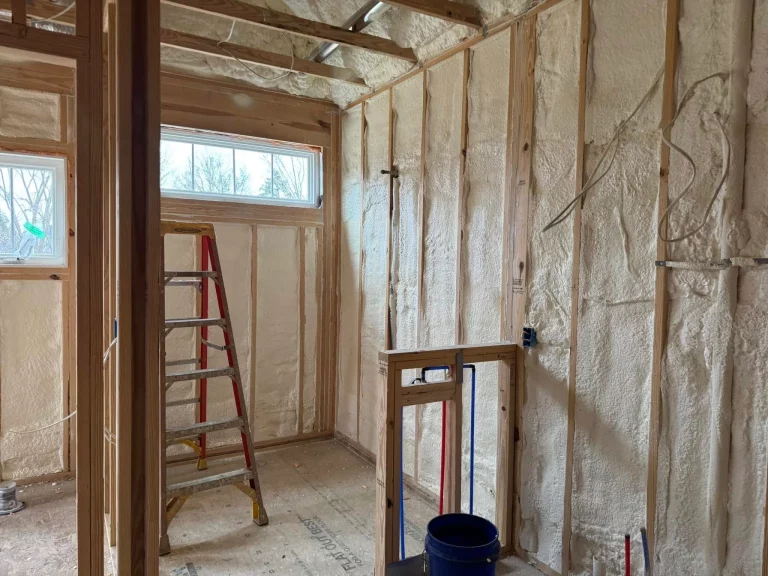
Spray foam starts as two liquid chemicals that mix at the spray gun and react on contact. According to Wikipedia’s spray foam reference, the blended material expands to 30 to 60 times its liquid volume, then hardens into a lightweight plastic that grips wood, concrete, and block. That expansion is the whole point. It fills the gaps, cracks, and odd corners where every other insulation simply stops.
Done correctly, a foam-insulated crawl space does three jobs at once. The U.S. Department of Energy’s Crawlspace Insulation Technology Fact Sheet, prepared with Oak Ridge National Laboratory, names the keys to an effective crawl space: moisture control, airtight construction, and complete insulation coverage. Spray foam is the only common material that delivers air sealing and high R-value in a single layer.
But foam is not magic. It works as the last step in a system, and skipping the earlier steps is where most failed projects begin. We’ll walk through that system in order.
The Two Job Sites: Walls vs. Floor
Before choosing a product, you need to choose a strategy. There are two ways to insulate a crawl space, and they solve different problems.
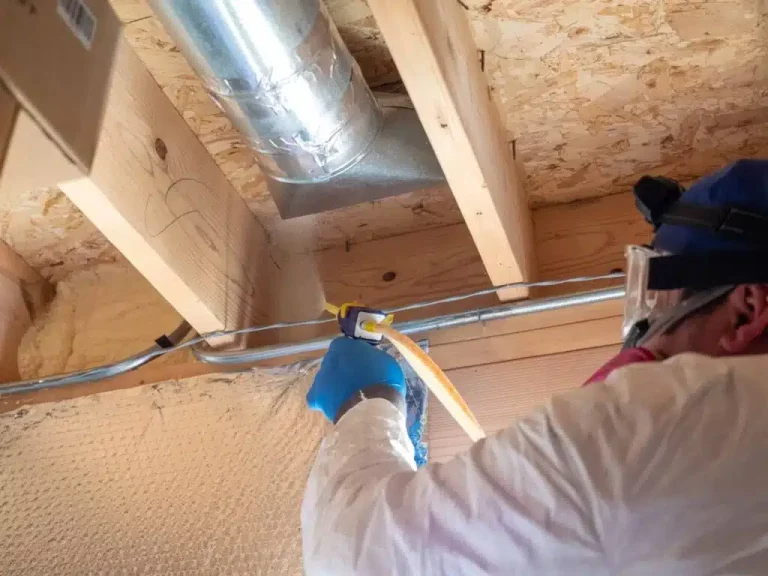
Option 1: Insulate the floor above a vented crawl space. Foam goes between the floor joists, against the underside of your subfloor. Vents stay open. This suits homes where the crawl space stays dry, and the owner wants to keep it outside the home’s air envelope.
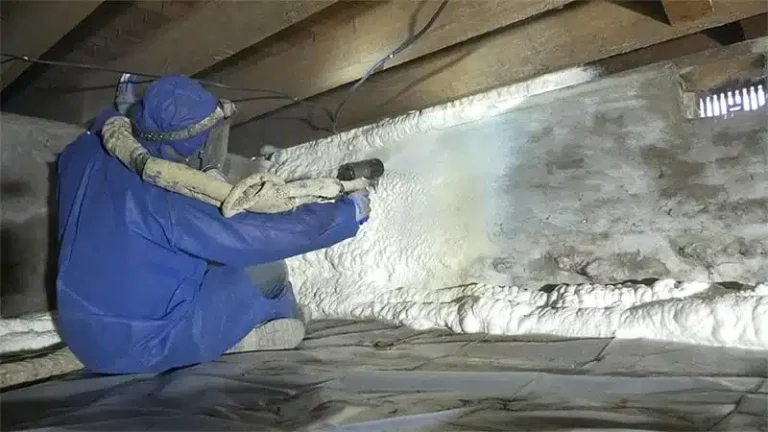
Option 2: Seal and condition the crawl space. Foam goes on the foundation walls, vents get sealed, and the space under your home behaves like a short basement. The DOE fact sheet favors this approach for most situations, and lists the reasons: pipes and ducts sit inside the conditioned volume, so they stop wasting energy and stop risking freeze damage in cold snaps. There’s less insulation to buy and install, roughly 400 square feet of wall for a 1,000-square-foot crawl space with three-foot walls, and less air sealing needed between the house and the space below it.
| Factor | Floor (Vented Crawl Space) | Walls (Sealed, Conditioned) |
|---|---|---|
| Where foam goes | Underside of subfloor, between joists | Foundation walls and rim joist |
| Vents | Stay open | Sealed |
| Ducts and pipes | Exposed, need their own insulation | Inside conditioned space |
| Moisture behavior | Ground moisture still migrates through | Ground vapor barrier plus sealed walls |
| Pipes in winter | Freeze risk if insulation has voids | Protected |
| Best fit | Dry, tall, vented spaces you don’t want to change | Most retrofit projects, damp or dusty spaces |
For most Fresno homes we inspect, the wall approach wins, mostly because of our summers. Hot air holds moisture, and the DOE fact sheet explains the trap: a crawl space held at 65°F by the ground can sit at 90% relative humidity, while 90°F outdoor air at 60% humidity carries a dew point near 74°F. Ventilating with that summer air actually adds moisture, which then condenses on cool joists and ducts. Sealing the space cuts that cycle off entirely.
Types of Crawl Space Spray Foam: Open Cell vs Closed Cell
All spray foam is polyurethane, but the two types behave very differently, and the difference matters more in a crawl space than anywhere else in the house.
Closed cell foam is dense and rigid. Each tiny cell is sealed, so the cured foam blocks both air and water vapor. Wikipedia’s spray foam overview lists its long-term R-value at roughly R-5.1 to R-6 per inch, the highest of any insulation commonly sprayed in homes. Two inches lands near R-10 to R-12, which hits many wall targets in a single pass.
Open cell foam is soft and spongy, nicknamed half-pound foam. It runs about R-3.8 per inch, and its open cells pass vapor straight through. Thin layers are not a vapor barrier at all. It has real strengths, mainly sound dampening and full cavities at a lighter density, but it’s rated for interior applications only.
| Property | Closed Cell | Open Cell |
|---|---|---|
| R-value per inch | R-5.1 to R-6 | About R-3.8 |
| Texture | Rigid, hard to the touch | Soft, sponge-like |
| Water vapor | Blocks it at full thickness | Passes through |
| Air sealing | Excellent | Excellent |
| Below-grade walls | Standard choice | Not rated for it |
| Typical crawl space use | Walls, rim joists, subfloor | Interior sound control, rare below grade |
In a space that touches the ground, closed cell is our default almost every time. It tolerates occasional dampness, adds a little stiffness to the structure, and reaches code-level R-values in thin passes, which matters when your wall is only three feet tall.
One more detail worth knowing: the chemicals inside the foam have changed for the better. Older closed cell products used blowing agents with high global warming potential, and newer HFO-based formulations have replaced them across most of the market.
Key Takeaways
- Closed cell foam, at R-5.1 to R-6 per inch, is the standard choice for crawl space walls and subfloors.
- Open cell foam passes moisture vapor, so it’s rarely right for a ground-contact space.
- Sealing the walls and vents turns the crawl space into a conditioned area that protects ducts and pipes.
Benefits of Crawl Space Spray Foam
The payoffs show up in your bills, your comfort, and the health of the building itself. Here’s what the evidence and our field experience both support.
Real energy savings. The EPA estimates, according to ENERGY STAR, that homeowners who air seal and add insulation in attics, floors over crawl spaces, and basements save an average of 15% on heating and cooling costs, or 11% on total energy costs. ENERGY STAR also reports that 9 out of 10 U.S. homes are under-insulated, and that a typical home’s combined leaks equal leaving a window open every day of the year. The crawl space is often the largest of those leaks.
Moisture and mold control. Mold needs moisture, nothing more. As the EPA’s Brief Guide to Mold, Moisture and Your Home puts it, the key to mold control is moisture control. Sealing a crawl space removes the humid summer air that condenses on joists, and closed-cell foam gives moisture nowhere to settle on the walls it covers.
Comfort you can feel. Warm floors in February, fewer drafts at the baseboard, less dust drifting up through the floor. Homes over sealed crawl spaces often need shorter air conditioner cycles in July, because the floor system stops absorbing heat from outside air.
Protected ductwork and plumbing. With the wall approach, your ducts and pipes live inside the building envelope. Ducts stop leaking cold air into a 100-degree space, and supply lines stop worrying anyone during a freeze.
Cleaner air indoors. Air moves upward through a house. A sealed, insulated floor system means the air reaching your living room stopped passing over bare soil first.
Crawl Space Spray Foam Costs: What Drives the Price
Every project is priced from a site inspection, so instead of guessing at numbers, learn the variables a contractor measures. Understanding these puts you in control of the quote.
| Cost Driver | What It Means for Your Project |
|---|---|
| Square footage and wall height | More surface area needs more material and time |
| Clearance height | Tight spaces slow every step, from prep to spraying |
| Surface preparation | Removing old batts, debris, or junk left by past trades |
| Moisture repairs | Fixing drainage, grading, or leaks before foam goes down |
| Mold remediation | Active growth must be cleaned and dried first |
| Target R-value | Zone targets set the required foam thickness |
| Duct and pipe layout | Obstacles between joists change application patterns |
The order of operations matters most. Foam installed over damp wood, active mold, or a wet crawl space seals the problem in and hides it. Proper sequencing: moisture fixes first, foam last- protects you from paying twice.
On the return side, weigh the energy savings above, the lifespan of the material, which is measured in decades, and the protection your ducts, pipes, and floor framing get. Incentives can shift the math too. According to ENERGY STAR’s insulation tax credit page, a federal credit applies to qualifying insulation products, including expanding spray foam, purchased and installed between January 2023 and the end of 2025, and the agency maintains a rebate finder for current utility, state, and local offers. Incentive programs change often, so check what’s live before you schedule.
The reliable way to learn your number is a crawl space assessment.
Crawl Space Spray Foam Installation, Step by Step
Good installation is a sequence, and each step protects the one after it. Here’s the process we follow under Fresno homes.
Step 1: Inspect and audit moisture. We check standing water, staining on joists, insulation that has fallen, vent condition, and relative humidity. The EPA guidance is blunt: if materials get wet, dry them within 24 to 48 hours or mold can start. Anything damp gets resolved before foam touches it.
Step 2: Fix water outside first. The DOE fact sheet calls for gutters that carry water away, and soil sloped away from the foundation for at least 5 feet at a 5% grade. Foam never fixes a grading problem, but grading problems love to ruin foam jobs.
Expert Tip: Check the crawl space a few days after a rain, or after irrigation season starts. Persistent damp spots tell you where the water is coming from before you ever open a bucket of foam.
Step 3: Clear and remediate. Old batts, wood scraps, and vapor barrier fragments come out. If mold covers more than about a 3-foot by 3-foot patch, EPA guidance recommends professional remediation rather than a DIY scrub. A musty smell with no visible growth usually points to hidden moisture, which we track before proceeding.
Step 4: Handle safety items. Sealing a space changes how air moves. If your furnace or water heater sits in the crawl space, the DOE requires sealed-combustion, power-vented units before you close it up. In high-radon areas, test before sealing and plan mitigation pipe while everything is open.
Step 5: Lay the ground vapor barrier. Heavy 6-mil polyethylene goes across the entire floor, with seams overlapped 12 inches and taped, and the material run 6 inches up the walls, per the DOE fact sheet. This layer stops soil moisture from feeding the space you just sealed.
Step 6: Air seal, then close vents. Gaps at pipe penetrations, wire holes, and the rim joist get sealed. Caulk handles gaps a quarter inch or smaller; foam fills anything larger. Foundation vents get sealed shut only after the space is dry.
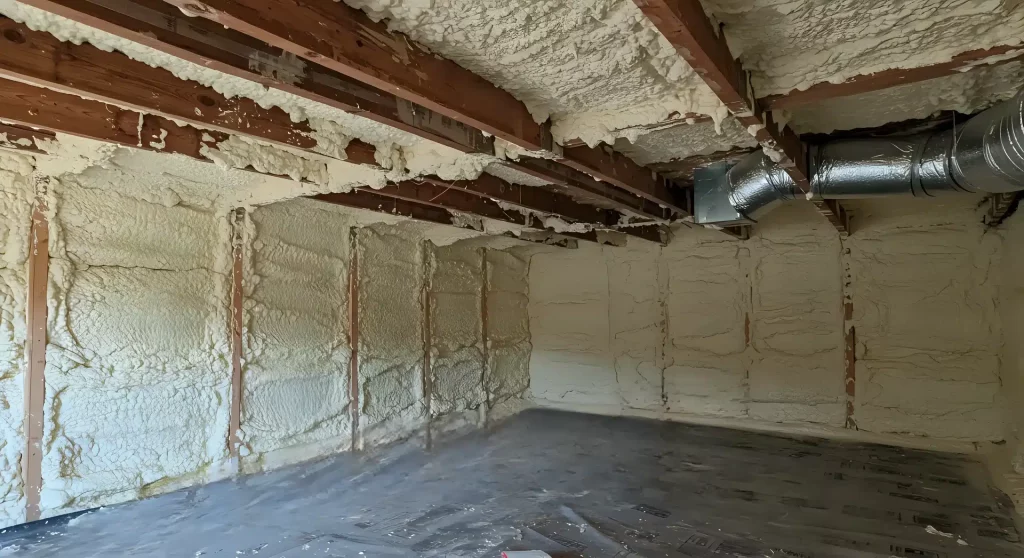
Step 7: Spray the foam. On walls, closed-cell foam goes up in passes to the target R-value. For perspective, ENERGY STAR’s recommended R-values, based on the 2021 International Energy Conservation Code, call for R-5 on crawl space walls in climate zone 3, which covers Fresno, and R-19 for floors over unconditioned spaces in the same zone. Closed cell at R-6 per inch means a wall target in about one inch and a floor target in three to four inches. The rim joist gets its own pass, since it’s the leakiest band in the building.
Step 8: Finish and verify. The access door gets an airtight, insulated fit. We leave a 2- to 4-inch inspection strip at the top of foam near sill plates where termite checks are required, a detail straight from the DOE guide. Final checks include moisture readings and a visual pass on coverage, because complete coverage is the whole point.
Expert Tip: Ask to see the space before and after, and keep the photos. Documented thickness and coverage protect you if the home sells later or a pest inspector has questions.
Key Takeaways
- Fix water, drainage, and mold before any foam is sprayed, or the foam hides the problem.
- Ground vapor barrier, vent sealing, and air sealing come before insulation.
- Zone 3 targets are R-5 on crawl space walls and R-19 for floors, which closed-cell spray foam reaches in thin passes.
Common Challenges and How to Solve Them
Every crawl space has a personality. These are the problems we run into most, and the fixes that hold up.
Low clearance. Some spaces offer barely enough room to roll over. It slows prep and spraying, but it doesn’t rule the job out. It just changes the equipment and the schedule.
Wet soil or seepage. If water enters the space regularly, drainage and grading come first, and sometimes a sump pump. Foam over a wet crawl space is money spent twice.
Ducts in the crawl space. In a sealed design, ducts end up inside the envelope, which is the better outcome. But joints and boots should be sealed first so the ducts stop leaking into the space you’re conditioning.
Old insulation and debris. Fallen batts and construction scraps hold moisture against wood and block access. Full removal is non-negotiable in our process.
Pests and termites. Foam can hide termite shelter tubes from view. That’s why the DOE-recommended inspection gap at the top of the wall matters, and why we coordinate with pest control on homes with a termite history.
Poor workmanship. Spray foam is chemistry, and chemistry demands the right mix ratio, temperature, and substrate conditions. Off-ratio foam can stay soft, shrink, or smell. This is the strongest argument for a trained, certified crew over a general handyman.
Expert Tip: Foam needs dry, warm-enough surfaces to cure correctly. If a contractor wants to spray over damp wood or in a soaked crawl space, stop the job and fix the water first.
Measuring Success and Long-Term ROI
How do you know the job worked? Four checks tell you.
Humidity readings. Put an inexpensive hygrometer in the crawl space. The EPA recommends keeping indoor humidity below 60%, and ideally between 30% and 50%. A sealed, foamed space should sit in that band through a Central Valley summer.
Thermal checks. An infrared camera on a hot afternoon shows whether your floor system is holding steady temperatures or still bleeding.
Comfort and runtime. Notice your floors, your baseboards, and how long the air conditioner runs on a 100-degree day. Shorter cycles and even floors are the signature of a job done right.
Utility bills, compared honestly. Pair the same months year over year, and remember that rate changes muddy the picture. The EPA’s average estimate of 15% heating and cooling savings from air sealing plus insulation gives you a realistic expectation, not a promise.
Keep your paperwork, including product data sheets and photos. They matter at resale, and they answer inspectors who are still learning to evaluate foamed crawl spaces.
Putting Your Crawl Space Spray Foam Plan into Action
You now have the full picture: how the two approaches differ, why closed cell dominates below grade, what the energy and moisture benefits really are, which cost drivers move your quote, and the correct order of installation. The single biggest lesson from our years under Fresno homes is that sequence beats product. A mid-grade foam job done in the right order outperforms a premium product sprayed over a wet, open, leaking space.
Use this guide as your checklist when you get quotes. Ask contractors how they’ll handle drainage, vapor barrier, vents, and combustion safety before they talk about R-values. If you want a second opinion on your crawl space, Supreme Spray Foam Fresno is glad to take a look and walk you through what we find.
Need Expert Guidance?
A crawl space is hard to judge from a doorway, and honest answers start with a real inspection. If you’d like our team to evaluate your space, explain your options, and give you a clear, no-pressure assessment, reach out anytime. Call us at (559) 545-0800 or email [email protected]. Supreme Spray Foam Fresno serves homeowners throughout Fresno and the Central Valley, and we’re happy to answer questions even if you’re still deciding. Your floors, your air, and your utility bills will thank you for taking the first step.
Frequently Asked Questions About Crawl Space Spray Foam
Is closed-cell spray foam safe to live above?
Yes, once cured. Uncured foam emits fumes during application, so occupants stay out and the crew wears respirators, and the cured material is inert. Reputable crews ventilate thoroughly and confirm full cure before calling the job done.
Should I close my crawl space vents?
In most sealed, conditioned designs, yes. The DOE notes that closing vents after the space is dry, combined with moisture control and good drainage, is the better option in most homes, since summer ventilation often adds moisture rather than removing it.
How thick should crawl space spray foam be?
It depends on the target. In climate zone 3, which includes Fresno, crawl space walls call for R-5, about one inch of closed-cell, while floors over unconditioned spaces call for R-19, roughly three to four inches at R-6 per inch.
Do I still need a vapor barrier if I spray foam the walls?
Yes. Foam insulates and air-seals, but a sealed ground cover is what stops soil moisture from entering the space. The two layers do different jobs, and the system needs both.
How long does installation take?
Most residential crawl spaces take one to two days, with prep work, moisture repairs, or remediation adding time when needed. A proper inspection produces a realistic schedule before work starts.
Will foam hide mold or termite problems?
Foam covers surfaces, which is why inspection gaps and pre-work checks matter. Mold gets remediated first, and the DOE-recommended inspection strip at the top of foam walls keeps termite checks possible.
Sources
- U.S. Department of Energy, Crawlspace Insulation Technology Fact Sheet – DOE guidance prepared with Oak Ridge National Laboratory and Southface covering water management, wall vs floor insulation, vapor barriers, radon, and combustion safety for crawl spaces.
- EPA, A Brief Guide to Mold, Moisture and Your Home – Federal guidance on mold prevention, the 24-48 hour drying rule, humidity targets, and remediation thresholds.
- Wikipedia, Spray Foam – Reference overview of spray polyurethane foam chemistry, open cell vs closed cell R-values, applications, and health and safety considerations.