
Proper commercial insulation is one of the most impactful investments you can make for your building’s HVAC system. When your walls, ceilings, and floors are properly insulated, your heating and cooling equipment works significantly less to maintain comfortable temperatures. This reduced workload translates directly into fewer repairs, lower energy bills, and a longer equipment lifespan Department of Energy – Insulation Fact Sheet. For business owners in Fresno and the Central Valley, where temperature extremes are common year-round, commercial insulation services provide essential protection for your HVAC investment.
Our professionals at Supreme Spray Foam Fresno specialize in spray foam insulation solutions designed specifically for commercial properties. We understand that HVAC replacement represents a major capital expense, and protecting that investment through proper insulation is a smart business decision. The connection between insulation quality and HVAC performance is well-documented Energy Star – HVAC Maintenance, and our team has helped countless commercial properties across Fresno County maximize equipment longevity while reducing operational costs.
TL;DR
- Commercial insulation reduces HVAC runtime by up to 50%, significantly decreasing wear on mechanical components
- Properties with superior insulation experience 25-40% lower heating and cooling costs annually
- Spray foam insulation provides the highest R-values per inch, making it ideal for spaces with limited installation depth
- HVAC systems in poorly insulated buildings fail 30-40% faster than those in properly insulated structures
- Air sealing through spray foam eliminates drafts and thermal bypasses that force systems to overwork
- Professional installation ensures consistent coverage and proper air barrier creation
- Upfront insulation investment typically pays for itself within 3-7 years through energy savings alone
- Insulation also protects against moisture infiltration that can damage HVAC components
Why HVAC Systems Struggle Without Proper Insulation
Your commercial HVAC system has one primary job: maintain your building at a consistent temperature regardless of outdoor conditions. When your building lacks adequate insulation, your HVAC equipment must run almost continuously during extreme weather periods. This constant operation accelerates wear on compressors, blower motors, fan belts, and heat exchangers.
Poor insulation creates several specific problems for HVAC equipment. Heat gain during the summer months forces cooling systems to work harder than necessary. Inadequate wall and ceiling insulation allows exterior heat to penetrate interior spaces, making it impossible for your system to reach setpoint temperatures efficiently. Similarly, during winter, heat escapes through poorly insulated envelopes, forcing heating systems to run continuously to maintain warmth.
Thermal bridging represents another significant issue. When building materials like metal studs or concrete create direct pathways for heat transfer, your insulation becomes less effective. These bridges create spots where heat enters or escapes disproportionately, causing your HVAC system to compensate by working harder. Over time, this compensation leads to premature equipment fatigue and reduced efficiency.
Air leakage compounds insulation problems significantly. Gaps, cracks, and penetrations in your building envelope allow conditioned air to escape while unconditioned outdoor air enters. Every air leak represents a point where your HVAC system loses its ability to control interior temperatures effectively. The result is a constant cycle of overwork that shortens equipment life and increases utility expenses.
How Spray Foam Insulation Solves These Problems
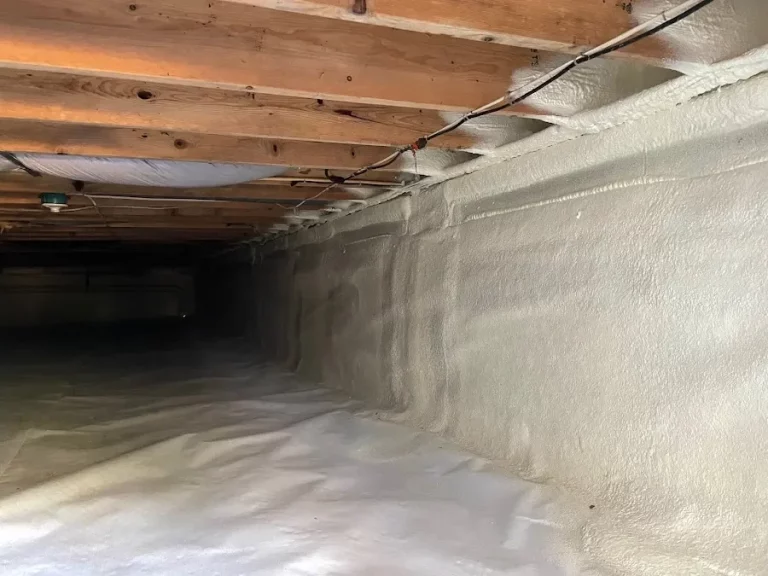
Spray foam insulation addresses both insulation gaps and air leakage simultaneously. Unlike traditional batt insulation, which simply slows heat transfer, spray foam creates an effective air barrier when properly applied. This air barrier prevents the movement of conditioned air out of your building and blocks unconditioned air from entering.
The R-value advantage of spray foam insulation is substantial. Open-cell spray foam typically provides R-3.5 to R-3.7 per inch, while closed-cell formulations achieve R-6 to R-7 per inch Oak Ridge National Laboratory – Spray Foam Insulation Performance. Compare this to fiberglass batts, which provide approximately R-3 per inch, and you can see why spray foam delivers superior thermal resistance in the same physical space. For commercial buildings with limited wall cavity depth, this higher R-value per inch makes spray foam the logical choice.
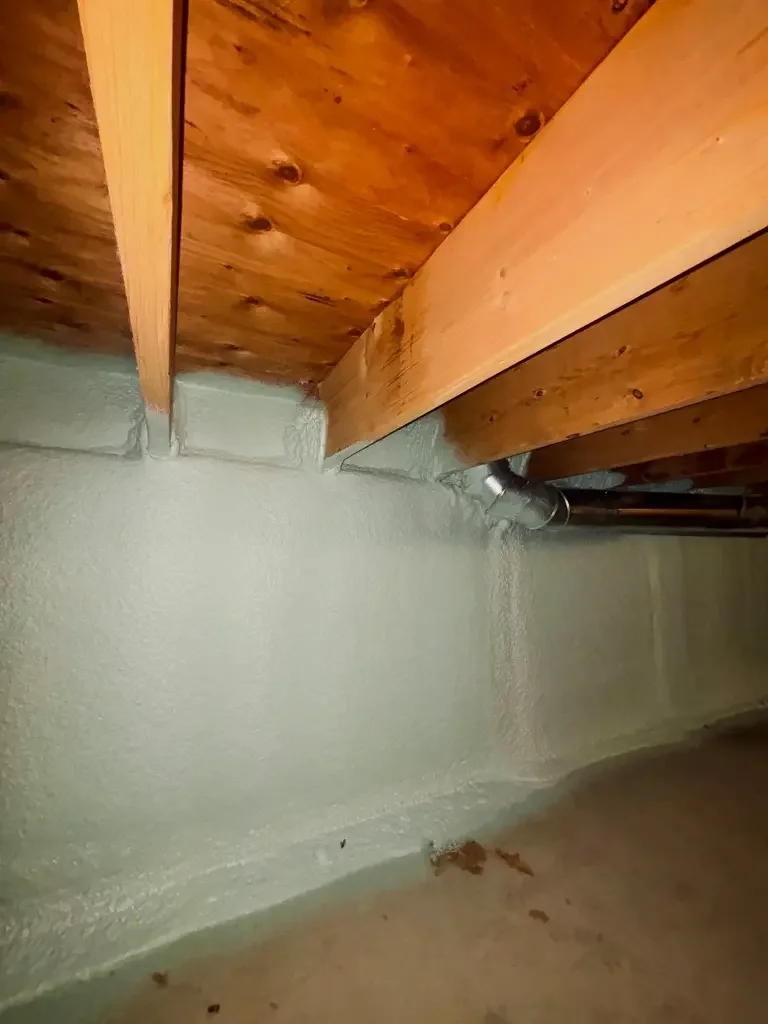
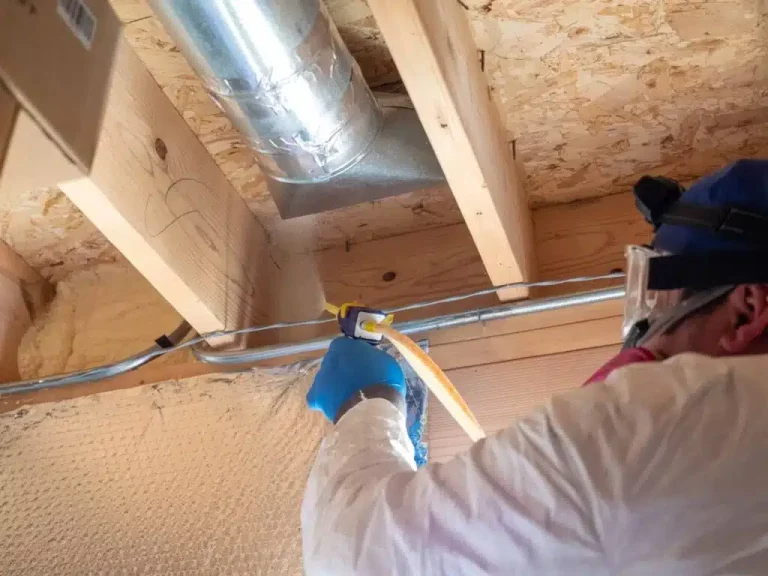
Spray foam also eliminates thermal bridging more effectively than other insulation types. When applied as a continuous layer within wall cavities or directly to roof sheathing, spray foam creates a complete thermal envelope without gaps. Our technicians at Supreme Spray Foam Fresno ensure complete coverage by training extensively on proper application techniques, including attention to joists, studs, and other structural elements where gaps commonly occur.
Moisture resistance represents another critical benefit for HVAC protection. Closed-cell spray foam resists water penetration, preventing moisture from reaching structural elements and HVAC components located in wall or ceiling cavities. Moisture damage to ductwork, electrical connections, and mechanical equipment represents a significant cause of premature HVAC failure. By blocking moisture intrusion, spray foam insulation adds another layer of protection for your equipment.
Measuring the Impact on HVAC Lifespan
Industry research confirms the significant relationship between insulation quality and HVAC longevity Building Science Corporation – Insulating Buildings. Buildings with proper insulation typically see HVAC equipment lasting 15-20 years, while buildings with inadequate insulation may require replacement in 10-12 years. This difference represents thousands of dollars in avoided capital expenditure for each piece of equipment.
The mechanism behind this extended lifespan is straightforward. Reduced runtime means fewer cycles on compressors, less wear on moving parts, and lower operating temperatures for electrical components. When your HVAC system does not need to work against significant thermal loads, it operates within design parameters more consistently. Equipment operating within specification experiences far less stress and failure than systems pushed to their limits continuously.
Air quality improvements from spray foam insulation also benefit HVAC components. Dust, pollen, and other airborne particles that enter through gaps and cracks settle on equipment surfaces and inside ductwork. This accumulated debris reduces efficiency and can cause mechanical failures in motors and fans. By creating an effective air barrier, spray foam keeps your HVAC equipment cleaner and operating more efficiently.
Comparing Insulation Options for Commercial Properties
| Insulation Type | R-Value per Inch | Air Barrier | Moisture Resistance | Best Applications |
|---|---|---|---|---|
| Open-cell spray foam | R-3.5 | Yes | Low | Interior walls, attics |
| Closed-cell spray foam | R-6.5 | Yes | High | Exterior walls, roofs, and foundations |
| Fiberglass batts | R-3 | Partial | Low | Stud cavities, accessible areas |
| Cellulose | R-3.4 | Partial | Low | Walls, attics, retrofits |
| Rigid foam board | R-5 | No | High | Exterior sheathing, foundations |
When evaluating insulation options, consider that spray foam provides the only solution combining high R-value, complete air sealing, and moisture resistance in a single product. While other insulation types offer lower upfront costs, their reduced effectiveness and shorter lifespans often result in higher total ownership costs when factoring in increased HVAC operating expenses and earlier equipment replacement.
Choosing the Right Spray Foam Solution
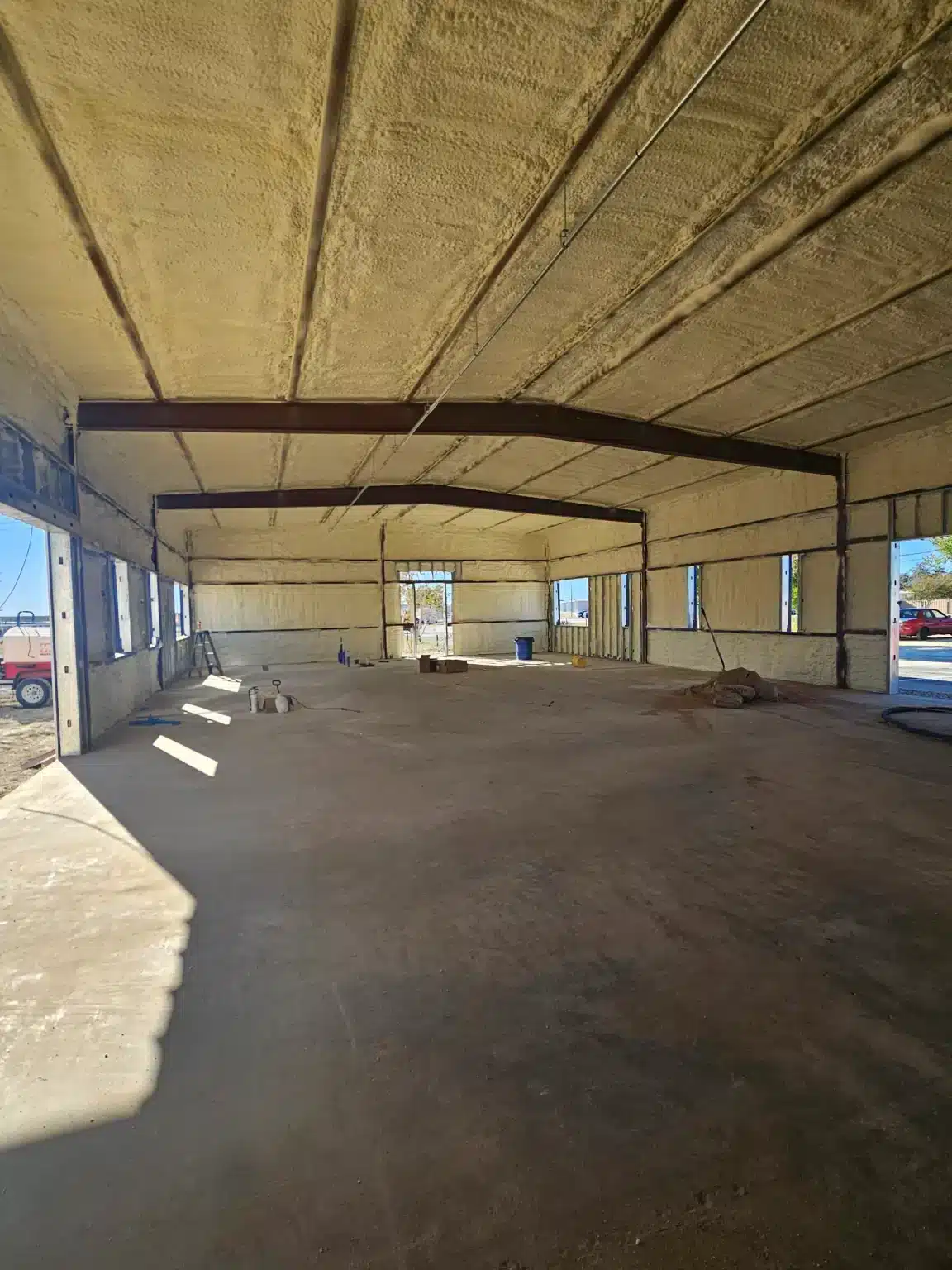
Commercial properties have distinct insulation requirements compared to residential buildings. Higher ceilings, larger conditioned volumes, and more complex HVAC configurations all influence insulation specifications. Our team evaluates each commercial property individually, considering factors like building construction, climate zone, HVAC system capacity, and occupancy patterns.
Open-cell spray foam works well for many commercial interior applications. It provides excellent insulation value while remaining breathable, which helps manage moisture in certain configurations. For exterior walls and roof applications, closed-cell spray foam is typically preferred due to its superior R-value and moisture-blocking properties. Our technicians are trained to recommend the appropriate product for each specific application within your building.
Thickness requirements depend on your building’s design and local building codes California Energy Commission – Building Standards. Our professionals perform heat gain and heat loss calculations to determine optimal insulation depths for your specific structure. This engineering-based approach ensures your HVAC system receives the support it needs for efficient, long-lasting operation.
Signs Your Building Needs Better Insulation
Several indicators suggest your commercial property may benefit from upgraded insulation. Excessive HVAC runtime, particularly during shoulder seasons when temperatures are moderate, often points to insulation deficiencies. If your equipment runs constantly even when outdoor conditions are not extreme, your building envelope likely needs improvement.
High energy bills relative to comparable properties in your area represent another warning sign. Utility costs that seem excessive compared to your building’s size and occupancy level typically indicate thermal envelope problems. Similarly, uncomfortable temperature variations between different areas of your building suggest uneven insulation or air leakage issues.
Visible signs of insulation problems include condensation on interior surfaces, drafts near windows and doors, ice dams on roofs during winter, and hot or cold spots in occupied areas. These visible indicators often correspond to hidden insulation deficiencies affecting your HVAC system’s performance.
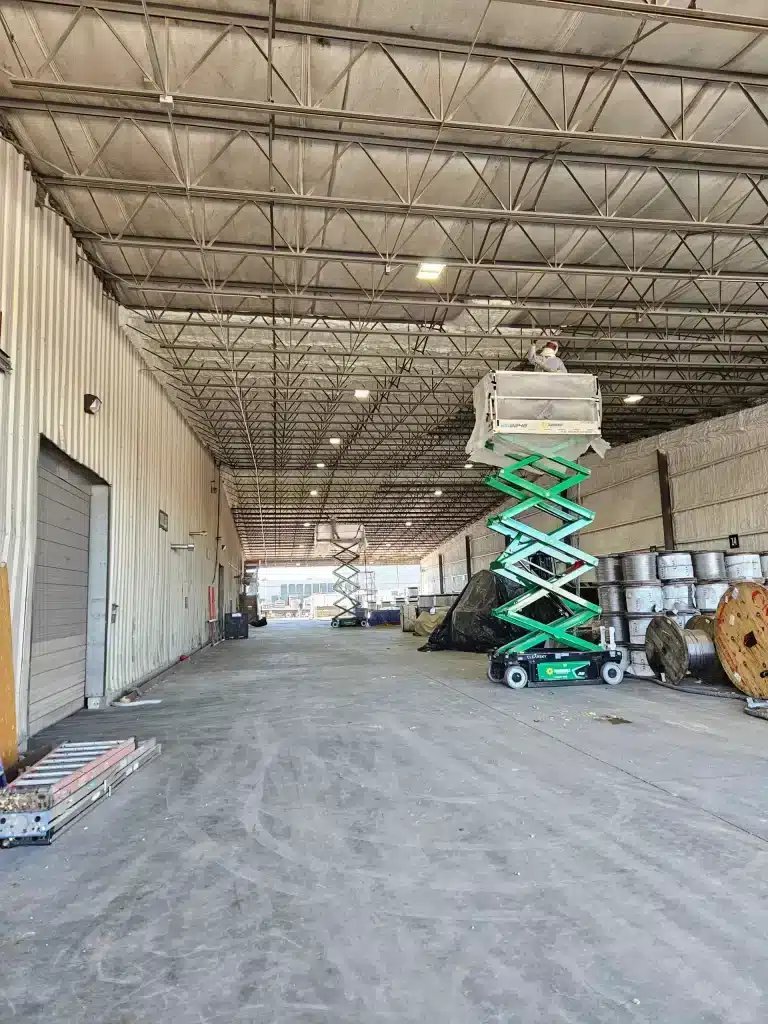
Protecting Your Investment for the Long Term
Commercial insulation services represent one of the most cost-effective ways to protect your HVAC investment. The upfront cost of professional spray foam installation pays dividends through reduced utility bills, extended equipment life, and improved occupant comfort. By reducing the workload on your heating and cooling equipment, proper insulation helps ensure your system reaches its full expected lifespan without costly premature failures.
Beyond equipment protection, improved insulation also supports your sustainability goals. Buildings with efficient thermal envelopes require less energy to condition, reducing your carbon footprint and supporting environmental certifications. Many commercial property owners find that insulation improvements also enhance their building’s market value and tenant appeal.
Working with experienced professionals ensures your insulation investment delivers maximum benefit. Our team at Supreme Spray Foam Fresno has extensive experience with commercial applications throughout Fresno County. We understand local climate challenges and building construction patterns, allowing us to provide targeted solutions that address your specific needs.
Take Action to Protect Your HVAC System
Investing in professional commercial insulation services from Supreme Spray Foam Fresno is one of the smartest decisions you can make for your building’s long-term performance. Our experienced team specializes in spray foam solutions designed to reduce HVAC workload, extend equipment life, and lower your operating costs. We serve commercial properties throughout Fresno, Clovis, Madera, and the surrounding Central Valley communities.
Ready to protect your HVAC investment?
Contact our team today to request a quote for your commercial property. Our professionals will assess your building’s insulation needs and recommend solutions tailored to your specific requirements and budget.
Want to learn more about your options?
Schedule a consultation with our insulation specialists to discuss how spray foam can improve your building’s performance and extend the lifespan of your HVAC equipment.
Call us at (559) 545-0800 or email [email protected] to get started. Our team is standing by to help you make informed decisions about commercial insulation that protects your equipment and your bottom line.
Frequently Asked Questions
How much can proper insulation extend my HVAC system’s lifespan?
Buildings with high-quality insulation like spray foam typically see HVAC equipment lasting 15-20 years compared to 10-12 years in poorly insulated structures. The exact extension depends on usage patterns, maintenance schedules, and equipment quality, but most commercial properties see at least 25-30% longer equipment life with proper insulation.
What R-value do commercial buildings need for adequate HVAC support?
Commercial insulation requirements vary by climate zone and building code. Most commercial properties in the Central Valley region benefit from wall insulation of R-13 to R-20 and ceiling or roof insulation of R-30 to R-49. Our professionals perform load calculations to determine optimal specifications for your specific building.
Can spray foam insulation be installed in existing commercial buildings?
Yes, spray foam can be installed in existing structures through various methods, depending on access points. Interior wall cavities can be accessed through drywall removal, attic spaces are typically accessible from within, and roof applications can be made from either interior or exterior approaches. Our team evaluates each building to determine the most effective installation strategy.
How long does commercial spray foam installation take?
Project timelines vary based on building size and scope. Smaller commercial properties may complete in 2-3 days, while larger facilities might require a week or more. Our team provides detailed timelines during the assessment phase so you can plan accordingly with minimal disruption to your operations.
Will spray foam insulation help with moisture problems in my building?
Closed-cell spray foam provides excellent moisture resistance and can help manage condensation issues in wall cavities and crawl spaces. However, addressing existing moisture problems requires identifying and correcting water sources first. Our professionals assess moisture conditions and recommend appropriate remediation along with insulation solutions.
Sources
- Department of Energy – Insulation Fact Sheet – Official government guidance on insulation R-values, types, and energy savings potential for commercial and residential buildings.
- Energy Star – HVAC Maintenance – EPA guidance on how proper building envelope improvements support HVAC efficiency and extend equipment life.
- Oak Ridge National Laboratory – Spray Foam Insulation Performance – Research findings on spray foam insulation performance including R-values, air sealing capabilities, and moisture management properties.
- Building Science Corporation – Insulating Buildings – Technical guidance on building envelope design, insulation selection, and the relationship between thermal barriers and HVAC performance.
- California Energy Commission – Building Standards – California-specific energy code requirements for commercial insulation including climate zone recommendations for the Central Valley region.

- How Can Homeowners Prepare a Crawl Space for Spray Foam Installation in Parkwood, CA? - October 15, 2026
- Why Does Crawl Space Access Matter When Installing Spray Foam Insulation? - October 15, 2026
- What Makes Crawl Space Spray Foam a Choice for Better Air Quality in Oakhurst, CA? - September 22, 2026