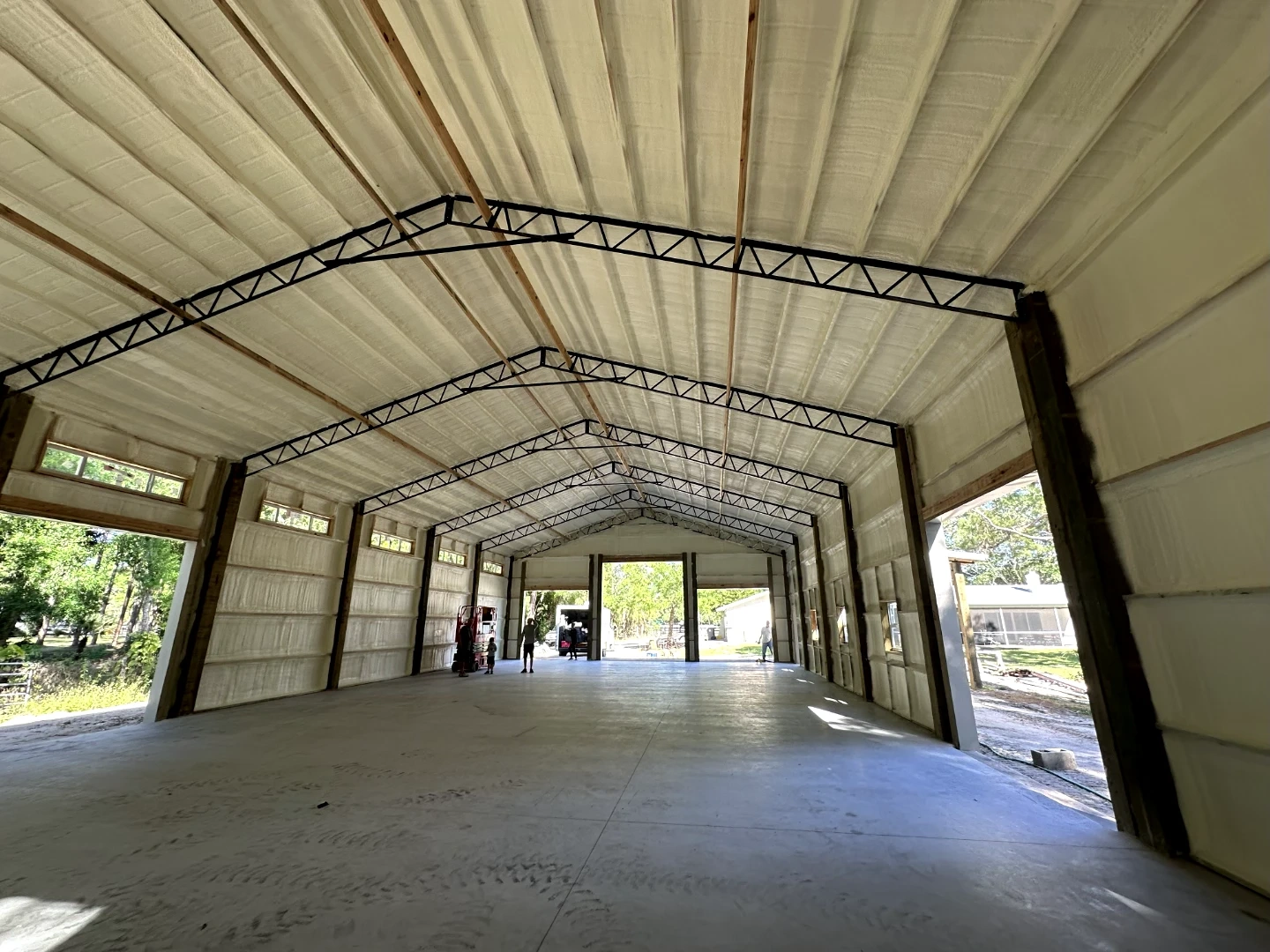
Commercial insulation services directly address the envelope performance requirements set by California’s Title 24, Part 6 energy code for nonresidential buildings in Fresno’s specific climate zone. Professional insulation contractor understand how to select and install materials that satisfy both the prescriptive and performance compliance paths, while also handling the air sealing, thermal bridging, and Quality Insulation Installation (QII) verification that building inspectors look for during permit reviews. For building owners, developers, and architects working in Fresno, getting the envelope right the first time is the most practical way to avoid permit delays, failed inspections, and costly rework.
TL;DR
- Fresno falls within California Climate Zone 13, which carries specific minimum R-value requirements for roofs, walls, and floors under Title 24, Part 6.
- The 2025 Energy Code, effective January 1, 2026, introduces tighter envelope standards and mandatory QII verification for nonresidential buildings.
- Commercial insulation services address both the prescriptive and performance compliance paths, giving design teams flexibility in how they demonstrate code compliance.
- Professional installers handle thermal bridging in metal-framed commercial construction, a common failure point during inspections.
- An independent study found that roof and pipe insulation retrofits in commercial buildings reduce energy use by 7 to 9 percent in educational facilities alone.
- Proper air sealing combined with insulation is a mandatory provision under both Title 24 and ASHRAE 90.1, and cannot be substituted with cavity-only insulation in steel-framed structures.
How Fresno’s Climate Zone Drives Code Requirements
California’s building energy code is built around a 16-zone climate system, and Fresno sits in Climate Zone 13. This means the San Joaquin Valley’s hot summers and cool winters dictate specific minimum insulation levels that differ from coastal or mountain regions. The California Energy Commission updates these standards every three years, and the 2025 Building Energy Efficiency Standards now apply to all permit applications filed on or after January 1, 2026.
For nonresidential buildings in Fresno’s zone, the code sets minimum R-values for roofs, walls, floors, and fenestration. These are not suggestions. They are the legal baseline that every commercial new construction project, addition, and tenant improvement must meet. The 3C-REN regional energy network notes that requirements like roof insulation can swing significantly between zones, with some requiring R-30 and others R-38, making zone identification the first step in any compliant design.
Title 24 Compliance Paths and Where Insulation Fits
California’s Energy Code offers two primary compliance approaches for nonresidential buildings. Understanding both helps explain why commercial insulation services are not optional extras but structural necessities.
Prescriptive Path
Under the prescriptive approach, every building component must meet or exceed a minimum specified value listed in the code’s reference tables. Walls, roofs, and floors each have target R-values. The advantage is simplicity: if every assembly hits its number, the building passes. The limitation is rigidity, since trade-offs between assemblies are not allowed. Commercial insulation solutions can help building owners and contractors choose materials and assemblies that meet these requirements while supporting energy efficiency and long-term performance.
Performance Path
The performance approach uses energy modeling software to compare a proposed design against a code-minimum baseline building. If the proposed building demonstrates equal or lower energy consumption, it complies, even if individual assemblies fall below prescriptive minimums. ASHRAE 90.1, the national commercial energy standard that shares a similar structure with Title 24, uses this same two-path system with prescriptive requirements for building envelope, HVAC, lighting, and power systems.
In practice, most commercial projects in Fresno use the performance path because it allows design teams to trade off insulation levels in one area against efficiency gains in another. This is where professional insulation services matter: an experienced installer can help the design team maximize envelope performance, which in turn reduces the burden on HVAC and lighting systems to carry the compliance load.
Why Professional Installation Matters for Code Compliance
Thermal Bridging in Steel-Framed Construction
Many commercial buildings in Fresno use steel framing, and steel conducts heat far more readily than wood. The Department of Energy’s Insulation Fact Sheet notes that the overall R-value of a metal-framed wall can be as low as half the rated R-value of the insulation itself due to thermal bridging through the studs. Title 24 addresses this by requiring continuous insulation on steel-framed walls in most climate zones. Professional insulation contractors know how to apply continuous insulation correctly, whether using rigid foam boards, spray foam, or insulated sheathing, to close the thermal bridging gap.
Air Sealing as a Mandatory Provision
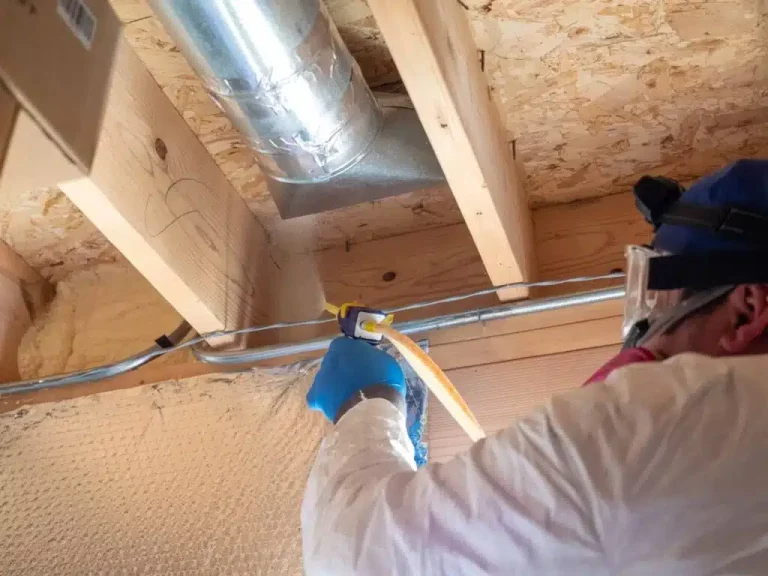
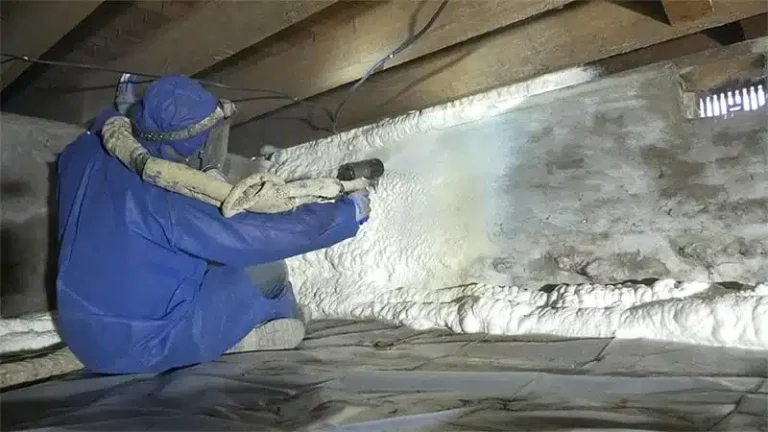
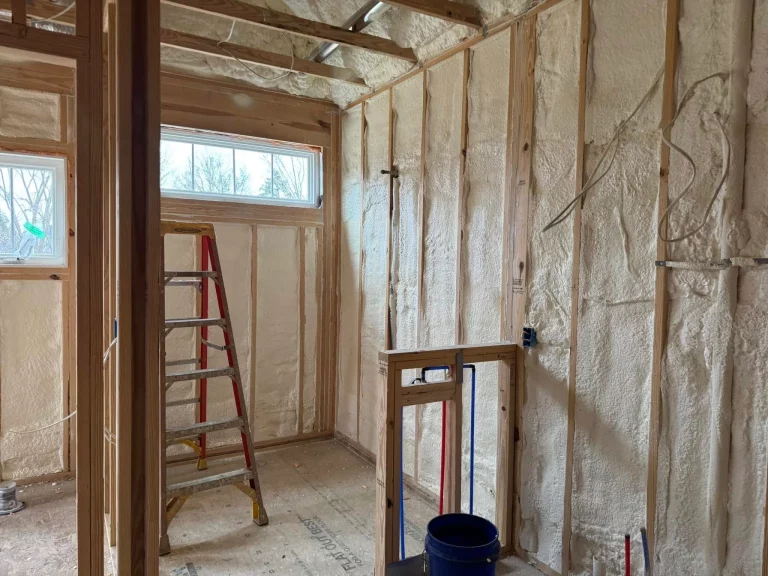
Both Title 24 and ASHRAE 90.1 treat air leakage control as a mandatory requirement, meaning it applies regardless of which compliance path is chosen. Air sealing cannot be traded off or substituted. Spray foam insulation is particularly effective here because it simultaneously provides an air barrier and thermal insulation in a single application. Gaps around structural members, penetrations, and junctions between wall types are common inspection failure points that professional services identify and resolve before the inspector arrives.
Quality Insulation Installation (QII) Verification
The 2025 Energy Code continues to require QII verification for insulation installations. This means a certified HERS rater must verify that insulation is installed without gaps, compressions, or voids. Insulation that is compressed into a cavity thinner than its rated thickness loses effective R-value. Similarly, gaps around obstructions like wiring, plumbing, and structural members can reduce assembly performance well below what the code requires. Our team works within QII protocols to ensure every installation passes verification on the first attempt.
| Compliance Factor | Code Requirement | Common Failure Point | How Professional Services Help |
|---|---|---|---|
| Wall R-value | Minimum assembly R-value per zone and framing type | Thermal bridging through steel studs reduces effective R-value | Continuous insulation applied over framing |
| Roof insulation | Zone-specific minimum R-value for above-deck or below-deck applications | Compression of insulation, gaps at joints, inadequate coverage | Full-coverage spray foam or rigid board with sealed joints |
| Air barrier | Mandatory air leakage rate for nonresidential envelopes | Unsealed penetrations, gaps at wall-roof junctions, poorly fitted doors | Spray foam air sealing at all penetrations and transitions |
| QII verification | Third-party HERS rater inspection of insulation installation | Gaps, voids, compression, missing insulation in obstructed areas | Installation following QII protocols with pre-inspection review |
| Fenestration | Maximum U-factor and Solar Heat Gain Coefficient per zone | Improperly sealed window and door perimeters | Foam sealing around all fenestration rough openings |
The Energy Savings Behind Code Compliance
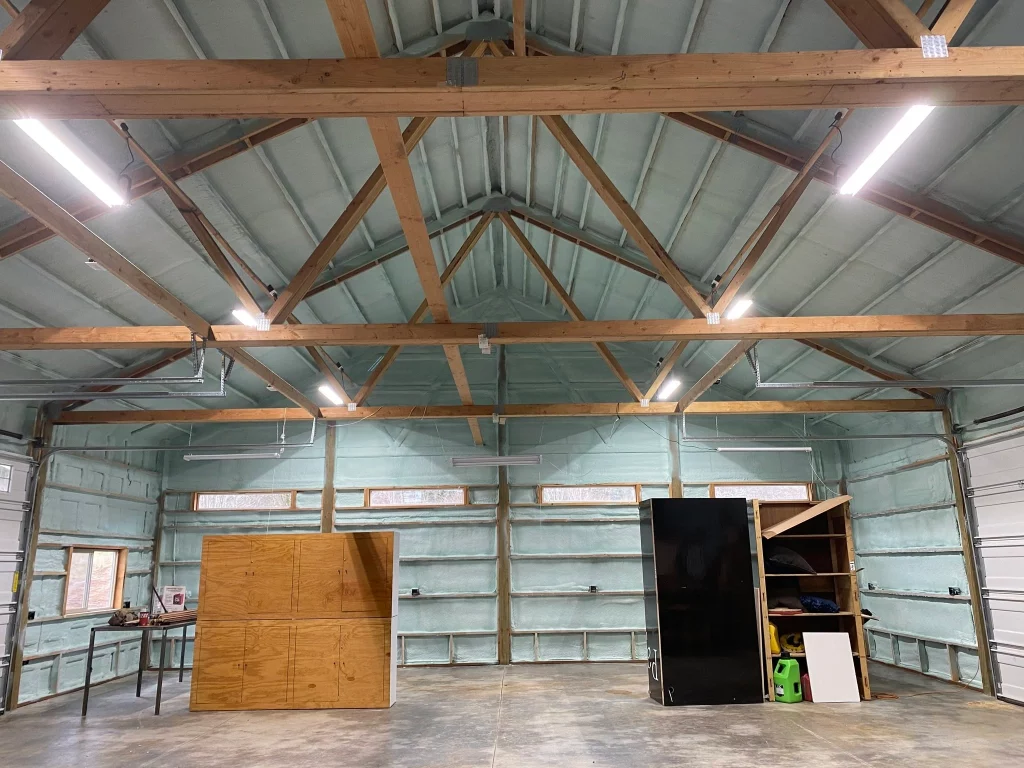
Meeting code is not just about passing inspections. The ICF consulting firm conducted an independent study, published by the National Insulation Association, that quantified the impact of commercial insulation upgrades. The study found that insulation retrofits reduce energy use in primary schools by nearly 9 percent and in secondary schools by more than 7 percent. Extrapolated across 25 percent of existing U.S. commercial floor space, roof and pipe insulation upgrades alone would save more than 700 therms of natural gas annually.
For new construction in Fresno, building to current code standards means the envelope starts outperforming older stock from day one. The U.S. Department of Energy’s Building Energy Codes Program notes that today’s energy codes provide more than 30 percent savings compared to codes from less than a decade ago. Commercial insulation services are the installation mechanism that turns code language into real-world thermal performance.
Which Buildings Benefit Most from Professional Insulation Services
| Building Type | Typical Code Challenge | Recommended Insulation Strategy |
|---|---|---|
| Office buildings | Large window-to-wall ratios increase solar heat gain and reduce wall insulation area | High-performance spray foam in remaining wall areas, continuous roof insulation, air sealing at all curtain wall transitions |
| Retail and warehouse | Large roof areas, loading dock doors, metal building construction | Roof insulation to zone minimum with air barrier, continuous insulation on metal walls, dock door perimeter sealing |
| Educational facilities | Mixed occupancy types, gymnasiums with high ceilings, varying HVAC zones | Assembly-specific R-values, gym ceiling spray foam for both insulation and air barrier, duct insulation in unconditioned spaces |
| Medical and healthcare | Strict ventilation requirements, 24/7 operations, infection control concerns | Highest practical R-values to reduce HVAC runtime, careful air sealing to maintain pressurization zones |
Signs You’ve Found the Right Insulation Partner for Code Compliance
- Zone-specific knowledge: The team immediately identifies your project’s California Climate Zone and references the correct Title 24 tables for Fresno rather than relying on generic national standards.
- Compliance path discussion: Before recommending materials, they ask whether your design team is pursuing prescriptive or performance compliance, since the insulation strategy differs between the two.
- QII familiarity: They install with QII verification in mind from the start, not as an afterthought before the HERS rater arrives.
- Thermal bridging awareness: For steel-framed buildings, they recommend continuous insulation solutions rather than relying solely on cavity-fill products.
- Documentation readiness: They provide product labels, installation certificates, and material specifications that your building official will expect at permit submittal and final inspection.
Get Your Project Code-Ready
Supreme Spray Foam Fresno helps commercial building owners, developers, and design professionals across Fresno meet California’s Title 24 energy code requirements with precision-installed spray foam insulation. Our team understands Climate Zone 13 specifications, QII verification protocols, and both prescriptive and performance compliance paths. Reach out to us at [email protected] or call (559) 545-0800 to discuss your project.
FAQs
What California climate zone is Fresno in for commercial building insulation?
Fresno is in California Climate Zone 13, which has its own set of minimum R-value requirements for commercial building envelopes under Title 24, Part 6.
Does Title 24 require air sealing in addition to insulation for commercial buildings?
Yes, air leakage control is a mandatory provision under Title 24 that applies regardless of whether the project follows the prescriptive or performance compliance path.
What is the difference between prescriptive and performance compliance paths for commercial insulation?
The prescriptive path requires every building assembly to meet minimum specified R-values, while the performance path uses energy modeling to demonstrate that the overall building meets or exceeds the energy budget of a code-minimum baseline.
Why does steel-framed commercial construction need continuous insulation?
Steel conducts heat much more readily than wood, causing thermal bridging that can cut a wall assembly’s effective R-value in half when only cavity insulation is used. Continuous insulation over the framing addresses this code requirement.
What is QII verification and when is it required?
Quality Insulation Installation (QII) verification is a third-party inspection by a certified HERS rater confirming that insulation is installed without gaps, compressions, or voids. It is required under the 2025 California Energy Code for nonresidential buildings.
Sources
- 2025 Building Energy Efficiency Standards – California Energy Commission – Official page for California’s 2025 Energy Code effective January 1, 2026, covering nonresidential building envelope, HVAC, and QII requirements.
- California Energy Code – Wikipedia – Overview of Title 24 structure, history, and the 16 California climate zones including Fresno’s assignment to Zone 13.
- Different Climate Zones for Different Standards – 3C-REN – Explanation of how California’s 16 climate zones determine zone-specific insulation requirements like R-30 vs. R-38 roof insulation.
- ASHRAE 90.1 – Wikipedia – Description of the national commercial energy standard’s prescriptive and performance compliance paths, including building envelope requirements for walls, roofs, and air barriers.
- Independent Study Confirms Insulation Upgrades Save Energy and Emissions – National Insulation Association – ICF-commissioned study quantifying 7-9% energy savings from commercial roof and pipe insulation retrofits in educational and office buildings.

- What Makes Crawl Space Spray Foam a Choice for Better Air Quality in Oakhurst, CA? - September 22, 2026
- Crawl Space Spray Foam: Types, Benefits, Costs, Installation, and Guide - September 22, 2026
- How Long Should Spray Foam Insulation Last Before It Needs to Be Repaired in Ahwahnee, CA? - September 11, 2026