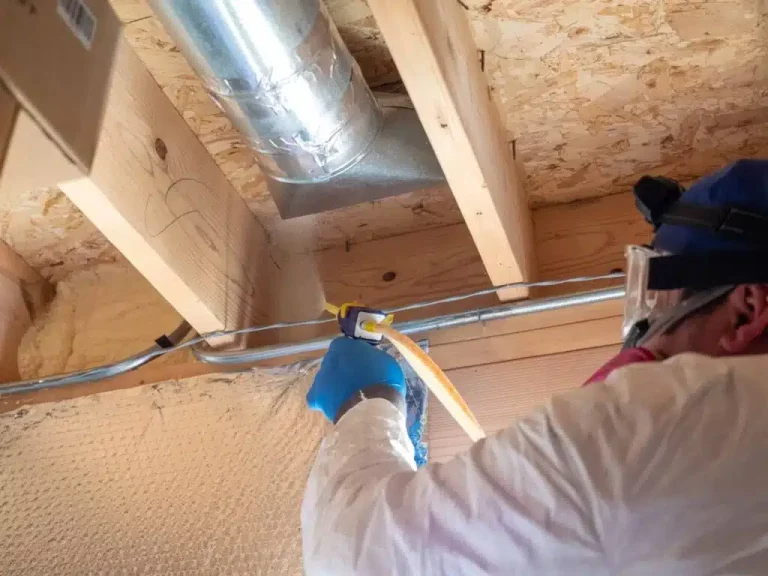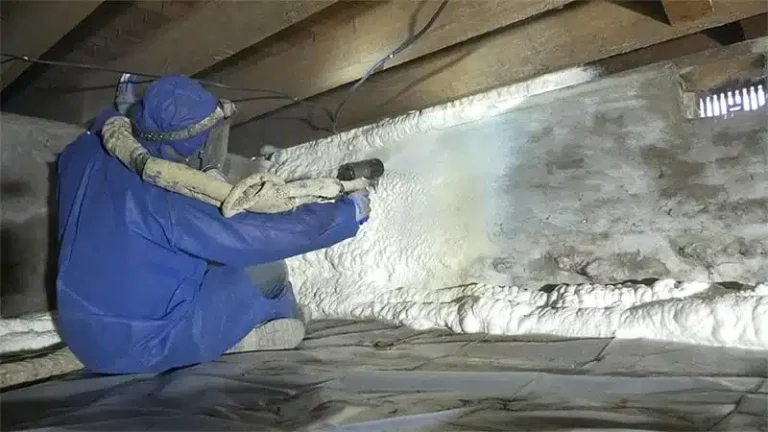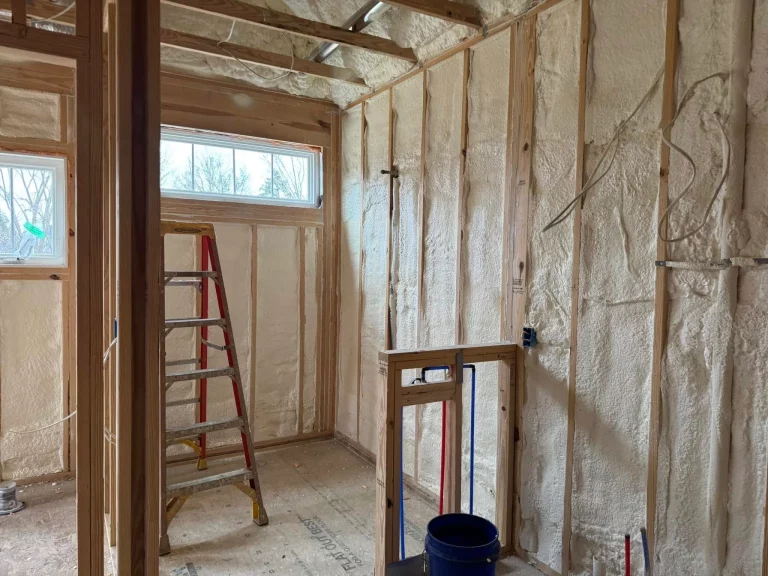

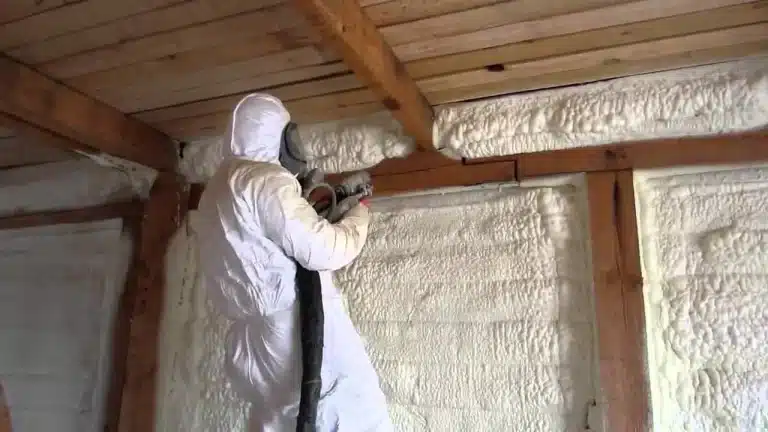
Closed-cell spray foam is the better choice for flood-prone basements in Auberry, CA, and it is not close. Closed-cell foam has a sealed cellular structure that resists water absorption, adds structural strength to walls, and delivers a higher R-value per inch than open-cell alternatives. Open-cell foam absorbs and holds moisture, which makes it a liability in areas where seasonal storms, groundwater seepage, and surface runoff regularly threaten basements. For Auberry homeowners in the Sierra Nevada foothills, where winter and spring storms can push water into below-grade spaces, choosing the wrong insulation type means risking mold growth, structural rot, and thousands of dollars in remediation work down the road.
TL;DR
- Closed-cell spray foam delivers R-6 to R-7 per inch, roughly double the R-3.6 per inch that open-cell foam provides, according to Wikipedia’s R-value data for spray foam insulation
- Closed-cell foam resists water absorption due to its sealed cell structure, while open-cell foam is sponge-like and will hold water against framing members
- Auberry, CA falls within IECC Climate Zone 3, where ENERGY STAR recommends R-13 batt or R-5 insulative wall sheathing for basement walls
- Moisture is the primary threat to insulation performance, with research showing thermal conductivity in some insulants increases up to 45% under high humidity conditions
- Closed-cell foam adds wall rigidity and acts as a vapor barrier, which open-cell foam cannot do
- Open-cell foam costs less upfront but carries significantly higher long-term risk in flood-prone below-grade applications
- Polyurethane foams are classified by cell structure, with rigid foams having closed cells and flexible foams typically having open, interconnected pores
What Sets Closed-Cell and Open-Cell Spray Foam Apart
The difference between these two insulation types comes down to the cellular structure of the cured foam. As Wikipedia explains for polyurethane foam, rigid polyurethane foams have a closed-cell structure where the individual pores are sealed off from each other, while flexible foams feature interconnected, irregularly shaped open pores. This structural distinction drives every meaningful performance difference between the two products in a basement environment.
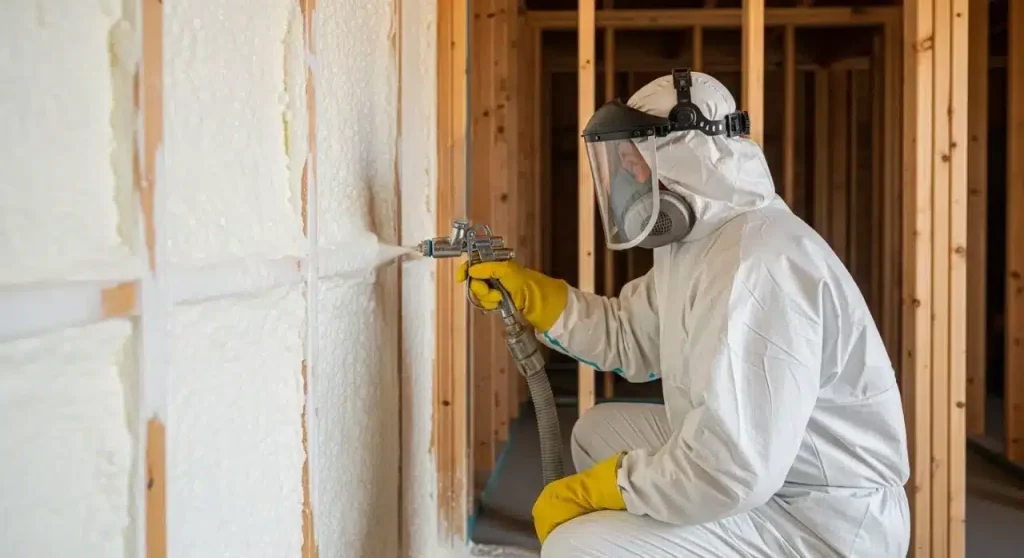
Closed-cell spray foam is a rigid, high-density material that cures into a solid, continuous layer. The gas trapped inside each closed cell gives the foam its insulating properties and makes it resistant to water penetration. Open-cell spray foam is softer, lighter, and more flexible, with a porous structure that allows air and moisture to pass through.
| Feature | Closed-Cell Spray Foam | Open-Cell Spray Foam |
|---|---|---|
| Cell Structure | Sealed, independent gas-filled cells | Interconnected, porous cells |
| R-Value per Inch | R-5.5 to R-6.5 | R-3.6 to R-3.7 |
| Density | 1.75 to 2.5 lbs/ft³ | 0.5 to 1.2 lbs/ft³ |
| Water Absorption | Low, acts as a moisture barrier | High, absorbs and retains water |
| Vapor Barrier | Yes (Class II) | No |
| Air Barrier | Yes | Yes |
| Structural Support | Adds wall rigidity | No structural benefit |
| Sound Dampening | Moderate | Excellent |
Why Moisture Makes the Decision for Auberry Basements
Auberry, CA sits in the Sierra Nevada foothills of Fresno County, where winter and spring storms can produce intense rainfall and rapid snowmelt runoff. Basements and below-grade spaces in this region face persistent moisture pressure from groundwater, surface drainage, and seasonal high-water tables. When insulation gets wet, the damage compounds quickly. According to the Wikipedia article on building insulation, inadequate damp proofing and poor ventilation in enclosed crawl spaces and cellars can lead to condensation at the insulation surface and promote mold growth, with building damage reports attributing roughly 13-14% of all reported damage to mold problems.
Open-cell foam behaves like a sponge. When floodwater or persistent moisture reaches it, the interconnected cells fill with water and hold it against the framing, sheathing, and concrete. This keeps wood wet for extended periods, accelerates rot, and creates ideal conditions for mold. The R-value data from Wikipedia notes that closed-cell polyurethane spray foam retains its insulating properties better under adverse conditions, while some insulants see thermal conductivity increase by as much as 45% when humidity rises to 90-95%. In practical terms, wet open-cell foam stops insulating entirely and starts causing damage.
Closed-cell foam, by contrast, creates a continuous moisture barrier that keeps bulk water away from the substrate. The sealed cells prevent water from penetrating the foam body, and the material adheres directly to concrete, block, or wood framing to seal cracks, gaps, and joints that would otherwise allow seepage.
R-Value and Code Compliance in Climate Zone 3
Auberry falls within IECC Climate Zone 3, which has moderate heating and cooling demands. The ENERGY STAR recommended R-values guide specifies that basement or crawlspace walls in Zone 3 should receive either R-5 insulative wall sheathing or R-13 batt insulation. These are minimum code-level recommendations, and many homeowners choose to exceed them for better comfort and energy savings.
Closed-cell spray foam sulotions achieves code-required R-values in a fraction of the thickness needed for open-cell foam or fiberglass batts. Two inches of closed-cell foam delivers approximately R-11 to R-13, which meets or exceeds the Zone 3 basement wall requirement. Open-cell foam would need five to six inches to reach the same R-value, and in a basement where wall cavity depth may be limited, that extra thickness is not always practical.
The International Code Council’s 2021 IECC framework emphasizes that improving envelope efficiency through proper insulation is a cost-effective strategy for building resilience, with DOE studies showing that meeting current energy code requirements extends habitability during extreme temperature events by up to 120-140%. For Auberry homeowners, that means the right insulation choice pays dividends in both flood resistance and year-round energy performance.
Real-World Scenarios in the Auberry Area
Here are realistic examples showing how the choice between closed-cell and open-cell spray foam plays out in different properties around Auberry:
| Scenario | Property Type | Recommended Option | Why |
|---|---|---|---|
| Below-grade basement with visible efflorescence on walls | 1970s ranch home on sloped lot | Closed-cell foam | Water intrusion evidence demands a moisture-resistant barrier |
| Finished basement with seasonal dampness after spring storms | Newer construction, insulated interior | Closed-cell foam | Sealed cell structure prevents recurring moisture damage to finishes |
| Unfinished crawlspace under hillside home | Raised foundation, moderate moisture | Closed-cell foam on rim joist; open-cell on sub-floor optional | Rim joist needs moisture seal; above-grade floor cavity less critical |
| Above-grade bonus room over garage | Conditioned space, no flood risk | Open-cell foam | Lower cost, no moisture exposure, better sound dampening |
| Historic stone basement with known seepage | Pre-1940s home, no vapor barrier | Closed-cell foam only | Open-cell would trap moisture against stone and wood, accelerating decay |
Factors That Influence the Decision
Several variables determine which insulation type makes sense for a given property:
- Flood history and water table depth: Homes with documented basement flooding or high seasonal water tables should always receive closed-cell foam. The cost savings of open-cell foam disappear after a single flooding event.
- Basement wall construction: Poured concrete, concrete block, and stone foundations each present different moisture profiles. Closed-cell foam adheres to all three and seals the inevitable cracks and joints.
- Cavity depth: Closed-cell foam achieves higher R-values in less space, making it the practical choice for narrow wall cavities common in older basements.
- Ventilation: Building science research shows that insulating the ceiling of a damp cellar requires careful attention to the water vapor profile and adequate ventilation. If ventilation cannot be managed, closed-cell foam provides the vapor control needed.
- Budget and timeline: Open-cell foam is less expensive per square foot. For above-grade walls and spaces with no moisture risk, it is a reasonable choice. For below-grade applications, the long-term cost of open-cell failure outweighs any short-term savings.
- Intended use: Storage basements with unfinished walls can tolerate less insulation if flooding is unlikely. Finished basements with drywall, flooring, and electrical systems demand the moisture protection that only closed-cell foam provides.
Who Closed-Cell Foam Is For and Who It Is NOT For
Closed-cell spray foam is the right choice when:
- The basement is below grade or partially below grade
- The property has a history of water intrusion, dampness, or seasonal flooding
- Wall cavity depth is limited and high R-values per inch are needed
- You want a combined air barrier, vapor retarder, and insulation in one application
- Structural rigidity of the wall assembly is a concern
Closed-cell spray foam may not be necessary when:
- The space is entirely above grade with no moisture exposure
- The budget is tight and moisture risk is genuinely zero
- Sound dampening is the primary goal, such as in interior partitions
- The space is a vented attic where open-cell foam performs well at a lower cost
Get a Professional Assessment for Your Auberry Basement
Choosing between closed-cell and open-cell spray foam for a flood-prone basement is not a decision that should be based on pricing alone. The wrong choice leads to moisture damage, mold remediation, and insulation replacement, none of which are cheap problems to solve after the fact. Our team at Supreme Spray Foam Fresno evaluates your basement conditions, moisture history, and building assembly before recommending the right product for your specific situation. We serve the Auberry area with professional spray foam installation and honest guidance.
Call us at (559) 545-0800, email [email protected], or use the buttons below to get started.
FAQs
Can open-cell spray foam be used in a basement that has flooded before?
No. Open-cell foam absorbs and retains water like a sponge, so installing it in a basement with any history of flooding or persistent dampness will hold moisture directly against framing and sheathing, promoting rot and mold growth.
How thick should closed-cell spray foam be applied on basement walls?
For Auberry’s Climate Zone 3, two inches of closed-cell spray foam provides approximately R-11 to R-13, which meets or exceeds the IECC minimum for basement walls. Our team calculates the exact thickness based on your wall assembly and project goals.
Does closed-cell spray foam act as a vapor barrier?
Yes. Closed-cell spray foam is a Class II vapor retarder, which means it slows moisture vapor transmission through the wall assembly and keeps indoor humidity from reaching cold exterior surfaces where condensation would form.
Will spray foam insulation stop water from coming through my basement walls?
Spray foam seals cracks, gaps, and joints that allow air and water vapor to penetrate, but it is not a waterproofing system. Active water leaks and hydrostatic pressure need to be addressed with proper drainage and foundation waterproofing before insulation is applied.
Is closed-cell spray foam worth the extra cost for a basement in Auberry?
For any below-grade or flood-prone space in the Auberry area, yes. The higher per-inch R-value, moisture resistance, and structural support that closed-cell foam provides make it the only insulation type that protects both your building and your investment in the long run.
Sources
- Building Insulation – Wikipedia – Comprehensive reference on building insulation materials, thermal performance in damp environments, and moisture management in below-grade spaces.
- Polyurethane Foam – Wikipedia – Explains the classification of polyurethane foams by cellular structure, including the distinction between open-cell and closed-cell formations.
- R-value (Insulation) – Wikipedia – Detailed reference for thermal resistance values of spray foam insulation types, including closed-cell polyurethane at R-5.5 to R-6.5 per inch and open-cell polyurethane at R-3.6 per inch.
- ENERGY STAR – Recommended Home Insulation R-Values – Climate zone-specific insulation recommendations for basements, crawlspaces, and walls based on the 2021 IECC Residential Provisions.
- International Code Council – 2021 IECC Adoption Toolkit – Energy code requirements, building envelope efficiency standards, and resilience benefits of improved insulation in residential construction.

- What Makes Crawl Space Spray Foam a Choice for Better Air Quality in Oakhurst, CA? - September 22, 2026
- Crawl Space Spray Foam: Types, Benefits, Costs, Installation, and Guide - September 22, 2026
- How Long Should Spray Foam Insulation Last Before It Needs to Be Repaired in Ahwahnee, CA? - September 11, 2026