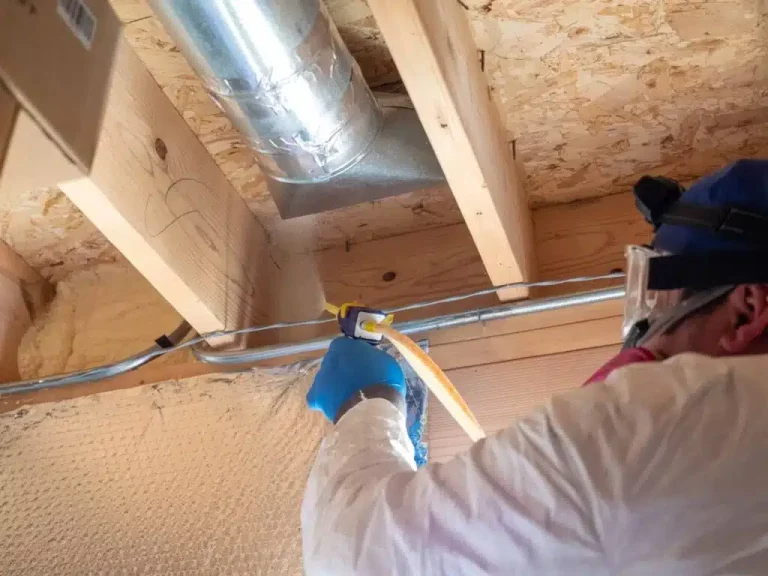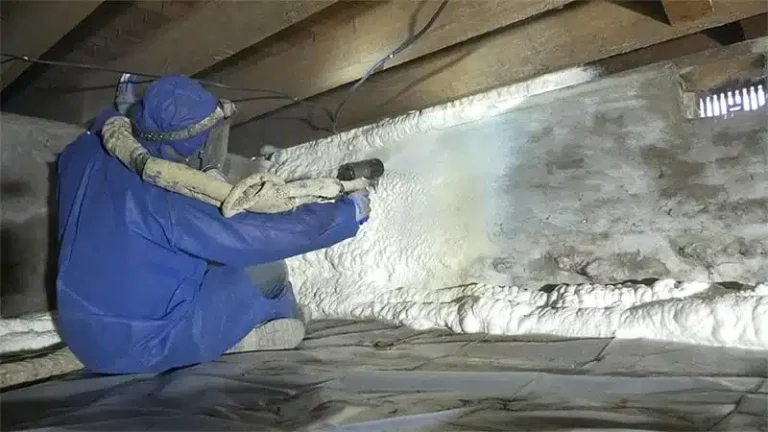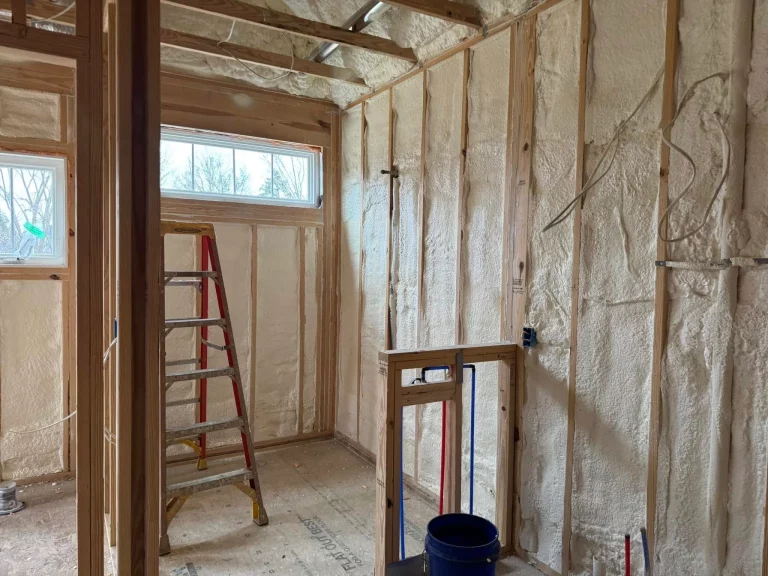

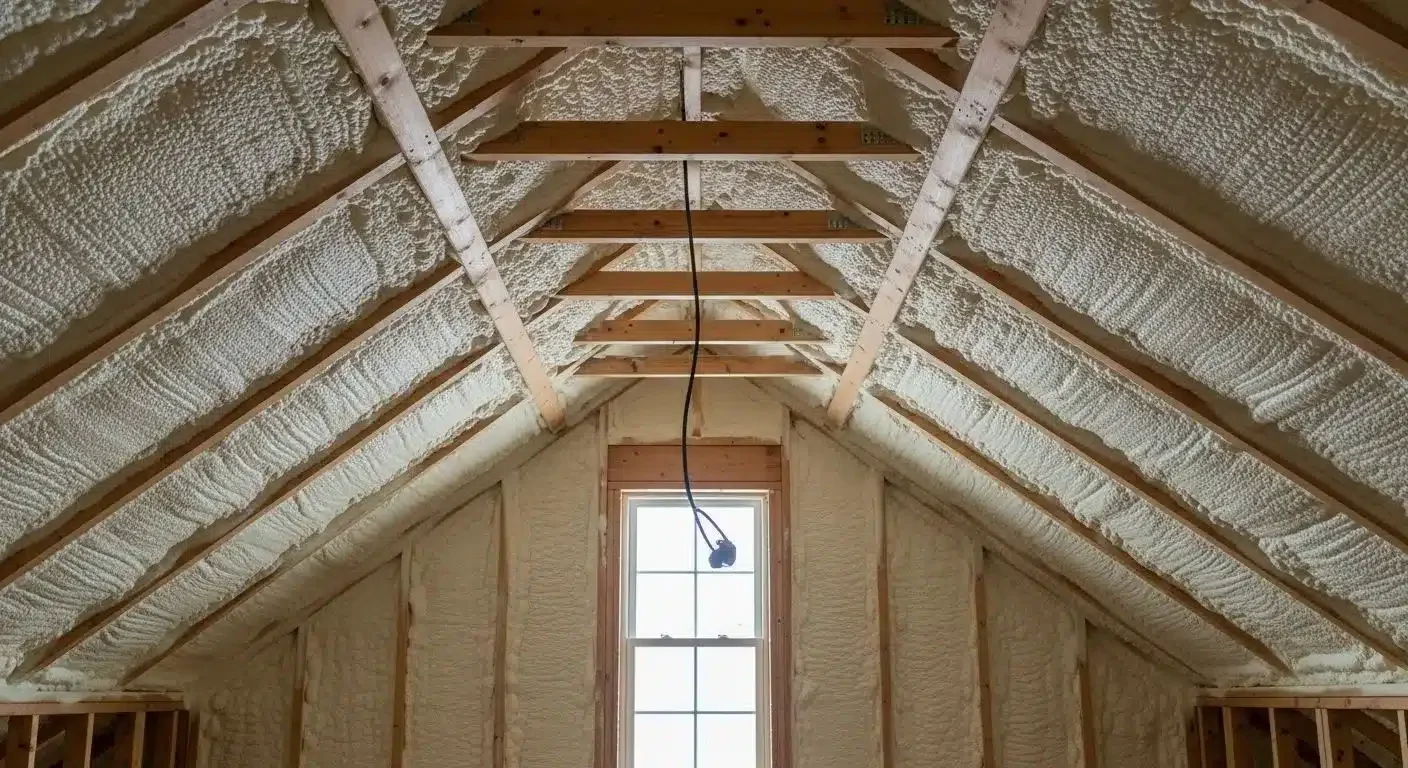
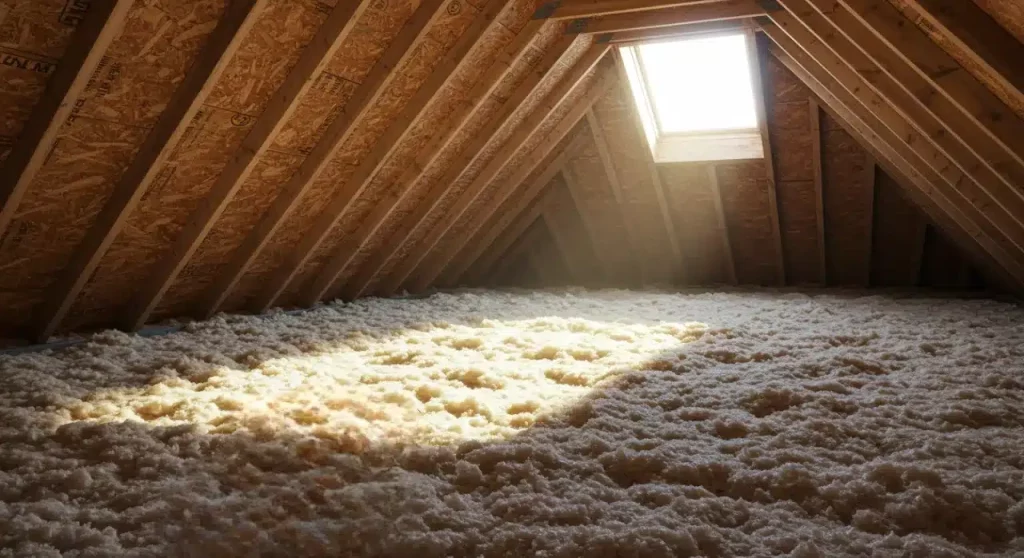
Attic spray foam insulation improves comfort and energy efficiency in older homes by simultaneously air sealing and insulating the attic floor or roof deck, addressing the two biggest weaknesses in older building envelopes. Homes built before modern energy codes typically have little to no attic insulation and numerous air leaks at the ceiling plane. Spray foam insulation for attics solves both problems in a single application by expanding to fill gaps, cracks, and penetrations while delivering a high R-value per inch. The EPA estimates that homeowners can save an average of 15% on heating and cooling costs by air sealing and adding attic insulation. The right approach, whether open-cell or closed-cell foam applied at the attic floor or roofline, depends on your climate zone, existing attic conditions, and whether HVAC equipment is located in the attic.
TL;DR
- Older homes often have little to no attic insulation and extensive air leaks at the ceiling plane, making the attic the single largest opportunity for energy savings
- Spray foam insulation both air seals and insulates in one step, unlike fiberglass or cellulose which only address thermal resistance
- The EPA estimates homeowners save an average of 15% on heating and cooling costs (11% on total energy) by air sealing and insulating attics, crawl spaces, and basements
- Oak Ridge National Laboratory simulations show that sealing an attic with spray foam can save homeowners upward of $460 per year in a home with leaky HVAC ducts
- 9 out of 10 U.S. homes are under-insulated according to ENERGY STAR, and the combined gaps in a typical home’s envelope equal leaving a window open year-round
- Closed-cell spray foam is preferred for attic floor applications because it provides a continuous air barrier and higher R-value per inch
- Federal tax credits of up to $1,200 are available for insulation meeting 2021 IECC requirements
- Older homes may require pre-installation steps like removing vermiculite insulation (potential asbestos), addressing knob-and-tube wiring, and repairing roof leaks
Why Older Homes Lose So Much Energy Through the Attic
Homes built before the 1980s were constructed under energy codes that required little to no insulation. According to the Building America Solution Center, many older homes have little or no attic insulation, and the attic floor is riddled with air leaks from unsealed drywall-to-top-plate seams, recessed can lights, gaps around vent pipes and wiring, and open soffits. These gaps allow conditioned air to escape directly into the attic, which is exactly what you do not want in a vented, unconditioned attic space.
The problem compounds when HVAC ductwork runs through the attic. ORNL research found that poorly sealed HVAC ducts leak conditioned air into the attic, costing homeowners between $100 and $300 per year based on their computer simulations. In an older home where duct insulation has degraded over decades, those losses can be even higher.
ENERGY STAR notes that if you added up all the leaks, holes, and gaps in a typical home’s envelope, it would equal having a window open every day of the year. In older construction, that analogy understates the problem, because those homes often lack even basic air sealing details that became standard practice later.
How Spray Foam Addresses Both Air Sealing and Insulation
Traditional insulation materials like fiberglass batts and blown cellulose slow conductive heat transfer, but they do not stop air movement through gaps and penetrations. Spray foam insulation contractor use materials that expand upon application, filling irregular cavities and sealing cracks as they cure into a solid continuous layer.
The Building America Solution Center recommends installing a minimum of 1 inch of closed-cell spray foam over the entire attic floor to create a continuous air control layer, then adding loose-fill or batt insulation on top to reach the full code-required R-value. This dual-layer approach provides both the air barrier that older homes lack and the thermal resistance needed to meet current energy code requirements.
The two main types of spray foam serve different purposes in attic applications:
| Foam Type | R-Value Per Inch | Air Barrier | Best Attic Application |
|---|---|---|---|
| Closed-cell | ~R-6.5 to R-7 | Yes (Class II vapor retarder at 2 inches) | Attic floor air sealing layer; low-clearance eaves; unvented attic conversions |
| Open-cell | ~R-3.7 to R-3.8 | Yes | Full cavity fill in deeper attic floor joist bays; sound dampening |
Closed-cell is the preferred choice for attic floor retrofits in older homes because it can be applied in a consistent 1-inch layer without the billowing and voids that open-cell foam can create. It also adds structural rigidity and acts as a vapor retarder, which helps manage moisture in the assembly.
Two Attic Spray Foam Strategies for Older Homes
Attic Floor Application (Vented Attic)
This approach keeps the attic ventilated and establishes the thermal boundary at the ceiling plane, which is how most older homes were originally designed. The spray foam is applied directly to the attic floor, sealing all penetrations and covering the top plates. Additional blown-in insulation is then added on top to reach the target R-value.
The DOE’s guidance specifies R-value requirements by climate zone. In Fresno’s climate zone (Zone 3), the 2021 IECC requires a minimum of R-49 for an uninsulated attic ceiling. This matters for federal tax credit eligibility, which requires meeting or exceeding 2021 IECC standards.
Key considerations for older homes using this approach:
- Existing insulation must be removed to expose the ceiling plane for air sealing
- Baffles must be installed at each soffit vent to maintain ventilation airflow above the insulation
- Low-pitch roofs common in older construction may limit clearance at eaves, making spray foam a better choice than batts because of its higher R-value per inch
- Non-ICAT-rated recessed lights need covers before foam is applied
Roofline Application (Unvented / Sealed Attic)
This approach seals the soffit vents and applies spray foam directly to the underside of the roof deck, bringing the attic into the conditioned space. This is particularly effective when HVAC equipment or ductwork is located in the attic, since that equipment then operates within the thermal envelope rather than in extreme temperatures.
The Building America Solution Center notes that this conversion requires careful attention to moisture management and is best suited to situations where the attic floor approach is impractical, such as when there is extensive attic flooring or when HVAC equipment cannot be relocated.
Comfort Improvements Beyond Energy Savings
The benefits of spray foam insulation extend well beyond lower utility bills. ENERGY STAR identifies several comfort-related improvements from proper air sealing and insulation:
- More even temperatures throughout the home, eliminating the hot second-floor problem common in older homes
- Reduced drafts near ceiling penetrations, recessed lights, and exterior wall tops
- Better humidity control because less outside air infiltrates through unsealed gaps
- Less noise from outside and between floors, since spray foam also dampens sound transmission
- Fewer pests entering through gaps in the attic floor
In older homes with plaster ceilings, these improvements are especially noticeable. Plaster homes often have numerous cracks and gaps that develop over decades of settling, and spray foam seals these pathways in a way that cannot be achieved with loose-fill insulation alone.
R-Value Requirements by Climate Zone
The DOE outlines specific minimum R-values for attic insulation based on climate zone. Meeting or exceeding these values is required to qualify for the federal Energy-Efficient Home Improvement Credit of up to $1,200.
| Climate Zone | Minimum Ceiling R-Value (Uninsulated Attic) | Notes for Older Homes |
|---|---|---|
| Zone 2 | R-49 | Hot climate; cooling dominated |
| Zone 3 | R-49 | Mixed climate; heating and cooling loads |
| Zone 4 (except Marine) | R-60 | Older homes may need full tear-out of existing insulation |
| Zone 5 and Marine 4 | R-60 | Cold climate; vapor retarder considerations apply |
Fresno falls within Climate Zone 3, requiring R-49 at the ceiling plane. For an older home with 2×6 ceiling joists (roughly 5.5 inches of cavity depth), spray foam alone at the floor may not reach R-49, which is why the layered approach (1 inch of spray foam for air sealing plus blown-in insulation on top) is often the most practical solution.
Pre-Installation Considerations for Older Homes
Before any spray foam is applied, the Building America Solution Center identifies several conditions that must be addressed in older homes:
- Knob-and-tube wiring: Must be identified and removed or made safe before insulation covers it
- Vermiculite insulation: May contain asbestos and requires professional testing and remediation
- Roof leaks: Must be repaired before any insulation is added, as trapped moisture will cause damage
- Bathroom fans venting into the attic: Must be rerouted to exhaust outside
- Non-ICAT recessed lights: Need approved covers to maintain fire safety clearances
- Attic flooring: Must be removed if the air barrier is to be established at the ceiling plane
Skipping any of these steps can create safety hazards or building durability problems that undermine the benefits of the insulation upgrade.
Signs You Have Found the Right Insulation Contractor
A qualified spray foam contractor for an older home retrofit should demonstrate specific knowledge and practices:
- They inspect before quoting, checking for knob-and-tube wiring, vermiculite, roof leaks, and ventilation adequacy
- They explain both attic floor and roofline strategies and recommend the approach that fits your specific home, not a one-size-fits-all solution
- They discuss ventilation requirements and show how baffles and vents will be maintained or modified
- They reference current building codes and IECC requirements for R-values in your climate zone
- They address moisture management and vapor retarder placement based on your climate zone
- They provide clear documentation of the scope, materials, and installation process
Recommendations by Home Type
| Home Profile | Recommended Approach | Key Considerations |
|---|---|---|
| Pre-1940s with plaster ceilings, no existing insulation | Closed-cell spray foam on attic floor (1 inch minimum) plus blown-in to R-49 | Expect extensive air leaks at top plates; plaster cracks provide many air pathways |
| 1950s-1970s with some fiberglass batts | Remove existing batts, spray foam air seal layer, then blown-in to code | Check for vermiculite before removal; existing batts likely poorly installed |
| 1980s-1990s with blown-in insulation | Air seal with spray foam over existing insulation if accessible, or remove and redo | May meet old code but still has significant air leakage at penetrations |
| Home with HVAC equipment in attic | Consider unvented attic conversion with spray foam on roofline | Protects ducts from extreme temperatures; brings equipment into conditioned space |
Ready to Upgrade Your Attic Insulation?
Supreme Spray Foam Fresno specializes in attic spray foam insulation for older homes throughout the Fresno area. Our team evaluates your existing insulation, identifies air leakage points, and recommends the right spray foam strategy for your home’s specific construction and climate zone. Whether your older home needs a full attic floor air seal or a complete sealed attic conversion, we handle every step from inspection to installation.
Call us at (559) 545-0800 or email [email protected] to get started.
FAQs
Can spray foam be installed over my existing attic insulation?
No, the existing insulation must be removed first so the spray foam can adhere directly to the attic floor and create a continuous air seal.
Does my older home need a vapor barrier when adding spray foam?
In climate zones 5 and below, Class I vapor barriers should be avoided in attics. In Zone 3 (Fresno), 2 inches of closed-cell spray foam acts as a Class II vapor retarder, which is generally appropriate.
Will sealing my attic cause moisture or ventilation problems?
A properly installed spray foam application on the attic floor maintains the vented attic design. Soffit vents and baffles are preserved, allowing continued attic ventilation.
How does spray foam compare to simply adding more blown-in insulation?
Blown-in insulation adds R-value but does not seal air leaks. Spray foam does both simultaneously, which is why it outperforms fiberglass in real-world conditions beyond what R-value alone would predict.
Is the federal tax credit available for spray foam insulation in an older home?
Yes, the Energy-Efficient Home Improvement Credit covers up to $1,200 for insulation improvements that meet 2021 IECC requirements, including spray foam retrofits on existing homes.
Sources
- ORNL – Roof-and-Attic System Delivers Year-Round Efficiency – Oak Ridge National Laboratory research on sealed attic performance, including spray foam savings estimates and duct leakage cost data.
- ENERGY STAR – Rule Your Attic! – EPA’s consumer-facing program on attic insulation and air sealing, including the 15% heating and cooling savings estimate and federal tax credit information.
- ENERGY STAR – Why Seal and Insulate? – EPA data on home envelope air leakage, including the statistic that 9 out of 10 U.S. homes are under-insulated and the open-window equivalent analogy.
- DOE – Energy-Efficient Home Improvement Credit Insulation and Air-Sealing Essentials – Department of Energy guidance on 2021 IECC R-value requirements by climate zone, air sealing criteria for attic components, and federal tax credit eligibility.
- Building America Solution Center – Spray Foam Insulation Applied to Existing Attic Floor – DOE-funded PNNL resource guide covering step-by-step spray foam application to existing attic floors in older homes, including pre-installation hazards, ventilation requirements, and climate zone considerations.

- What Makes Crawl Space Spray Foam a Choice for Better Air Quality in Oakhurst, CA? - September 22, 2026
- Crawl Space Spray Foam: Types, Benefits, Costs, Installation, and Guide - September 22, 2026
- How Long Should Spray Foam Insulation Last Before It Needs to Be Repaired in Ahwahnee, CA? - September 11, 2026