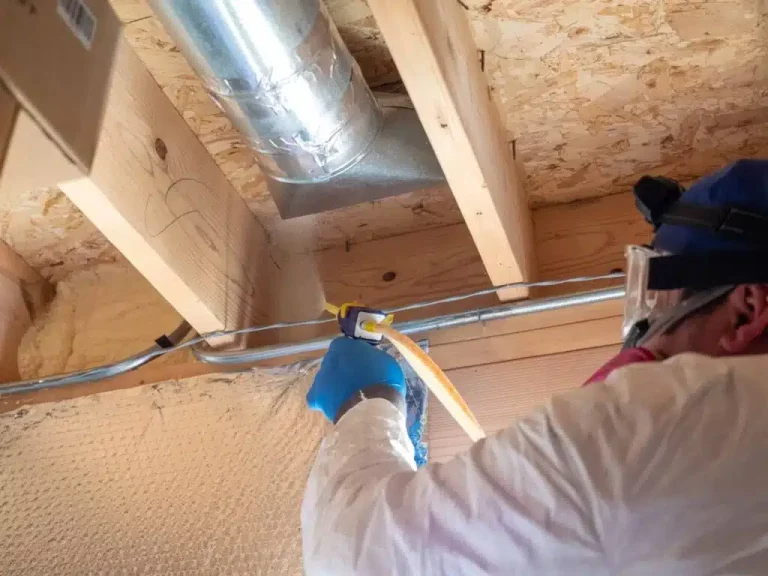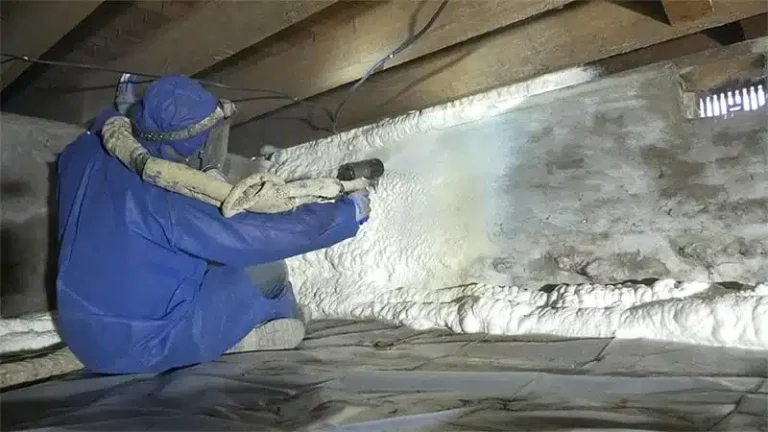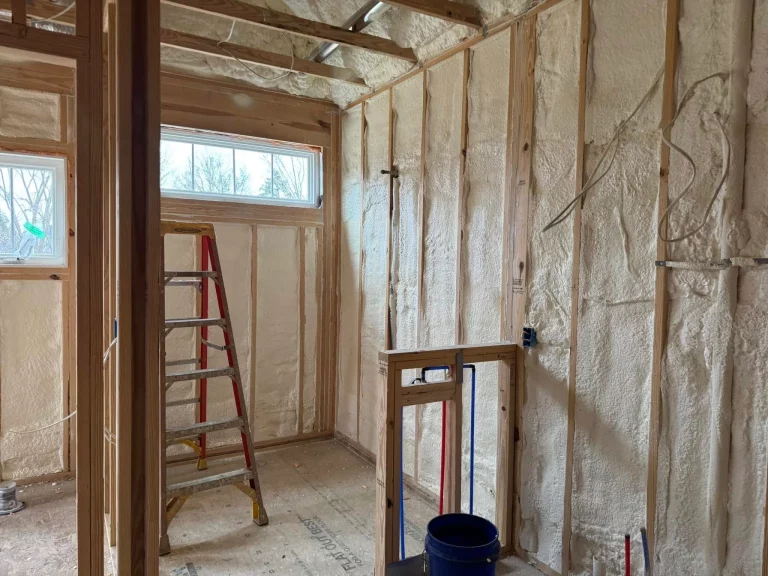

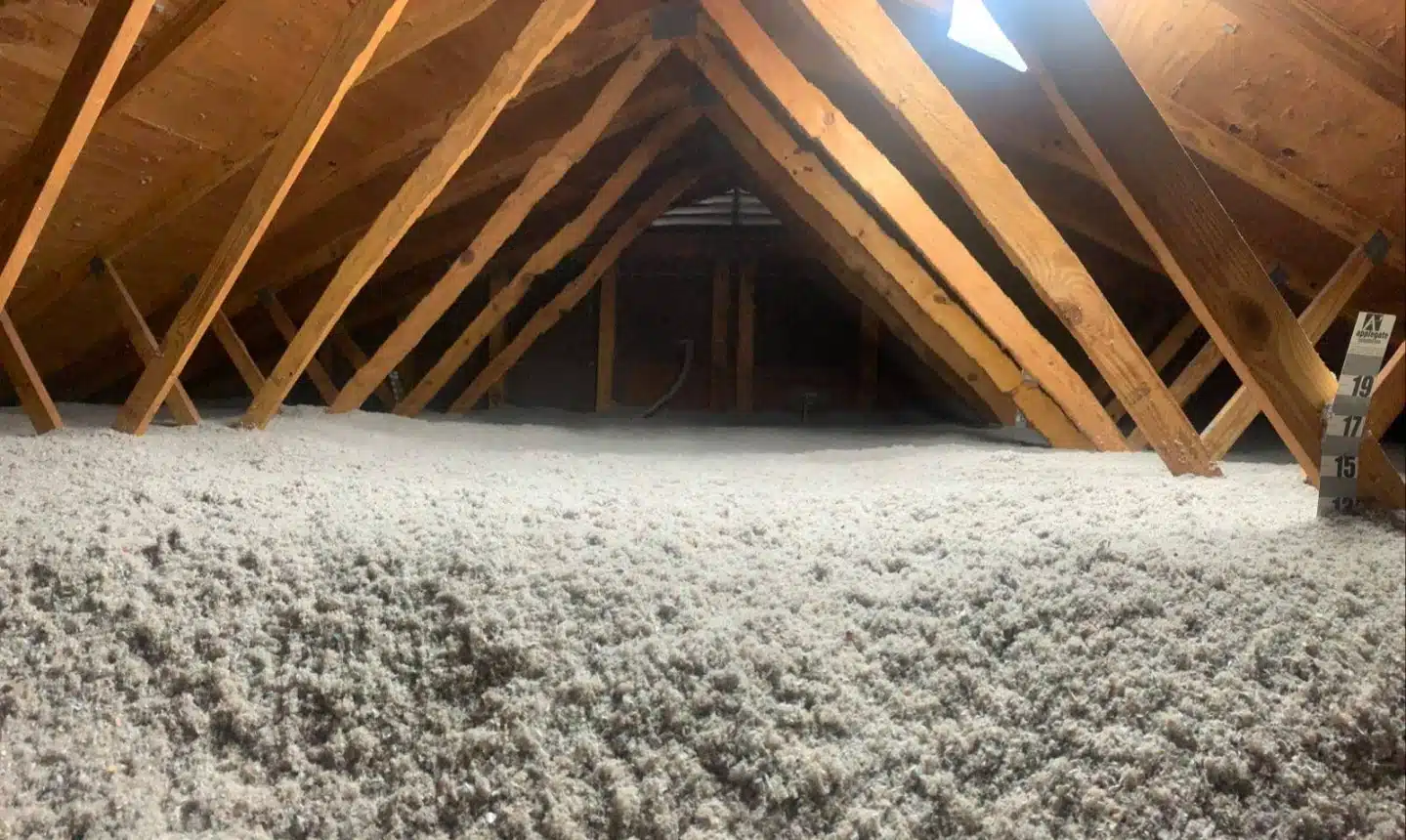
Attic spray foam insulation services provide a superior alternative to traditional insulation by creating a total thermal envelope and air seal in a single application. While traditional options like fiberglass or cellulose only slow down heat transfer, spray foam stops air movement entirely by expanding into cracks and voids. This dual-action performance results in significantly higher energy efficiency and structural protection. In the short term, spray foam requires a higher initial investment compared to batts or blown-in materials. However, its long-term strategic positioning is much stronger because it does not sag, settle, or lose R-value over time.
For property owners in Fresno, switching to spray foam is often the most effective way to manage extreme temperature fluctuations. Traditional insulation allows conditioned air to leak out through the roof, forcing HVAC systems to work harder. By contrast, attic spray foam insulation services eliminate these leaks, leading to immediate reductions in monthly utility bills. When evaluating costs, owners should look beyond the sticker price and consider the total lifecycle value, as spray foam frequently pays for itself through energy savings and reduced wear on heating and cooling equipment.
TL;DR
- Efficiency: Spray foam provides both insulation and air sealing in one step, whereas fiberglass requires separate sealing.
- Lifespan: Spray foam lasts the life of the building without requiring top-ups, unlike cellulose, which settles and loses effectiveness.
- Moisture Control: Closed-cell spray foam acts as a vapor barrier, preventing mold growth and wood rot in attic spaces.
- Cost Gap: Initial installation costs for spray foam are typically 2 to 3 times higher than those of traditional methods, but the return on investment is achieved in 3 to 5 years.
- Structural Integrity: Closed-cell foam can increase the roof’s racking strength, providing better protection during high-wind events.
- Space Optimization: Spray foam applied to the roof deck creates a conditioned attic, making the space suitable for storage or mechanical equipment.
The Science of Superiority: Comparing Insulation Technologies
When you are looking for home insulation solutions, the choice usually falls between traditional loose-fill or batt insulation and modern spray-applied polymers. Traditional insulation works like a wool sweater; it keeps you warm but allows the wind to blow right through the fibers. Spray foam works like a windbreaker; it stops the air movement while providing the thermal barrier you need.
In Fresno, the heat can be relentless. Attic spray foam insulation services are designed to address the specific challenges of hot climates by moving the thermal boundary from the attic floor to the roofline. This change prevents the attic from becoming a “super-heated” box above your living space. According to the Department of Energy, air leakage accounts for a significant portion of energy wasted in residential buildings. Traditional materials simply cannot compete with the airtight seal that spray foam provides.
Performance and Durability of Modern Foam
One of the primary benefits of spray foam is its chemical stability. Fiberglass batts are prone to moisture retention, which can lead to sagging and the formation of “cold spots.” Over time, these materials can also become nesting grounds for pests. Spray foam is an inert polymer that does not provide a food source for insects or rodents, and it maintains its physical shape for decades.
| Feature | Spray Foam (Open/Closed Cell) | Fiberglass Batts | Blown-In Cellulose |
|---|---|---|---|
| Air Sealing | Excellent (Self-Sealing) | Poor (Requires extra steps) | Moderate |
| R-Value per Inch | 3.5 to 7.0 | 2.2 to 3.8 | 3.2 to 3.8 |
| Moisture Resistance | High (Closed-cell is waterproof) | Low (Holds moisture) | Low (Can mold) |
| Settling Issues | None | Potential sagging | High (Loses height over time) |
| Typical Lifespan | 50+ Years | 15 to 25 Years | 20 to 30 Years |
Maximizing Attic Energy Savings
Implementing attic energy savings strategies is a priority for any property owner facing rising utility costs. Traditional insulation often fails because of “thermal bridging” and convective loops within the attic. Air escapes through recessed lights, plumbing stacks, and top plates. Even with thick layers of fiberglass, these air leaks remain.
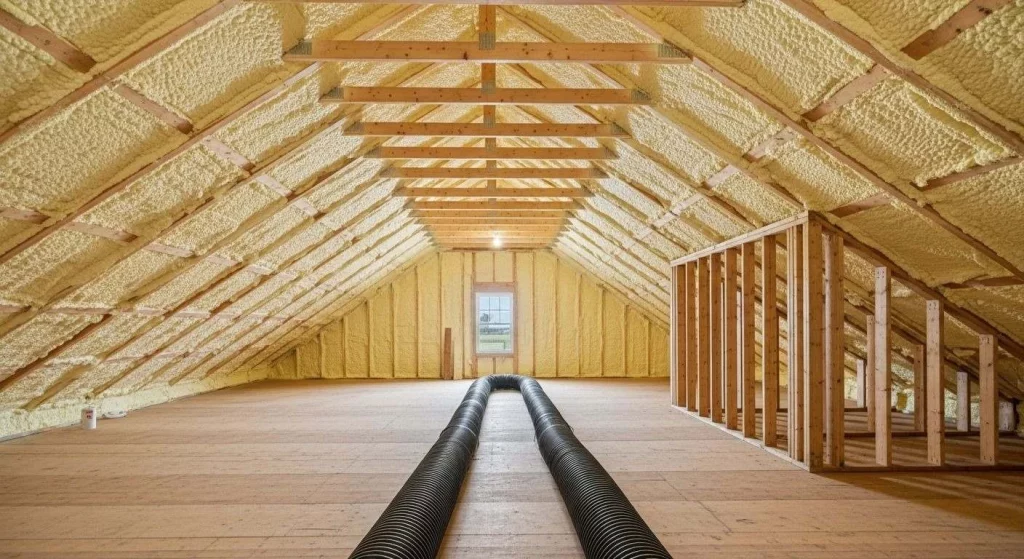
Our attic spray foam insulation services target these specific leak points. By applying the foam directly to the underside of the roof deck, we bring the attic into the “conditioned space” of the home. This means your ductwork, often located in the attic, is no longer sitting in 130-degree heat. This single change can reduce HVAC load by up to 40%. The International Code Council provides guidelines on how unvented attic assemblies using spray foam contribute to overall building safety and efficiency.
Strategic Comparison: Why Foam Wins Against Traditional Insulation Alternatives
For those looking for traditional insulation alternatives, it is important to understand the concept of the “stack effect.” In winter, warm air rises and escapes through the roof. In summer, hot air pushes its way in through the same gaps. Because spray foam expands up to 100 times its liquid volume, it finds every tiny crevice that a human hand could never reach with a fiberglass batt.
Visual Suggestion: Heat Transfer Comparison
- Graph Type: Dual Line Graph
- X-Axis: Outside Temperature (60°F to 110°F)
- Y-Axis: Attic Temperature (°F)
- Data Line 1: Traditional Attic Floor Insulation (shows attic temp rising significantly above outdoor temp)
- Data Line 2: Sealed Spray Foam Roof Deck (shows attic temp staying within 10 degrees of indoor temp)
Real-World Performance Scenarios
Understanding how these materials perform in real-world buildings helps clarify the value of attic spray-foam insulation services.
| Scenario | Property Type | Recommended Option | Estimated Cost Impact |
|---|---|---|---|
| Old Home Renovation | 1950s Bungalow | Open-cell Spray Foam | High upfront, 30% energy drop |
| New Construction | Modern 2-Story | Closed-cell Spray Foam | Integrated into the mortgage, 40% savings |
| Ductwork in Attic | Suburban Ranch | Roof Line Spray Foam | Immediate HVAC efficiency gain |
| Rental Property | Multi-unit | Blown-In (Budget option) | Low cost, minimal long-term gain |
Critical Factors Influencing Your Decision
Not every project is identical, and several variables will determine if attic spray foam insulation services are the right fit for your specific needs.
- Climate Zone: In high-heat areas like Fresno, the air-sealing properties of foam are significantly more valuable than in temperate climates.
- Attic Usage: If you plan to use your attic for storage or your furnace is located there, spray foam is the only logical choice to keep the area properly insulated.
- Budget vs. ROI: While traditional insulation is cheaper today, the Building Performance Institute notes that professional air sealing and high-performance insulation offer some of the highest returns of any home improvement.
- Roof Condition: Spray foam should only be applied to a roof in good repair. If the roof is leaking, those repairs must happen before the foam is installed.
- Ventilation Requirements: Traditional insulation requires a vented attic to manage moisture. Spray foam often creates an “unvented” attic, which changes how the house breathes.
Who This Is For / Who This Is NOT For
This is ideal for:
- Homeowners are experiencing high energy bills and uneven room temperatures.
- Property owners with HVAC equipment or ductwork in the attic.
- Builders looking to meet strict modern energy codes with a single product.
- People living in areas prone to high winds or dust benefit from foam, which creates a tighter building shell.
This is NOT for:
- Temporary structures or buildings slated for demolition in the near future.
- Projects with extremely restricted immediate cash flow where long-term ROI is not a priority.
- Homeowners with a roof that requires imminent replacement.
Achieving Total Home Comfort with Supreme Spray Foam Fresno
At Supreme Spray Foam Fresno, we specialize in transforming inefficient attics into high-performance thermal barriers that save you money year after year. Our team understands the unique climate challenges of the Central Valley and provides expert attic spray-foam insulation services to protect your investment. We don’t just add insulation; we engineer a more comfortable and durable environment for your family or business.
Ready to lower your energy bills? Request a quote today!
Company: Supreme Spray Foam Fresno Phone: (559) 545-0800 Email: [email protected]
Stop letting your hard-earned money leak out through your roof and start experiencing the difference of a professionally sealed home.
Frequently Asked Questions
How much can I really save with attic spray foam insulation services?
Most property owners see a reduction in heating and cooling costs between 15% and 40%, depending on their previous insulation levels. The most significant savings occur in homes where ductwork is located in the attic.
Is spray foam safe for indoor air quality?
Yes, once the foam has cured (typically within 24 hours), it is entirely inert and does not off-gas. It actually improves air quality by blocking outdoor pollutants, dust, and allergens from entering through the attic.
Does spray foam trap moisture and rot my roof?
No, when installed correctly by professionals, spray foam prevents warm, moist indoor air from reaching the cold roof deck. This actually reduces the risk of condensation and wood rot compared to traditional vented attics.
Can I install spray foam over my existing fiberglass insulation?
It is generally recommended to remove old, dirty insulation before applying spray foam. This allows the foam to adhere directly to the substrate and ensures we can identify any underlying structural or wiring issues.
How long does the installation process take?
For a standard residential attic, our team can usually complete the preparation and spraying within one to two days. Larger commercial projects may take longer depending on the complexity and square footage.
Sources
- U.S. Department of Energy: https://www.energy.gov/energysaver/insulation
- International Code Council (ICC): https://www.iccsafe.org/
- Building Performance Institute (BPI): https://www.bpi.org/
- Spray Polyurethane Foam Alliance (SPFA): https://www.sprayfoam.org/

- What Makes Crawl Space Spray Foam a Choice for Better Air Quality in Oakhurst, CA? - September 22, 2026
- Crawl Space Spray Foam: Types, Benefits, Costs, Installation, and Guide - September 22, 2026
- How Long Should Spray Foam Insulation Last Before It Needs to Be Repaired in Ahwahnee, CA? - September 11, 2026