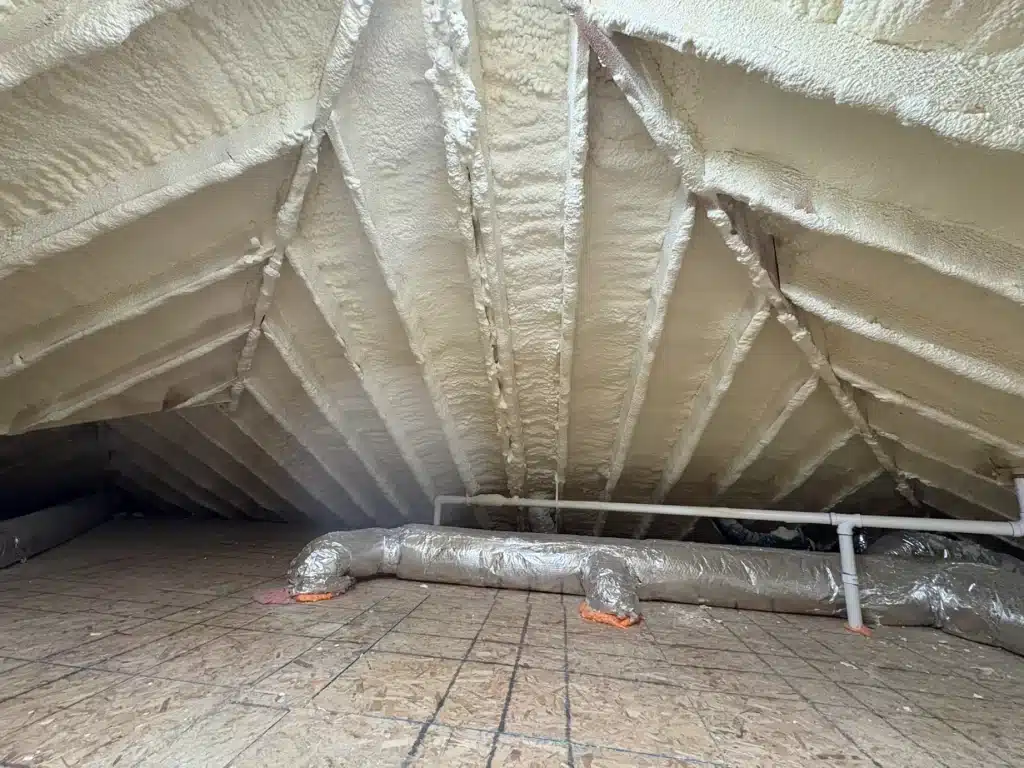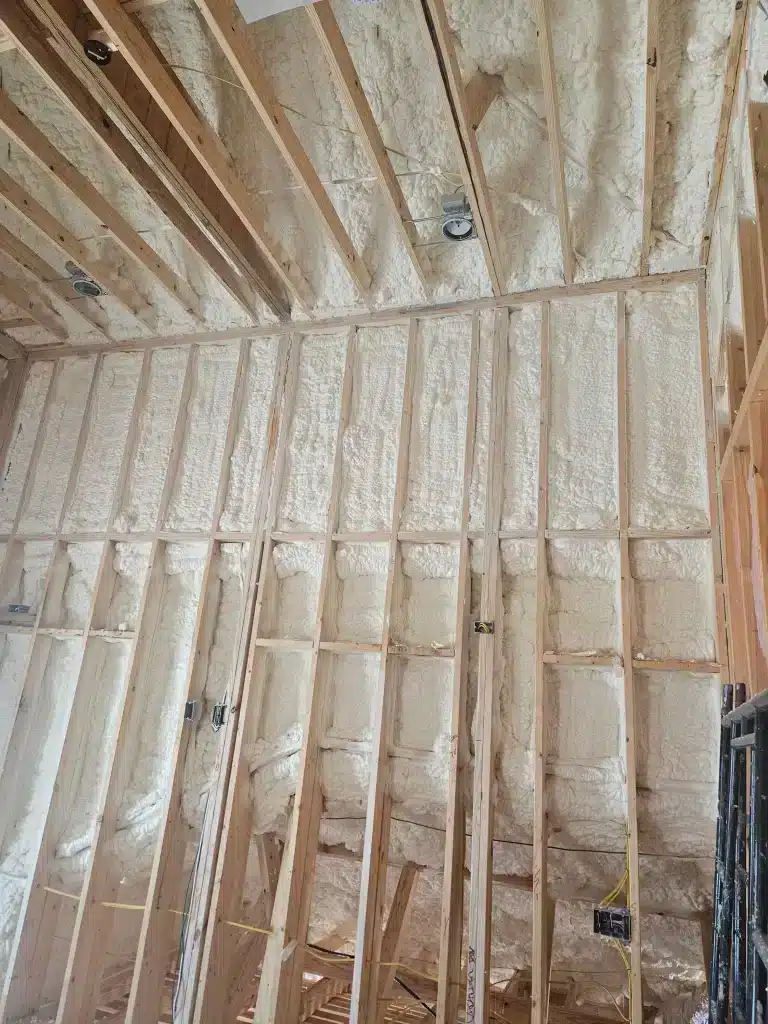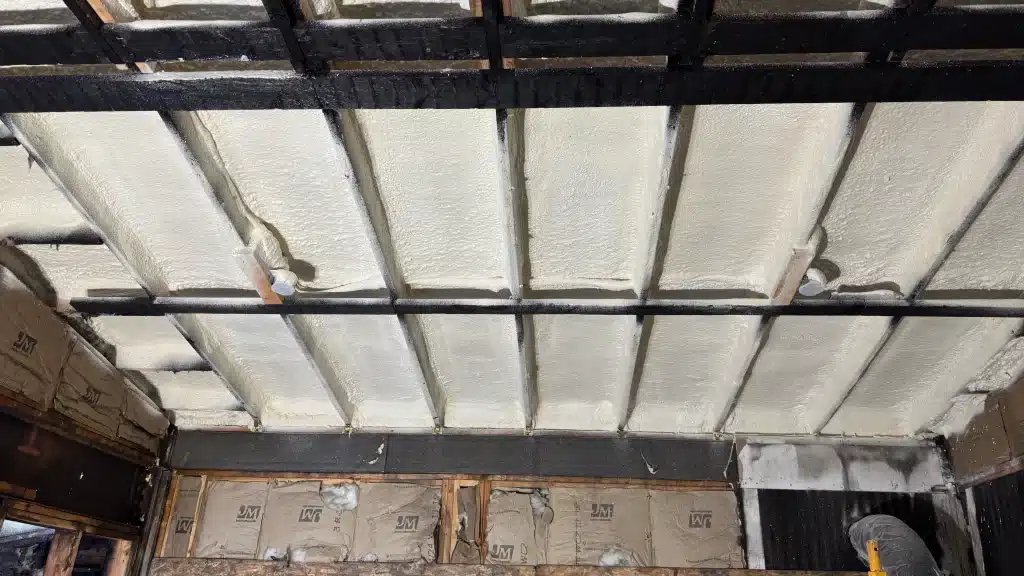

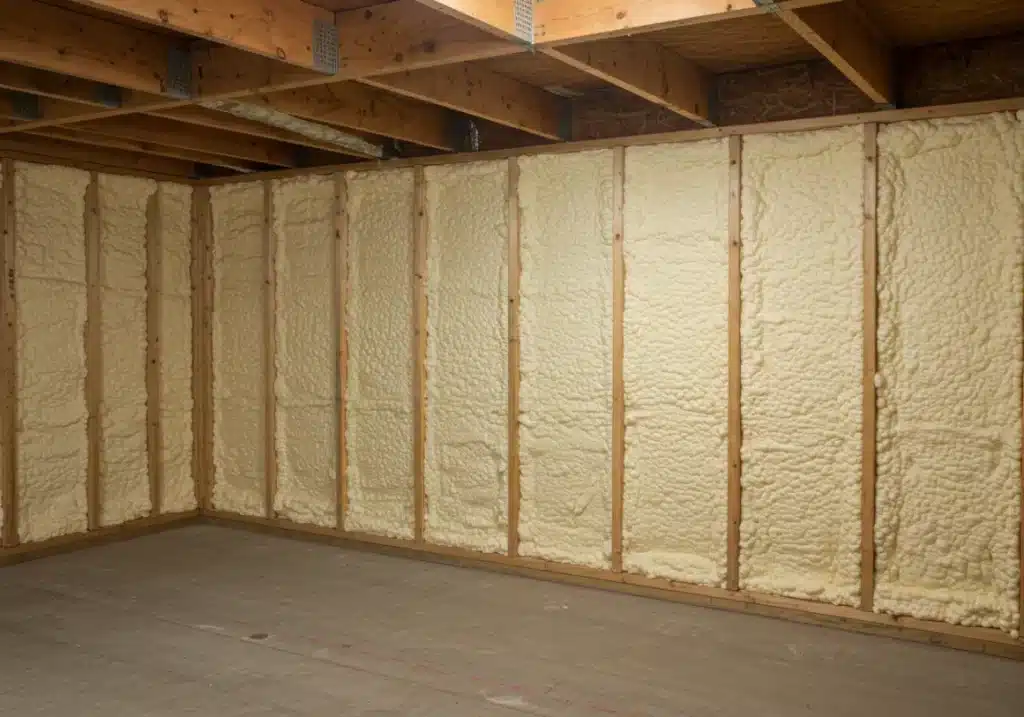
Spray foam insulation prevents ice dams by establishing an airtight seal that stops warm indoor air from escaping into the attic. When warm air remains inside the living space rather than heating the roof deck, snow on the roof melts naturally rather than melting from beneath and refreezing at the eaves. This thermal barrier addresses the root mechanical cause of ice dams rather than just treating the symptoms.
Homeowners frequently rely on temporary fixes like heat tape or aggressive gutter cleaning, but these methods fail to resolve the underlying issue. Ice dams form when roof temperatures are inconsistent. By applying spray foam, specifically closed-cell varieties, the roof deck stays consistently cold during the winter months. This prevents the melt-freeze cycle that forces water under shingles and into the home. Supreme Spray Foam- Fresno helps property owners understand the physics behind these leaks to ensure long-term structural protection.
The Science Behind Ice Dams and Roof Leaks
To understand how spray foam works, you must first understand the formation of an ice dam. These occur when heat from the living areas of a home escapes into the attic. This escaping heat warms the upper section of the roof deck, causing the bottom layer of snow to melt.
The melted water runs down the roof until it reaches the eaves. Since the eaves extend past the heated wall line, they are much colder. When the water hits this cold surface, it refreezes. Over time, this ice builds up to form a barrier, or “dam.” Subsequent meltwater backs up behind this dam, seeps under the shingles, and leaks into the attic, damaging insulation, drywall, and ceilings.
Data indicates that air leakage is a primary culprit. According to the Department of Energy, air leaks can account for up to 40% of a home’s energy loss. This wasted energy does more than raise utility bills; it actively destroys the roof system during winter.
Air Sealing: The Spray Foam Advantage
Traditional insulation materials like fiberglass or cellulose primarily slow conductive heat transfer. They act like a wool sweater. However, they do not stop air movement. Warm air can pass right through fiberglass, carrying heat directly to the underside of the roof.
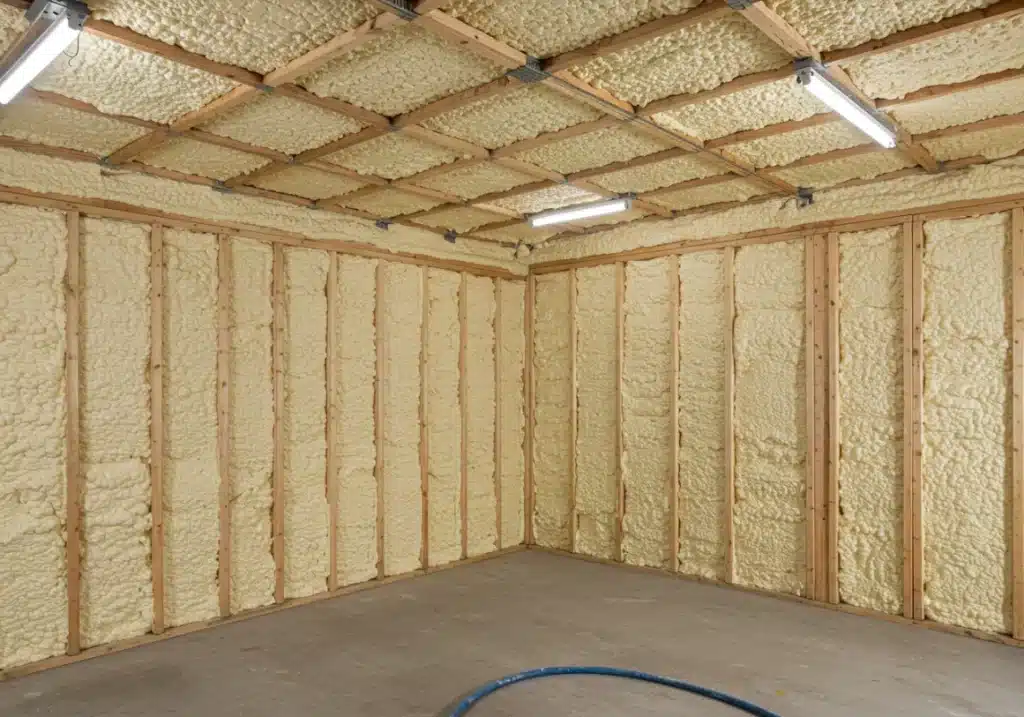
The University of Minnesota Extension notes that preventing ice dams requires sealing all points where warm air leaks from the living space into the attic, a task that traditional insulation alone often fails to accomplish. Spray foam is unique because it expands to fill gaps, cracks, and crevices. Upon application, it solidifies into a rigid barrier that stops both airflow and heat transfer.
Eliminating the Stack Effect
Houses act like chimneys in winter. Warm air rises, creating pressure that pushes against the ceiling. In homes with traditional insulation, this pressurized warm air forces its way through light fixtures, wire penetrations, and attic hatches. Spray foam seals these bypasses thoroughly. When the warm air cannot escape, the attic temperature remains close to the outdoor temperature, preventing the snow from melting artificially.
Bonus Tip: Pay special attention to the attic hatch or pull-down stairs. This is often the single largest source of heat leakage. Ensure this area is sealed and insulated to the same level as the rest of the attic.
Closed-Cell vs. Open-Cell for Roof Protection
Not all spray foam is created equal when it comes to fighting ice dams. While both types provide an air seal, closed-cell foam offers distinct advantages for roof applications.
Closed-cell foam is dense and rigid. It acts as a Class II vapor retarder, meaning it prevents moisture from passing through. This is critical in winter climates. If moist interior air hits a cold roof deck, condensation forms, leading to mold and rot. Closed-cell foam prevents this warm, humid air from ever touching the cold roof deck.
Comparison of Insulation Types for Ice Dam Prevention
| Feature | Fiberglass Batts | Blown-in Cellulose | Open-Cell Spray Foam | Closed-Cell Spray Foam |
|---|---|---|---|---|
| Air Sealing Ability | Poor (Allows airflow) | Moderate (Settles over time) | Excellent | Excellent |
| Moisture Resistance | Absorbs water | Absorbs water | Permeable (needs vapor barrier) | Waterproof / Vapor Barrier |
| R-Value per Inch | ~3.1 – 3.4 | ~3.2 – 3.8 | ~3.5 – 3.7 | ~6.0 – 7.0 |
| Structural Rigidity | None | None | Low | Adds structural strength |
Market Data on Water Damage Risks
Ignoring the potential for ice dams carries significant financial risk. Water damage and freezing are among the most common and costly home insurance claims. A report from the Insurance Information Institute notes that water damage and freezing account for nearly 24% of all homeowner insurance losses.
Investing in proper insulation is often less expensive than the deductible and repair costs associated with a severe ice dam event. The damage often extends beyond just the roof, affecting electrical systems, drywall, and flooring.
Things to Consider Before Making a Decision
Before choosing spray foam to combat ice dams, evaluate specific structural and budget factors.
Ventilation Strategy You must decide between a vented or unvented attic assembly. In a vented attic, foam is applied to the attic floor, sealing the living space from the attic. In an unvented (conditioned) attic, foam is applied directly to the underside of the roof deck. Both methods stop ice dams, but using foam on the roof deck (creating a “hot roof” assembly) often requires specific HVAC considerations.
Removal of Old Insulation For the best seal, existing dirty or compressed insulation should be removed. This adds to the project scope but allows the installer to identify and seal all penetrations properly. Putting new foam over old, damaged insulation can hide existing problems rather than solving them.
Initial Investment Spray foam costs more upfront than traditional materials. Property owners should view this as a long-term capital improvement rather than a quick repair. The return on investment comes from energy savings and the prevention of costly water-damage repairs.
Bonus Tip: If you have recessed lighting (can lights) in your top-floor ceiling, ensure they are “IC-rated” (Insulation Contact) before spraying foam around them. If they are older, non-IC lights, they will need to be replaced or boxed out to prevent fire hazards.
Summary and Advice
Ice dams are a symptom of a failed thermal boundary, not just a weather phenomenon. Spray foam helps stop roof leaks caused by ice dams by treating the building envelope as a complete system. It seals air leaks, manages moisture, and maintains a consistent roof deck temperature.
Property owners dealing with recurring icicles and leaks should stop looking for temporary exterior fixes and examine the attic. Assess the current insulation levels and check for air leaks. If the goal is permanent protection and energy efficiency, creating a seamless air barrier is the most effective strategy.
Contact Supreme Spray Foam- Fresno
For a permanent solution to winter roof leaks and energy loss, a professional assessment is necessary. Supreme Spray Foam- Fresno provides expert inspections to identify thermal bypasses and recommends the correct insulation strategy for your specific structure.
Phone: (559) 545-0800 Email: [email protected]
Protect your investment by addressing the root cause of ice dams today.
Frequently Asked Questions
Will spray foam rot my roof deck?
No. This is a common misconception. Rot occurs when moisture gets trapped against the wood. Closed-cell spray foam adheres directly to the wood, eliminating gaps where condensation can form. Preventing moist air from reaching the cold roof deck actually protects the wood from rot.
Can spray foam be applied in the winter?
Yes, professional installers use heated rigs to bring the chemicals to the correct temperature before application. However, the substrate (the wood surface) needs to be dry and within a specific temperature range. Experienced technicians know how to condition the space to ensure proper adhesion even in colder months.
How long does spray foam insulation last?
Spray foam is an indefinite material. It does not sag, settle, or degrade over time like cellulose or fiberglass. Unless mechanically damaged or exposed to direct sunlight (UV rays), it will last for the life of the building.
Does spray foam void shingle warranties?
It depends on the manufacturer. Some shingle manufacturers previously voided warranties for “hot roof” assemblies (unvented attics), claiming the shingles overheated. However, studies show the temperature difference is negligible (often less than 5 degrees). Most modern warranties now accept properly designed spray foam systems, but you should always check the specific documentation for your shingles.
Sources
- Department of Energy – Information on how air leaks contribute to energy loss and the importance of insulation.
- University of Minnesota Extension – Detailed analysis of ice dam mechanics and the importance of air sealing and insulation.
- Insurance Information Institute – Statistical data regarding homeowners insurance losses due to water damage and freezing.