
Adding a new room or extension to your home is a major investment, and the insulation choices you make during construction will affect your comfort, energy costs, and indoor air quality for decades. High performance insulation does more than meet minimum building code requirements. It seals air leaks, resists moisture, and creates a thermal barrier that keeps conditioned air exactly where it belongs. The right insulation depends on your climate zone, the type of addition you are building, and whether you want to go beyond code-minimum for long-term savings. Skipping or under-investing in insulation during a home addition is one of the most expensive mistakes a homeowner can make, and it is nearly impossible to fix affordably once walls and ceilings are closed.
TL;DR
- Building code minimums are a floor, not a ceiling. The 2021 IECC raised R-value requirements across most climate zones, but going above code pays for itself over time.
- Air leakage accounts for roughly 4 quads of energy loss annually in U.S. buildings, and home additions with poor air sealing contribute directly to that figure.
- Proper insulation and air sealing can save homeowners an average of 15% on heating and cooling costs according to ENERGY STAR modeling.
- It is more cost-effective to install insulation during construction than to retrofit later, as stated by the U.S. Department of Energy.
- Uncontrolled moisture in wall cavities can lead to mold growth, structural damage, and degraded insulation performance, as documented by the EPA.
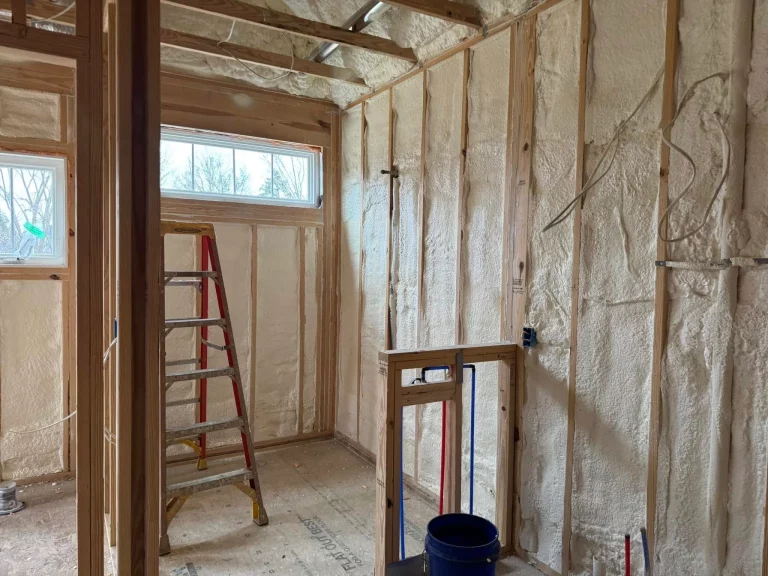
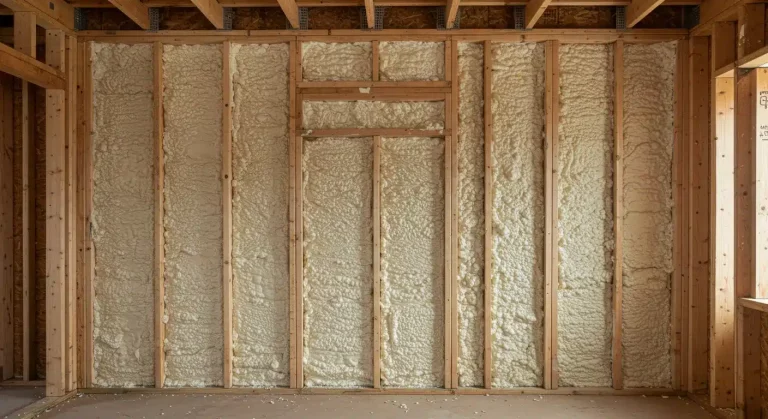
- High performance materials like spray foam provide both insulation and an air barrier in a single step, reducing the risk of gaps and thermal bridging common with batt insulation.
What Building Codes Actually Require (And Why It Matters)
Most state and local building codes base their insulation requirements on the International Energy Conservation Code (IECC). The 2021 IECC significantly increased minimum R-values compared to earlier editions. For example, in Climate Zone 3 (which includes much of California’s Central Valley), ceiling insulation jumped from R-38 to R-49, and wood frame wall requirements now include options for continuous insulation in addition to cavity fill.
Here is a simplified look at how wall insulation requirements changed under the 2021 IECC:
| Climate Zone | 2009 Wall Requirement | 2021 Wall Requirement | Change |
|---|---|---|---|
| Zone 2 | R-13 | R-13 or R-0 + R-10 CI | Added continuous insulation option |
| Zone 3 | R-13 | R-20 or R-13+R-5 CI or R-0+R-15 CI | Significant increase |
| Zone 4 (non-marine) | R-13 | R-30 or R-20+R-5 CI or R-13+R-10 CI | Major increase |
| Zone 5 | R-20 or R-13+R-5 | R-30 or R-20+R-5 CI or R-13+R-10 CI | Major increase |
CI stands for continuous insulation, applied to the interior or exterior of the wall assembly. Continuous insulation eliminates thermal bridging through wood studs, which is one of the biggest weaknesses of cavity-only insulation.
The DOE notes that state and local codes set minimums, but an energy-efficient home should exceed those mandates. When building an addition, you have full control over every wall, ceiling, and floor assembly, which makes it the ideal time to invest in higher performance rather than settle for code-minimum.
The Hidden Cost of Air Leakage
Insulation R-values tell only part of the story. A wall insulated with R-21 fiberglass batts but riddled with air leaks will perform far worse than a properly sealed wall with a lower rated insulation material. The DOE’s Energy Saver guide states that energy losses from air leakage can actually exceed conductive losses in a well-insulated home.
Oak Ridge National Laboratory research confirms that air leakage in buildings accounts for approximately 4 quads (4 quadrillion BTUs) of energy loss each year in the United States, or roughly 4% of total national energy use. In a home addition, this shows up as drafts, temperature swings, and higher utility bills.
High performance insulation addresses this in two ways:
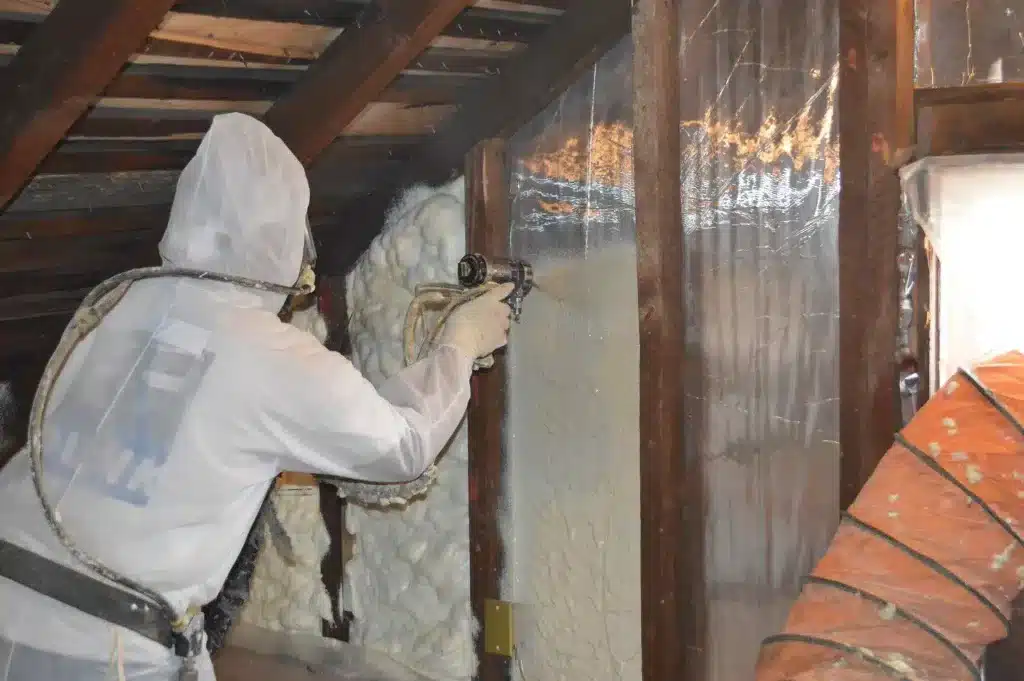
- Air sealing as part of the insulation system. Spray foam insulation expands to fill gaps, cracks, and penetrations that batt insulation cannot reach. It creates an air barrier that significantly reduces infiltration.
- Continuous thermal protection. Rigid foam board or spray foam applied continuously reduces thermal bridging through framing members, which traditional cavity insulation leaves exposed.
The EPA’s ENERGY STAR program estimates that sealing air leaks and adding insulation can save an average of 15% on heating and cooling costs, with savings reaching 18% or more in northern climate zones.
Moisture Control: The Problem You Cannot See
Moisture management is arguably the most overlooked aspect of insulating a new home addition. When warm, humid air meets a cold surface inside a wall cavity, condensation forms. Over time, this moisture can saturate insulation materials, promote mold growth, rot wood framing, and create serious indoor air quality problems.
The EPA’s moisture control guidance warns that wet or damp construction cavities are major sources of mold and can significantly degrade the performance of insulation, increasing energy costs. The agency emphasizes that the building envelope is the first line of defense, and that framed walls, floors, and roofs should have proper vapor and air retarders on the correct side of the insulation.
High performance insulation helps manage moisture in several ways:
- Closed-cell spray foam acts as both a vapor barrier and an air barrier, preventing moisture from entering wall cavities in the first place.
- Rigid foam insulation provides a drainage plane when installed on the exterior of wall assemblies, allowing any trapped moisture to drain rather than accumulate.
- Proper air sealing prevents the convective loops that carry moisture-laden air into wall cavities and attic spaces.
In mixed climates like California’s Central Valley, where both heating and cooling seasons create different moisture challenges, getting the insulation and air sealing strategy right from the start is essential for long-term durability.
High Performance Insulation Options for Home Additions
Not all insulation materials deliver the same results in a home addition. The table below compares the most common options across key performance factors:
| Insulation Type | R-Value Per Inch | Air Sealing | Moisture Resistance | Best Application |
|---|---|---|---|---|
| Closed-cell spray foam | R-6.0 to R-7.0 | Excellent (acts as air barrier) | High (vapor retarder) | Walls, crawl spaces, rim joists |
| Open-cell spray foam | R-3.5 to R-3.7 | Excellent (acts as air barrier) | Low (requires separate vapor barrier) | Walls, ceilings, attics |
| Fiberglass batts | R-2.9 to R-3.8 | Poor (no air sealing) | Low (absorbs moisture) | Standard wall cavities (with separate air sealing) |
| Rigid foam board | R-3.8 to R-6.5 | Moderate (depends on sealing) | Varies by type | Continuous exterior insulation |
| Blown-in cellulose | R-3.1 to R-3.8 | Moderate (fills gaps better than batts) | Moderate (treated with borates) | Attics, existing wall cavities |
The DOE recommends that in most climates, a combination of cavity insulation and insulated sheathing will deliver the best results. For new additions specifically, spray foam insulation offers a unique advantage because it insulates and air seals in a single application step, reducing the chance of installation errors that are common when air sealing and insulation are handled as separate trades.
Why New Additions Are the Perfect Opportunity
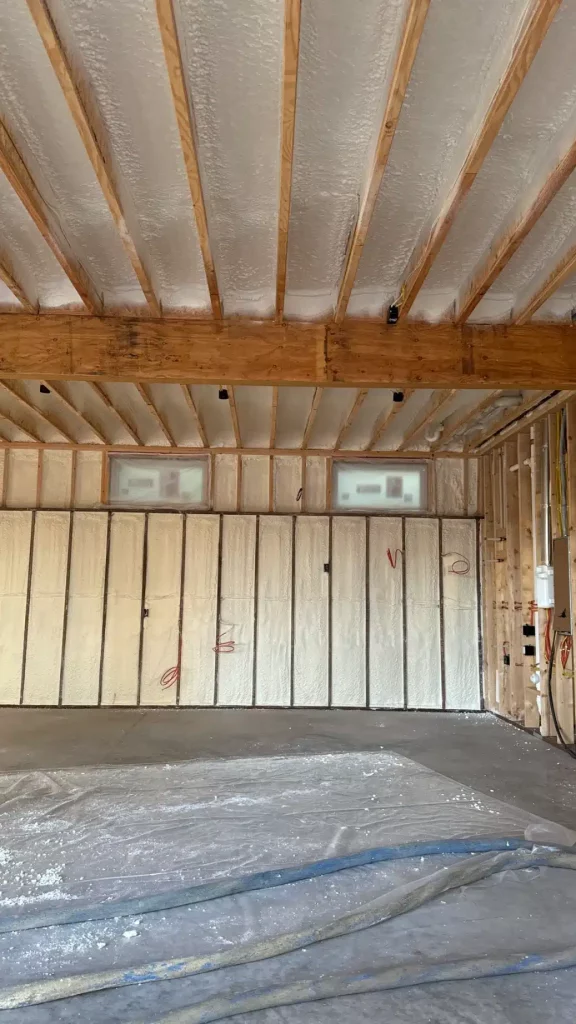
Retrofitting insulation into an existing home is difficult and expensive. Walls must be opened, drywall replaced, and finishes restored. The Department of Energy explicitly states that it is more cost-effective to add insulation during construction than to retrofit it after the house is finished.
A home addition gives you several advantages:
- Full access to framing cavities. Every stud bay, ceiling joist bay, and floor cavity is open and accessible, allowing for thorough insulation coverage.
- Control over the building envelope. You can design the addition with continuous insulation, proper air barriers, and integrated moisture management from the start.
- Ability to match or exceed the main house. If your existing home is under-insulated (which is common in older construction), the addition can be built to a higher standard and connected to the existing HVAC system efficiently.
- Simplified permitting and inspection. New construction goes through standard code inspections, making it straightforward to verify that insulation meets or exceeds requirements.
Skipping high performance insulation during this window means accepting decades of higher energy bills, comfort complaints, and potential moisture problems that could have been prevented with a relatively small upfront investment.
Recommendations by Addition Type
The right insulation approach depends on what you are adding to your home:
| Addition Type | Recommended Approach | Key Considerations |
|---|---|---|
| Bedroom or living room | Closed-cell spray foam in walls, high R-value in attic | Priority on comfort and quiet; air sealing reduces HVAC load |
| Sunroom or enclosed patio | Closed-cell foam in walls and ceiling | Large glass areas create extreme heat gain/loss; insulation quality matters more here |
| Garage conversion | Spray foam in walls and ceiling, rigid foam on shared wall with garage | Garage walls face exterior temperature extremes; shared walls need air sealing |
| Second-story addition | Spray foam in knee walls and cathedral ceilings, continuous insulation on exterior | Vaulted and knee wall assemblies are notoriously hard to insulate properly |
| Home office | Closed-cell foam in walls, sound-dampening focus | Occupied for long hours; comfort and indoor air quality are priorities |
Signs You Have Found the Right Insulation Approach
Choosing the right insulation for your home addition goes beyond picking a material. Here is what separates a solid approach from a risky one:
- Air sealing is treated as part of the insulation system, not an afterthought. If your contractor discusses air barriers, thermal bridging, and moisture control alongside R-values, that is a good sign.
- The proposal references climate-specific requirements. A reputable installer will know the IECC requirements for your climate zone and be able to explain how their recommendation meets or exceeds them.
- Moisture management is part of the conversation. Proper vapor barrier placement, drainage planes, and condensation risk should be discussed, especially for additions with vaulted ceilings or exterior foam applications.
- Installation quality guarantees are provided. The DOE notes that insulation performance depends heavily on installation quality. A strong installer will warranty their work and explain their quality control process.
- The approach looks at the whole building envelope. Isolated upgrades to one wall or ceiling without considering how the addition connects to the existing house can leave thermal weak points at the transition.
Protect Your Addition Investment with Expert Insulation
Every new home addition deserves insulation that goes beyond the minimum. At Supreme Spray Foam Fresno, our professionals specialize in high performance spray foam insulation for home additions throughout the Fresno area. We evaluate your project’s unique requirements, recommend the right materials for our Central Valley climate, and install with precision so your new space stays comfortable, efficient, and protected from moisture for years to come. Call us at (559) 545-0800 or email [email protected] to get started.
Frequently Asked Questions
Is insulation required for a home addition?
Yes. Building codes require new additions to meet current IECC insulation requirements. In most cases, the addition must comply with the same or similar standards as new construction.
Can I use the same insulation as my existing house?
You can, but your existing home may have been built to older, lower standards. Building an addition is an opportunity to upgrade performance rather than repeat past shortcuts.
What happens if I skip air sealing and only insulate?
Insulation without air sealing still allows drafts and moisture movement through gaps, cracks, and penetrations. The DOE notes that air leakage losses can exceed conductive losses in otherwise well-insulated homes.
How long does spray foam insulation last in a new addition?
Properly installed spray foam insulation is designed to last the life of the building without settling, sagging, or degrading, unlike some fiberglass or cellulose products that can lose effectiveness over time.
Does high performance insulation help with noise control?
Yes. Spray foam insulation fills gaps and crevices that allow sound transmission, providing meaningful noise reduction between rooms and from outside, which is especially useful in bedroom additions and home offices.
Sources
- Insulation for New Home Construction – U.S. Department of Energy – DOE guidance on insulation materials, air sealing, and moisture control for new construction and home additions.
- Methodology for Estimated Energy Savings – ENERGY STAR – EPA/ENERGY STAR modeling data showing average 15% savings on heating and cooling from proper air sealing and insulation.
- 2009-2021 IECC and IRC Minimum Insulation Requirements – Building America Solution Center (PNNL) – Complete table of minimum R-value requirements by climate zone under the 2009 through 2021 energy codes.
- Moisture Control – U.S. Environmental Protection Agency – EPA guidance on building envelope design, condensation prevention, and moisture migration in construction assemblies.
- ORNL-Dow Evaluation of Advanced Energy-Saving Sealant for Buildings – Oak Ridge National Laboratory – ORNL research quantifying air leakage energy losses at 4 quads annually in U.S. buildings.