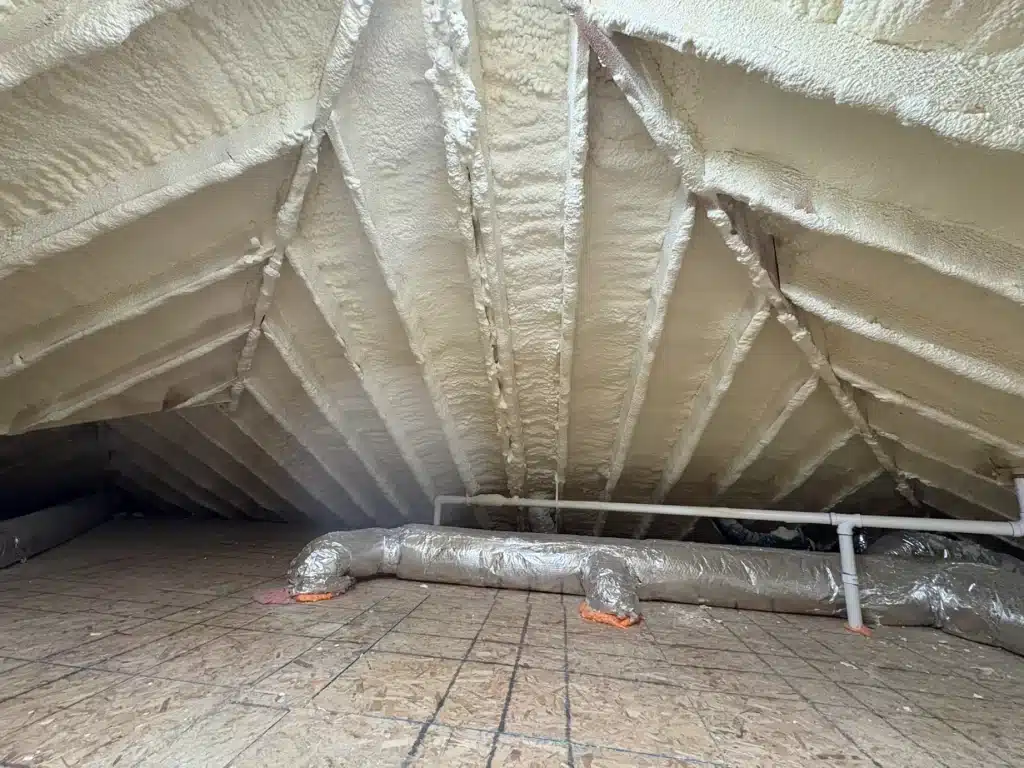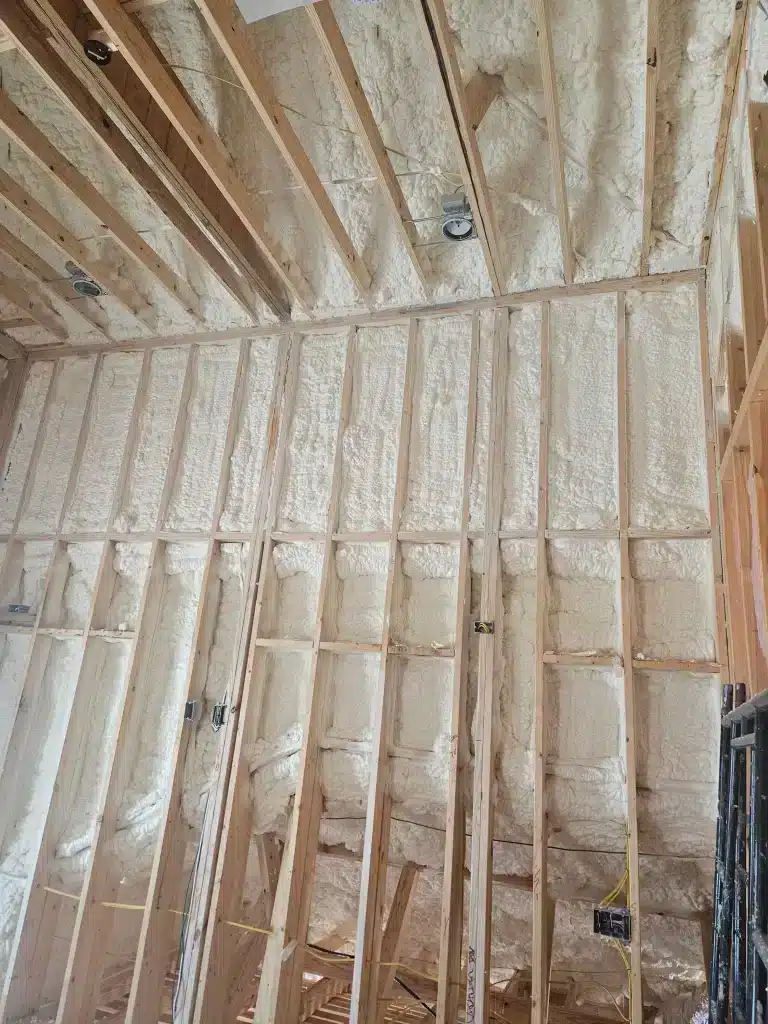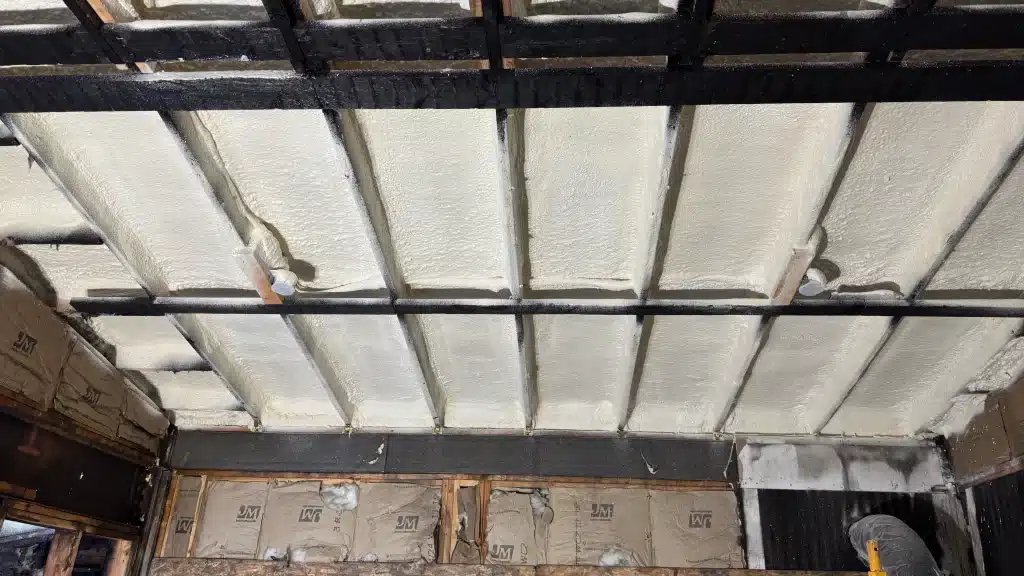

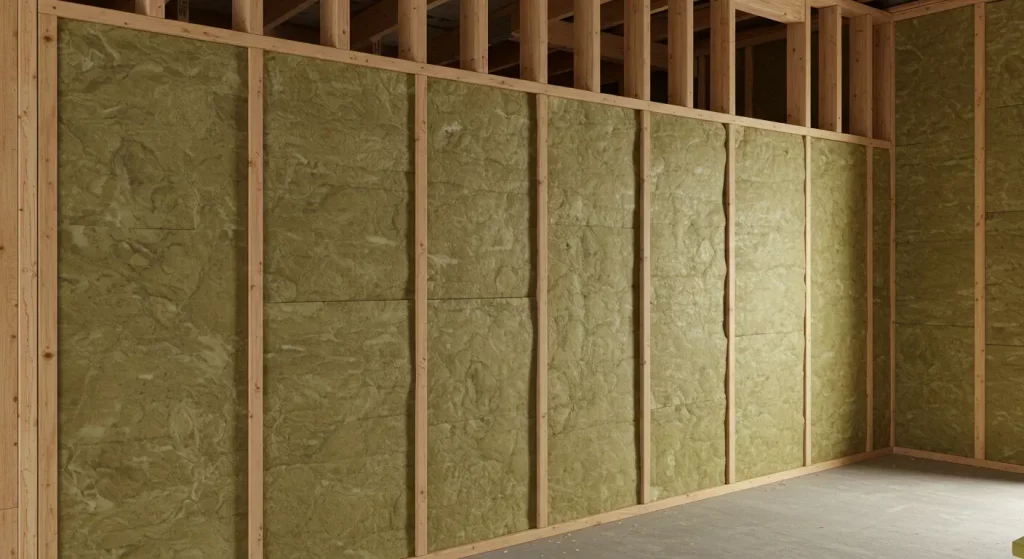
Insulation solution stabilizes temperatures in open spaces by creating a continuous thermal envelope that restricts the flow of conductive, convective, and radiant heat. In structures with high ceilings or large open floor plans, this barrier minimizes the “stack effect,” in which warm air rises and escapes through the roof while drawing in cold air from the bottom. By sealing gaps and providing high thermal resistance, insulation maintains a uniform climate from floor to ceiling, reducing the workload on HVAC systems and eliminating hot or cold spots.
Managing large air volumes requires more than just standard batting material; it demands controlling air movement itself. Without a proper thermal barrier, open spaces experience rapid temperature fluctuations, making heating and cooling inefficient. Experience in the field demonstrates that the right insulation strategy transforms a drafty, echoing shell into a controlled environment where the thermostat reading matches the actual feeling in the room.
The Science of Heat Flow in Large Volumes
Understanding how heat moves is the first step to controlling it. In open spaces like warehouses, pole barns, or homes with cathedral ceilings, heat transfer occurs through three primary mechanisms. Insulation works by disrupting these processes.
Conduction occurs when heat moves through a solid material. In the summer, the sun heats the roof, and that heat travels through the roofing material into the interior supports. Convection involves the movement of air. As air warms, it expands and rises; as it cools, it contracts and sinks. Radiation is the transfer of heat through electromagnetic waves, such as heat radiating down from a hot metal roof.
A report from the Department of Energy states that heat flows from warmer to cooler areas until there is no longer a temperature difference. In an open space without partitions to block airflow, convection currents become powerful. Insulation slows conduction and, depending on the type used, can stop convection by sealing air leaks.
Combatting the Stack Effect
The most significant challenge in maintaining consistent temperatures in open spaces is the stack effect. This phenomenon occurs when warm air rises to the ceiling, creating positive pressure at the top of the building. If there are gaps in the roof or upper walls, this warm air forces its way out.
This escaping air creates negative pressure at the lower levels, sucking in cold outside air through gaps near the foundation, windows, or doors. The result is a continuous cycle where you pay to heat air that immediately rises and leaves the building, while cold drafts constantly chill the floor level.
Effective insulation stops this cycle by:
- ** sealing the upper envelope** so warm air cannot escape.
- Reducing the temperature difference between the interior air and the surface of the roof or walls.
- Eliminating drafts at the ground level by sealing rim joists and foundation gaps.
Bonus Tip: In buildings with ceilings higher than 10 feet, installing ceiling fans alongside insulation helps push warm air back down to the living level during winter, working in tandem with the thermal barrier.
Comparing Insulation Materials for Open Layouts
Not all insulation materials perform equally in large, open environments. The lack of interior walls means the external shell must do all the work. Here is a comparison of how common materials handle the demands of open spaces.
| Feature | Spray Polyurethane Foam (Closed-Cell) | Fiberglass Batts | Rigid Foam Board |
|---|---|---|---|
| Air Sealing | Excellent (Expands to fill gaps) | Poor (Air passes through easily) | Good (If joints are taped) |
| R-Value per Inch | High (R-6 to R-7) | Moderate (R-3 to R-4) | Moderate to High (R-4 to R-6) |
| Moisture Resistance | Impermeable (Acts as a vapor barrier) | Permeable (Absorbs moisture) | Varies (Some are waterproof) |
| Structural Rigidity | Adds structural strength | None | Minimal |
| Best Application | Metal buildings, pole barns, irregular framing | Standard wood framing (dry areas) | Flat ceilings, masonry walls |
According to technical data from the Spray Polyurethane Foam Alliance, closed-cell spray foam is the only material that provides insulation, an air barrier, and a moisture retarder in a single application. This makes it particularly effective for large metal structures where condensation is a concern.
The Role of Air Sealing
R-value (thermal resistance) measures how well a material resists conductive heat flow, but it does not account for air leakage. In open spaces, air leakage is often the primary cause of temperature inconsistency. You can have high R-value fiberglass installed, but if air moves through it, the temperature will fluctuate.
Air sealing prevents “wind washing,” where outside air moves through porous insulation, stripping away the heat it is supposed to hold. By sealing the building envelope tightly, you trap the conditioned air inside. This stability allows the HVAC system to run for shorter cycles, maintaining the set temperature without constant effort.
Market data support the importance of air sealing. Energy Star estimates that sealing air leaks and adding insulation can save homeowners up to 15% on heating and cooling costs. In large, open commercial or agricultural spaces, these savings are often significantly higher due to the sheer volume of conditioned air.
Things to Consider Before Making a Decision
Before selecting an insulation method for an open space, several factors should be evaluated to ensure long-term performance and comfort.
1. The Building’s Function A workshop typically has different requirements than a living room or a storage warehouse. If the space involves high humidity (like an indoor pool or a brewery), moisture control becomes the priority. Fibrous materials like fiberglass can sag or grow mold if they absorb moisture, whereas closed-cell options repel water.
2. HVAC Sizing Proper insulation reduces the load on heating and cooling equipment. If the insulation is upgraded significantly, the existing HVAC system might become oversized. An oversized unit will short-cycle (turn on and off too frequently), leading to poor humidity control and increased wear and tear.
3. Roof Deck Temperature In open spaces with exposed roof decks (like barndominiums), the roof temperature can reach extremes. The insulation must withstand these temperatures without degrading. Some rigid boards can warp under high heat, while spray foam bonds directly to the surface and remains stable.
Bonus Tip: When insulating a metal building, pay attention to the “thermal bridging” caused by steel beams. Steel conducts heat rapidly. Covering these beams with a layer of continuous insulation prevents them from acting as radiator fins that bring heat or cold into the space.
Summary of Temperature Control Strategies
Maintaining consistent temperatures in open spaces relies on stopping the movement of heat and air. A complete thermal boundary eliminates the stack effect, prevents drafts, and stops the transfer of radiant heat from the roof. While various materials exist, those that offer both high thermal resistance and air sealing capabilities provide the most reliable results for high-ceilinged and large-volume structures. Evaluating the specific needs of the building, including moisture levels and structural composition, ensures the chosen solution delivers long-term comfort and efficiency.
Upgrade Your Comfort and Efficiency
Controlling the climate in an ample open space requires a professional approach to insulation. The proper application protects your property, lowers energy costs, and ensures a comfortable environment year-round. Supreme Spray Foam- Fresno assists property owners in identifying the most effective thermal barriers for their specific building types. Contact the team at (559) 545-0800 or via email at [email protected] to discuss your project requirements.
Frequently Asked Questions
What is the best R-value for high ceilings?
The ideal R-value depends on your local climate zone. However, for ceilings, experts generally advise aiming for R-38 to R-49. Higher R-values are beneficial in open spaces to compensate for the larger volume of air that needs to be kept stable.
How does insulation prevent condensation on metal roofs?
Insulation keeps the inner surface of the roof warmer than the air’s dew point. By preventing the warm, moist interior air from touching the cold metal surface, condensation cannot form. This prevents “indoor rain” and protects the structure from rust.
Will insulation reduce the size of the heater I need?
Yes. A well-insulated and air-sealed space requires less energy to heat. Building Science Corporation notes that tightening the building envelope significantly reduces thermal load, allowing for smaller, more efficient HVAC equipment.
How long does spray foam insulation last?
Spray foam is an inert polymer that does not degrade over time. It typically lasts for the life of the building, which can be 80 years or more. Unlike fiberglass, it does not settle or sag, maintaining its R-value indefinitely.
Sources
- Department of Energy – Overview of heat flow mechanisms and insulation principles.
- Spray Polyurethane Foam Alliance – Technical data regarding the properties and performance of spray foam insulation.
- Building Science Corporation – In-depth analysis of building envelopes, ventilation, and thermal loads.