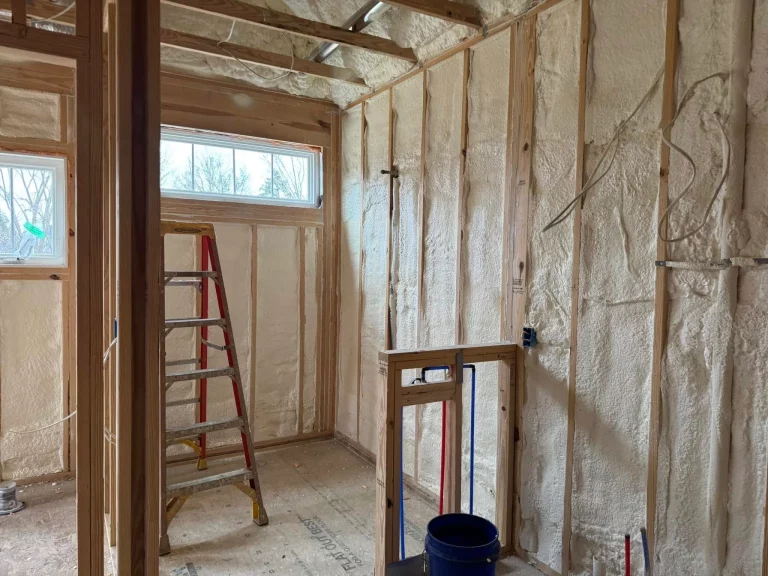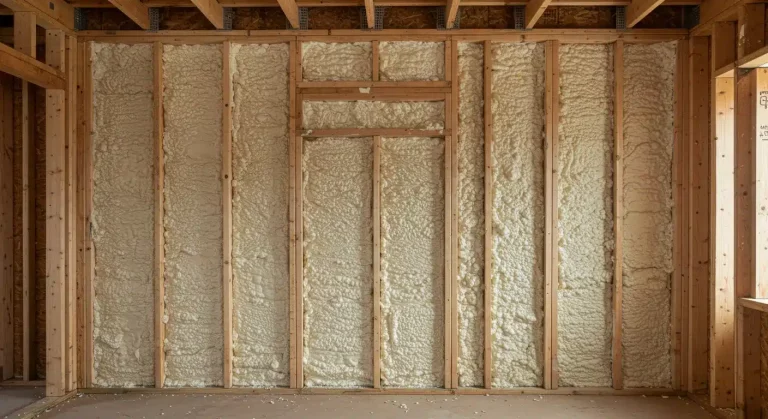

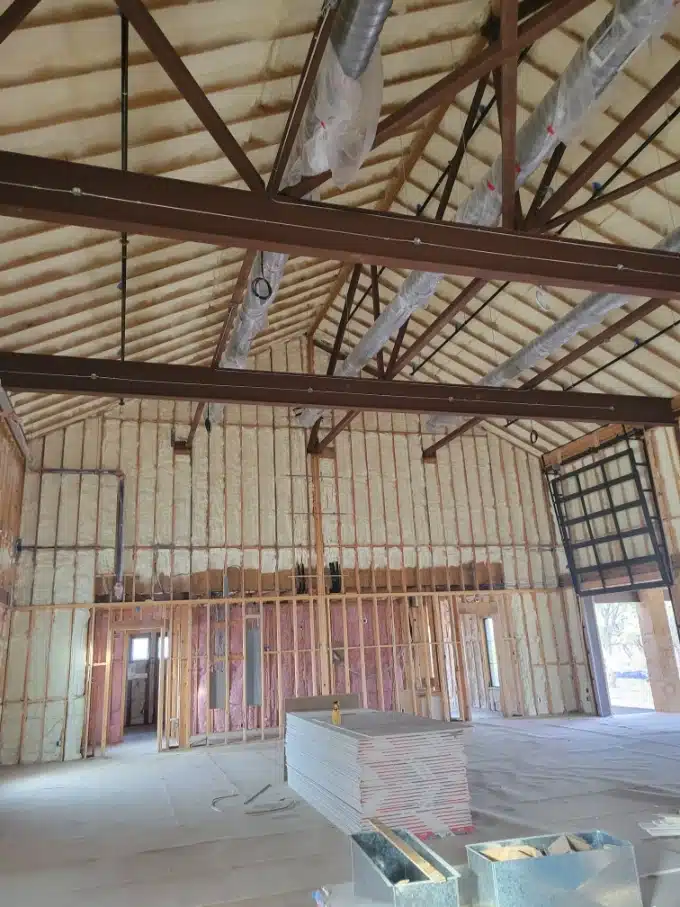
Commercial property owners in Farmersville, CA often think of insulation as a way to manage utility bills, but the connection between commercial insulation services and lower insurance premiums is just as significant. Insurance carriers calculate rates based on risk exposure, and a well-insulated building envelope directly reduces fire damage liability, moisture-related claims, and structural deterioration. When we install spray foam insulation in a commercial facility, we are not just improving thermal performance, we are actively lowering the risk profile that underwriters use to set policy pricing. For Farmersville businesses operating in California’s demanding Central Valley climate, this creates a compounding benefit: lower energy costs, improved building durability, and meaningful insurance savings over the life of the property.
TL;DR
- Insurance underwriters assess fire resistance, moisture control, and building construction type when setting commercial property premiums
- Commercial insulation reduces fire spread risk by filling voids and concealed spaces that would otherwise allow flames and smoke to travel
- Closed-cell spray foam creates a moisture barrier that prevents condensation-related mold growth, a frequent source of commercial property claims
- California’s Title 24 Energy Code assigns Farmersville to a climate zone with specific insulation requirements, making compliance a direct factor in insurability
- Non-residential structure fires caused over $3.6 billion in property losses in 2024 alone, giving insurers strong motivation to reward fire-resistant buildings
- Properly insulated buildings demonstrate lower long-term claims frequency, which carriers translate into reduced premiums
- The right insulation provider should offer documentation of fire ratings, building code compliance, and materials that support your insurance negotiations
How Insurance Companies Evaluate Commercial Buildings
Insurance carriers do not set premiums arbitrarily. They use a structured underwriting process that evaluates the physical condition and risk characteristics of every commercial property. The Insurance Institute for Business and Home Safety (IBHS) and Insurance Information Institute track fire loss data annually, and the numbers are striking. In 2024, non-residential structure fires accounted for 119,500 incidents with over $3.6 billion in direct property losses. Insurers know that buildings with upgraded materials and proper construction details generate fewer and less severe claims.
Underwriters look at three primary risk categories:
| Risk Category | What Insurers Assess | How Insulation Helps |
|---|---|---|
| Fire resistance | Construction type, flame spread ratings, fire barrier integrity | Fills voids and concealed spaces to slow fire spread; meets ASTM E84 flame spread requirements |
| Moisture and water damage | Condensation risk, roof integrity, drainage, mold history | Closed-cell spray foam acts as a vapor barrier, preventing condensation and moisture intrusion |
| Building durability | Envelope integrity, code compliance, structural maintenance | Seals the building envelope against air and moisture infiltration that degrades materials over time |
Farmersville’s location in the Central Valley adds another layer of scrutiny. The area experiences hot summers with significant temperature swings between day and night, creating conditions where condensation can form inside wall cavities if insulation is absent or improperly installed.
Fire Resistance and Insurance Premium Reductions
Fire is the single largest driver of commercial property insurance costs. According to data compiled by the Insurance Information Institute, structure fires caused over $15.3 billion in direct property damage in 2024. For insurance companies, any building feature that slows fire spread or reduces damage severity directly translates into lower expected claim payouts.
Commercial insulation contributes to fire safety in several ways. When spray foam insulation is installed in wall cavities, ceilings, and concealed spaces, it eliminates the air gaps that flames and smoke use to travel through a building. The Insulation Institute notes that filling voids with insulation materials helps block fire and smoke from spreading. For commercial buildings, the International Building Code (IBC) requires foam plastics used in interior walls, ceilings, and floors to meet specific flame spread index ratings (75 or less) and smoke developed index ratings (450 or less) as tested under ASTM E84.
This fire testing documentation is something we provide after every commercial insulation installations, and it gives your insurance agent concrete evidence that your property meets recognized fire safety standards. Some carriers offer premium adjustments when building owners can demonstrate code-compliant fire-rated assemblies, especially in concealed spaces where fire spread often goes undetected until significant damage has occurred.
Moisture Control and Mold Prevention
Moisture-related claims represent one of the fastest-growing cost categories for commercial property insurers. The EPA’s Mold Remediation Guide for Schools and Commercial Buildings identifies moisture control as the single most important factor in preventing mold growth, noting that condensation prevention through proper insulation is a primary defense strategy.
In Farmersville, CA commercial buildings, the problem is straightforward. During summer months, outdoor temperatures regularly exceed 100 degrees Fahrenheit, while air-conditioned commercial interiors stay in the low 70s. That temperature differential creates a dew point inside wall assemblies. When warm, humid outdoor air meets cooler surfaces within the wall cavity, condensation forms. Without a proper vapor barrier and insulation system, that moisture accumulates, feeds mold growth, and eventually damages structural components.
Spray foam insulation addresses this problem at the source. Closed-cell spray foam creates an airtight seal that also functions as a vapor retarder, keeping moisture-laden air from reaching cold surfaces inside the building envelope. The EPA recommends insulating surfaces to increase their temperature as a method of preventing condensation, which is exactly what our commercial insulation installations accomplish. By eliminating the moisture pathway, we eliminate the conditions that lead to mold claims, water damage repairs, and the insurance premium increases that follow repeated claims.
California Title 24 Compliance and Insurability in Farmersville
California’s building energy code, Title 24, is among the most stringent in the nation. The California Energy Commission divides the state into 16 climate zones, each with specific insulation requirements for commercial building envelopes. Farmersville falls within a Central Valley climate zone that demands high R-values for walls, roofs, and floors to meet energy efficiency standards.
Title 24 compliance matters for insurance because it demonstrates that your building meets state-mandated construction quality standards. Insurers view code-compliant buildings as lower risk because they have been constructed and maintained according to established engineering criteria. When a commercial property in Farmersville can show that its insulation meets or exceeds Title 24 requirements, it signals to underwriters that the building owner is proactive about maintenance and risk management.
The U.S. Department of Energy confirms that a properly designed and constructed building envelope greatly increases energy savings, comfort, and indoor air quality. From an insurance perspective, that same building envelope integrity means fewer claims related to HVAC system stress, condensation damage, and temperature-related material degradation.
Which Commercial Properties Benefit Most
Not every commercial property sees the same insurance impact from insulation upgrades. The benefit depends on building type, occupancy, construction class, and existing risk factors.
| Property Type | Primary Insurance Risk | Insulation Benefit | Premium Impact |
|---|---|---|---|
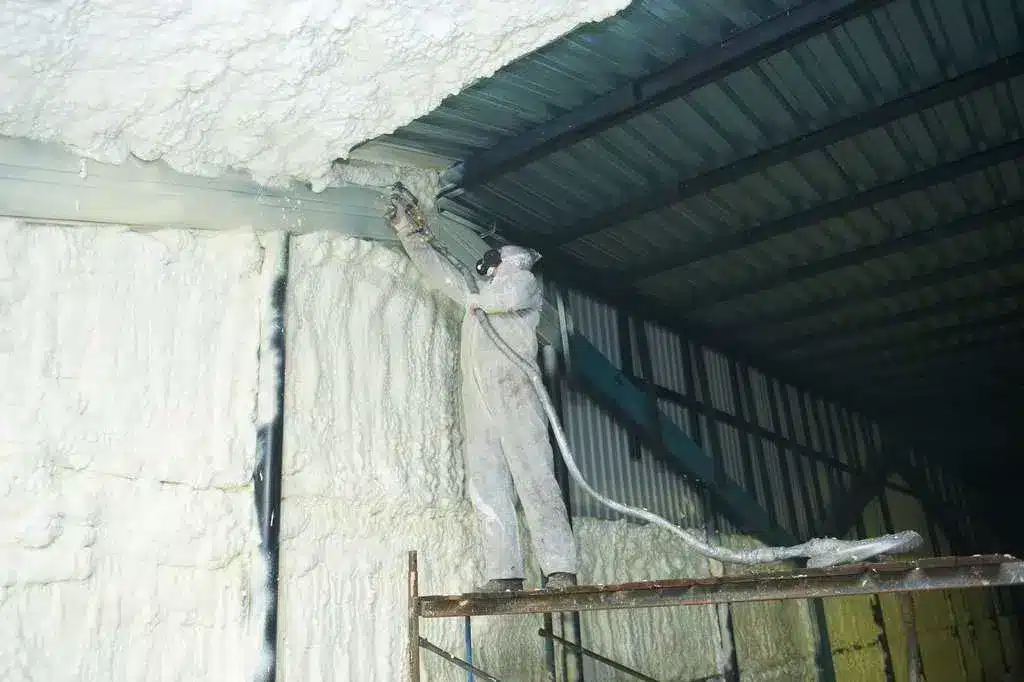
| Warehouses and storage | Fire spread through concealed spaces, condensation on metal roofs | Fills voids with fire-rated foam; seals metal roof panels against condensation | High, due to large concealed spaces and fire load |
| Office buildings | Moisture in HVAC zones, tenant liability for mold | Seals envelope and ductwork; prevents condensation in wall cavities | Moderate to high, depending on occupancy |
| Retail spaces | Fire load from merchandise, customer safety liability | Fire-rated insulation slows spread; moisture barrier protects inventory | Moderate, varies with merchandise type |
| Food processing / cold storage | Extreme temperature differentials, condensation, health code compliance | Closed-cell foam handles extreme differentials; prevents ice formation and condensation | High, due to specialized risk profile |
| Agricultural facilities | Wildfire exposure, structural degradation from heat cycling | Envelope sealing and fire-rated materials reduce vulnerability | High in Farmersville’s wildfire-prone region |
For Farmersville specifically, wildfire exposure adds urgency. The Central Valley has experienced increasing wildfire activity in surrounding areas, and insurers are tightening underwriting standards for commercial properties in the region. Buildings with upgraded, fire-resistant insulation assemblies present a stronger risk profile and are more likely to receive favorable terms.
Signs You Have the Right Insulation Partner
Choosing an insulation provider for a commercial property should go beyond comparing quotes. The right partner directly affects the quality of documentation you can share with your insurance carrier, and that documentation can be the difference between a standard rate and a preferred rate.
Clear communication about fire ratings and code compliance. A qualified provider explains which ASTM and NFPA testing standards their materials meet and provides written documentation after installation.
Knowledge of local building code requirements. Farmersville operates under both the International Building Code and California Title 24. Your insulation contractor should be able to reference specific climate zone requirements and show how their installation meets or exceeds them.
Willingness to document work for insurance purposes. After installation, we provide detailed reports including material specifications, fire testing certificates, and R-value calculations that your insurance agent can submit directly to underwriters.
Experience with your building type. Warehouses, office buildings, and cold storage facilities each require different insulation strategies. Ask about similar projects in the Central Valley and what outcomes those property owners achieved.
Long-term warranty and inspection support. Insurance carriers value ongoing maintenance. A provider who offers post-installation inspections and stands behind their work with meaningful warranties demonstrates the kind of risk management that underwriters reward.
Request Your Commercial Insulation Assessment
Supreme Spray Foam Fresno delivers commercial insulation services throughout the Farmersville area with a focus on fire-rated materials, code compliance, and insurance-ready documentation. Our team evaluates your building envelope, identifies vulnerability points that drive up your premiums, and installs spray foam insulation designed to meet California Title 24 standards while reducing your property’s risk profile. We work with building owners, facility managers, and insurance agents to ensure every installation supports your premium reduction goals.
Call us at (559) 545-0800 or email [email protected] to get started. The sooner your building envelope is sealed and insulated, the sooner your insurance carrier can adjust your risk classification.
Frequently Asked Questions
How quickly can insulation upgrades affect my insurance premiums?
Most carriers reassess risk at policy renewal, so you should share your insulation documentation with your agent 60 to 90 days before renewal to allow time for underwriting review.
Does spray foam insulation qualify as a fire barrier for insurance purposes?
Spray foam that meets ASTM E84 flame spread and smoke developed ratings, when installed with proper thermal barriers per IBC requirements, contributes to fire resistance ratings that insurers recognize during underwriting.
Will my insurance company require an inspection after insulation installation?
Some carriers do request follow-up inspections, which is why we provide post-installation documentation including material specifications and compliance reports to streamline that process.
What types of commercial buildings in Farmersville see the largest premium reductions?
Warehouses, cold storage facilities, and agricultural buildings typically see the most significant premium impact because these property types face the highest fire and moisture-related claim risks in the Central Valley climate.
Can insulation upgrades help with wildfire-related insurance costs?
Fire-rated insulation assemblies that seal the building envelope can reduce ember intrusion and slow fire spread, which underwriters increasingly factor into wildfire risk assessments for Central Valley commercial properties.
Sources
- Insurance Information Institute – Facts + Statistics: Fire – Annual compilation of U.S. fire loss data including commercial structure fires, property damage totals, and large-loss fire statistics from NFPA.
- EPA – Mold Remediation in Schools and Commercial Buildings Guide – Federal guidance on mold prevention in commercial properties, including the role of insulation in condensation control and moisture management.
- Insulation Institute – Commercial Health & Safety – Non-profit resource covering fire safety properties of commercial insulation materials, including flame spread ratings and fire resistance testing standards.
- California Energy Commission – Climate Zone Tool – Official state resource for identifying California climate zones used in Title 24 energy code compliance for commercial building envelope requirements.
- U.S. Department of Energy – Building Envelope Technologies – Federal research on building envelope performance, including the relationship between insulation quality, energy efficiency, and structural durability in commercial construction.