
An uninsulated workshop is practically unusable through Fresno’s summer heat and winter chill. Temperatures swing wildly, moisture condenses on metal surfaces, tools rust, and energy bills spike whenever you try to heat or cool the space. Spray foam insulation solves all of these problems simultaneously because it does more than slow heat transfer. It creates an airtight seal that blocks drafts, prevents condensation, and locks in whatever temperature you need to work comfortably. Whether you run a metal building shop, a woodshop in a detached garage, or a hobby workspace behind the house, spray foam is the single most effective way to turn a seasonal outbuilding into a full-time, year-round workspace.
TL;DR
- Spray foam delivers higher R-value per inch than fiberglass batts or blown cellulose, meaning better thermal resistance in less space, which matters in thin-walled workshops.
- It creates an airtight seal that blocks drafts, dust, pests, and moisture at the same time, unlike traditional batt insulation that leaves gaps around framing.
- The EPA estimates air sealing combined with insulation can reduce heating and cooling costs by an average of 15%.
- NIST research shows that improving building airtightness can reduce natural gas consumption for space heating by more than 40% in most U.S. climate zones.
- Closed-cell spray foam resists water absorption and adds structural rigidity, making it well suited for metal buildings and pole barns.
- Open-cell foam costs less and provides sound dampening, but should not be used in below-grade or flood-prone areas.
- Condensation control is one of the biggest hidden benefits. In uninsulated metal buildings, temperature differences between interior and exterior surfaces cause water to form on walls and tools.
What Spray Foam Actually Does for a Workshop
Most people think of insulation as something that keeps heat from escaping. That is only part of the picture. According to the U.S. Department of Energy, insulation provides resistance to heat flow through three mechanisms: conduction (heat moving through solid materials), convection (heat circulating through air), and radiation (heat traveling in a straight line from warm surfaces). In a workshop, all three are working against you. Heat conducts through metal framing, convects through cracks around doors and windows, and radiates from the roof on summer afternoons, where spray foam services can help.
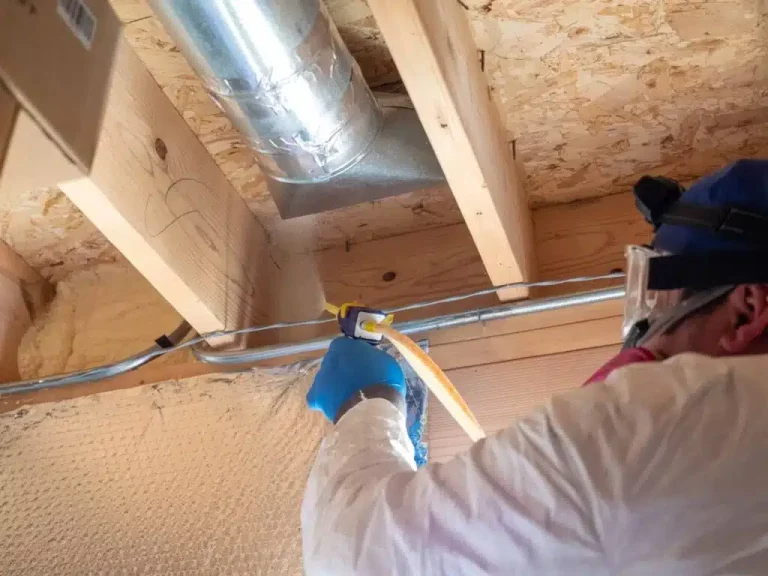
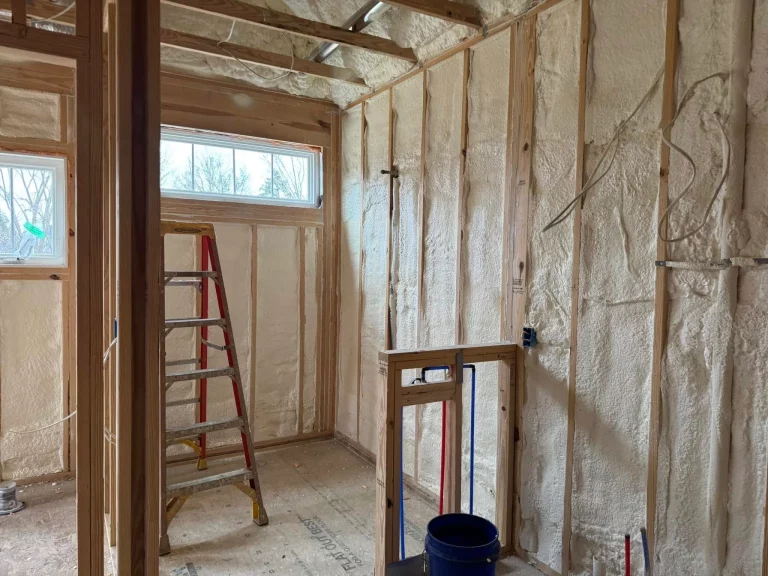
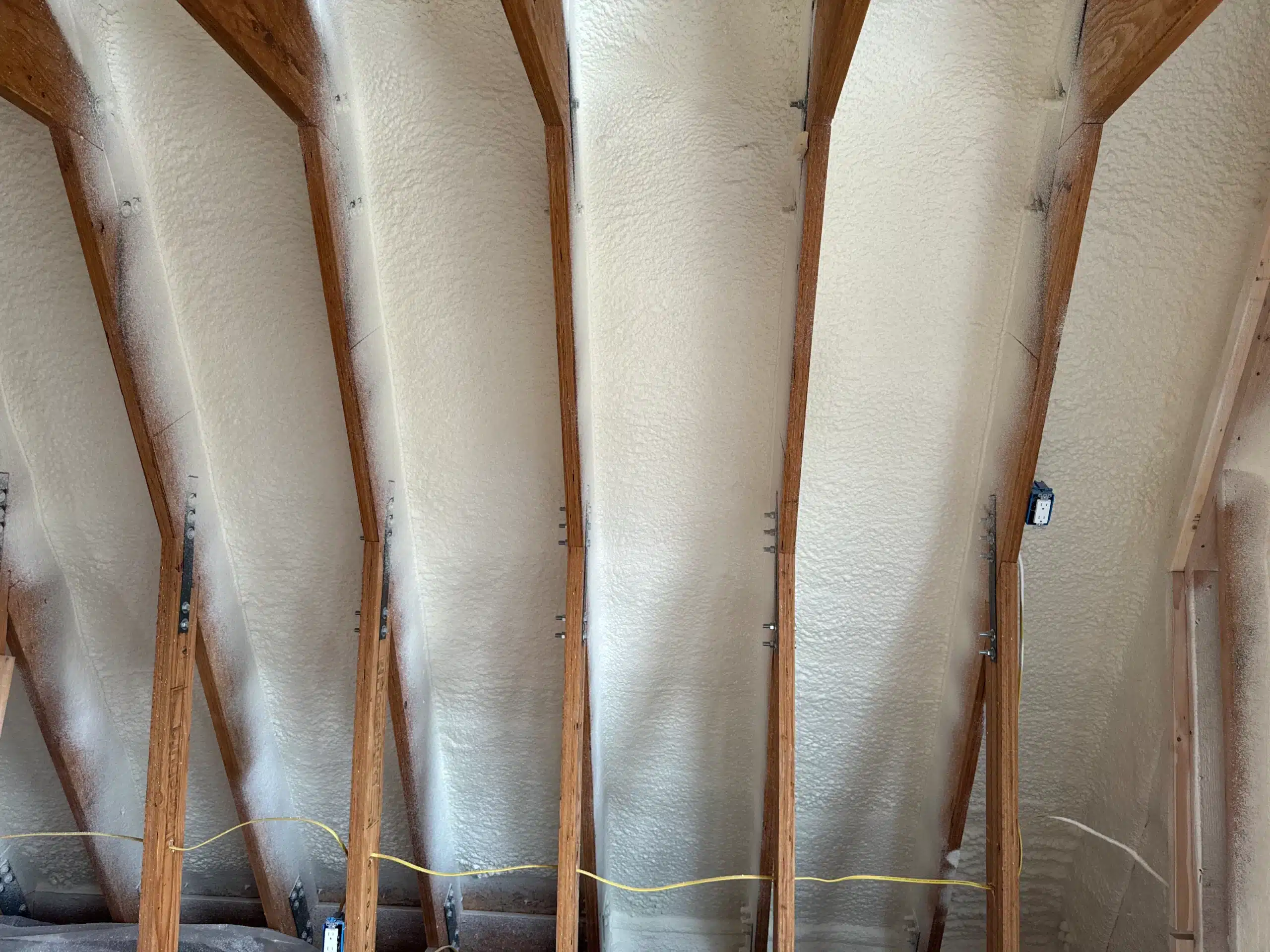
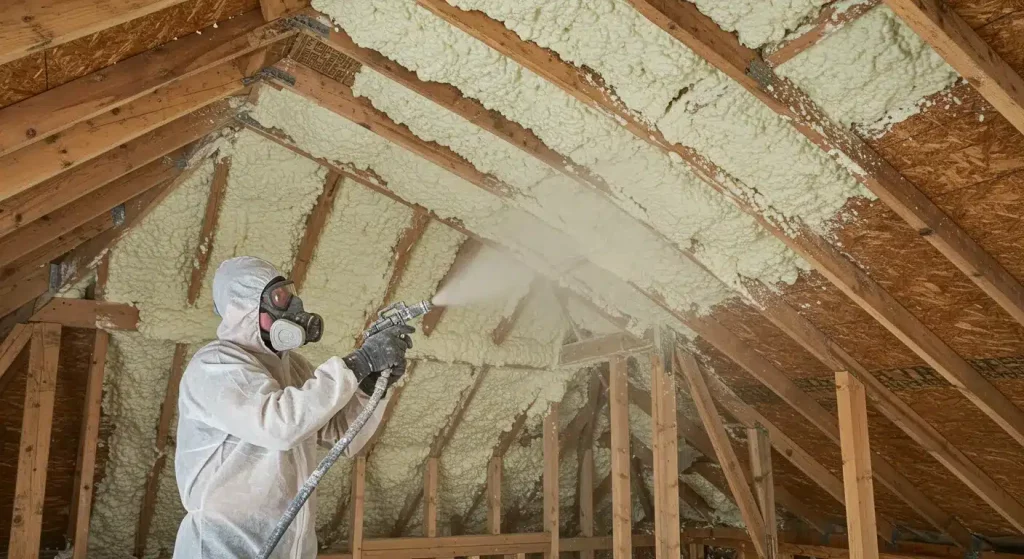
Spray foam insulation addresses all three paths at once. It expands into every crack, gap, and cavity, conforming to irregular surfaces that batts and rolls cannot cover. The U.S. Department of Energy notes that sprayed foam insulation can fill even the smallest cavities while creating an effective air barrier, something that traditional blanket insulation cannot accomplish.
For workshops built with metal framing or metal siding, this matters even more. Metal conducts heat rapidly. Without a continuous layer of insulation that also seals air leaks, a metal workshop will feel like an oven in July and a freezer in January, regardless of what kind of heater or fan you run inside.
Closed-Cell vs. Open-Cell: Which One Fits Your Workshop
Not all spray foam is the same, and choosing between the two main types depends on your workshop’s construction and how you use the space.
| Property | Closed-Cell Foam | Open-Cell Foam |
|---|---|---|
| Density | High (dense, rigid) | Low (spongy, flexible) |
| R-value per inch | Roughly R-6 to R-7 | Roughly R-3.5 to R-3.6 |
| Air sealing | Excellent | Excellent |
| Moisture resistance | Acts as a vapor barrier | Absorbs water, not for below-grade use |
| Structural benefit | Adds wall rigidity | Minimal |
| Sound dampening | Moderate | Excellent |
| Best application | Metal buildings, pole barns, exterior walls | Interior walls, ceilings, sound control |
Closed-cell foam is the better choice for most workshops, especially those with metal construction. Its higher R-value per inch means you get meaningful thermal resistance even in a thin wall cavity, and its resistance to moisture protects against the condensation problems that plague uninsulated metal buildings. According to Wikipedia’s R-value reference, closed-cell polyurethane spray foam delivers approximately R-5.5 to R-6.5 per inch, while open-cell polyurethane spray foam delivers roughly R-3.6 per inch. That difference is significant when your workshop walls are only four to six inches thick to begin with.
Open-cell foam has its place. If your workshop shares a wall with your house and noise reduction is a priority, open-cell foam absorbs sound better. It also expands more during installation, which helps it reach into narrow and hard-to-access cavities. However, it should never be used in areas where moisture is a concern, such as basements or crawl spaces.
Why Air Sealing Matters as Much as R-Value
Most homeowners and builders focus exclusively on R-value when choosing insulation, but the thermal resistance number on the label only tells part of the story. Heat escapes through air leaks just as readily as through conduction. According to ENERGY STAR, if you add up all the leaks, holes, and gaps in a typical building’s envelope, it would be the equivalent of having a window open every day of the year. Their data shows that 9 out of 10 U.S. homes are under-insulated.
For a workshop, this problem is often worse. Workshops are frequently built with less attention to air sealing than homes. Gaps around roll-up doors, untreated framing joints, unsealed penetrations for electrical conduit, and vents that are never properly closed all contribute to massive air leakage. Running a space heater in a drafty workshop is like trying to fill a bucket with a hole in the bottom.
Spray foam eliminates this problem at the source. Because it expands to fill gaps as it cures, it seals air leaks that other insulation types leave untouched. The Department of Energy points out that caulk and weatherstripping alone can pay for themselves in a year or less, but spray foam goes further by combining air sealing and insulation into a single step.
Condensation and Moisture: The Hidden Workshop Killer
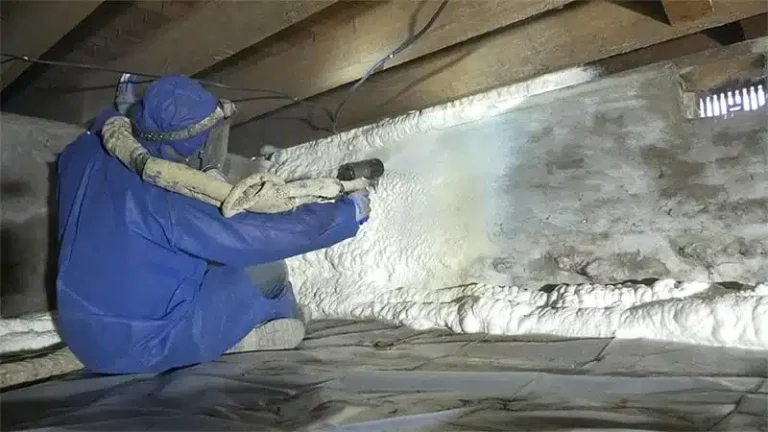
In Fresno’s climate, temperature swings between day and night create the perfect conditions for condensation inside an uninsulated workshop. When warm, moist interior air meets a cold metal wall or roof panel, water droplets form on the surface. Over time, this moisture leads to rust on tools, warping of lumber, mold growth on stored materials, and corrosion of the building’s structural components.
Spray foam, particularly closed-cell, addresses this by keeping the interior surface of the wall at a temperature closer to the indoor air temperature. When the foam layer prevents warm air from reaching the cold exterior surface, condensation does not form. The foam itself also resists water absorption, so even in high-humidity conditions it maintains its insulating properties.
This matters enormously for anyone storing electronics, powders, wood stock, or precision tools in their workshop. Moisture is the single most common reason workshop contents degrade, and it is largely preventable with proper insulation and air sealing.
How Spray Foam Improves Energy Efficiency in Workshops
The energy savings from spray foam insulation are well documented. The EPA estimates that homeowners can save an average of 15% on heating and cooling costs by combining air sealing with added insulation. For workshops that require heating in winter or cooling in summer, those savings are even more noticeable because the starting point is so inefficient. An uninsulated metal building has virtually no thermal resistance, so every dollar spent on heating or cooling escapes almost immediately.
Research from the National Institute of Standards and Technology (NIST) demonstrates that improving building airtightness from 13 air changes per hour to 0.6 air changes per hour at 50 Pascals reduced natural gas consumption for space heating by more than 40% in most U.S. climate zones. While NIST’s study focused on residential buildings, the physics of air leakage and heat loss apply directly to workshops, which often leak significantly more than houses due to larger doors, more penetrations, and less careful construction.
For a workshop owner running a heater through winter months, that level of reduction translates directly into lower energy bills and a more comfortable working environment without upgrading to a larger heating or cooling unit.
Recommendations by Workshop Type
| Workshop Type | Recommended Foam | Key Reason |
|---|---|---|
| Metal building or pole barn | Closed-cell | Prevents condensation on metal, adds structural strength, seals air leaks at panel joints |
| Attached garage workshop | Closed-cell walls, open-cell ceiling | Maximizes R-value at exterior walls, dampens noise transfer to living space |
| Detached wood-frame garage | Either type depending on climate | Closed-cell for moisture-heavy environments, open-cell for budget-conscious sound control |
| Basement workshop | Closed-cell only | Moisture resistance is non-negotiable below grade |
The construction type and intended use of the space should drive the decision more than budget alone. Using open-cell foam in a metal building will leave you vulnerable to condensation, and using closed-cell foam everywhere when open-cell would suffice means spending more than necessary.
Signs You Have Found the Right Insulation Approach
A qualified spray foam installer will demonstrate several qualities before and during the project. They should be willing to visit your workshop, assess the building type, and explain which foam type fits your specific structure. They should discuss R-value targets for your climate zone rather than quoting a single standard price. They should also address air sealing, vapor barriers, and ventilation, because spray foam creates such a tight seal that some buildings may need mechanical ventilation to maintain healthy indoor air quality.
Look for installers who explain what they are doing at each step, show you the thickness of the foam after application, and confirm that the cured foam is continuous and gap-free. A professional crew will also discuss whether an ignition barrier or thermal barrier is required by your local building code for the specific application in your workshop.
Get Your Workshop Insulated by Professionals Who Know the Fresno Climate
At Supreme Spray Foam Fresno, our team specializes in insulating workshops, garages, metal buildings, and pole barns throughout the Central Valley. We assess your building type, recommend the right foam for your application, and deliver a complete air sealing and insulation installation that keeps your workshop comfortable in every season. Reach out to us today to discuss your project.
Call us at (559) 545-0800 or email [email protected] to get started. The sooner your workshop is properly insulated, the sooner you stop losing energy and start using the space the way it was intended.
Frequently Asked Questions
Can spray foam be installed in an existing workshop, or does it only work in new construction?
Spray foam works in both new and existing buildings. It is applied directly to existing walls, ceilings, and roof decks, making it ideal for retrofitting uninsulated workshops.
How long does spray foam insulation last in a workshop environment?
Properly installed spray foam insulation is a permanent solution. It does not settle, sag, or degrade over time like fiberglass batts can.
Does spray foam help with condensation on a metal workshop roof?
Closed-cell spray foam is one of the most effective ways to prevent roof condensation in metal buildings because it keeps the interior surface temperature above the dew point.
Will spray foam insulation reduce dust and pests from entering my workshop?
Yes. The airtight seal created by spray foam blocks the cracks and gaps where dust, insects, and rodents typically enter a workshop.
Do I need to add ventilation after insulating my workshop with spray foam?
In some cases, yes. Spray foam creates a very tight seal, so if you use solvents, paints, or equipment that produces fumes, adequate ventilation or exhaust fans become even more important.
Sources
- U.S. Department of Energy – Types of Insulation – Comprehensive overview of insulation types including sprayed foam insulation, installation methods, advantages, and guidance on open-cell versus closed-cell foam.
- ENERGY STAR – Why Seal and Insulate – EPA data on energy savings from air sealing and insulation, including the estimate that 9 out of 10 U.S. homes are under-insulated.
- Wikipedia – R-value (Insulation) – Reference data on R-values per inch for common insulation materials including closed-cell and open-cell spray foam.
- U.S. Department of Energy – Insulation and Air-Sealing Essentials – Guidance on climate zone R-value requirements, air sealing criteria, and building envelope best practices.
- NIST – Online Calculator to Evaluate the Impact of Airtightness – Research showing that improved airtightness reduces space heating gas consumption by more than 40% across most U.S. climate zones.