
Yes, closed-cell spray foam insulation does pay off over time for homeowners and property owners in Atwater, CA, especially given the region’s extreme summer heat, rising PG&E electricity rates, and California’s increasingly strict energy code requirements. The typical payback window falls between 3 and 7 years, depending on the size of the project, the condition of the existing insulation, and the homeowner’s energy usage patterns. After that breakeven point, the savings compound year after year. The decision to invest depends on factors like the building’s age, whether the project targets attics, walls, or crawlspaces, and whether the owner prioritizes energy savings, moisture control, or structural benefits.
TLDR / Key Takeaways
- Closed-cell spray foam delivers an R-value of roughly R-6.5 to R-7 per inch, outperforming fiberglass batts and blown-in cellulose at thinner application depths R-Value Associates – Spray Foam Insulation Cost Guide .
- The typical payback period in California’s Central Valley ranges from 3 to 7 years, with annual energy savings between $500 and $900 for an average-sized home.
- PG&E’s residential electric rates averaged approximately 45 cents per kWh in 2024, making every unit of energy saved significantly more valuable than in lower-rate regions.
- Atwater falls within California Climate Zone 12-13, a region with hot summers that regularly exceed 100°F and cool, damp winters where air sealing is critical.
- Beyond energy savings, closed-cell foam acts as a vapor barrier, adds structural rigidity, and resists mold growth, reducing long-term maintenance costs.
- Homes insulated with spray foam typically sell for 2% to 6% more than comparable homes without it, according to industry appraisals.
- California’s Title 24 energy code continues to tighten, meaning early investment in high-performance insulation can reduce compliance costs on future renovations.
Why Atwater’s Climate Makes the ROI Equation Favorable
Atwater sits in the heart of California’s Central Valley, classified under Climate Zones 12 and 13 by the California Energy Commission. This region experiences some of the most aggressive temperature swings in the state: summer highs routinely push past 100°F from June through September, while winter nights can drop into the mid-30s. That temperature differential means your HVAC system works overtime in both directions, heating and cooling, often within the same week during shoulder months.
Closed-cell spray foam performs particularly well in this environment because it simultaneously insulates and air-seals. Unlike fiberglass or cellulose, which can leave gaps around studs, pipes, and electrical boxes, spray foam expands to fill cavities completely. This airtight seal prevents the constant exchange of conditioned indoor air with hot, dusty outside air during the summer months. In a region where summer cooling loads dominate energy bills, that seal alone can account for 30% to 50% of the total energy savings.
The structural advantage also matters in Atwater. Closed-cell foam adheres to framing and sheathing, adding shear strength to walls and roof assemblies. For older homes in the area, many built in the 1960s through 1980s with minimal insulation, this structural reinforcement is an added benefit that traditional insulation types simply cannot match.
PG&E Rates and the Math Behind the Savings
Energy rates in PG&E’s service territory are among the highest in the nation. According to PG&E’s own rate advisory data, the average residential bundled electric rate sat at roughly 46.8 cents per kWh as of early 2024. To put that in perspective, the national average residential rate hovers around 16 cents per kWh. At nearly three times the national average, every kilowatt-hour saved in Atwater has a much larger financial impact than in most other markets.
Here’s how the savings math works for a typical scenario:
| Factor | Detail |
|---|---|
| Average home size in Atwater | 1,500 to 2,200 sq ft |
| Closed cell installation cost | $2,500 to $8,000+ (varies by scope) |
| Typical annual energy savings | $500 to $900 |
| Estimated payback period | 3 to 7 years |
| Expected lifespan of spray foam | 80+ years |
| PG&E average residential rate (2024) | ~46.8 cents/kWh |
Over a 20-year period, a homeowner saving $700 per year on energy costs would net roughly $14,000 in cumulative savings against an initial investment that likely costs between $3,000 and $5,000 for a targeted project like an attic or crawl space. The savings continue well beyond that window since closed-cell spray foam does not degrade, settle, or lose R-value over time as fiberglass batts can.
Closed Cell vs. Other Insulation Types in Atwater
Not all insulation delivers the same return in the Central Valley climate. The table below breaks down how closed-cell spray foam compares to common alternatives on the metrics that matter most for long-term value.
| Insulation Type | R-Value Per Inch | Air Sealing | Moisture Barrier | Typical Cost | Best Application in Atwater |
|---|---|---|---|---|---|
| Closed Cell Spray Foam | R-6.5 to R-7 | Excellent | Yes (Class II vapor retarder) | $0.50 to $1.00 per board foot | Walls, crawl spaces, rim joists, cathedral ceilings |
| Open Cell Spray Foam | R-3.5 to R-3.7 | Good | No | $0.25 to $0.50 per board foot | Interior walls, soundproofing |
| Fiberglass Batts | R-2.9 to R-3.8 | Poor | No | $0.50 to $1.50 per sq ft | Standard wall cavities (budget projects) |
| Blown-In Cellulose | R-3.1 to R-3.8 | Moderate | No | $1.00 to $2.00 per sq ft | Attic floors, existing wall cavities |
| Rigid Foam Board | R-3.8 to R-6.5 | Poor (joints leak) | Varies by type | $0.75 to $2.00 per sq ft | Basement walls, exterior continuous insulation |
Closed-cell spray foam stands out in Atwater because it combines high R-value per inch with air sealing and moisture resistance in a single application. In a humid agricultural region where groundwater and condensation are real concerns, the vapor retarder quality prevents moisture from infiltrating wall cavities and causing rot or mold Heartland Foam & Roofing. That protection alone can save thousands in potential repair costs over the life of the building.
Additional Financial Benefits Beyond Energy Bills
The payback calculation for closed-cell spray foam should not stop at monthly utility bills. Several other financial factors improve the total return on investment.
Reduced HVAC sizing and wear. Because spray foam dramatically reduces the heating and cooling load on a home, HVAC systems can often be downsized by 25% to 35%. A smaller, right-sized system costs less to install, runs more efficiently, and lasts longer because it cycles less frequently. In new construction, this offset can cover a meaningful portion of the foam installation cost.
Moisture and mold prevention. Atwater’s agricultural surroundings mean higher ambient humidity and more dust than coastal or urban areas. Closed-cell foam’s moisture barrier properties keep wall cavities dry, preventing the mold growth that can require expensive remediation. A single mold remediation project in the Central Valley can cost $2,000 to $10,000 or more, depending on the extent of the damage.
Increased property value. Homes with modern, high-performance insulation appeal to buyers who are increasingly energy-conscious. Industry estimates suggest that energy-efficient upgrades can increase a home’s resale value by 2% to 6%. For a $400,000 home in Atwater, that translates to an $8,000 to $24,000 value boost, which alone can exceed the cost of the insulation project.
California Title 24 compliance. California’s building energy efficiency standards are among the strictest in the country and continue to tighten with each update cycle. Homes with high-performance insulation are better positioned to meet or exceed these standards, which can reduce compliance costs during remodels, additions, or when selling the property.
Recommendations by Property Type
Not every property or project scenario calls for the same approach. Here’s how we recommend property owners in Atwater think about closed-cell spray foam based on their situation.
| Property Type / Scenario | Recommended Approach | Key Notes |
|---|---|---|
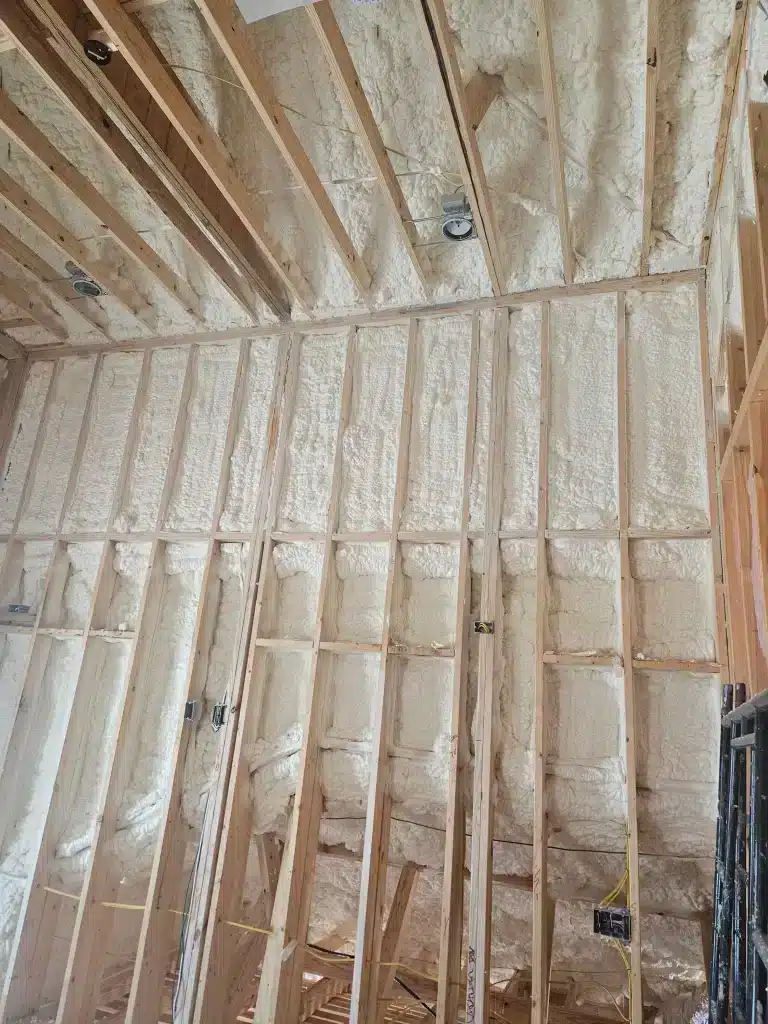
| New construction (home) | Full envelope spray foam | Maximum ROI when applied during framing before drywall. Combined with right-sized HVAC for best results. |
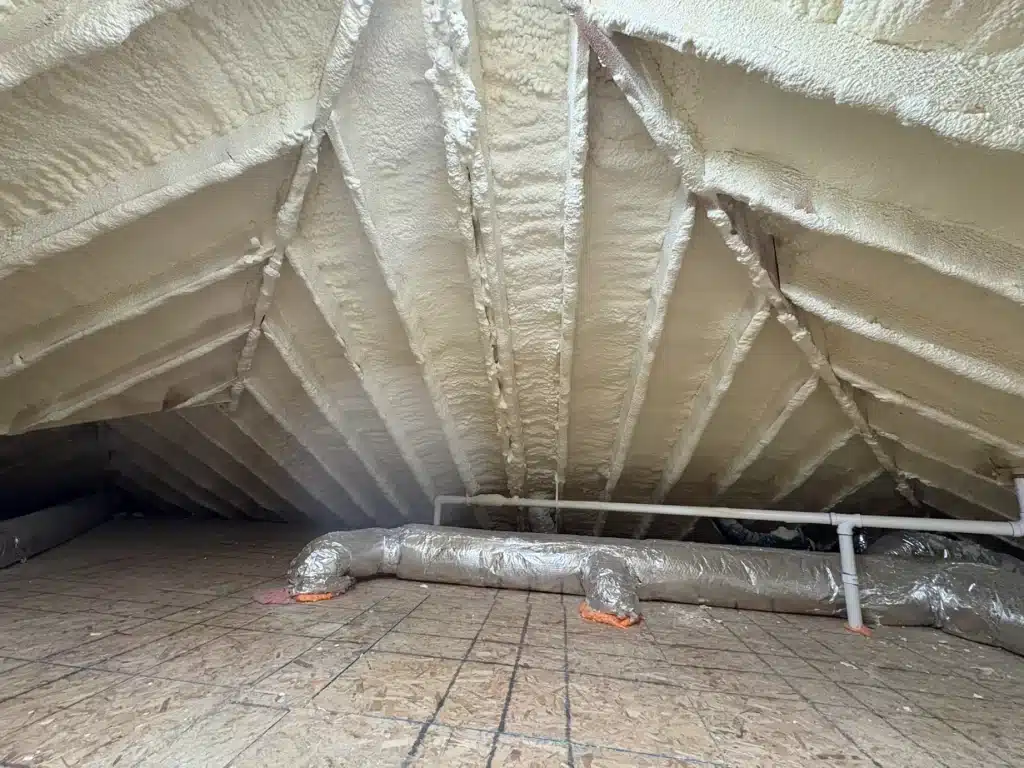
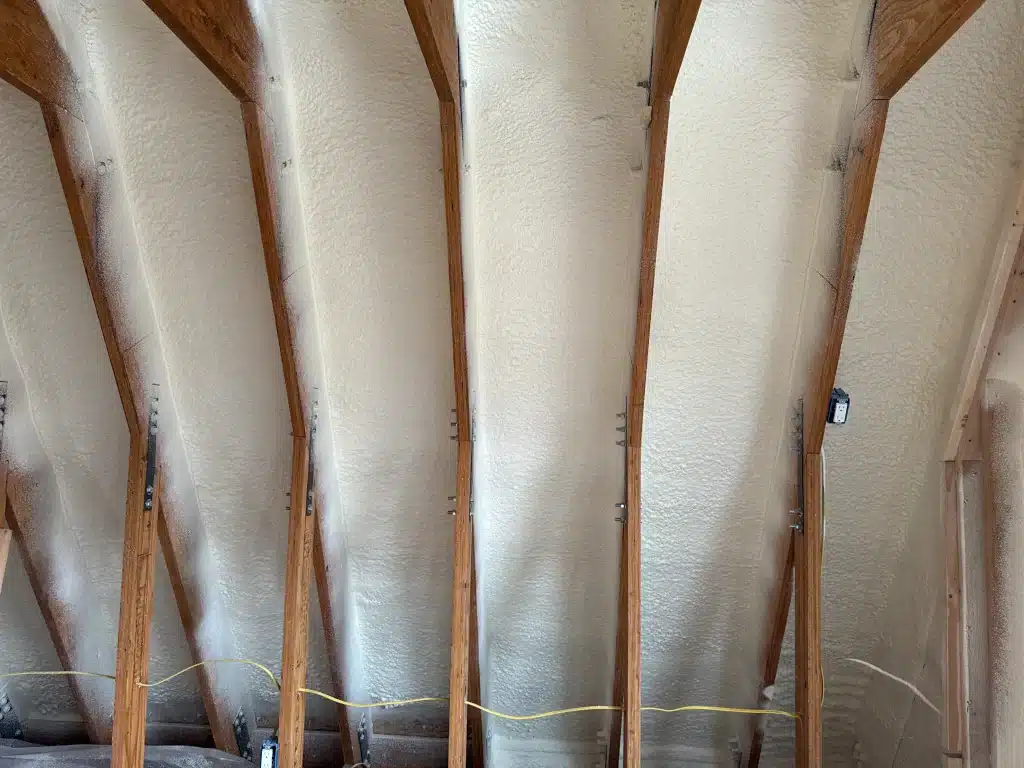
| Existing home, attic only | Closed cell on the roof deck (hot roof) | Eliminates the need for attic ventilation, converts attic to conditioned space, best for homes with ductwork in the attic. |
| Existing home, crawl space | Closed cell on crawl space walls and rim joist | Seals out moisture and pests, keeps floors warmer in winter. High impact for relatively low square footage. |
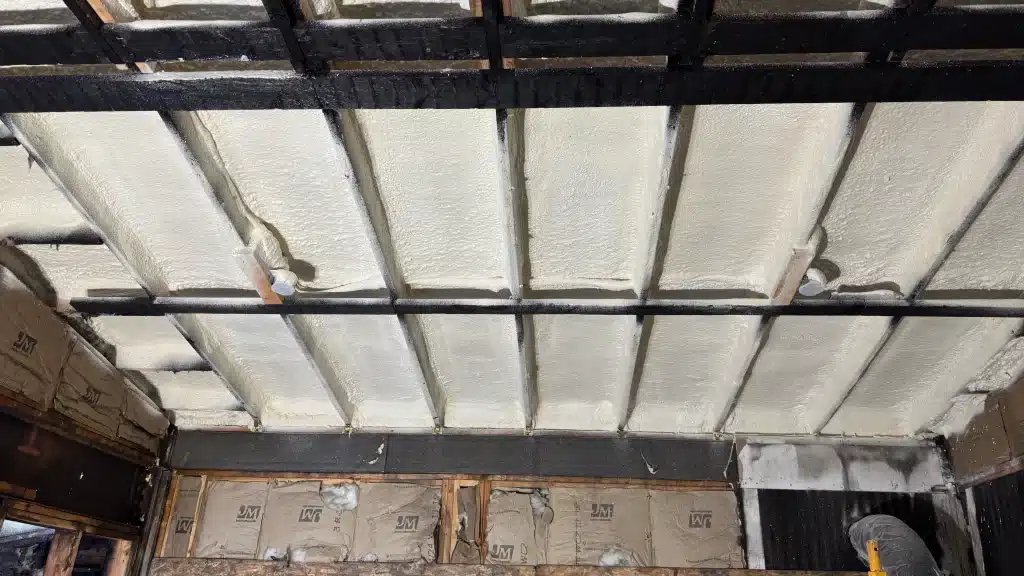
| Older home (pre-1980), full retrofit | Closed cell in walls and attic | Higher upfront cost, but addresses multiple deficiencies at once. Best combined with HVAC upgrade. |
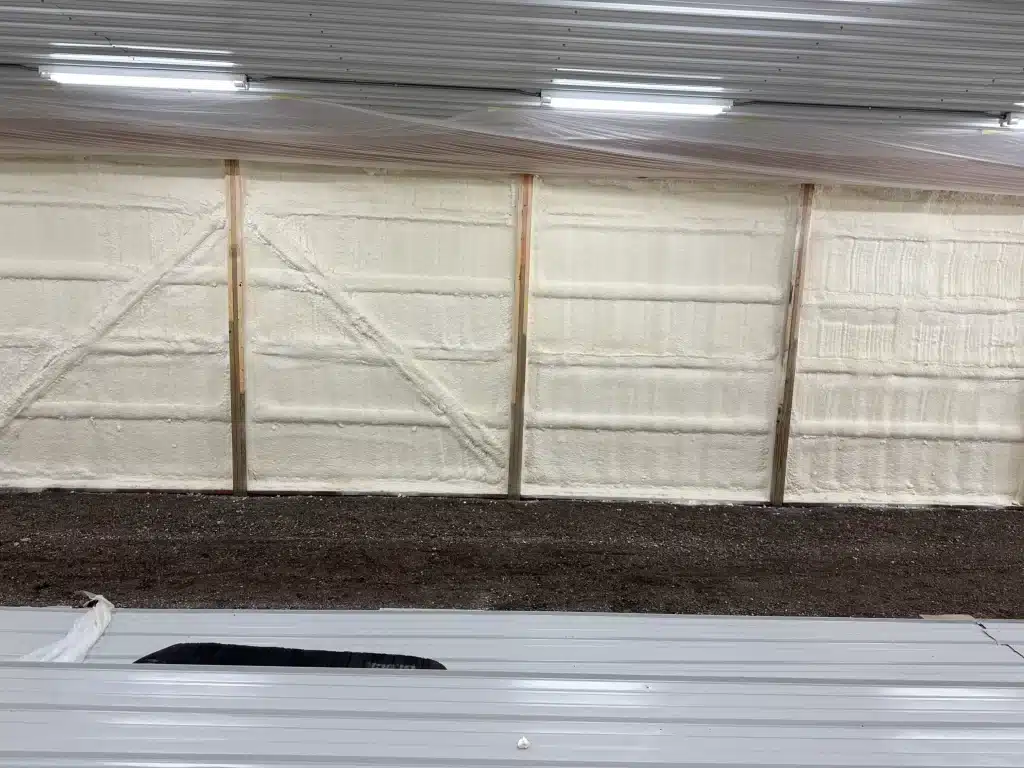
| Commercial building or warehouse | Closed cell on metal roof deck and walls | Dramatically reduces cooling costs in metal buildings with minimal insulation. Fast ROI due to large surface areas. |
| detached garage or ADU | Closed cell in walls and ceiling | Ideal for making unconditioned spaces livable or usable year-round. |
Signs You’ve Found the Right Spray Foam Contractor
A high-quality installation determines whether you actually hit the projected savings numbers. Sloppy application, thin coverage, or improper mixing can reduce R-value and eliminate the air sealing benefits that make spray foam worthwhile. Here are the indicators that separate a reliable contractor from a risky one.
- They perform a detailed energy assessment before quoting. A reputable installer will want to understand your home’s current insulation levels, air leakage points, and HVAC system before recommending a scope of work. A one-size-fits-all quote without a site visit is a red flag.
- They explain R-value targets for your specific climate zone. Atwater’s Climate Zone 12-13 requirements should factor into their recommendation. They should be able to reference California Title 24 and explain how their proposed R-value meets or exceeds code.
- They provide a clear, itemized estimate. The quote should break down the cost by area (attic, walls, crawl space), thickness of application, and total board feet. Vague pricing or estimates given over the phone without measurements are warning signs.
- They carry proper licensing and insurance. In California, insulation contractors should hold a valid C-2 (Insulation) or C-20 (Warm-Air Heating, Ventilating and Air-Conditioning) license, along with general liability and workers’ compensation coverage.
- They offer a warranty on both materials and labor. Reputable spray foam manufacturers typically back their products with warranties covering shrinkage, delamination, and off-gassing. The installer should also stand behind their workmanship for a defined period.
- They are transparent about curing times and occupancy. Closed-cell spray foam requires a curing period before the space can be reoccupied. A professional contractor will communicate this timeline clearly and schedule the job to minimize disruption.
Get an Expert Assessment for Your Atwater Property
Understanding whether closed-cell spray foam is the right investment for your home or building starts with a conversation. At Supreme Spray Foam Fresno, we serve Atwater and the surrounding Central Valley communities with detailed energy assessments, transparent pricing, and professional installation. Our team can evaluate your property’s current insulation, identify priority areas for improvement, and build a project plan that fits your budget and goals.
Call us directly at (559) 545-0800 or email [email protected] to get started. Every day you wait is another day of energy dollars leaking through your walls and attic.
Sources
- California Energy Commission – Climate Zone Tool, Maps, and Information – Official California climate zone classification map used for Title 24 energy code compliance, confirming Atwater’s placement in Climate Zone 12-13.
- PG&E Electric Rate Advisory – March 2024 – PG&E’s published residential electric rate data shows the average bundled rate of 46.8 cents per kWh, effective March 2024.
- California Energy Commission – 2025 Reference Appendices – Detailed reference appendices covering California’s building energy efficiency standards, including performance requirements by climate zone.
- R-Value Associates – Spray Foam Insulation Cost Guide – Comprehensive cost analysis for spray foam insulation, including installation pricing, R-value comparisons, and payback period estimates for residential projects.
- Heartland Foam & Roofing – How Spray Foam Insulation Saves You Money – Breakdown of long-term savings calculations comparing spray foam to traditional insulation with real-world cost scenarios.
Frequently Asked Questions
How long does closed-cell spray foam actually last in a Central Valley home?
Closed-cell spray foam is a permanent insulation material that does not settle, sag, or degrade over time. When properly installed, it lasts the entire life of the building, which is 80+ years. Unlike fiberglass batts that can compress and lose effectiveness, spray foam maintains its R-value and air sealing properties for decades without any maintenance.
Is closed-cell spray foam worth it for just an attic project in Atwater?
Yes, attic-only projects are among the highest-ROI applications in the Central Valley. Most homes in Atwater have HVAC ductwork running through unconditioned attic space, meaning conditioned air is fighting 120°F-plus attic temperatures all summer. Applying closed-cell foam to the roof deck converts the attic to a semi-conditioned space, dramatically reducing that heat gain and protecting your ductwork.
Does closed-cell spray foam help with Atwater’s summer cooling costs more than winter heating?
In Atwater’s Climate Zone 12-13, the majority of energy savings come from reduced cooling costs. Summer cooling loads are substantially larger than winter heating loads due to the extreme temperature differential. However, the air sealing benefit cuts both ways, and homeowners do see meaningful heating savings during the cooler winter months as well.
Can closed-cell spray foam be installed over existing fiberglass insulation?
In most cases, the answer is yes, though it depends on the condition of the existing insulation and the application method. Closed-cell foam can be sprayed directly over clean, dry fiberglass in many attic installations. However, if the existing insulation has been damaged by moisture, pests, or compression, removal is usually recommended before applying foam for the best results.
How does the cost of closed-cell spray foam compare to the value it adds to a home?
The installation cost for a typical closed-cell spray foam project ranges from $2,500 to $8,000, depending on scope, while the added property value can range from $8,000 to $24,000 for a median-priced home in the Atwater area. The energy savings alone typically pay for the project within 3 to 7 years, and the insulation continues delivering savings for the lifetime of the home, making it a net positive investment in nearly every scenario.