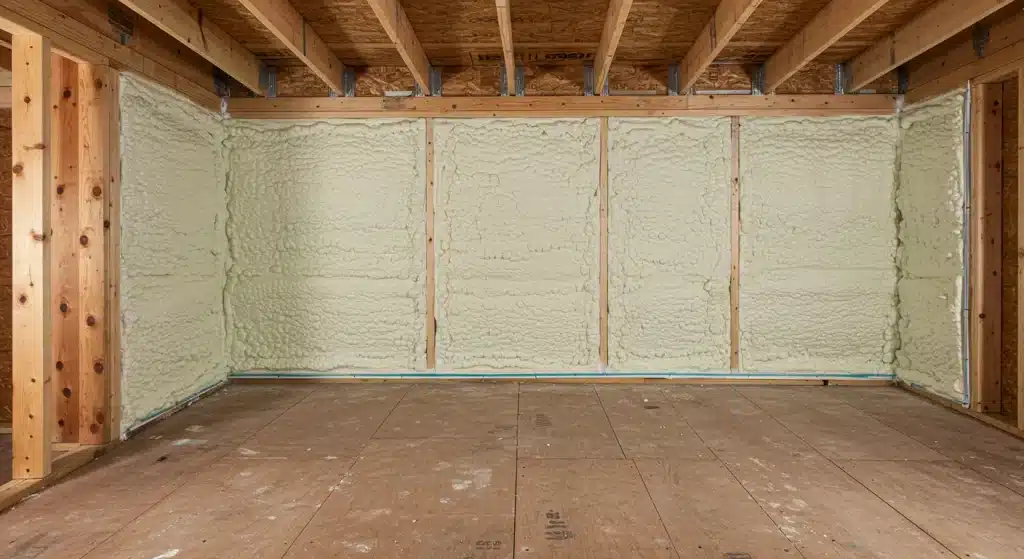
For homeowners in Fresno, the typical payback period for a spray foam insulation investment is between three to five years. This timeframe is a direct result of balancing the initial installation investment against the significant monthly savings on energy bills. Several elements can shift this estimate, including the size of the property, the type of spray foam used (open-cell or closed-cell), existing energy consumption habits, and the availability of local or federal energy efficiency incentives.
This article provides a detailed breakdown of the factors that determine the return on investment for spray foam insulation in the Central Valley. The information is based on extensive field experience and data relevant to Fresno residents, helping you understand the real-world financial benefits. By analyzing installation factors, energy savings, and long-term value, you can make a well-informed decision for your home.
Key Factors Influencing Your Payback Period
The speed at which your spray foam insulation pays for itself depends on a few specific conditions. Understanding these can help you create a more accurate estimate for your property.
Initial Installation Investment
The upfront investment is the largest variable in the payback equation. This amount is influenced by:
- Project Size: The total square footage of the area being insulated, whether it’s an attic, crawl space, or entire home envelope.
- Type of Foam: Closed-cell spray foam generally has a higher material cost per board foot than open-cell foam but offers a higher R-value and acts as a vapor barrier.
- Complexity: Difficult-to-access areas, such as attics with complex roof lines or cluttered crawl spaces, may require more labor, affecting the final investment.
- Required Thickness: The depth of foam needed to achieve the desired R-value, which is often guided by local building codes and climate zone recommendations.
Local Energy Costs in Fresno
Fresno’s hot summers and cool winters mean that heating and cooling systems work hard year-round. According to the U.S. Energy Information Administration, California often has higher-than-average residential electricity prices, making energy efficiency improvements particularly impactful. A report from the U.S. Bureau of Labor Statistics notes the fluctuations in energy prices in the Pacific region. Higher utility rates directly accelerate the payback period, as every kilowatt of energy saved translates into more substantial financial savings.
Bonus Tip: Review your past 12 months of PG&E bills to find your average monthly energy cost. This figure is the baseline you can use to measure potential savings after insulation is installed.
Your Home’s Energy Consumption
Homes with historically high energy bills will see the fastest return. If your home has significant air leakage, an older HVAC system, or inefficient windows, it’s likely losing a lot of conditioned air. Spray foam insulation creates a powerful air seal, which can drastically reduce this energy waste. According to ENERGY STAR, uncontrolled air leakage through gaps and cracks can account for a significant portion of a home’s heating and cooling energy use. Sealing these leaks leads to immediate and noticeable reductions in HVAC run time.
Calculating Your Estimated Return on Investment
A straightforward way to estimate the payback period is by comparing the total initial investment to the estimated annual energy savings. The goal is to determine how many years it will take for the accumulated savings to equal the upfront expense.
The relationship between the investment and the payback time is a simple balance. A larger initial investment, such as insulating an entire home, will require more substantial energy savings to reach the break-even point. In contrast, a smaller project will have a lower upfront requirement, and the payback will be achieved through more modest, yet still significant, reductions in your energy bills.
The table below shows how different factors can conceptually influence the payback period.
| Investment Factor | Impact on Payback Period | Example Scenario |
|---|---|---|
| Project Scope | Larger projects have a higher initial investment but yield greater annual savings, potentially keeping the payback period similar to smaller projects. | Insulating an entire home versus only the attic. The full home project saves more energy, offsetting its higher initial expense. |
| Foam Type | Higher-performance foam (like closed-cell) has a greater material expense but provides more energy savings per inch, which can shorten the payback period. | Choosing closed-cell foam for its higher R-value might lead to a faster ROI despite the initial investment. |
| Home’s Condition | A home with significant air leakage will experience dramatic savings, leading to a much faster payback period. | An older, drafty home will see a quicker return than a newer, relatively well-sealed home. |
Things to Consider Before Making a Decision
Before committing to a spray foam insulation project, a few preparatory steps can ensure you get the best results and a clear understanding of the benefits.
Get a Professional Energy Audit
An energy audit is a top-to-bottom assessment of your home’s energy use. A certified auditor can use tools like blower doors and infrared cameras to pinpoint exact locations of air leaks and insulation gaps. This provides a scientific basis for your insulation plan, ensuring you target the areas with the most potential for energy savings.
Understand Available Rebates and Tax Credits
Financial incentives can significantly lower your initial investment. Programs change, so it’s important to check for current offerings. The Database of State Incentives for Renewables & Efficiency (DSIRE) is an excellent resource for finding up-to-date information on state, local, and utility rebates. Federal tax credits for energy-efficient home improvements may also be available.
Bonus Tip: Ask your insulation contractor if they are familiar with local rebate programs. They can often provide guidance on the application process.
Choose the Right Type of Foam for the Application
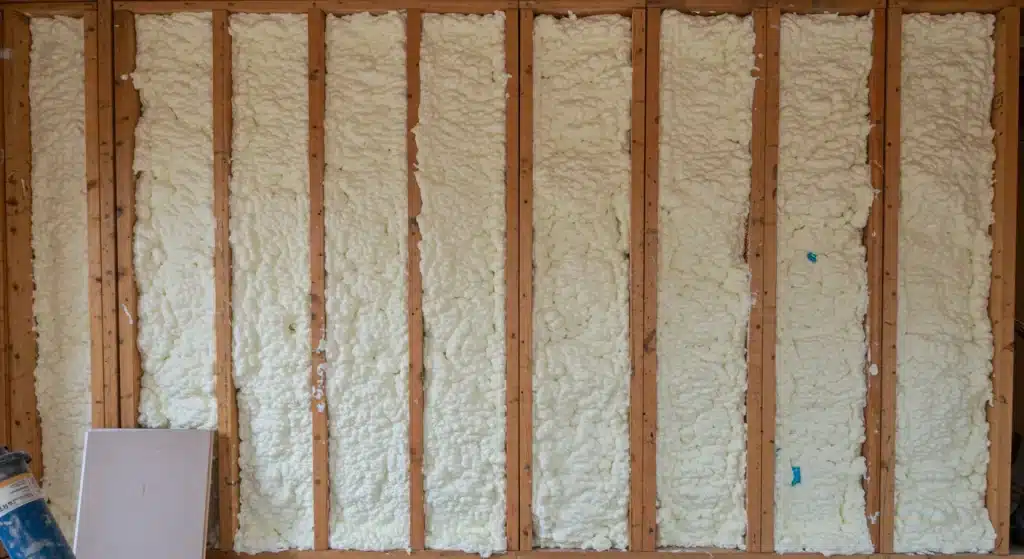
- Open-Cell Foam: Has a sponge-like texture and is excellent for blocking sound. It’s best used in interior walls and unvented attic assemblies. It is permeable to vapor.
- Closed-Cell Foam: Is dense, rigid, and provides a higher R-value per inch. Its structure blocks both air and water vapor, making it ideal for crawl spaces, exterior walls, and areas where moisture is a concern.
Your Questions About Spray Foam Payback Answered
How much can I realistically save on my Fresno energy bills?
Most homeowners in Fresno can expect to save a significant percentage on their heating and cooling costs after installing spray foam insulation, often between 20% and 40%. The exact amount depends on how much energy your home was wasting prior to the upgrade.
Is closed-cell or open-cell foam a better investment?
It depends on the application. Closed-cell foam offers a higher R-value and moisture resistance, often making it a better long-term investment for exterior walls and crawl spaces. Open-cell is a more cost-effective choice for interior walls or attic roof decks where its sound-dampening qualities are also a benefit.
Are there financing options for spray foam installation?
Many insulation contractors offer financing options to help homeowners manage the upfront investment. Additionally, some government-backed loans or utility programs are designed to help finance energy efficiency upgrades.
Does spray foam insulation require any maintenance?
No. Once properly installed, spray foam insulation is inert and requires no maintenance. It’s a one-time investment that provides benefits for the entire lifespan of the building.
Final Thoughts
Investing in spray foam insulation in Fresno is a practical financial decision for homeowners . With a typical payback period of three to five years, it offers a relatively quick return followed by decades of continued energy savings. The key is to evaluate your home’s specific situation, from its current energy consumption to the areas that would benefit most from an air seal. By doing so, you can accurately project your return and confirm that the investment aligns with your long-term goals.
Get a Clear Estimate for Your Home
The best way to understand your specific payback period is to get a detailed assessment and quote. A professional evaluation can determine the optimal insulation strategy for your property and provide a clear projection of potential energy savings. For a personalized consultation, contact Supreme Spray Foam Fresno at (559) 545-0800 or send an email to [email protected] to discuss your project.
Sources
- U.S. Bureau of Labor Statistics – Provides data on average energy prices in the Pacific region, including California.
- ENERGY STAR – A U.S. government program providing information on energy efficiency, including data on energy loss from air leakage.
- Database of State Incentives for Renewables & Efficiency (DSIRE) – A comprehensive source of information on energy-related incentives and policies in the United States.