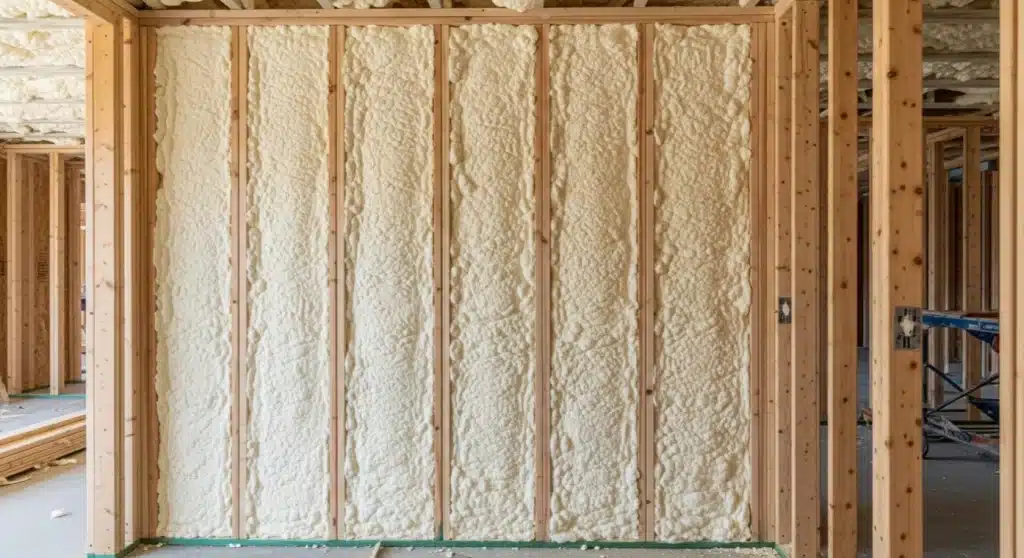

Closed-cell spray foam insulation delivers long-term energy savings by creating an airtight barrier with a high R-value per inch through its unique cellular structure. The foam contains billions of closed, gas-filled cells that resist heat transfer, moisture penetration, and air movement, reducing energy costs by 20-50% compared to traditional insulation materials. This article explains the scientific principles behind these savings, provides performance data from real-world applications, and helps you evaluate whether closed-cell foam meets your specific energy-efficiency needs, taking climate, building type, and budget into account.
How Closed-Cell Foam Works at the Molecular Level
Closed-cell foam consists of polymer cells that are completely sealed and filled with inert gas, typically a hydrofluorocarbon (HFC) or water-blown agent. Each cell acts as an individual thermal barrier, creating what scientists call a “composite thermal resistance system.” The cell walls are made of polyurethane or polyisocyanurate polymers that are rigid and dense, while the trapped gas inside has very low thermal conductivity. This combination creates a material that blocks all three types of heat transfer: conduction (through the solid polymer walls), convection (prevented by sealed cells), and radiation (reduced by the foam’s reflective properties).
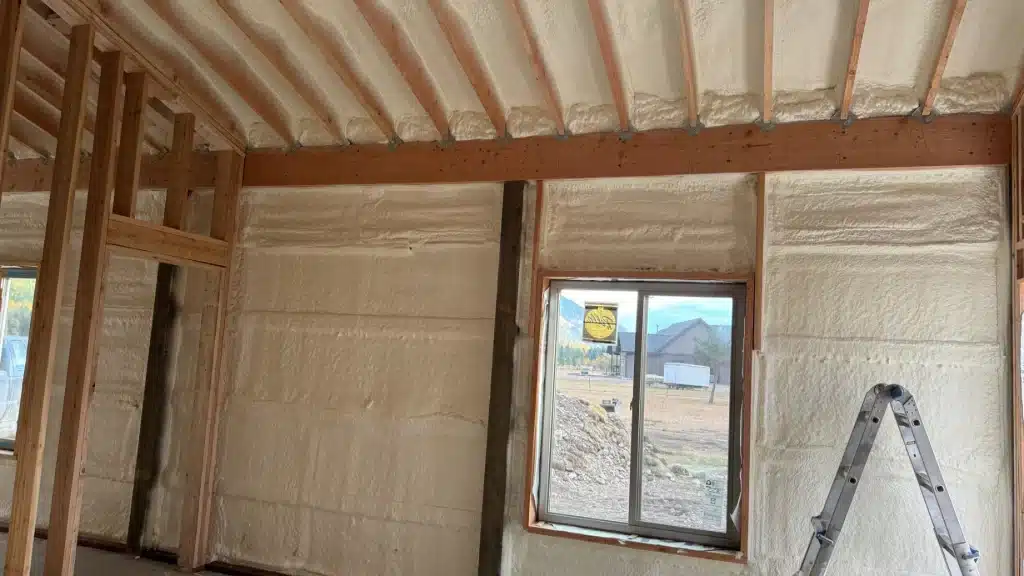
The foam expands to 30-60 times its original liquid volume when applied, filling gaps, cracks, and voids that traditional insulation cannot reach. This expansion creates a continuous air barrier that eliminates the thermal bridges and air leaks responsible for up to 40% of a building’s energy loss. According to research from the U.S. Department of Energy, air sealing combined with proper insulation can reduce heating and cooling costs by up to 15%, with closed-cell foam providing superior performance in this regard.
Energy Performance Data and Market Trends
The insulation market has seen significant growth in closed-cell foam applications due to proven energy savings. A recent market analysis indicates that the global spray foam insulation market is projected to reach billions of dollars by 2027, driven largely by energy-efficiency regulations and rising utility costs. Buildings insulated with closed-cell foam typically experience energy consumption reductions of 20-50%, with payback periods of 3-7 years, depending on local climate conditions and energy prices.
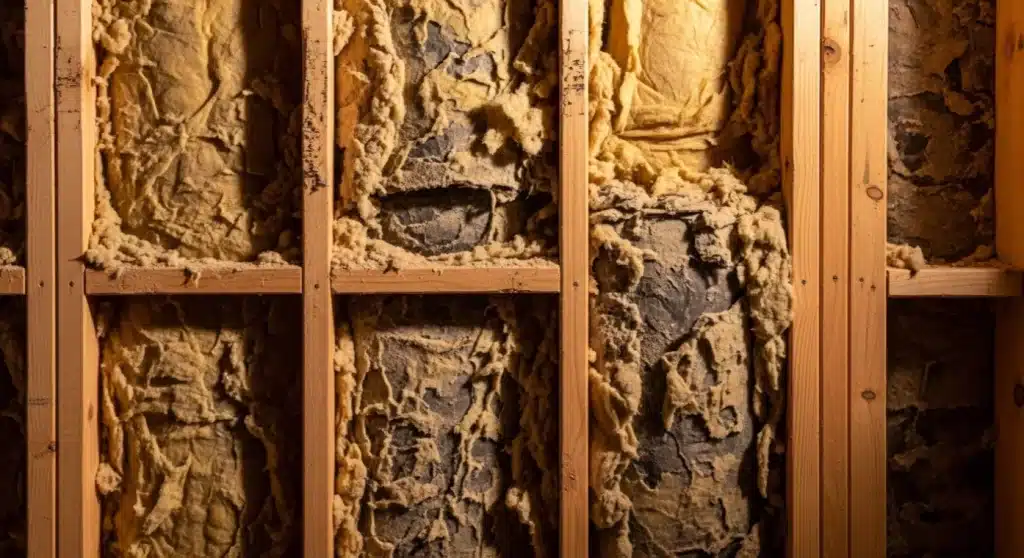
Real-world performance data from residential and commercial installations demonstrates consistent results. In a study of 100 homes in varying climate zones, those with closed-cell foam insulation showed an average 35% reduction in heating costs and 28% reduction in cooling costs compared to similar homes with traditional fiberglass insulation. The moisture-resistance properties of closed-cell foam also contribute to energy efficiency by preventing the increase in thermal conductivity that occurs when traditional insulation materials absorb moisture.
Bonus Tip
In hot climates like California’s Central Valley, the greatest energy savings come from applying slightly thicker foam layers on the east and west walls, where solar heat gain is most intense, while maintaining standard thickness on north and south exposures.
Comparing Insulation Performance
Understanding how closed-cell foam compares to other insulation options helps in making informed decisions. The following table provides a technical comparison of common insulation materials:
| Material | R-Value per Inch | Vapor Permeability | Air Barrier |
|---|---|---|---|
| Closed-Cell Foam | 6.5-7.0 | Semi-impermeable (≤1 perm) | Yes |
| Open-Cell Foam | 3.5-4.0 | Permeable (≥10 perms) | Yes |
| Fiberglass | 3.1-3.4 | Permeable | No |
| Cellulose | 3.2-3.8 | Permeable | No |
| Rigid Foam Board | 4.0-6.5 | Variable | No |
The data clearly shows closed-cell foam’s superior R-value per inch, meaning less thickness is needed to achieve the same thermal performance. This is particularly valuable in retrofit applications where interior space is at a premium. The air barrier properties also eliminate the need for separate house wrap or vapor retarders in most applications, reducing labor costs and simplifying construction.
Things to Consider Before Making a Decision
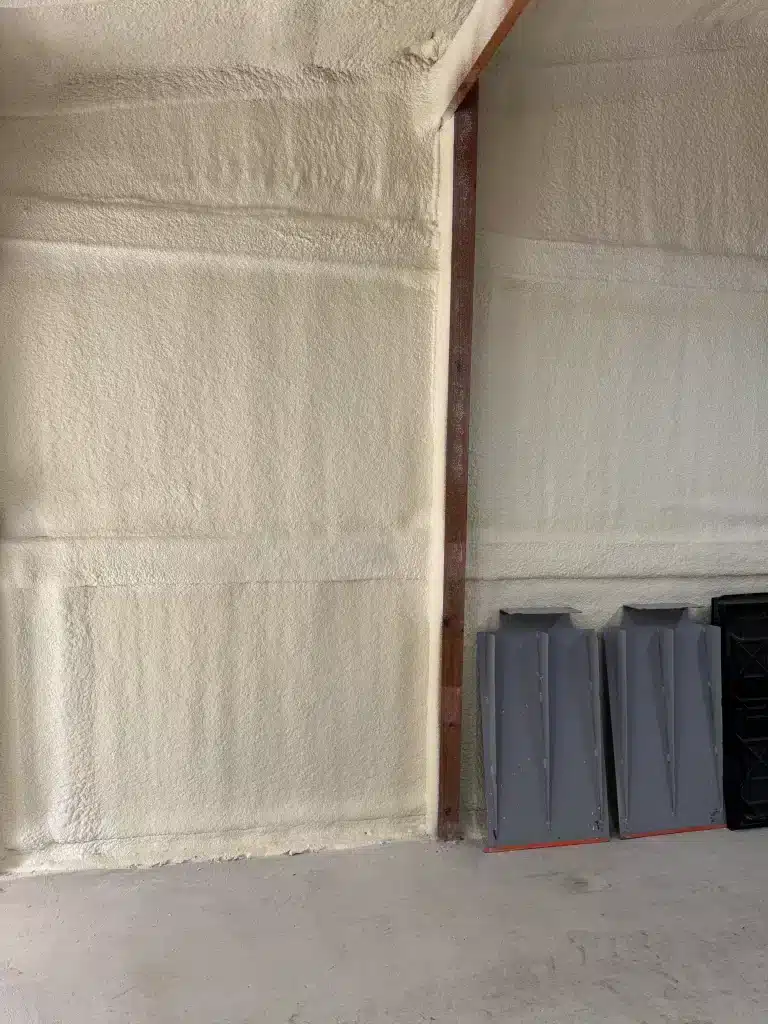
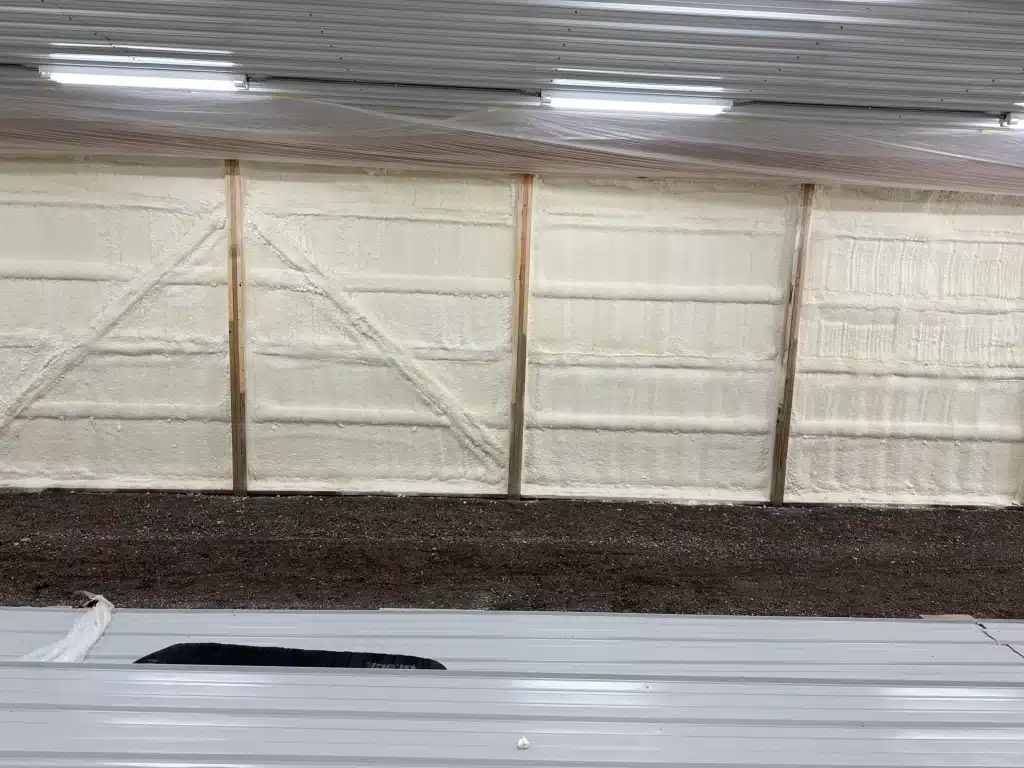
Before choosing closed-cell foam insulation, several factors should influence your decision. First, assess your climate zone: closed-cell foam offers exceptional performance in extreme temperatures but may be overkill in mild climates, where lower-cost options could suffice. The building’s construction type matters too; closed-cell foam excels in metal buildings and structures with irregular cavities where traditional insulation performs poorly.
Moisture issues should guide your selection. If your building experiences humidity problems or is located in a flood-prone area, closed-cell foam’s moisture resistance makes it ideal. Consider your budget timeline – while the upfront cost is higher than traditional insulation, the energy savings often provide a reasonable payback period. Installation complexity is another factor; closed-cell foam requires professional equipment and trained applicators, unlike DIY-friendly options like fiberglass or mineral wool.
Regional Climate Considerations
In Fresno’s hot-summer Mediterranean climate, closed-cell foam provides particular advantages by handling both extreme summer heat and winter cold. The material’s thermal mass helps moderate temperature swings, reducing the strain on HVAC systems during triple-digit summer days. For homes in this region, applying 2-3 inches of closed-cell foam in walls and 4-6 inches in attics typically optimizes the balance between performance and cost.
Bonus Tips Based on Practical Experience
When budgeting for closed-cell foam, consider hybrid approaches rather than insulating the entire envelope. Focus on areas with the greatest thermal bridging and air leakage potential – rim joists, cantilevers, and bonus rooms over garages typically provide the best return on insulation investment. In new construction, slightly reducing the total insulation area while targeting critical zones can maintain performance while controlling costs.
For existing homes, conduct an energy audit before making insulation decisions. The audit results help identify the most cost-effective applications of closed-cell foam rather than blanket application. Many homeowners find that combining closed-cell foam in problem areas with upgraded traditional insulation elsewhere provides the best balance of performance and cost.
Final Considerations
Closed-cell spray foam insulation offers scientifically proven energy savings through its unique combination of high R-value, air sealing, and moisture resistance. The technology provides particular value in extreme climates and buildings with challenging insulation requirements. While the upfront investment is significant, the long-term energy savings, comfort improvements, and durability often justify the cost for homeowners and building owners planning to remain in their properties for several years.
Evaluate your specific situation by considering local climate, building construction, existing insulation condition, and energy costs before making a decision. For many applications, particularly in regions with extreme temperatures like California’s Central Valley, closed-cell foam is one of the most effective long-term investments in energy efficiency available today.
Get Professional Assessment
Supreme Spray Foam Fresno offers comprehensive energy evaluations to determine whether closed-cell foam insulation makes sense for your specific situation. The team provides a detailed cost-benefit analysis based on local energy rates and climate conditions. For a personalized assessment of your insulation needs, contact [email protected] or call (559) 545-0800 to schedule a consultation.
FAQS
Is closed-cell foam worth the extra cost compared to traditional insulation?
Closed-cell foam typically costs 3-4 times more than fiberglass per square foot, but the energy savings, increased comfort, and moisture protection often justify the investment. The payback period varies by climate and energy prices, but most homeowners see returns within 5-7 years.
Can closed-cell foam be DIY installed?
Closed-cell foam installation requires specialized equipment, protective gear, and training to achieve proper performance and safety. Unlike open-cell foam, the high-pressure and rapid expansion characteristics of closed-cell systems make professional installation strongly recommended.
Does closed-cell foam require vapor barriers?
Closed-cell foam itself acts as a vapor barrier due to its low permeability rating. In most climate zones, no additional vapor barrier is needed when using closed-cell foam, though local building codes should be consulted for specific requirements.
How thick should closed-cell foam be applied?
The optimal thickness depends on the climate zone and the application. In most residential walls, 2-3 inches provide sufficient R-value while keeping costs down. Attic applications typically require 4-6 inches in cold climates and 3-5 inches in moderate climates for optimal performance.
Is closed-cell foam safe for indoor air quality?
When properly installed and cured, closed-cell foam is safe for indoor environments. The initial installation period creates fumes that require proper ventilation, but once cured, the material is inert and does not off-gas harmful chemicals. Working with certified installers ensures proper application and curing procedures.
Sources
- U.S. Department of Energy – Government data on energy savings from air sealing and insulation improvements
- Spray Polyurethane Foam Alliance – Industry organization providing technical specifications and performance data for spray foam insulation
- Market Research Future – Market analysis and growth projections for the global spray foam insulation industry