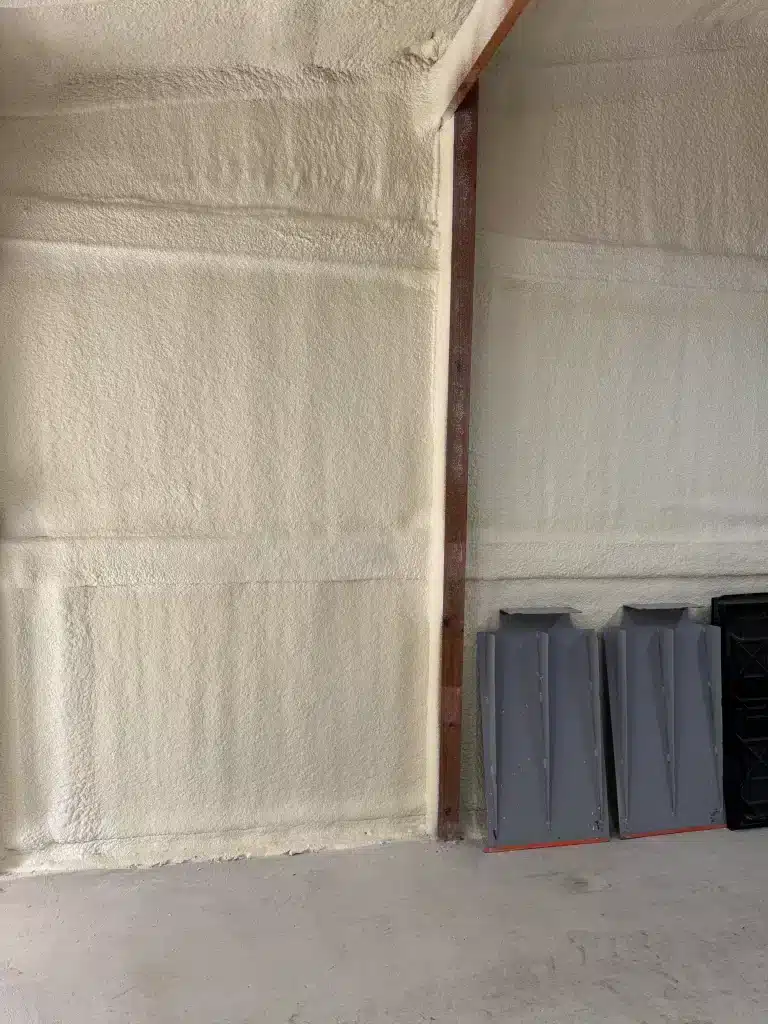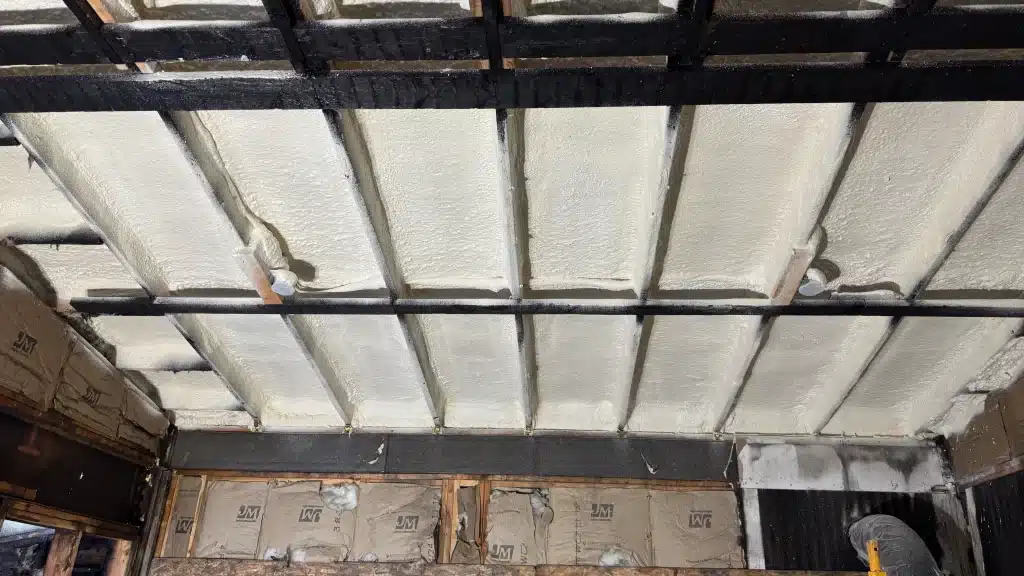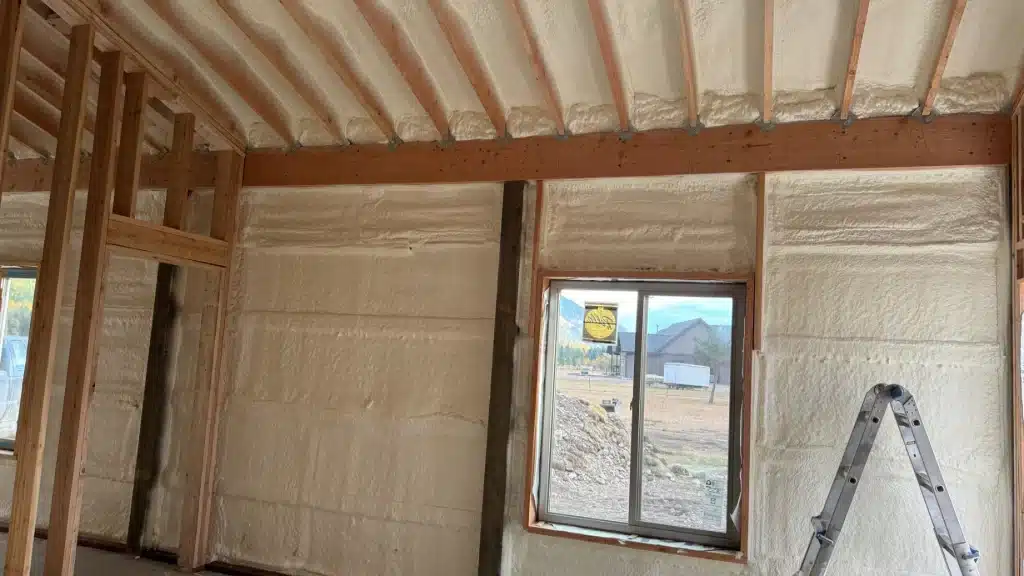

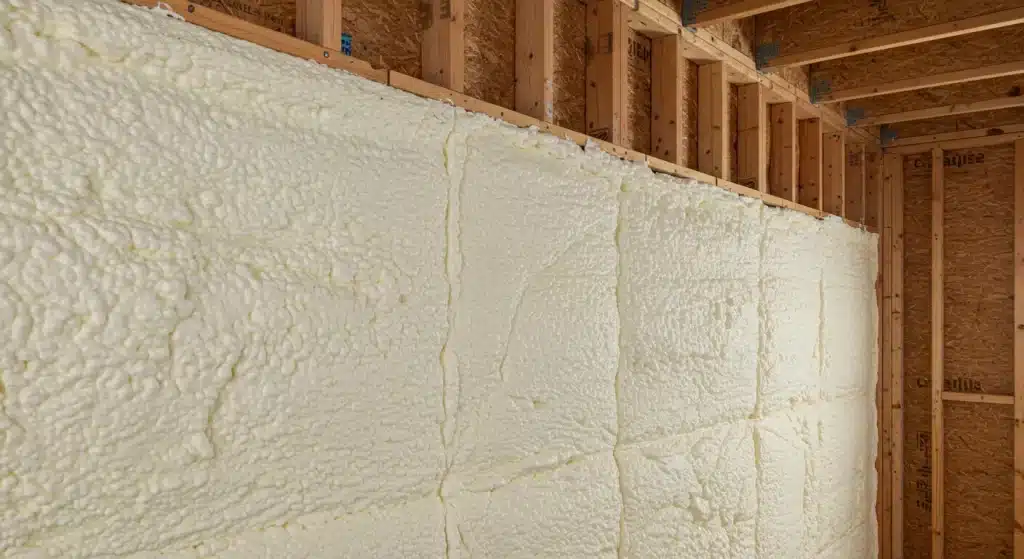
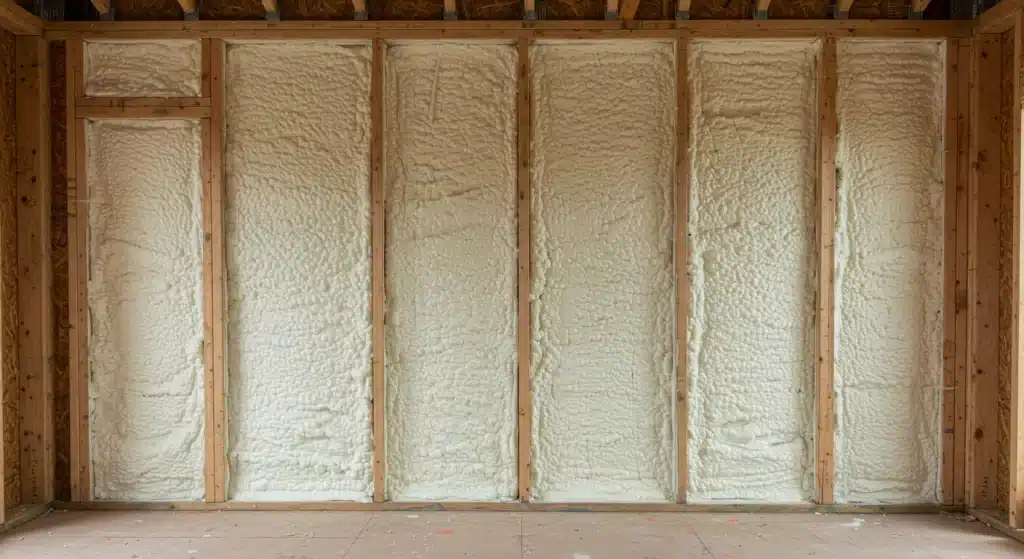
Spray foam insulation stands out as a premium, high-performance product because it addresses heat transfer, air leakage, and moisture control in a single application. Unlike traditional insulation materials that primarily slow down conductive heat flow, spray polyurethane foam (SPF) expands to create a continuous, solid barrier. This monolithic seal eliminates the gaps and seams common with fiberglass batts or blown-in cellulose, which are major sources of energy loss. The result is a more airtight building envelope that significantly improves energy efficiency, indoor air quality, and structural stability.
This article will break down the specific characteristics that define spray foam’s performance. It will cover the technical metrics, long-term benefits, and important factors to consider before an installation. The information is based on extensive field experience in residential and commercial insulation projects, providing a practical look at how this material functions in real-world applications.
Unpacking the Performance Metrics
The effectiveness of any insulation is measured by its ability to resist heat flow, prevent air movement, and manage moisture. Spray foam excels in all three areas due to its unique chemical composition and application method.
Superior Thermal Resistance
An insulation’s ability to resist heat flow is measured by its R-value. A higher R-value indicates better insulating power. Spray foam comes in two main types, each with a different density and R-value.
- Open-Cell SPF: Has a spongy, flexible texture and typically provides an R-value of about 3.5 to 3.8 per inch. It’s excellent for sound dampening and filling interior walls.
- Closed-Cell SPF: Is rigid and dense, offering a much higher R-value, often between 6.0 and 7.0 per inch. A report from the U.S. Department of Energy confirms these R-value ranges, positioning closed-cell foam as one of the most effective insulators available per inch.
This high thermal resistance means that less material thickness is needed to achieve the desired insulation level, which is especially useful in spaces with limited depth like vaulted ceilings or wall cavities.
The Air Sealing Advantage
Air leakage, or infiltration, can account for a significant portion of a building’s heating and cooling costs. The U.S. Environmental Protection Agency states that controlling air leaks is a critical step in improving indoor air quality and efficiency. Because spray foam is applied as a liquid that expands, it fills every crack, gap, and penetration point, creating a near-perfect air seal. This barrier prevents conditioned air from escaping and stops unconditioned air, pollutants, and allergens from entering.
Bonus Tip: An effective air seal also reduces the workload on HVAC systems. When a building doesn’t have drafts, heating and cooling equipment can maintain the desired temperature more easily, leading to less wear and tear and a longer system lifespan.
Moisture and Vapor Control
Moisture intrusion is a serious threat to a building’s durability, leading to mold, mildew, and rot. Closed-cell spray foam acts as a vapor retarder, meaning it resists the passage of moisture vapor. This property is especially valuable in climates with high humidity or in applications below grade, like basements and crawl spaces. Open-cell foam, while not a vapor barrier, allows moisture to pass through it, which can be useful in certain wall assemblies where drying potential is needed.
Long-Term Value and Financial Returns
While spray foam insulation has a higher initial installation cost compared to some alternatives, its long-term benefits often provide a strong return on investment through energy savings and enhanced building durability. The growing demand for energy-efficient solutions is reflected in market trends, with the global spray foam insulation market projected to continue its expansion according to analysis from Fortune Business Insights.
Comparing Insulation Options
To understand spray foam’s position as a premium product, it helps to compare it directly with other common insulation materials.
| Feature | Closed-Cell Spray Foam | Fiberglass Batts | Blown-In Cellulose |
|---|---|---|---|
| R-Value per Inch | 6.0 – 7.0 | 3.1 – 4.3 | 3.2 – 3.8 |
| Air Seal | Excellent | Poor (seams and gaps) | Fair (settles over time) |
| Moisture Barrier | Yes (vapor retarder) | No (absorbs moisture) | No (absorbs moisture) |
| Structural Impact | Adds rigidity | None | None |
| Lifespan | 80+ years | 15 – 30 years | 20 – 30 years |
Energy Savings and Building Durability
By creating a superior thermal and air barrier, spray foam can significantly reduce monthly energy bills. The exact savings depend on the climate, building design, and occupant behavior, but the impact of a properly sealed building envelope is well-documented.
Furthermore, the rigid nature of closed-cell spray foam adds structural strength to the building assembly. When applied to wall sheathing or the underside of a roof deck, it adheres to the surfaces and essentially glues the components together. This can increase a wall’s racking strength, making the entire structure more resilient to high winds and other environmental stresses.
Things to Consider Before Making a Decision
Choosing the right insulation requires careful thought about the specific project, the qualifications of the installer, and the overall budget.
Project Suitability and Application
Spray foam is not a one-size-fits-all solution. Its application must be matched to the project’s needs.
- Attics and Roof Decks: Applying spray foam directly to the underside of the roof deck creates a conditioned attic, which is highly efficient for homes with HVAC equipment located in the attic.
- Walls: Both open-cell and closed-cell foams are effective in wall cavities, with the choice depending on budget, climate, and structural needs.
- Crawl Spaces and Basements: Closed-cell foam is the ideal choice for below-grade applications due to its moisture resistance and high R-value.
Bonus Tip: In older homes with existing insulation, spray foam can sometimes be installed over it, but a thorough inspection is needed first. Any damp or compacted old insulation should be removed to prevent trapping moisture and to ensure a good bond for the foam.
The Importance of Professional Installation
The performance of spray foam is entirely dependent on the quality of the installation. It is a chemical product created on-site by combining two components under specific temperatures and pressures. An inexperienced installer can create off-ratio foam that fails to cure properly, resulting in poor performance, lingering odors, and potential safety issues. Always choose a certified and insured contractor with a proven track record.
Understanding the Investment
The upfront cost of spray foam insulation is higher than that of fiberglass or cellulose. This cost reflects the sophisticated equipment, chemical materials, and skilled labor required for proper installation. However, it’s best to view this as an investment in the building’s long-term performance. The energy savings, improved comfort, and added structural durability contribute to the overall value of the property over its lifetime.
Your Questions About Spray Foam Answered
What is the difference between open-cell and closed-cell spray foam?
Open-cell foam has a lower density, where the tiny cells of the foam are not completely closed. It is softer, more flexible, and provides excellent sound insulation. Closed-cell foam is much denser, with its cells fully encapsulated. This makes it rigid, stronger, and a better insulator with a higher R-value. It also acts as a vapor barrier.
How long does spray foam insulation last?
Spray foam insulation is a highly durable product. As long as it is not exposed to direct sunlight or physical damage, it should last for the life of the building. It doesn’t sag, settle, or break down over time like some other insulation materials can.
Does spray foam insulation help with noise reduction?
Yes, particularly open-cell spray foam. Its soft, porous structure is very effective at absorbing sound waves, which can significantly reduce noise transmission between rooms and from the outside.
Is there an odor associated with spray foam?
There is a distinct odor during the application process, which is why the area must be well-ventilated and unoccupied. This odor typically dissipates completely within 24 hours as the foam fully cures. A lingering odor can be a sign of an improper installation where the chemical ratio was incorrect.
Is spray foam insulation safe once it’s cured?
Yes. Once spray foam has fully cured, which typically takes about 24 hours, it becomes an inert plastic. It is stable and does not off-gas, making it safe for occupants. The installation process itself is what requires safety protocols, including proper ventilation and personal protective equipment for the installers.
Can spray foam be used in older homes?
Absolutely. Spray foam is often an excellent choice for retrofitting older homes because it can easily fill irregular-shaped cavities and seal the numerous small air leaks that are common in older construction. It helps bring the performance of an older home up to modern energy efficiency standards. Supreme Spray Foam Fresno has extensive experience applying this technology to structures of all ages.
Making the Right Insulation Choice
Spray foam insulation earns its premium reputation by delivering superior performance across the board. Its ability to provide high thermal resistance, a complete air seal, moisture control, and added structural strength in one product sets it apart from conventional options. While the initial cost is a factor, the long-term energy savings and enhanced building durability make it a compelling investment for many property owners. The best approach is to evaluate your specific needs, the climate you live in, and your long-term goals for energy efficiency and comfort.
As demand for cost-effective insulation solutions continues to rise, our team has recently expanded support across additional regions. Learn more in our latest service expansion update.
Get a Professional Assessment
Choosing the right insulation can feel complex, but a professional evaluation can provide clarity. An expert can assess your property’s unique conditions and recommend the best solution for your goals and budget. For a detailed consultation, you can contact Supreme Spray Foam Fresno by phone at (559) 545-0800 or via email at [email protected] to discuss your project.
Sources
- U.S. Department of Energy – Provides official information on the types of spray foam insulation and their respective R-values.
- U.S. Environmental Protection Agency – Details the importance of air sealing for improving indoor air quality and energy efficiency.
- Fortune Business Insights – Offers market analysis and growth projections for the global spray foam insulation industry.