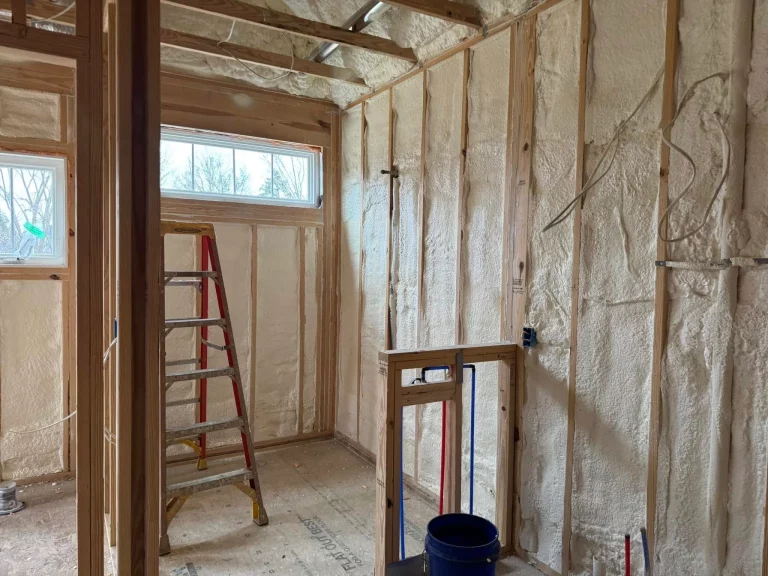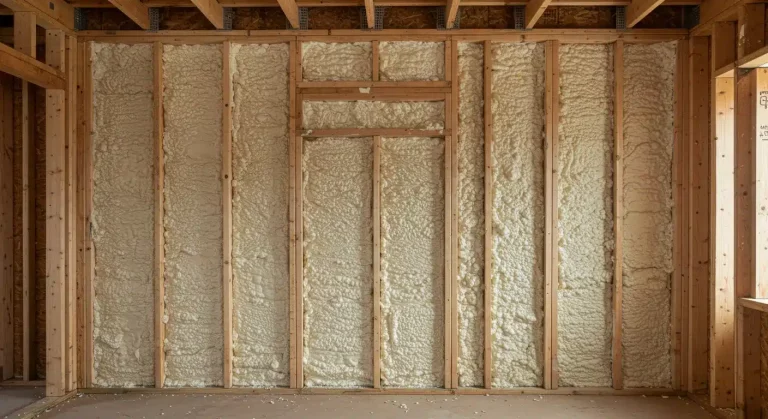

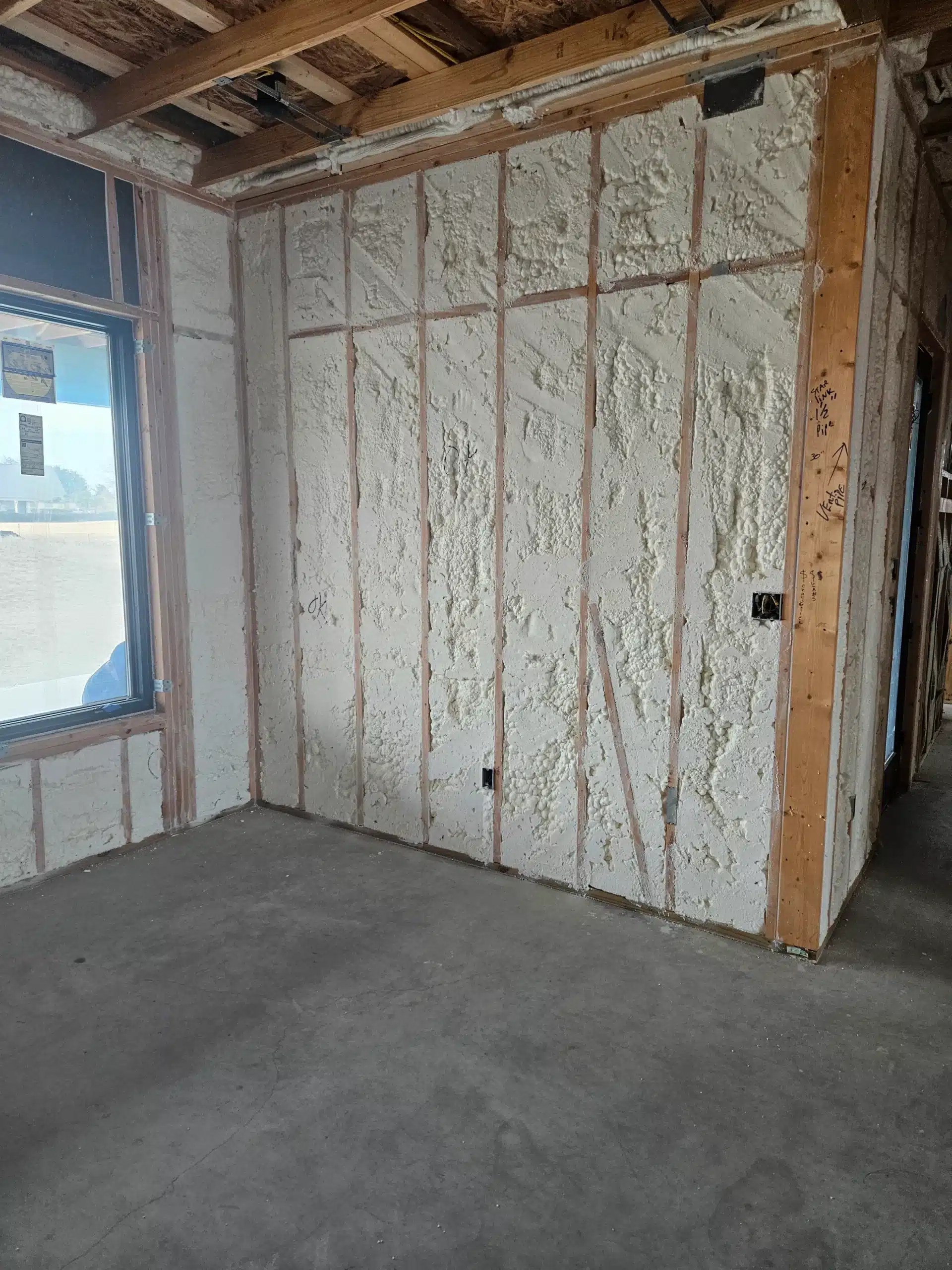
Open cell spray foam insulation works particularly well for timber frame homes in Fresno because its low density, high expansion rate, and ability to move with the natural shifting of wood address the specific challenges that timber construction presents in California’s hot, dry Central Valley climate. Fresno falls in California Climate Zone 13, one of the state’s inland zones with hot summers and cool winters that push insulation requirements higher than coastal areas. Timber frame homes, while beautiful and structurally sound, are prone to air leakage at joints and thermal bridging through wood members, which makes the choice of insulation material especially important. Open cell spray foam fills every gap and cavity while remaining flexible enough to accommodate the subtle movement that timber structures experience over time.
TLDR: Key Takeaways
- Open cell spray foam expands up to 100 times its original volume, filling irregular cavities common in timber frame construction and sealing air leaks that traditional batt insulation cannot reach.
- Fresno’s Climate Zone 13 requires high attic insulation levels (R-38) and continuous wall insulation, making air sealing combined with cavity insulation a practical compliance strategy under California Title 24.
- The U.S. Department of Energy classifies sprayed foam as both insulation and an air barrier, reducing the need for separate weatherization tasks like caulking and housewrap application.
- Thermal bridging through wood framing can account for up to 30% of total heat loss in a wall assembly, according to research published by HUD’s Office of Policy Development and Research.
- Open cell foam’s lighter weight puts less stress on timber frame structures compared to denser insulation alternatives.
- EPA estimates that homeowners can save an average of 15% on heating and cooling costs through proper air sealing and insulation.
What Makes Timber Frame Homes Different for Insulation
Timber frame construction uses large wooden posts and beams rather than conventional 2×4 or 2×6 stud walls. This creates wide, open bays between structural members and more complex joint connections where air infiltration is common. The irregular geometry of timber frames makes it difficult for rigid batts or blankets to fit tightly, leaving gaps that allow conditioned air to escape, making open cell spray foam insulation solutions a preferred option.
Wood itself has a low R-value of about R-1.25 per inch, meaning those substantial timber beams become pathways for heat transfer. This effect, known as thermal bridging, reduces the overall effective R-value of the wall assembly significantly. A typical wood-framed home can have a framing factor as high as 25%, and timber frame homes with their large exposed beams often face even greater thermal bridging at every post and beam connection.
Beyond thermal performance, timber naturally expands and contracts with changes in humidity and temperature. In Open Cell Spray Foam systems, summer temperatures in Fresno regularly exceed 100 degrees and winter nights can drop into the 30s, creating conditions where seasonal movement is pronounced. An insulation material that bonds rigidly to the wood without allowing for this movement can create gaps, cracks, or adhesion failures over time.
Open Cell vs. Closed Cell: A Comparison for Timber Frames
When selecting spray foam for timber frame construction, the two main options are open cell and closed cell. Each has distinct properties that affect performance in a timber frame application.
| Property | Open Cell Spray Foam | Closed Cell Spray Foam |
|---|---|---|
| R-Value per Inch | Approximately R-3.5 to R-3.8 | Approximately R-6.0 to R-7.0 |
| Density | Low (0.4 to 1.2 lbs/ft³) | High (1.7 to 2.5 lbs/ft³) |
| Expansion Rate | 100 to 120 times original volume | 30 to 35 times original volume |
| Vapor Barrier | Vapor permeable (breathable) | Acts as vapor barrier |
| Flexibility | High, spongy texture | Rigid and dense |
| Sound Absorption | Excellent | Moderate |
| Weight on Structure | Light | Heavy |
For timber frame homes in spray foam insulation Fresno, CA, the flexibility and expansion properties of open cell foam provide clear advantages. The foam’s ability to expand into every void, crack, and joint in a timber frame creates a continuous air seal that rigid insulation materials cannot match. Its breathable nature allows moisture vapor to pass through, which is important in a climate where interior humidity levels fluctuate with air conditioning use in summer and heating in winter. Closed cell foam, while offering higher R-value per inch, is rigid and can separate from timber surfaces as the wood moves seasonally.
Why Fresno’s Climate Matters
Fresno sits in California’s Central Valley, classified under Climate Zone 13 in the state’s building energy code. This zone is characterized by hot, dry summers with significant cooling loads and winters that still demand meaningful heating performance. The California Energy Commission assigns higher insulation requirements to inland zones like Fresno compared to coastal areas.
Under the current energy code, Fresno homes require R-38 attic insulation regardless of duct configuration, and wood-framed walls must meet a U-0.048 assembly rating, typically achieved with 2×6 R-21 cavity insulation plus R-5 continuous exterior insulation. For timber frame homes, achieving these targets is more complex because of the irregular framing geometry and the thermal bridges at every beam connection.
Open cell spray foam helps meet these requirements in a way that works with the timber frame structure rather than against it. By filling the full depth of wide wall cavities with foam at R-3.7 per inch, a 5.5-inch timber frame bay can achieve approximately R-20 in the cavity alone, approaching code targets. Combined with its air sealing properties, open cell foam addresses the two primary challenges of timber frame insulation in one application.
How Open Cell Spray Foam Handles Timber Frame Movement
Timber frame homes are designed to be flexible structures. The wooden joinery, whether traditional mortise and tenon or modern steel connectors, allows the building to settle, shift, and respond to seasonal moisture changes. This flexibility is a strength of timber frame construction, but it creates a challenge for insulation.
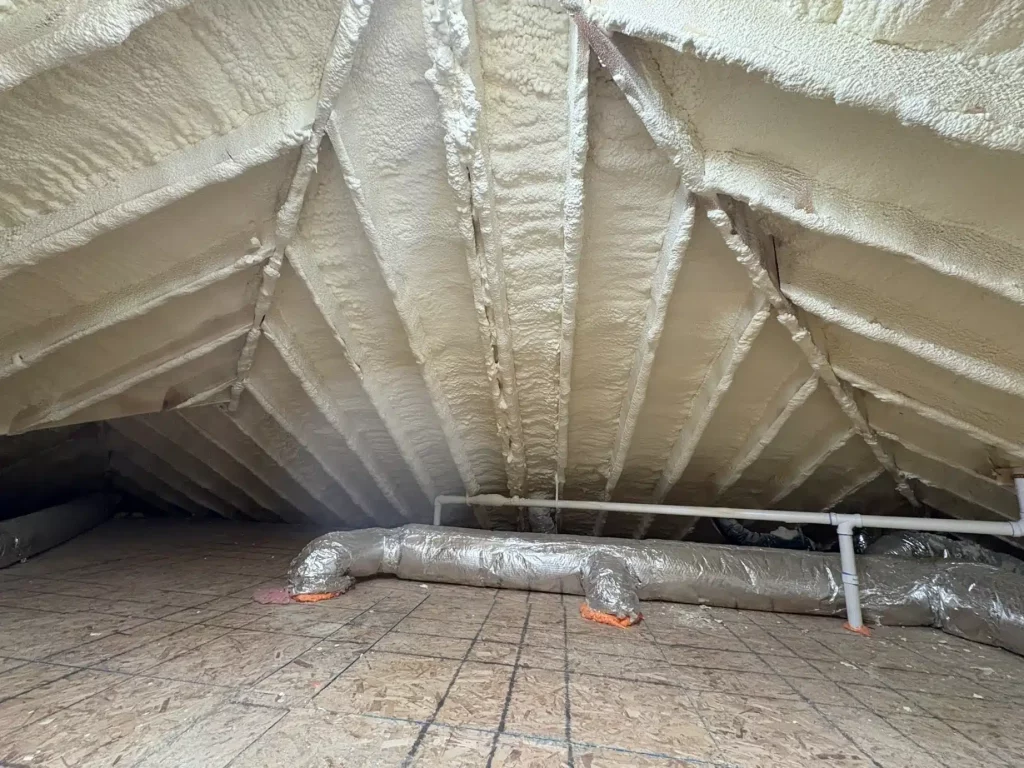
Open cell spray foam adheres to wood surfaces and cures into a flexible, sponge-like material. When the timber moves, the foam bends and compresses with it rather than cracking or delaminating. This maintains the air seal and insulation continuity year after year, even as the structure acclimates to Fresno’s temperature swings.
The lower density of open cell foam also means less overall weight added to the wall and roof assemblies. In a timber frame home with wide bays and spanning beams, adding heavy insulation can be a structural consideration. Open cell foam weighs a fraction of what closed cell foam or other dense materials weigh, reducing the load on timber connections and joinery.
Common Mistakes When Insulating Timber Frame Homes
- Using batt insulation in irregular cavities: Fiberglass or mineral wool batts cannot conform to the complex shapes of timber frame bays, leaving air gaps that reduce effective R-value and allow moisture intrusion.
- Choosing closed cell foam for interior walls: The rigidity of closed cell foam can crack at timber joints as the wood moves, creating air leakage paths. Open cell’s flexibility accommodates this movement.
- Ignoring vapor permeability: In Fresno’s mixed heating and cooling climate, walls need to dry in both directions. Open cell foam is vapor permeable, allowing the wall assembly to manage moisture naturally.
- Skipping air sealing before insulation: Air sealing is as important as the insulation itself. One of open cell spray foam’s primary advantages is that it provides both insulation and air barrier in a single step.
- Not accounting for framing factor: Timber frames have more exposed wood area than conventional stud walls, increasing thermal bridging. Filling cavities completely with open cell foam maximizes the insulated area between structural members.
How to Evaluate an Insulation Approach for Your Timber Frame Home
When deciding on insulation for a timber frame build or retrofit in Fresno, consider these criteria:
Questions to ask your installer:
- What R-value will the installed foam achieve in our specific bay depths?
- Does the proposed installation meet current Title 24 requirements for Climate Zone 13?
- How does the foam handle timber movement and seasonal expansion?
- Will a separate vapor retarder be needed, or does the foam manage moisture on its own?
- What is the expected impact on indoor air quality and ventilation requirements?
Key criteria to evaluate:
- Air sealing effectiveness (blower door test results before and after)
- Compatibility with timber frame geometry and joinery
- Long-term adhesion and flexibility with wood movement
- Compliance with California energy code for your specific climate zone
- Sound dampening performance for interior partition walls
Recommendations by Home Type
| Home Type | Insulation Priority | Recommended Approach |
|---|---|---|
| New timber frame construction | Maximum air sealing from the start, code compliance for Zone 13 | Open cell foam in all wall cavities and roof assemblies during framing |
| Existing timber frame retrofit | Sealing air leaks in hard-to-reach bays, improving comfort | Open cell foam injected or sprayed into accessible wall and ceiling cavities |
| Timber frame with SIP roof panels | Consistent thermal envelope, avoiding gaps at panel edges | Open cell foam at all joints, transitions, and penetrations between panels and timber frame |
| Timber frame addition or remodel | Matching insulation performance of existing sections | Open cell foam in new wall cavities with attention to transitions at existing structure connections |
Signs You’ve Found the Right Insulation Approach
- The installer understands timber frame construction and can explain how the foam will interact with your specific framing design
- The proposal includes air sealing as part of the insulation scope, not as a separate add-on
- R-value calculations account for your actual bay depths and the framing factor of your timber layout
- The approach addresses Fresno’s Climate Zone 13 requirements under current Title 24 standards
- There is a clear plan for moisture management that accounts for both summer cooling and winter heating
- The installer is willing to discuss trade-offs between open cell and closed cell foam for different areas of your home
- Documentation includes expected blower door results and compliance verification
Ready to Insulate Your Timber Frame Home in Fresno
Supreme Spray Foam Fresno brings specialized experience insulating timber frame and non-standard construction throughout the Fresno area. Our team understands how wood movement, irregular bay geometries, and Fresno’s demanding Climate Zone 13 conditions affect insulation performance. We evaluate each project individually and recommend the right foam type and application method for your home’s specific needs. Contact us today to discuss your timber frame insulation project.
[email protected] | (559) 545-0800
FAQs
Does open cell spray foam meet California Title 24 requirements for Fresno?
Yes. Open cell spray foam is accepted under Title 24 as long as the installed R-value meets the requirements for Climate Zone 13, which include R-38 for attics and U-0.048 for wood-framed walls.
Can open cell spray foam be used in existing timber frame homes, or only new construction?
Open cell foam works well for both new construction and retrofits. In existing homes, it can be sprayed into open wall cavities during a remodel or injected through small access holes in finished walls.
How does open cell spray foam handle Fresno’s extreme summer heat?
Open cell foam is stable at high temperatures and maintains its insulating and air sealing properties. Its breathable nature also allows moisture to dissipate, which is important when air conditioning creates temperature differentials between interior and exterior surfaces.
Will the foam damage my timber beams or affect the wood’s ability to breathe?
Open cell spray foam adheres to wood surfaces without trapping moisture against the timber. Its vapor-permeable structure allows wood to maintain its natural moisture equilibrium while the air seal prevents uncontrolled air and moisture infiltration.
Is open cell spray foam a good choice for sound control between rooms in a timber frame home?
Open cell foam excels at sound absorption due to its soft, open-cell structure. It is particularly effective for reducing sound transmission through interior partition walls and floor/ceiling assemblies in timber frame homes.
Sources
- California Energy Commission – Climate Zone Tool, Maps, and Information – Official state resource for determining California’s 16 building climate zones, including Fresno’s assignment to Zone 13.
- U.S. Department of Energy – Types of Insulation – Comprehensive guide to insulation materials including sprayed foam, with details on open cell and closed cell properties, installation methods, and performance characteristics.
- U.S. Department of Energy – Air Sealing Your Home – Guide on reducing air leakage through caulking, weatherstripping, and spray foam, including strategies for walls, rim joists, and penetrations.
- HUD Office of Policy Development and Research – Concept of Thermal Bridging in Wood Framed Construction – Research documenting how thermal bridging through wood framing accounts for significant energy loss, with data on framing factors and the 2021 IECC continuous insulation requirements.
- ENERGY STAR – Methodology for Estimated Energy Savings – EPA’s methodology and savings estimates for air sealing and insulation improvements, showing average 15% savings on heating and cooling costs nationally.