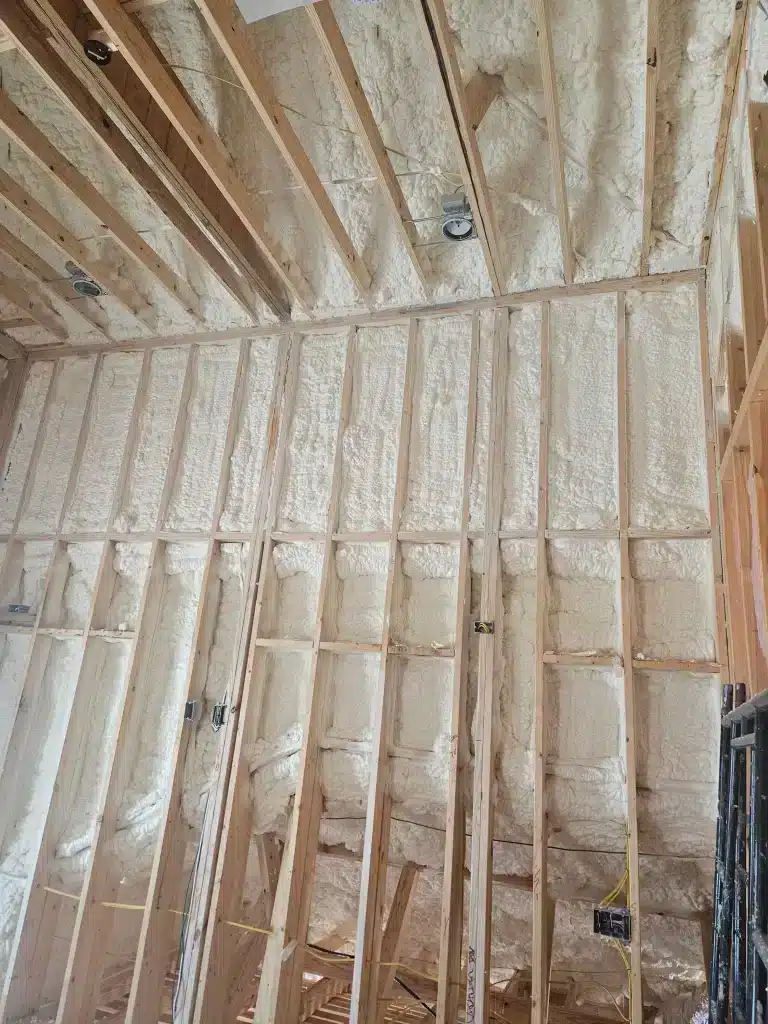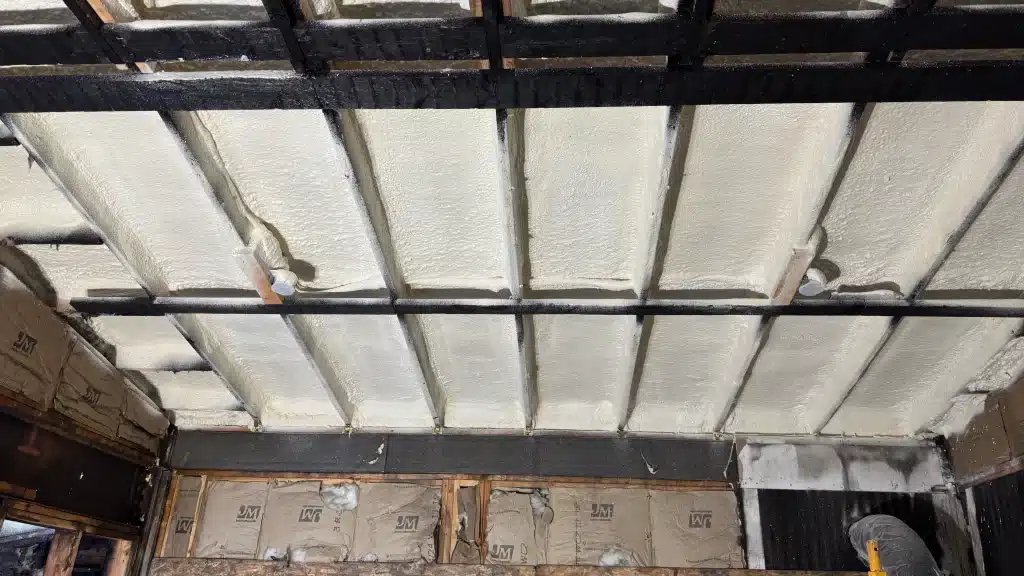

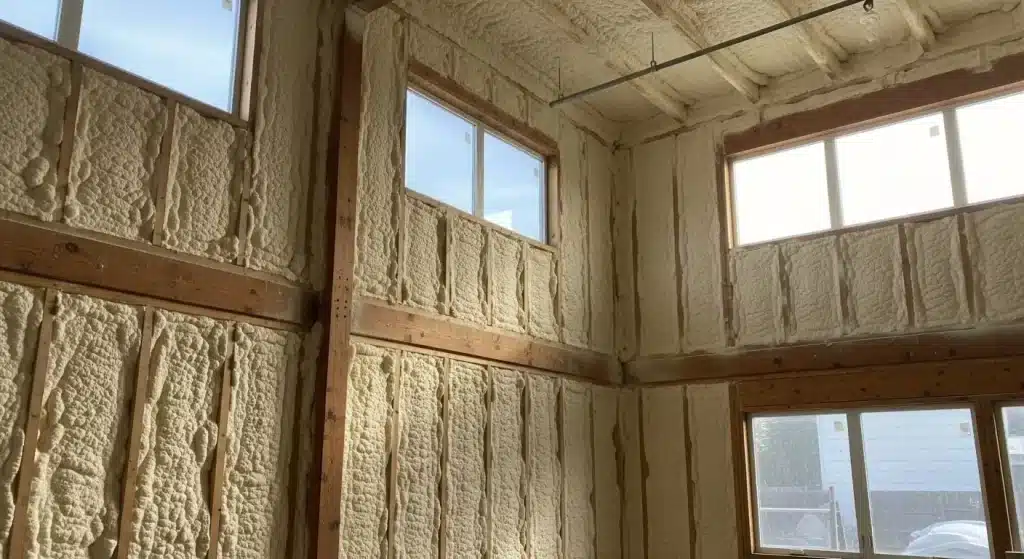
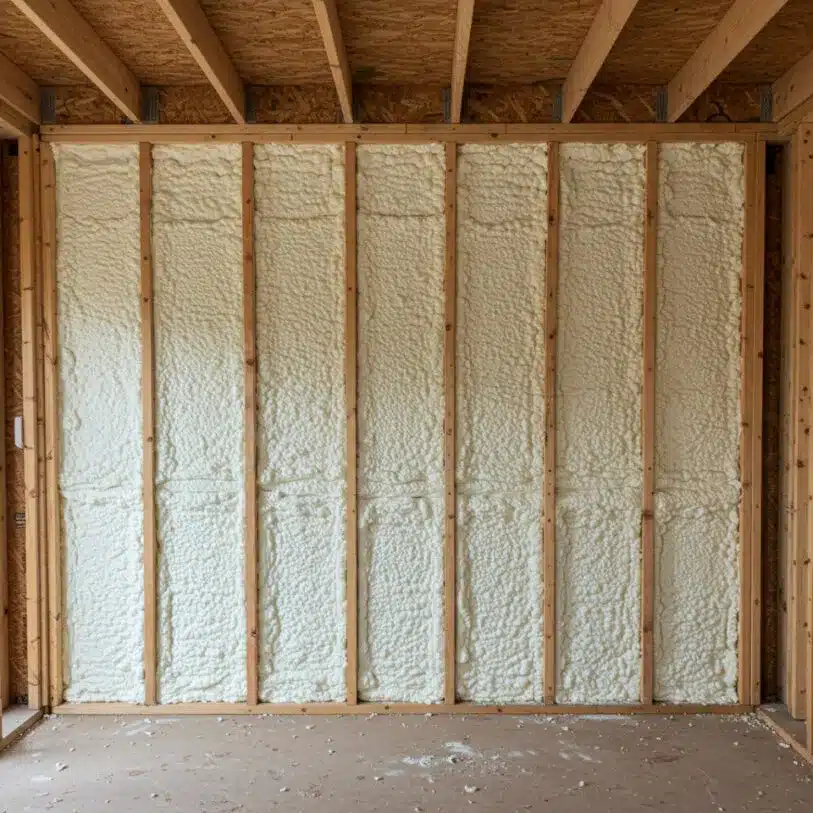
Open cell spray foam contributes to whole-home performance by functioning as both a thermal insulator and a comprehensive air barrier. Unlike traditional materials that only slow down heat transfer, open cell foam expands up to 100 times its original liquid volume to fill cracks, crevices, and voids. This expansion creates a continuous seal that prevents air leakage, manages indoor temperatures, and significantly reduces the workload on heating and cooling systems. By addressing the building envelope as a single, connected system, this material resolves common energy inefficiencies caused by drafts and thermal bridging.
Supreme Spray Foam- Fresno recognizes that actual home performance goes beyond simple R-values. The effectiveness of an insulation system depends on its ability to stop uncontrolled air movement. Open cell spray foam, technically known as low-density foam (approximately 0.5 lb/ft³), excels in this area because its structure remains flexible. This flexibility allows it to move with the building’s natural settling and shifting without cracking or breaking the air seal, maintaining high performance over the lifespan of the structure.
The Science Behind the Seal
To understand why open cell foam is effective, one must look at how heat and air move through a home. Heat travels in three ways: conduction, convection, and radiation. Most traditional insulation types primarily address conduction, the transfer of heat through solid materials. However, they often fail to address convection, the movement of heat through air currents.
Addressing the Stack Effect
Homes naturally experience a phenomenon called the “stack effect.” In winter, warm air rises and escapes through the attic, creating a vacuum that pulls cold air in through the foundation or lower windows. A Department of Energy report indicates that air leakage can account for 25% to 40% of heating and cooling energy use. Open cell spray foam halts this cycle by sealing the attic and upper boundaries of the home. When the air cannot escape the top, the vacuum effect breaks, and cold air stops entering the bottom.
Acoustic Dampening Properties
Beyond temperature control, the cellular structure of this foam acts as a sound absorber. The “open” nature of the cells means they are not fully encapsulated, which traps sound waves rather than reflecting them. This creates a quieter indoor environment by reducing noise transmission from outside traffic or between rooms.
Technical Specifications and Comparisons
Choosing the right insulation requires comparing technical metrics. While open-cell foam has a lower R-value per inch than closed-cell foam, its cost-effectiveness and air-sealing capabilities often make it the preferred choice for residential applications, particularly in roof decks and wall cavities.
Comparison of Common Residential Insulation Materials
| Feature | Open Cell Spray Foam | Closed Cell Spray Foam | Fiberglass Batts |
|---|---|---|---|
| R-Value per Inch | R-3.5 to R-3.7 | R-6.0 to R-7.0 | R-3.1 to R-3.4 |
| Air Barrier | Excellent (Expands to seal) | Excellent (Expands to seal) | Poor (Air passes through) |
| Moisture Permeability | High (Breathable) | Low (Vapor Retarder) | High (Breathable) |
| Sound Deadening | High | Moderate | Moderate |
| Rigidity | Flexible / Soft | Rigid / Structural | Flexible |
| Typical Cost | Moderate | High | Low |
Note: R-values measure thermal resistance. Higher numbers indicate better insulating power.
Things to Consider Before Making a Decision
Before selecting open cell spray foam for a project, specific structural and environmental factors require evaluation.
Climate and Application Zone
Open cell foam is permeable to moisture vapor. In very cold climates, using it on the underside of a roof deck without a proper vapor retarder can cause condensation. However, in mixed or hot conditions, such as the Central Valley of California, it performs exceptionally well. It allows any incidental moisture to dry inward toward the conditioned space, preventing wood rot.
The Roof Deck Location
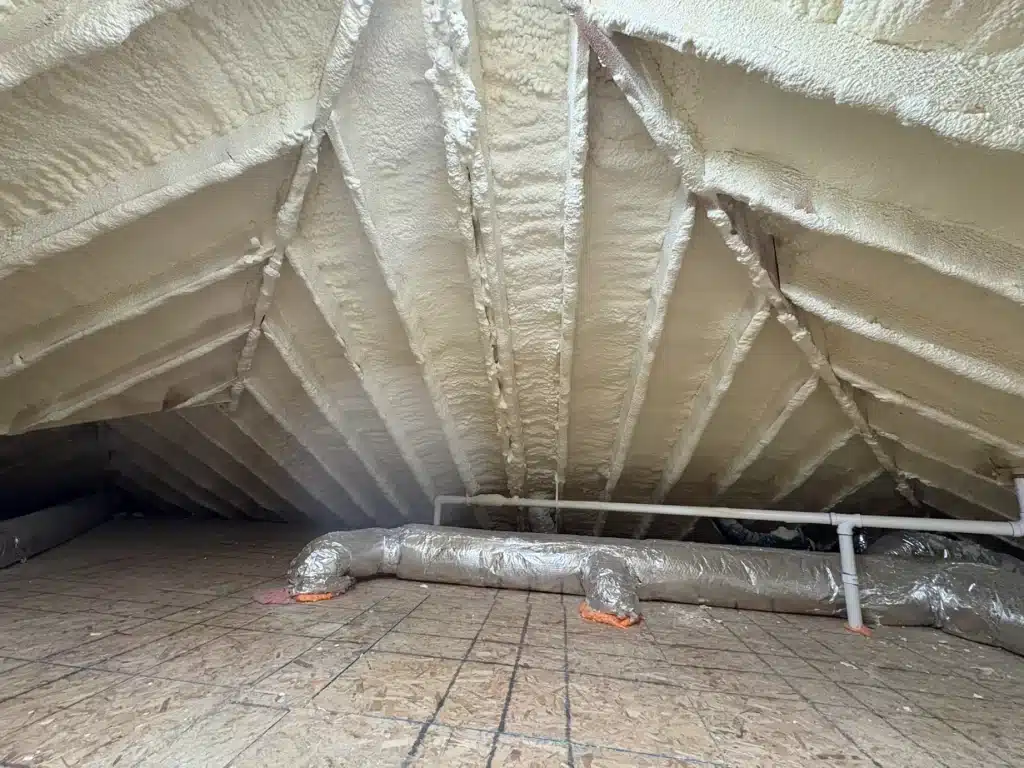
Applying foam directly to the underside of the roof deck moves the thermal boundary from the attic floor to the roofline. This converts the attic into a “conditioned space.” Ductwork located in this space stays within the building’s thermal envelope. According to the Building Science Corporation, keeping ducts in conditioned spaces can prevent significant energy losses that occur when HVAC systems push conditioned air through hot, vented attics.
Bonus Tip: If your HVAC equipment is located in the attic, moving the insulation to the roof deck with open cell foam typically yields the highest return on investment for energy savings.
Existing Electrical and Plumbing
Because the foam expands aggressively, it encases wires and pipes. While this does not harm the mechanical systems, it can make future modifications slightly more labor-intensive. Homeowners should complete any planned electrical upgrades or plumbing rough-ins before the insulation installation begins.
Market Trends and Energy Efficiency
The demand for high-performance insulation is rising as energy codes become stricter. Data published by Grand View Research suggests that the spray foam market is growing steadily as builders and homeowners prioritize long-term energy savings over lower upfront material costs. This shift reflects a broader understanding that the “cheaper” option often ends up costing more in monthly utility bills over time.
Modern building codes now emphasize air changes per hour (ACH). A lower ACH means a tighter home. Open cell spray foam is one of the most reliable methods to achieve the low ACH ratings required for Energy Star certification and modern efficiency standards.
Conclusion
Open cell spray foam serves as a powerful tool for improving whole-home performance by addressing the two main drivers of energy loss: heat conduction and air leakage. Its ability to create a continuous, air-tight envelope transforms how a house manages energy, leading to consistent indoor temperatures and lower utility costs. While it requires professional installation and careful consideration of climate zones, the long-term benefits typically outweigh the initial investment.
Homeowners should evaluate their property’s specific needs, focusing on the location of ductwork and the condition of the attic, to determine if this solution aligns with their energy goals. A tight building envelope is the foundation of a high-performance home.
Take the Next Step for Your Home
Improving your home’s energy efficiency starts with a professional assessment of your current insulation and air sealing. Supreme Spray Foam- Fresno assists homeowners in identifying the weak points in their building envelope and designing a solution that maximizes comfort and savings.
Supreme Spray Foam- Fresno Phone: (559) 545-0800 Email: [email protected]
Frequently Asked Questions
Does open cell foam shrink over time?
Quality open cell foam does not shrink significantly if applied correctly. It adheres to the wood framing and remains flexible. This flexibility allows it to expand and contract with the building structure without pulling away from the studs, maintaining the air seal indefinitely.
Can open cell foam be used in basements or crawl spaces?
Generally, builders avoid using open cell foam in below-grade applications or damp crawl spaces. Because it is permeable and acts like a sponge, it can absorb water if subjected to flooding or high hydrostatic pressure. Closed cell foam is the standard recommendation for these wet environments.
How does this insulation affect roof leaks?
Because open cell foam is breathable, water from a roof leak will eventually pass through it. This is actually a benefit compared to closed cell foam, which might trap the water against the roof deck, hiding the leak and causing wood rot. With open cell foam, you will spot the leak sooner, allowing for faster repairs.
Is it possible to remove the foam later?
Removing spray foam is difficult and labor-intensive because it adheres chemically to the substrate. It is intended as a permanent solution. While it can be scraped out, the process is time-consuming. This permanence underscores the need to choose the right contractor and product initially.
What is the difference between “pounds” of foam?
You will hear terms like “half-pound” and “two-pound” foam. Open cell is half-pound foam (0.5 lb density), meaning it is light and sponge-like. Closed cell is two-pound foam (2.0 lb density), making it dense, rigid, and strong enough to walk on. The density dictates the R-value and moisture resistance.
Sources
- Department of Energy – Provides data on energy loss due to air leakage and insulation types.
- Building Science Corporation – Detailed analysis of attic ventilation and the benefits of conditioned attic spaces.