
Navigating the world of home insulation can feel overwhelming. You’re faced with dozens of options, each promising lower energy bills and a more comfortable home. But not all insulation is created equal, and choosing the right material for your specific needs is what truly makes a difference. One of the most effective and increasingly popular options is open cell spray polyurethane foam (SPF). It’s a powerful tool for creating an energy-efficient and quiet living space, but understanding its unique properties is essential to using it correctly.
For years, the team at Supreme Spray Foam Fresno has worked with this material in countless homes, attics, and commercial buildings. We’ve seen firsthand how its expansive, air-sealing nature can solve long-standing issues with drafts, high utility costs, and noise pollution. This guide is a collection of that experience, designed to give you a complete picture of open cell spray foam. We’ll break down what it is, how it works, and where it shines.
By the time you finish reading, you will have a clear understanding of:
- The science behind open cell foam and what makes it unique.
- The primary benefits, from air sealing to sound dampening.
- A direct comparison between open cell and its counterpart, closed cell foam.
- The best applications for open cell foam in your home or building.
- A realistic look at its cost and long-term value.
This isn’t just about technical specifications; it’s about giving you the knowledge to make an informed decision for your property.
What Exactly is Open Cell Spray Foam?
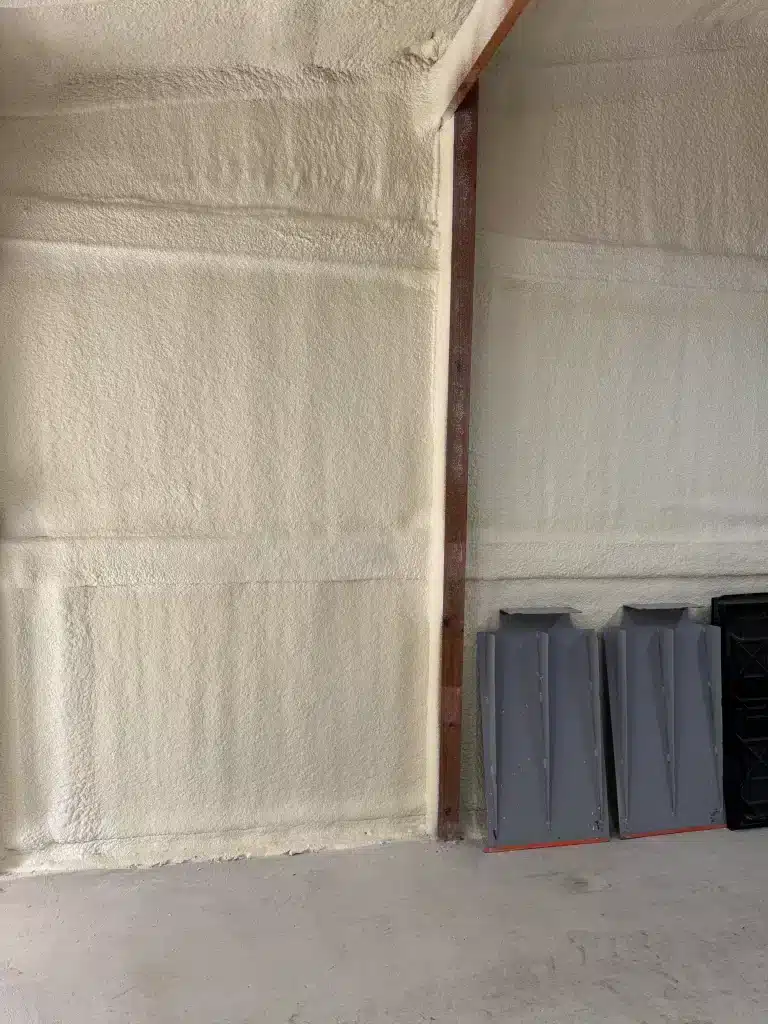
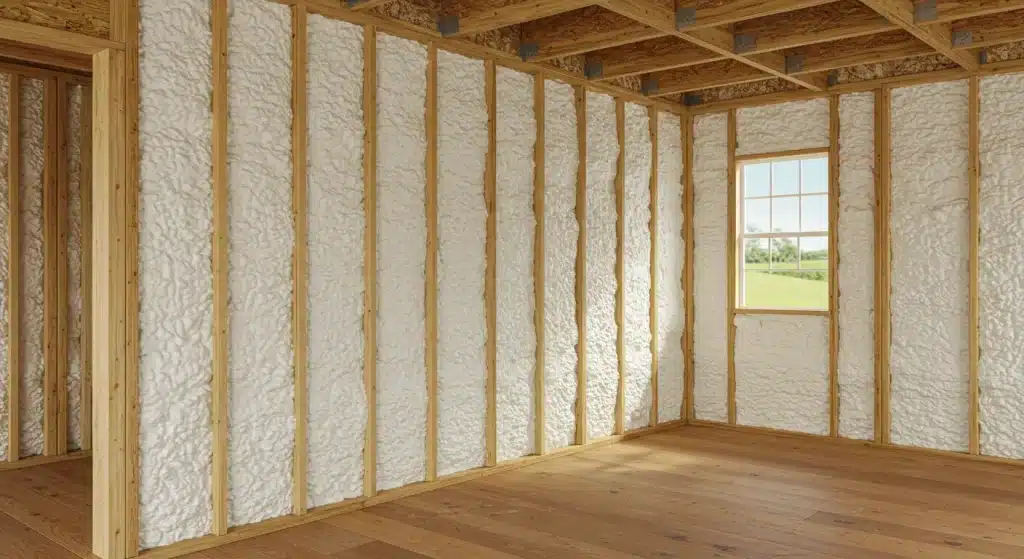
At its most basic, open cell spray foam is a type of polyurethane insulation that is applied as a liquid and expands rapidly into a soft, flexible foam. It’s created on-site by combining two chemical components, an isocyanate and a polyol resin, which react to form the foam.
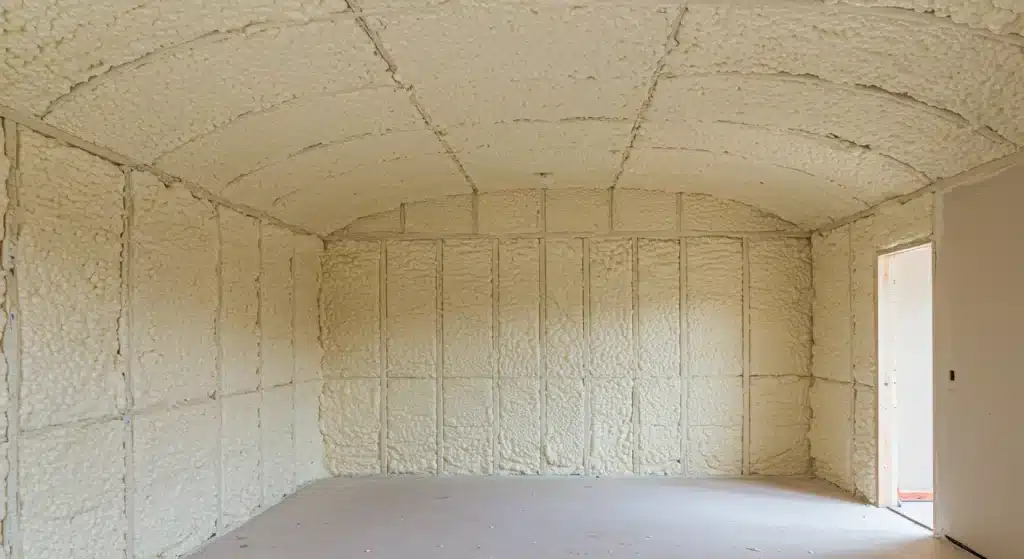
The name “open cell” describes its physical structure. Imagine a microscopic view of the foam; you would see tiny bubbles, or cells, that are intentionally left open. This creates a soft, sponge-like, and low-density material. This structure is very different from closed cell foam, where the cells are completely sealed and packed tightly together.
This open-celled structure is the source of its most important characteristics:
- Expansion: It expands dramatically upon application, often up to 100 times its liquid volume. This allows it to flow into every crack, crevice, and irregular cavity, creating a nearly perfect air seal.
- Flexibility: Because it’s soft and pliable, open cell foam can flex and move with a building’s natural expansion and contraction, preventing cracks and maintaining its seal over time.
- Permeability: The open cells allow water vapor to pass through the foam. This “breathability” can be an advantage in certain climates and building assemblies, as it helps prevent moisture from getting trapped in the wall cavity.
It’s a common misconception to judge an insulation material solely by its R-value. While open cell foam has a lower R-value per inch than some other materials, its true strength lies in its ability to stop air leakage. According to the U.S. Department of Energy, air leakage can account for up to 40% of the energy used for heating and cooling a typical home. By creating a comprehensive air barrier, open cell foam tackles this energy loss at its source.
The Core Benefits of Using Open Cell Foam
Choosing an insulation material involves weighing its various advantages. Open cell foam offers a distinct set of benefits that make it the ideal choice for many specific applications.
Unmatched Air Sealing Capabilities
This is the number one reason people choose spray foam. As it expands, open cell foam seals the building envelope from the inside out. It conforms perfectly to any shape, sealing gaps around plumbing, electrical wiring, and framing that are impossible to properly insulate with traditional batts or rolls. This airtightness prevents drafts, stops conditioned air from escaping, and keeps unconditioned air and pollutants from entering your home.
Superior Sound Dampening
If you’re looking to reduce noise, open cell foam is one of the best insulation materials on the market. Its soft, porous structure is excellent at absorbing sound waves, rather than just blocking them. This makes it a fantastic choice for:
- Interior walls between bedrooms, bathrooms, and laundry rooms.
- Media rooms or home theaters to create a true cinematic experience.
- Floors and ceilings to reduce footfall noise and conversation between levels.
Smart Moisture Management
While it isn’t waterproof, the vapor permeability of open cell foam is often a strategic advantage. If a roof or pipe leak occurs, the foam will allow water to pass through it, making the leak visible on the drywall or sheathing below. This allows you to identify and fix the source of the problem quickly. In contrast, closed cell foam can trap moisture, hiding leaks until significant rot or mold damage has already occurred. This breathability helps building materials dry out if they do get wet.
Flexibility and Longevity
Buildings are not static; they shift, settle, and expand with temperature changes. The flexible nature of open cell foam allows it to accommodate this movement without cracking or pulling away from the studs. This ensures the air seal remains intact for the life of the building, providing consistent performance year after year.
Open Cell vs. Closed Cell Foam: Making the Right Choice
One of the most common questions is about the difference between open and closed cell spray foam. They are both polyurethane foams but have very different properties and ideal uses. Choosing the wrong one can be an expensive mistake.
Closed cell spray foam is dense, rigid, and has a higher R-value per inch (typically R-6.0 to R-7.0). Its closed cell structure makes it a vapor barrier, meaning it blocks moisture. It also adds structural strength to the wall or roof assembly it’s applied to.
Open cell foam is light, flexible, and has a lower R-value per inch (typically R-3.5 to R-3.8). Its open cell structure makes it vapor-permeable, and it does not add structural rigidity.
Here’s a direct comparison to help clarify the differences:
| Feature | Open Cell Spray Foam | Closed Cell Spray Foam |
|---|---|---|
| R-Value per Inch | ~R-3.7 | ~R-6.5 |
| Density | Low (0.5 lb/ft³) | High (2.0 lb/ft³) |
| Air Barrier | Excellent | Excellent |
| Vapor Permeability | Permeable (lets vapor pass) | Impermeable (acts as a barrier) |
| Sound Dampening | Excellent | Good |
| Structural Strength | No | Yes |
| Expansion | High (up to 100x) | Low (up to 30x) |
| Cost | Lower | Higher |
Expert Tip: Think of it this way. If you need a high R-value in a small space, require a vapor barrier, or want to add structural reinforcement, closed cell is often the better option. If your primary goals are air sealing and soundproofing in an above-ground, interior application, open cell is usually the more cost-effective and suitable choice.
Key Takeaways: Open Cell vs. Closed Cell
- Choose Open Cell for: Soundproofing interior walls, filling large cavities cost-effectively, and in climates where building assemblies need to breathe and dry out. It excels in applications like unvented attics and between floors.
- Choose Closed Cell for: Applications requiring a high R-value in limited depth (like 2×4 walls), areas needing a moisture barrier (like basements or crawl space walls), and situations where adding structural rigidity is a benefit.
Best Applications: Where Does Open Cell Foam Perform Best?
Knowing the properties of open cell foam is one thing; knowing exactly where to use it is another. Its unique characteristics make it perfect for some areas and unsuitable for others.
Attics and Roof Decks
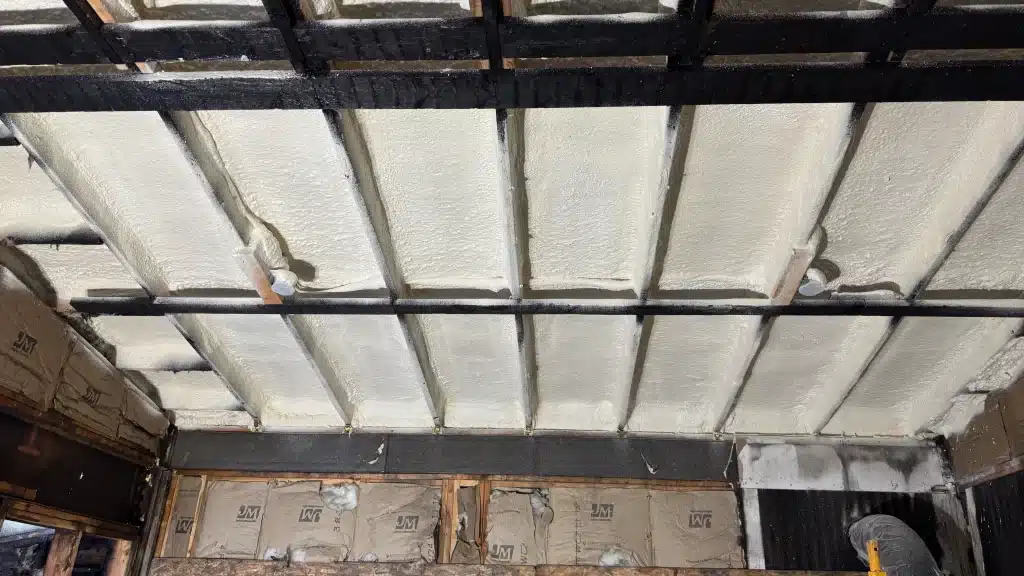
One of the most effective uses for open cell foam is on the underside of a roof deck in an unvented attic. This application moves the building’s thermal boundary from the attic floor to the roofline. It creates a conditioned or semi-conditioned attic space, which protects any HVAC equipment located there and eliminates the heat buildup that radiates down into your living space. The global spray foam insulation market is growing, partly driven by the effectiveness of this specific application, with a report from Fortune Business Insights projecting significant market expansion.
Interior and Exterior Walls (Above Grade)
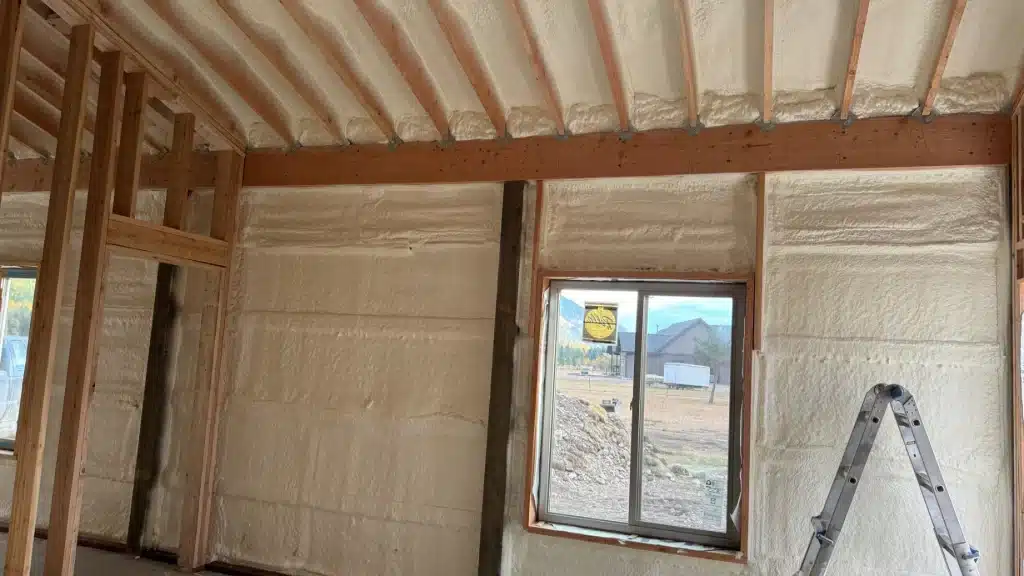
For standard 2×6 wall construction, open cell foam provides an excellent air seal and sufficient thermal performance for many climates. Its ability to expand and fill every void around pipes and outlets is a huge advantage over traditional insulation. It’s also the top choice for soundproofing interior walls.
Floors and Ceilings
To stop airborne noise and footfall sounds from traveling between floors, applying open cell foam in the ceiling joist cavities is extremely effective. It isolates vibrations and absorbs sound, leading to a much quieter home.
Areas to Avoid Open Cell Foam
You should not use open cell foam in any application where it might come into direct contact with water. This includes:
- Below-grade applications, such as basement exterior walls.
- In flood-prone areas.
- Exterior applications where it would be exposed to the elements.
Because it can absorb and hold bulk water (like a sponge), it’s the wrong choice for these situations. Closed cell foam, which is water-resistant, is the correct material for below-grade and other potentially wet environments.
The Installation Process Explained
Applying spray foam is not a DIY project. It requires specialized equipment, extensive training, and strict adherence to safety protocols. A professional installation ensures performance and safety.
- Preparation: This is a critical step. The crew will cover all surfaces not being sprayed, including windows, floors, and fixtures, with plastic sheeting. The area must be well-ventilated, and the substrate (the surface being sprayed) needs to be clean, dry, and free of contaminants.
- Application: Certified installers wear full personal protective equipment (PPE), including respirators and full-body suits. They use a heated, high-pressure hose to spray the liquid foam into the stud cavities. The foam hits the surface as a liquid and expands within seconds to its final thickness.
- Trimming: After the foam has cured (which happens very quickly), any excess that has expanded beyond the studs is trimmed flush. This creates a flat surface for the drywall to be installed over.
- Cleanup and Ventilation: The crew removes all plastic sheeting and debris. The building typically needs to be ventilated for 24 hours before it is safe for re-entry without PPE, as recommended by the Environmental Protection Agency (EPA).
Expert Tip: Always ask your installation contractor about their safety training and certifications. A reputable company will be transparent about their procedures for protecting your home and ensuring proper ventilation during and after the job.
Breaking Down the Cost of Open Cell Spray Foam
For many people, the bottom line is affordability. Open cell spray foam is generally less expensive than closed cell foam. The cost is typically measured by the “board foot,” which is a 12″ x 12″ square at 1″ thickness.
Several factors influence the final price of your project:
- Total Square Footage: Larger projects may have a lower per-unit cost but a higher overall price.
- Desired Thickness (R-Value): The thicker the application, the more material is needed, increasing the cost.
- Project Complexity: Difficult-to-access areas like tight crawl spaces or complex rooflines require more labor and time.
- Preparation Work: The amount of masking and prep needed will affect the labor cost.
Although the upfront investment can be higher than for fiberglass batts, the long-term return on investment is significant. A study published by the Office of Energy Efficiency & Renewable Energy highlights that effective air sealing and insulation can save homeowners an average of 15% on heating and cooling costs. Over the years, these savings can easily pay for the initial cost of the installation.
Expert Tip: When getting quotes, make sure the contractor specifies the type of foam, the thickness (in inches), and the total R-value they are proposing. An honest quote will be transparent about what you are paying for.
Frequently Asked Questions About Open Cell Spray Foam
What is the R-value of open cell foam?
Open cell spray foam typically provides an R-value of about R-3.5 to R-3.8 per inch of thickness. While this is lower than closed cell foam, its superior air-sealing performance often results in comparable or even better real-world energy efficiency.
Does open cell foam absorb water?
Yes, it can absorb and hold liquid water, much like a sponge. It is not a water barrier. However, it is vapor-permeable, meaning water vapor (humidity) can pass through it, which helps building materials dry out. This is why it should not be used in below-grade or flood-prone areas.
Does open cell spray foam off-gas?
All spray foams have a brief period of off-gassing during and immediately after installation while the material cures. This is why trained professionals use specific ventilation procedures and homeowners are advised to vacate the premises for about 24 hours. Once fully cured, modern spray foams are inert and stable, and are not considered a source of harmful emissions.
How long does open cell spray foam last?
When installed correctly, open cell spray foam does not shrink, settle, or degrade over time. It maintains its physical properties and performance for the life of the building.
Can open cell foam be installed in an existing home?
Absolutely. It is a popular choice for retrofitting existing homes, especially in attics, crawl spaces, and during renovations where wall cavities are exposed. The “drill-and-fill” method can sometimes be used for existing walls, but it’s more common to apply it when the drywall is removed.
Is open cell foam a good sound barrier?
Yes, it is one of the best sound-dampening insulation materials available. Its soft, porous structure is exceptional at absorbing sound energy, making it a great choice for reducing noise between rooms and floors.
Taking the Next Step
Open cell spray foam is a high-performance insulation material that offers a powerful combination of air sealing, sound dampening, and long-term value. While it may not be the right choice for every single application, it provides an outstanding solution for attics, walls, and floors in a wide range of climates. By understanding its unique properties, you can see how it creates a more comfortable, quiet, and energy-efficient building.
.
Need Expert Guidance?
If you’re considering spray foam insulation for your property and want advice tailored to your specific needs, the team at Supreme Spray Foam Fresno is here to help. We can walk you through the options and provide a clear assessment of what will work best for your home or building. For a professional consultation, you can reach out to us at (559) 545-0800 or send an email to [email protected].
Sources
- U.S. Department of Energy – Provides information on how air leakage contributes to energy loss in homes.
- Fortune Business Insights – Offers market analysis and growth projections for the spray foam insulation industry.
- Environmental Protection Agency (EPA) – Details safety protocols and health considerations related to spray polyurethane foam application.