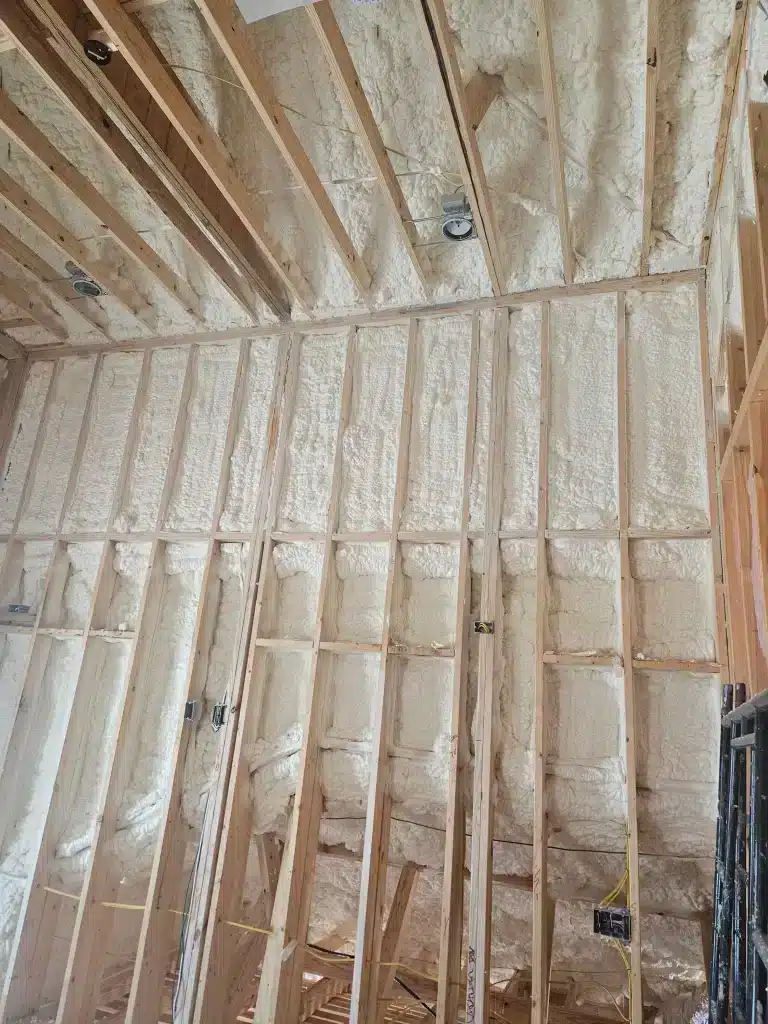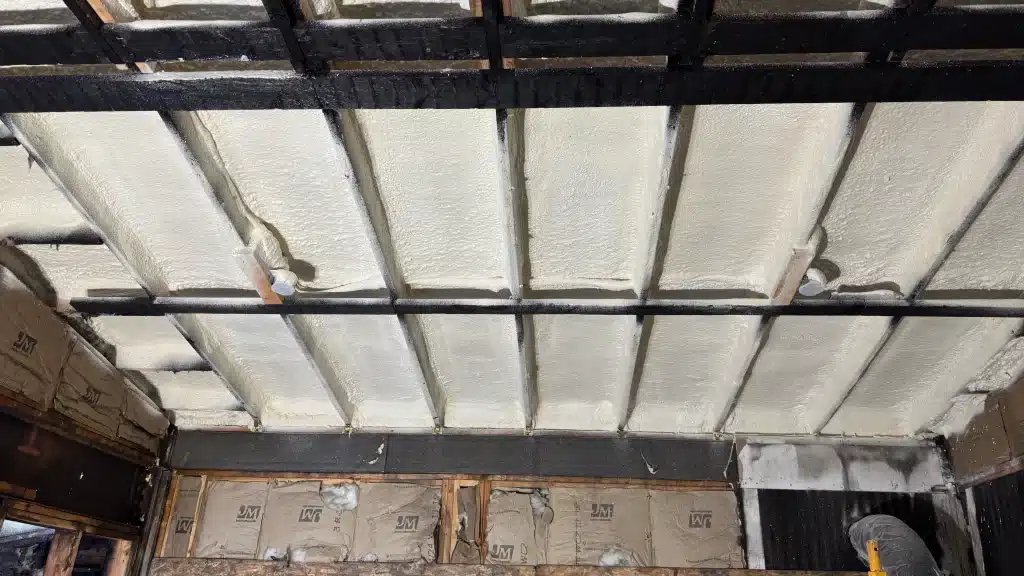

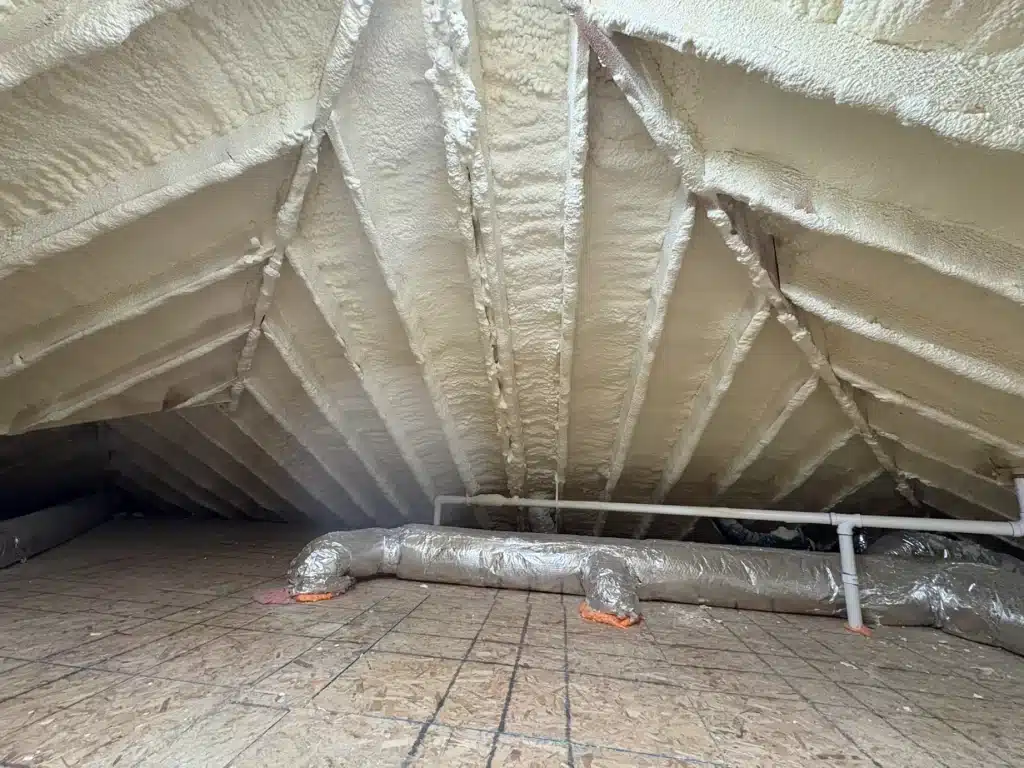
Open-cell spray foam insulation protects your family from outdoor allergens by expanding to fill every gap, crack, and void in your walls, attic, and crawl spaces, creating a continuous air barrier that physically blocks pollen, dust, mold spores, and other airborne irritants from entering your living spaces. Unlike traditional fiberglass or cellulose insulation, which sits loosely in wall cavities and allows air to pass through, spray foam adheres to surfaces and seals the building envelope at a molecular level. This airtight seal is the single most effective way to stop outdoor allergens from infiltrating your home, and it also brings meaningful energy savings and moisture control benefits.
TLDR / Key Takeaways
- Open-cell spray foam expands up to 100 times its applied volume, sealing gaps and cracks that traditional insulation cannot reach, effectively blocking allergen entry points.
- The EPA identifies biological contaminants like pollen, mold spores, and dust mites as major indoor air quality concerns, and sealing air leaks is a proven strategy to reduce their infiltration.
- Open-cell foam acts as both insulation and an air barrier, offering an R-value of approximately R-3.5 to R-3.7 per inch while remaining vapor permeable.
- By controlling air leakage, spray foam reduces the pathways through which outdoor allergens, humidity, and pollutants enter your home.
- Moisture control is a secondary allergen defense: open-cell spray foam allows vapor diffusion, which helps prevent condensation and the mold growth that follows.
- The Department of Energy recommends air sealing as a first step in home energy upgrades, with spray foam being one of the most effective materials for the job.
- Proper mechanical ventilation becomes important after spray foam installation to maintain fresh air circulation in a tightly sealed home.
Why Outdoor Allergens Keep Getting Inside Your Home
Most homeowners assume their walls and attic are solid barriers against the outside world. In reality, the average home has hundreds of small gaps, cracks, and penetrations that allow unconditioned air, along with everything floating in it, to flow freely indoors. Common entry points include recessed lighting fixtures, electrical outlets, plumbing penetrations, window and door framing gaps, attic hatches, and the joints where walls meet floors and ceilings.
The EPA’s guide on biological contaminants lists pollen, mold spores, dust mites, and pet dander among the most common biological pollutants found indoors. These contaminants enter through the very air leaks that also drive up your energy bills. When wind blows against your home, it creates positive pressure on one side and negative pressure on the other, literally pushing outdoor air through wall cavities, around framing, and into your living spaces.
Traditional insulation materials like fiberglass batts and blown cellulose provide thermal resistance but do almost nothing to stop air movement. Air simply passes through the fibers, carrying allergens along with it. Even insulation that has been installed correctly, following all manufacturer guidelines, leaves the building envelope porous unless an air sealing strategy is included.
How Open-Cell Spray Foam Blocks Allergen Pathways
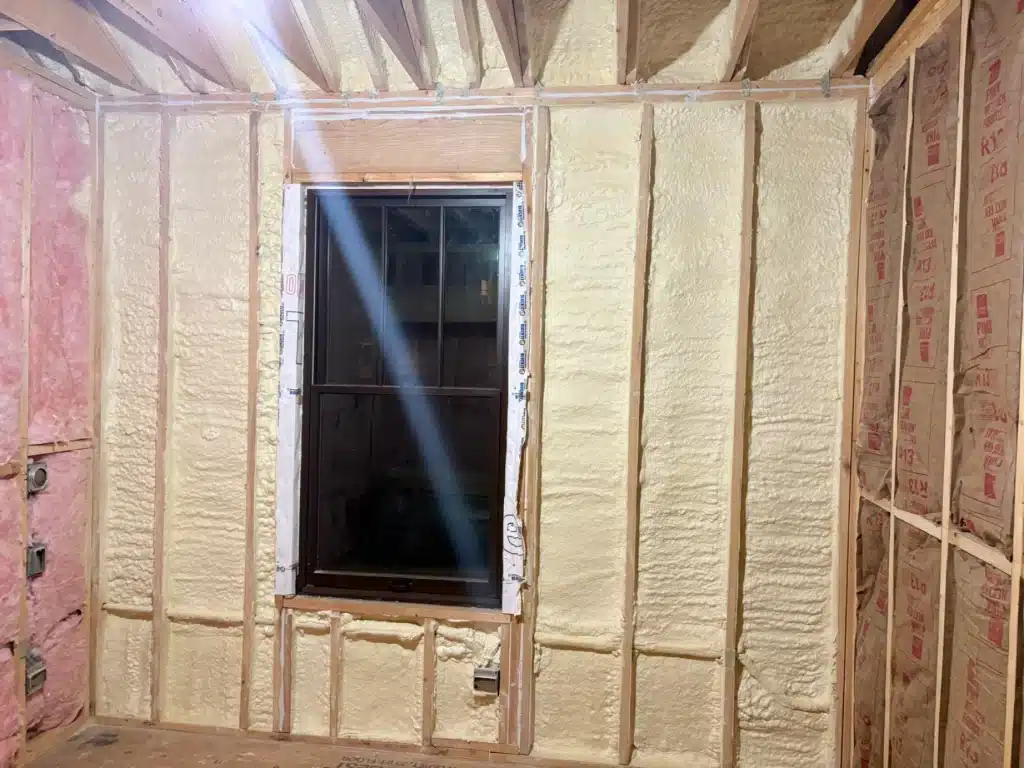
Open-cell spray foam insulation works differently from any other insulation material. When sprayed into a wall cavity, attic, or crawl space, it expands rapidly to fill every irregular shape and surface, creating a seamless, monolithic barrier. This expansion is what gives spray foam its unique ability to act as both insulation and an air barrier.
According to Building Science Corporation’s residential spray foam guide, both open-cell and closed-cell spray foam serve as effective air barriers when properly installed. The continuous seal eliminates the random air pathways that traditional insulation leaves open. With those pathways closed, outdoor allergens lose their primary route into your home.
The foam cures into a semi-rigid material with a density of approximately 0.5 pounds per cubic foot. While it does not have the structural rigidity or vapor impermeability of closed-cell foam, its air sealing performance is comparable. For allergen protection specifically, the air barrier function is what matters most. No air movement through the envelope means no pollen, no dust, and no mold spores riding that air current into your bedrooms, kitchens, and living rooms.
Open-Cell vs. Closed-Cell: Which Is Better for Allergen Protection?
Both foam types seal air leaks effectively, but they differ in several important ways. For homeowners focused on allergen reduction, understanding these differences helps in choosing the right product for each area of the home.
| Feature | Open-Cell Spray Foam | Closed-Cell Spray Foam |
|---|---|---|
| R-Value per Inch | R-3.5 to R-3.7 | R-6.0 to R-7.1 |
| Air Barrier | Yes | Yes |
| Vapor Permeability | Vapor permeable (Class III) | Vapor impermeable (Class II) |
| Density | ~0.5 lb/ft³ | ~2.0 lb/ft³ |
| Expansion Rate | Expands significantly | Expands moderately |
| Best Application | Walls, attics, crawl spaces | Basements, rim joists, exterior |
| Cost per Board Foot | Lower | Higher |
| Moisture Management | Allows drying | Traps moisture (can be problematic) |
Open-cell spray foam has a distinct advantage when it comes to long-term moisture management. Because it is vapor-permeable, it allows walls and assemblies to dry toward the interior if moisture gets in. This is particularly important because trapped moisture leads to mold growth, and mold spores are among the most dangerous indoor allergens. Green Building Advisor has noted that in many climate zones and assembly types, open-cell foam’s vapor permeability makes it the safer, more durable choice for above-grade walls and attics.
The lower density and higher expansion of open-cell foam also mean it fills cavities more completely at a lower cost, making whole-home air sealing more affordable.
The Connection Between Moisture Control and Allergen Reduction
Allergen protection is not only about blocking particles from entering. It is also about preventing the conditions that allow allergens to thrive inside your home. Dust mites, one of the most common indoor allergens, multiply rapidly when indoor humidity exceeds 50%. Mold spores, which can trigger severe allergic reactions and asthma attacks, colonize any surface where moisture accumulates.
Open-cell spray foam addresses this problem through two mechanisms. First, sealing air leaks, it reduces the amount of humid outdoor air that enters during warm months. Second, its vapor permeability allows any moisture that does get into wall assemblies to diffuse and dry out rather than accumulating behind a vapor-impermeable layer.
The Building Science Corporation’s resource on air quality highlights that high-performance builders prioritize air sealing and moisture control as foundational steps in creating healthy homes. When humidity stays in the 30-50% range, dust mite populations drop significantly, mold is less likely to establish, and overall indoor air quality improves measurably.
Why Air Sealing Matters More Than Insulation Alone
Many homeowners focus exclusively on R-value when upgrading their insulation, but R-value only measures thermal resistance in a laboratory setting. In a real home, air movement through the building envelope can reduce the effective performance of insulation by 30% or more. Gaps around framing, electrical boxes, and plumbing create convective loops that move air through wall cavities, carrying heat in winter and allergens year-round.
The Department of Energy’s guide on air sealing recommends air sealing as a prerequisite to any insulation upgrade. Without it, even the highest-R-value insulation underperforms. Spray foam is one of the few materials that combines insulation and air sealing in a single application, which is why it delivers such noticeable improvements in both comfort and indoor air quality.
For allergen-sensitive families, the distinction matters. A home insulated with R-38 fiberglass batts but with unsealed air leaks will still experience significant allergen infiltration. A home insulated with R-21 open-cell spray foam and properly sealed will have measurably fewer allergens in the indoor air because the air pathways have been eliminated.
Real-World Scenarios: How Homeowners Benefit
| Scenario | Home Type | Problem | Solution | Outcome |
|---|---|---|---|---|
| Fresno Family | 1970s ranch, 1,500 sq ft | Children with seasonal allergies, constant sneezing, and itchy eyes indoors | Open-cell spray foam in attic and exterior walls | Allergy symptoms reduced noticeably within the first pollen season |
| Crawl Space Home | 1990s two-story, 2,200 sq ft | Musty smell, elevated humidity, and mold growth in the crawl space | Open-cell spray foam sealed crawl space walls and rim joist | Humidity dropped below 50%, musty odor was eliminated |
| Retrofit Project | 1965 split-level, 1,800 sq ft | High energy bills, drafts around windows and outlets | Open-cell foam in wall cavities via drill-and-fill method | Drafts eliminated, energy bills down 25%, fewer indoor allergens |
| New Construction | Modern 2,400 sq ft custom build | Homeowner has severe dust mite allergy | Open-cell spray foam in all exterior walls and attic | Tight building envelope keeps humidity controlled, dust mite allergens reduced |
| Addition Remodel | 800 sq ft master bedroom addition | Partner with asthma triggered by outdoor pollen | Open-cell foam in addition walls and cathedral ceiling | New room became the most comfortable space in the house during peak allergy season |
Actionable Strategies for Maximum Allergen Protection
1. Prioritize the Attic First
The attic is typically the largest source of air leakage in any home and the most direct pathway for outdoor allergens. Heat rises, creating stack effect pressure that pulls unconditioned air through gaps in the ceiling below the attic. Sealing the attic floor and rim joist with open-cell spray foam addresses the biggest leak first and often produces the most noticeable improvement in indoor air quality.
2. Seal Crawl Spaces and Basements
Ground-level spaces are major humidity and allergen entry points. Soil moisture, mold spores, and pest allergens enter through vents, foundation cracks, and rim joist gaps. Applying open-cell spray foam to crawl space walls and ceiling joists, combined with a proper ground vapor barrier, creates a conditioned crawl space that dramatically reduces moisture and allergen migration.
3. Pair Spray Foam with Mechanical Ventilation
Once your home is tightly sealed, controlled mechanical ventilation becomes essential. The EPA’s guide to indoor air quality warns that tightly sealed homes without adequate ventilation can accumulate indoor pollutants. An energy recovery ventilator (ERV) or heat recovery ventilator (HRV) brings in filtered fresh air while exhausting stale indoor air, maintaining healthy air exchange without losing the allergen protection spray foam provides.
4. Target Rim Joist Areas
The rim joist area, where the floor framing meets the foundation, is notoriously leaky and difficult to insulate with traditional materials. Open-cell spray foam fills the irregular cavities around floor joists, plumbing, and wiring, creating an airtight seal that blocks one of the most significant allergen pathways in any home.
5. Use Low-VOC Products
When selecting spray foam, choose products that meet low volatile organic compound (VOC) standards. The Building America Solution Center recommends using indoor sealants that meet independent testing protocols such as GREENGUARD certification. This ensures the installation process itself does not introduce new pollutants into your living space.
Factors That Affect Allergen Protection Performance
- Installation quality: Spray foam must be applied at the correct temperature, thickness, and rate to cure properly and achieve its rated air barrier performance. Gaps or thin spots compromise the seal.
- Foam thickness: Open-cell foam typically needs to fill the full cavity depth to deliver its rated R-value and air sealing performance. Partial fills leave areas of the cavity uninsulated and unsealed.
- Climate zone: In hot, dry climates like California’s Central Valley, humidity control is less of a concern than pollen infiltration, making air sealing the primary benefit. In humid climates, moisture management becomes equally important.
- Building age and construction type: Older homes with balloon framing, knob-and-tube wiring, or degraded insulation require careful assessment before spray foam application. Some assemblies may need remediation first.
- Ventilation strategy: A tightly sealed home without mechanical ventilation can trap indoor pollutants, including cooking fumes, cleaning chemicals, and off-gassing from furniture. Balanced ventilation is not optional; it is required.
- Vapor diffusion requirements: Open-cell foam’s vapor permeability makes it appropriate for many above-grade assemblies, but may not be suitable for all below-grade applications where a stronger vapor retarder is needed.
Graph Suggestions for Designers
- Bar Chart Suggestion: Compare the estimated air leakage reduction (in CFM50) before and after open-cell spray foam installation in a typical 1,800 sq ft home, based on blower door test data.
- Pie Chart Suggestion: Show the distribution of common allergen entry points in a typical home, including attic penetrations, window and door gaps, rim joist leaks, and recessed lighting.
- Line Graph Suggestion: Plot indoor humidity levels over a 12-month period, comparing a home with open-cell spray foam versus one with traditional fiberglass insulation.
Ready to Protect Your Family from Outdoor Allergens?
At Supreme Spray Foam Fresno, we specialize in helping Fresno-area homeowners create healthier, more comfortable living environments through professional open-cell spray foam insulation installation. Our team assesses your home’s unique air sealing needs, identifies the allergen entry points that matter most, and delivers a precise, code-compliant installation that stands the test of time. With years of experience serving the Central Valley, we understand the specific allergen challenges our climate brings and how to address them effectively.
Call us at (559) 545-0800 or email [email protected] to get started.
Sources
- EPA – Biological Contaminants and Indoor Air Quality – Overview of biological pollutants, including pollen, mold spores, dust mites, and strategies for reducing exposure in homes.
- EPA – The Inside Story: A Guide to Indoor Air Quality – Comprehensive EPA guide covering indoor air pollutants, ventilation, and building tightness considerations.
- Department of Energy – Air Sealing Your Home – DOE recommendations for detecting and sealing air leaks, including the relationship between air sealing and energy performance.
- Building Science Corporation – Residential Spray Foam Guide – Technical guidance on open-cell and closed-cell spray foam applications, performance characteristics, and best practices.
- Green Building Advisor – Open-Cell Foam Beats Closed-Cell Foam – Analysis comparing open-cell and closed-cell spray foam performance, including vapor permeability and drying potential.
- Building Science Corporation – Air Quality and a Healthy Home – Guidance on how air sealing, moisture control, and ventilation contribute to healthier indoor environments.
- Building America Solution Center – Home Air Sealing – Checklist and best practices for home air sealing, including low-VOC product recommendations.
FAQs
How long does open-cell spray foam take to cure, and is it safe for allergy sufferers during installation?
Open-cell spray foam typically cures within 24 hours, with most off-gassing complete within the first few hours. During installation, the home should be well-ventilated, and sensitive individuals should leave the premises until the curing process is substantially complete. We recommend scheduling installation when family members with severe allergies or asthma can be away for at least 24 hours.
Can open-cell spray foam be installed in an existing home, or is it only for new construction?
Open-cell spray foam can be installed in existing homes using several methods. For attics and crawl spaces, access is usually straightforward. For wall cavities, a drill-and-fill technique allows foam to be injected through small holes drilled into the wall, which are then patched and finished. Many retrofit projects achieve excellent results without significant disruption.
Does spray foam eliminate the need for an air purifier or HEPA filtration?
Spray foam significantly reduces the volume of outdoor allergens entering your home, but it does not replace air filtration. Indoor allergen sources like pet dander, cooking particles, and dust from human activity still require filtration. A tight building envelope combined with a good HVAC filter or standalone air purifier provides the most comprehensive allergen protection.
Is open-cell spray foam effective against mold allergens?
Yes, in two ways. First, it seals the air leaks that allow outdoor mold spores to enter. Second, its vapor permeability helps wall assemblies dry out if moisture accumulates, reducing the conditions that allow mold to grow inside cavities. By controlling both moisture ingress and egress, open-cell foam addresses mold allergens at their source.
How does open-cell spray foam compare cost-wise to traditional insulation for allergen protection?
Open-cell spray foam has a higher upfront cost per square foot than fiberglass or cellulose insulation. However, when you factor in the air sealing benefit that traditional insulation does not provide, the value becomes clear. Homeowners who upgrade to spray foam often see reduced energy bills that partially offset the investment, along with measurable improvements in indoor air quality that fiberglass simply cannot deliver.