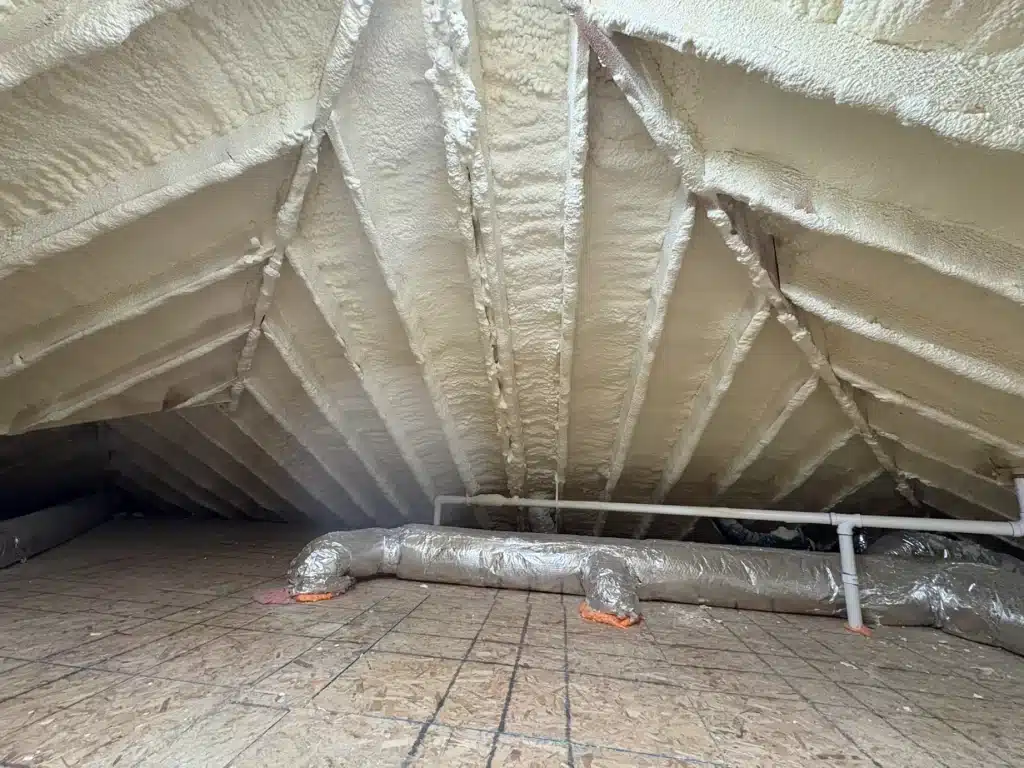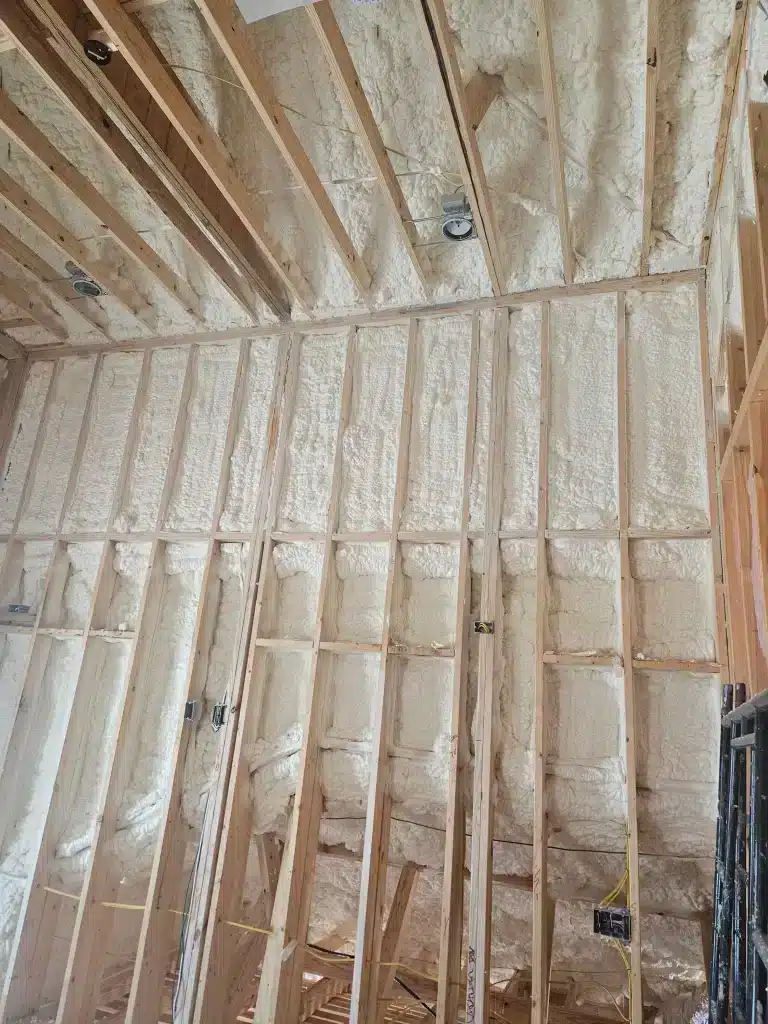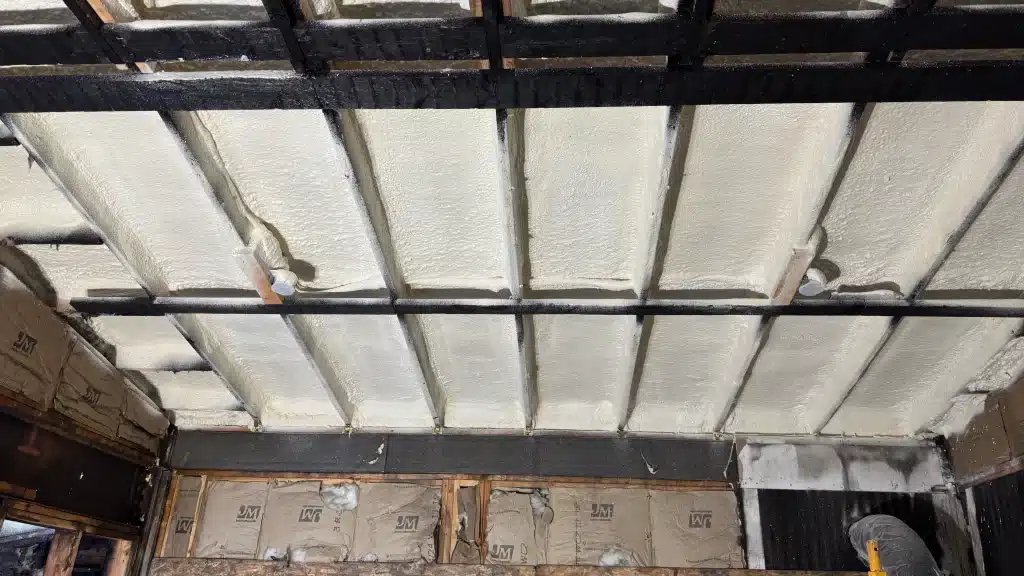

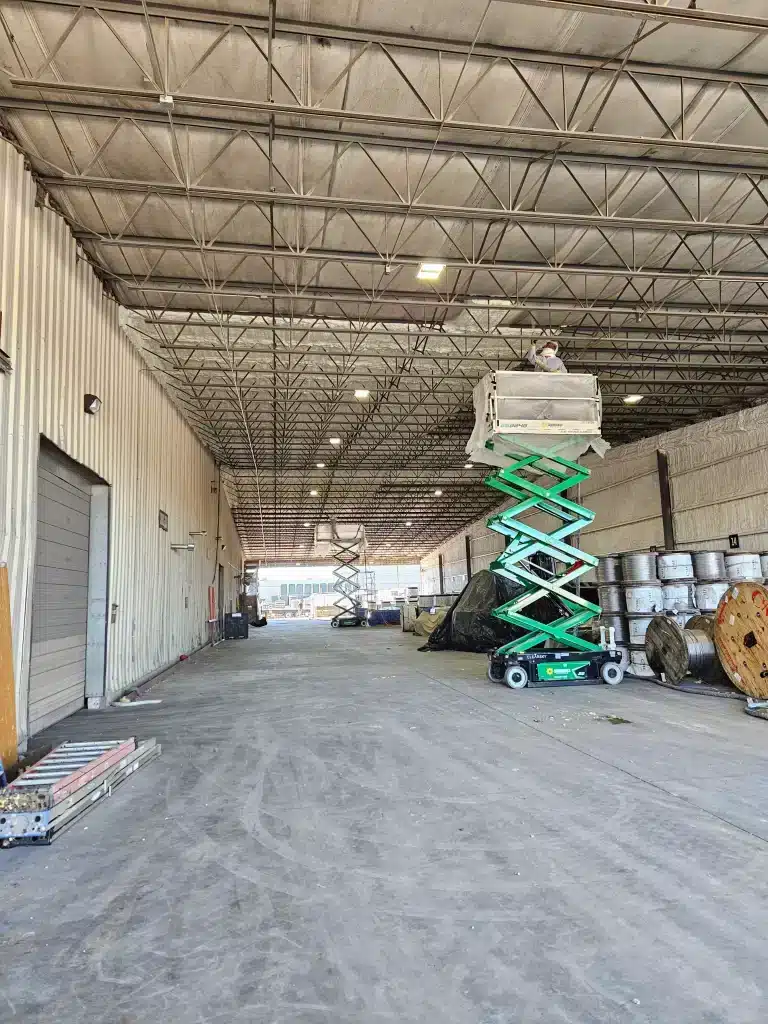
It depends on the building, the budget, and the performance goals. Open-cell spray foam is a single product with specific strengths, like air sealing and sound dampening at a lower cost per inch. Commercial insulation services, on the other hand, give you access to a full range of materials and strategies, including Closed-cell spray foam, fiberglass, rigid board, and blown-in options. For many commercial projects, a professional insulation service that selects the right material for each zone of the building will deliver better long-term value than relying on Open-cell spray foam alone.
TLDR / Key Takeaways
- Open-cell spray foam delivers R-3.5 to R-3.8 per inch and costs roughly $0.50 to $1.50 per square foot installed, making it one of the more affordable spray foam options.
- Closed-cell spray foam provides R-6.0 to R-7.0 per inch, nearly double the thermal resistance of Open-cell, and acts as a vapor barrier.
- Commercial insulation services offer material flexibility, allowing contractors to match the right insulation type to each building zone rather than defaulting to a single product.
- Open-cell foam excels at soundproofing and filling large cavities but absorbs moisture and lacks structural rigidity.
- A hybrid approach, combining Open-cell for interior walls and Closed-cell for exterior envelopes, often delivers the strongest ROI for commercial buildings.
- Energy savings from properly installed spray foam insulation can reduce heating and cooling costs by up to 50%.
- Building codes and climate zone requirements often dictate which materials are permissible, making professional guidance essential.
What Open-cell Spray Foam Actually Delivers
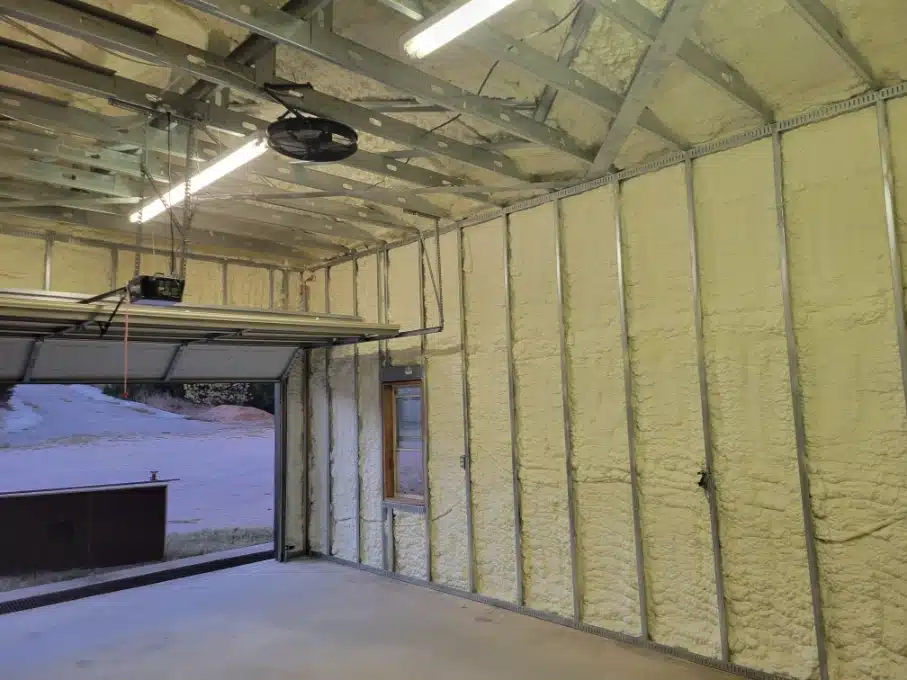
Open-cell spray foam is a low-density, expanding insulation material. As it cures, the tiny cells within the foam remain open, giving it a soft, spongy texture. It expands significantly during application, often 100 times its original volume, which allows it to fill gaps, cracks, and hard-to-reach cavities effectively.
According to Johns Manville, Open-cell spray foam has an R-value of approximately R-3.8 per inch and a density of around 0.5 pounds per cubic foot. This lower density makes it less expensive per board foot than Closed-cell alternatives, but it also means lower thermal resistance per inch of thickness.
Key strengths of Open-cell spray foam include:
- Air sealing capability that reduces drafts and air leakage
- Sound attenuation makes it popular for interior partition walls and office environments
- Lower material cost compared to Closed-cell foam, typically running $0.50 to $1.50 per installed square foot
- Flexibility, which accommodates building movement without cracking
Where Open-cell falls short is in moisture resistance and structural support. Because the cells are open, water vapor can pass through the material. It also does not add structural strength to walls or roofs, and it requires a separate vapor barrier in many climate zones.
How Full Commercial Insulation Services Compare
Commercial insulation services are not a single product. They represent a comprehensive approach to thermal management that includes material selection, installation planning, code compliance, and long-term performance assurance. A qualified commercial insulation contractor can deploy multiple material types across a single building, optimizing each zone independently.
Common insulation types available through commercial services include:
- Closed-cell spray foam (R-6.0 to R-7.0 per inch)
- Open-cell spray foam (R-3.5 to R-3.8 per inch)
- Fiberglass batts and blown-in (R-2.9 to R-4.3 per inch)
- Rigid foam board (R-3.8 to R-6.5 per inch depending on type)
- Mineral wool (R-3.7 to R-4.2 per inch)
- Cellulose blown-in (R-3.1 to R-3.8 per inch)
The Oklahoma State University Extension notes that building insulation is one of the most cost-effective investments for reducing energy consumption, and that selecting the correct insulation type based on climate zone, building design, and budget is essential for maximizing return.
A full-service insulation provider evaluates the entire building envelope, identifies weak points, and recommends a tailored strategy rather than applying a one-size-fits-all product.
Head-to-Head Comparison
| Factor | Open-cell Spray Foam Only | Full Commercial Insulation Services |
|---|---|---|
| R-Value per Inch | R-3.5 to R-3.8 | Varies by material (R-2.9 to R-7.0) |
| Moisture Barrier | No | Yes, when Closed-cell or rigid board is selected |
| Sound Dampening | Excellent | Good to excellent, depending on material choice |
| Structural Support | None | Yes, with Closed-cell spray foam or rigid board |
| Material Flexibility | Single product | Multiple products matched to each zone |
| Code Compliance | May not meet all requirements | Tailored to local codes and climate zones |
| Cost per Sq Ft (Installed) | $0.50 to $1.50 | $0.40 to $4.50, depending on materials used |
| Lifespan | 20+ years | 20 to 80+ years, depending on the material |
| Best Application | Interior walls, soundproofing, and large cavities | Full building envelope, mixed-use spaces |
Where Open-cell Spray Foam Alone Makes Sense
There are specific scenarios where Open-cell spray foam is the right call without needing a broader commercial insulation strategy. These include:
- Interior partition walls in office buildings, where sound isolation is the primary goal
- Existing buildings with large, open wall cavities that need retrofitted air sealing on a budget
- Climate zones with low humidity, where moisture intrusion through the insulation is not a significant concern
- Projects with tight budgets where the higher cost of Closed-cell foam is not justifiable
In these cases, Open-cell foam delivers strong performance for its price point. The key is that the building conditions align with what Open-cell foam does well.
Where Commercial Insulation Services Clearly Win
For most new construction and major commercial renovation projects, a full insulation service delivers measurably better outcomes. Here is why:
Moisture management. Commercial buildings in humid climates or with high interior moisture loads need vapor barriers. Closed-cell spray foam and rigid foam board both serve this function. Open-cell alone does not. Moisture intrusion leads to mold, rot, and costly remediation that far exceeds the savings from choosing a cheaper insulation material.
Code compliance. Many jurisdictions require specific R-values for commercial building envelopes based on ASHRAE standards. A commercial insulation contractor understands these requirements and selects materials that meet or exceed them without over-insulating and wasting budget.
Structural benefits. Closed-cell spray foam adds shear strength to walls and roof assemblies. For large commercial buildings, particularly in seismic or high-wind zones, this added structural rigidity is a meaningful advantage that Open-cell foam cannot replicate.
Long-term energy savings. While Open-cell foam delivers respectable R-values, the ability to pair it with higher-R materials in critical zones, like the roof deck and exterior walls, compounds energy savings over time. According to the U.S. Department of Energy, proper insulation can reduce heating and cooling costs by 15% to 50%, depending on the building and climate, but only when the right materials are installed in the right locations.
The Hybrid Strategy: Getting the Best of Both
The strongest commercial insulation strategies often combine Open-cell and Closed-cell spray foam within the same building. This hybrid approach uses each material where it performs best:
- Closed-cell spray foam on exterior walls, roof decks, and below-grade applications where moisture resistance and high R-value per inch are critical
- Open-cell spray foam on interior partition walls, ceiling cavities, and sound isolation assemblies where air sealing and acoustic performance matter more than thermal resistance
This strategy controls costs by reserving the more expensive Closed-cell material for the building envelope while still benefiting from Open-cell foam’s sound-dampening and air-sealing in less demanding zones Sprayman.
Recommendations by Building Type
| Building Type | Recommended Approach | Key Notes |
|---|---|---|
| Office Buildings | Hybrid (Closed-cell envelope, Open-cell interiors) | Sound isolation between offices is a priority; Open-cell handles this well |
| Warehouses | Closed-cell on the roof deck, fiberglass or rigid board on the walls | Large open spaces benefit from high-R roof insulation to reduce cooling loads |
| Retail Spaces | Full commercial service with mixed materials | Varying zones (stockrooms, storefronts, offices) need different insulation solutions |
| Multi-Family Housing | Closed-cell on exterior, Open-cell between units | Sound transmission between units is a common complaint; Open-cell helps significantly |
| Cold Storage Facilities | Closed-cell spray foam exclusively | The maximum R-value per inch and the vapor barrier are non-negotiable |
Signs You Have the Right Insulation Partner
Choosing between Open-cell spray foam and a full commercial insulation service often comes down to the contractor you work with. Here are indicators that your insulation provider is the right fit:
- They perform a whole-building energy assessment before recommending any specific material
- They present multiple options with clear cost, R-value, and performance comparisons
- They understand local building codes and ASHRAE requirements for your climate zone
- They explain why a specific material is recommended for each zone of the building rather than pushing a single product across the entire project
- They provide written warranties that cover both materials and installation workmanship
- They have experience with commercial-scale projects similar to yours
Contractors who default to one product for every job, regardless of building type or climate, are not delivering the level of service that commercial projects demand.
Ready to Insulate Your Commercial Building the Right Way?
Choosing between Open-cell spray foam and a comprehensive commercial insulation strategy does not have to be a guessing game. At Supreme Spray Foam Fresno, we evaluate your entire building envelope and recommend the right combination of materials for your specific project, climate zone, and budget. Whether your project calls for Open-cell, Closed-cell, or a hybrid approach, our team has the experience and expertise to deliver results that reduce energy costs and improve occupant comfort for years to come.
Call us at (559) 545-0800 or email [email protected] to get started on a strategy built for your building.
Sources
- Johns Manville – Spray Foam: Open-Cell vs. Closed-Cell – Technical comparison of Open-cell and Closed-cell spray foam, including R-values, densities, and performance characteristics.
- Oklahoma State University Extension – Importance of Building Insulation – Research-based overview of insulation types, their properties, and guidelines for selecting materials based on climate and building design.
- U.S. Department of Energy – Insulation – Federal guidance on insulation R-values, energy savings potential, and best practices for residential and commercial buildings.
- Fine Homebuilding – Understanding R-Value and Spray Foam – Builder-level analysis of R-value performance for Open-cell versus Closed-cell spray foam insulation.
- Sprayman – Spray Foam Insulation R-Value Guide – Detailed R-value data for various insulation types and thicknesses used in commercial and residential applications.
FAQs
Is Open-cell spray foam ever the wrong choice for a commercial building?
Yes. In high-humidity environments, below-grade applications, or any zone requiring a vapor barrier, Open-cell foam can allow moisture infiltration that leads to mold and structural damage. A commercial insulation service would recommend Closed-cell foam or a vapor-retarding rigid board in those locations instead. Fine Homebuilding.
How much more does Closed-cell spray foam cost compared to Open-cell?
Closed-cell spray foam typically costs two to three times more per square foot than Open-cell, with installed prices ranging from $1.50 to $4.50 per square foot versus $0.50 to $1.50 for Open-cell. However, the higher R-value per inch often means you need less total thickness to meet code requirements.
Can Open-cell and Closed-cell spray foam be used in the same building?
Yes, and this hybrid approach is one of the most cost-effective strategies for commercial construction. Closed-cell foam handles the building envelope where thermal resistance and moisture control are critical, while Open-cell foam is used for interior sound isolation and cavity filling where its strengths align with the application needs.
Does commercial insulation include more than just spray foam?
A full commercial insulation service includes multiple material options such as fiberglass batts, blown-in cellulose, mineral wool, rigid foam board, and both types of spray foam. The contractor selects the optimal material for each building zone based on thermal requirements, moisture conditions, fire codes, and budget.
How long does commercial spray foam insulation last?
Both Open-cell and Closed-cell spray foam insulation can last 20 years or more when properly installed. Closed-cell foam tends to have a longer effective lifespan, often exceeding 30 years, due to its higher density and resistance to moisture absorption. A professional commercial insulation service will also provide warranties that cover material and workmanship.