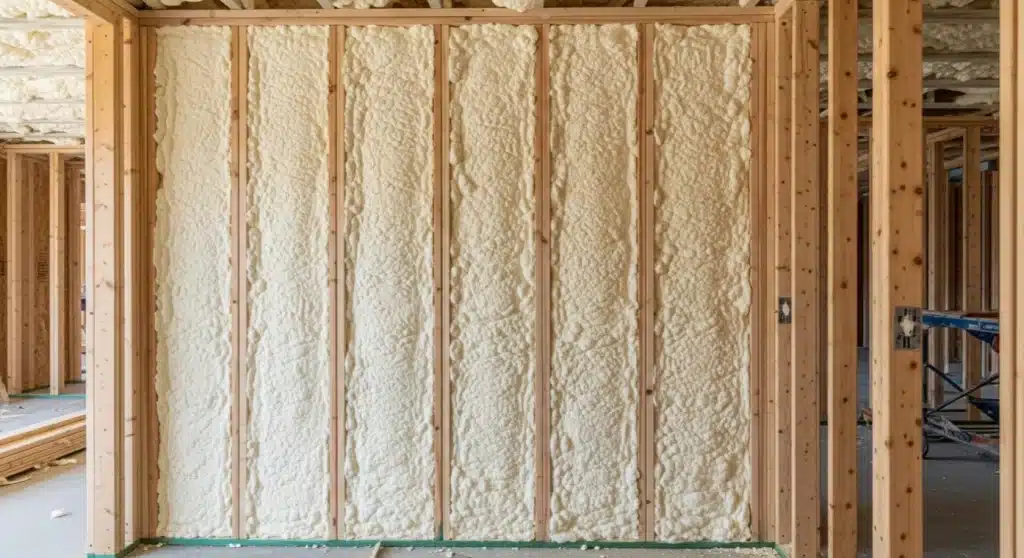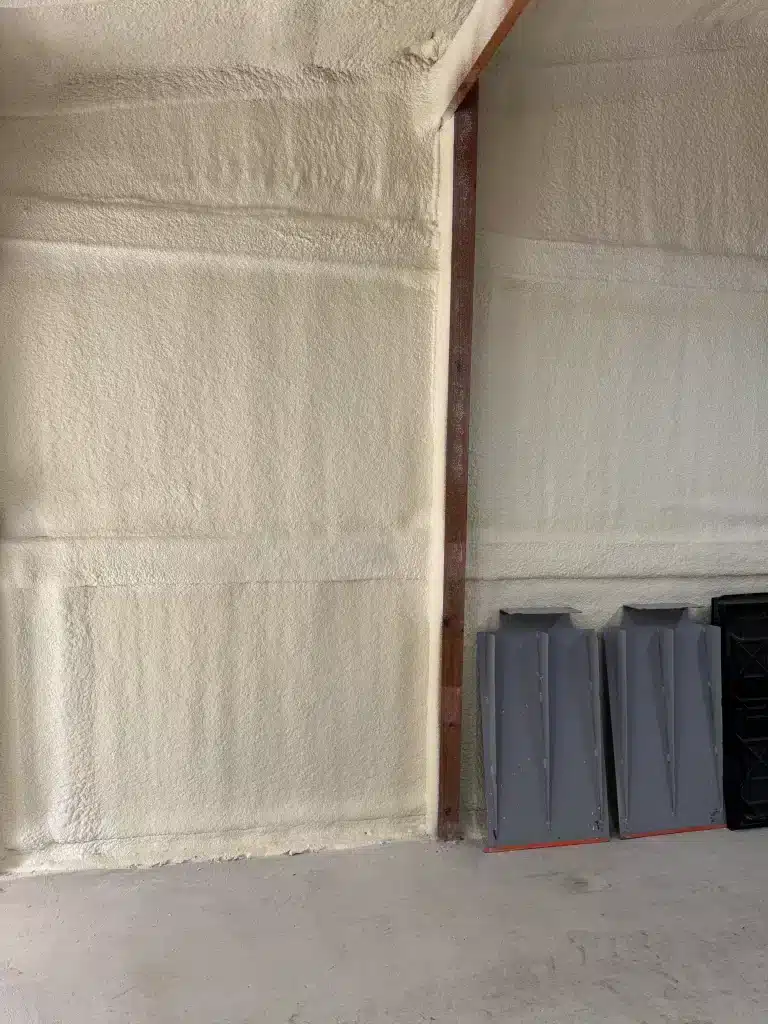

Closed cell spray foam insulation offers an exceptional R-value ranging from R-6.0 to R-7.0 per inch, which is nearly double the thermal resistance of open cell foam or traditional fiberglass batt insulation. For structures in Parlier, California, this high density provides maximum thermal protection, even in shallow wall cavities. The material acts as a comprehensive barrier that restricts heat flow, seals air leaks, and blocks moisture in a single application. This results in a highly energy-efficient building envelope that maintains comfortable interior temperatures despite the intense Central Valley heat.
The specific benefits for Parlier residents extend beyond simple temperature control. Because closed cell foam is rigid and dense, it adds structural integrity to walls and roofs while meeting California’s strict Title 24 energy efficiency standards without requiring 2×6 framing. Experience with local climate conditions demonstrates that this insulation type significantly reduces the workload on HVAC systems. By preventing the infiltration of hot, dusty air common in agricultural areas, closed cell spray foam ensures a cleaner and more consistent indoor environment.
Understanding R-Value in the Central Valley Climate
R-value measures the ability of an insulating material to resist heat flow. A higher number indicates better thermal resistance. In the context of Parlier and the greater Fresno County area, understanding R-value is vital due to the extreme temperature fluctuations. Summer temperatures often exceed 100 degrees Fahrenheit, while winter nights can drop near freezing.
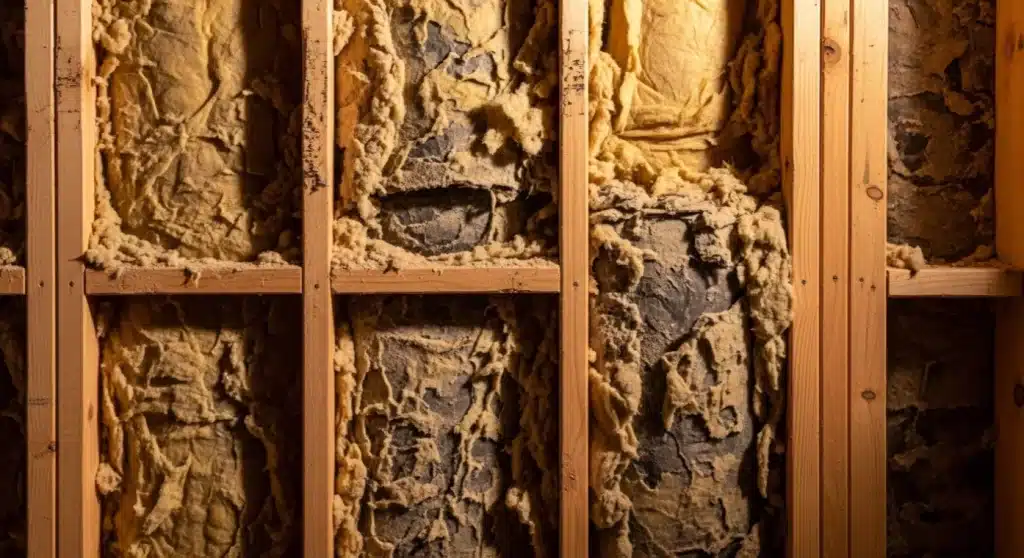
Insulation works by slowing the transfer of heat. During summer, it keeps the heat out. During winter, it keeps the heat in. The effectiveness of this barrier depends heavily on the R-value per inch of the material used. Standard fiberglass typically offers an R-value of roughly R-3.5 per inch. In contrast, closed cell spray foam provides a much denser barrier. Data published by the Department of Energy confirms that sprayed-foam insulation provides superior thermal resistance compared to traditional batts.
Why High R-Value Matters Here
In Parlier, homes and businesses face significant cooling loads. A lower R-value means the air conditioner runs longer to combat the heat entering through the roof and walls, and installing high R-value insulation, as closed cell foam acts as a thermal break. It stops the structure’s framing studs from conducting heat into the living space. This phenomenon, known as thermal bridging, is a primary source of energy loss in wood-framed buildings. Closed cell foam covers these studs, minimizing this transfer.
Closed Cell vs. Open Cell R-Value Comparison
Many property owners confuse open cell and closed cell spray foam. While both are polyurethane spray foams, their chemical structures and performance characteristics differ significantly. Closed cell foam consists of completely encapsulated cells pressed together, making the material rigid and water-resistant. Open cell foam is softer and sponge-like, with cells that are not entirely closed.
The following table illustrates the technical differences that affect R-value and performance:
| Feature | Closed Cell Spray Foam | Open Cell Spray Foam | Fiberglass Batts |
|---|---|---|---|
| R-Value Per Inch | R-6.0 to R-7.0 | R-3.5 to R-3.8 | R-3.1 to R-3.4 |
| Air Barrier | Yes | Yes | No |
| Vapor Retarder | Class II Vapor Retarder | Requires a separate vapor barrier | Requires a separate vapor barrier |
| Water Resistance | High (Water deflects) | Low (Absorbs water) | Low (Absorbs water) |
| Structural Strength | Adds rigidity (2x-3x racking strength) | Minimal structural addition | None |
| Ideal Application | Exterior walls, roofs, and below-grade | Interior walls, sound-dampening | Interior/Exterior walls |
Bonus Tip: When retrofitting an older home in Parlier with 2×4 wall studs, closed cell foam is often the only way to achieve modern energy code requirements without furring out the walls to make them thicker.
The Two-in-One Benefit: Air Sealing and Insulation
A high R-value alone does not guarantee energy efficiency if air can pass through the insulation services in Parlier, CA. This is where closed cell spray foam outperforms other materials. It functions as both an insulator and an air sealant. Traditional insulation types, such as fiberglass or cellulose, are air-permeable. Air can move through them, carrying heat and moisture.
The California Energy Commission highlights that uncontrolled air leakage is a major contributor to energy waste in California homes. Because closed cell foam expands to fill every crack, crevice, and gap around wiring or plumbing, it eliminates drafts. This air-sealing property effectively boosts the “performing R-value” of the entire wall assembly. Even if a fiberglass batt has a decent nominal R-value, air gaps around the edges can reduce its real-world effectiveness by nearly 30 percent. Closed cell foam maintains its rated performance because it stays physically bonded to the substrate.
Moisture Resistance and Structural Integrity
Parlier experiences distinct seasons, including Tule fog and rainy winters. Moisture control is just as important as temperature control. Closed cell spray foam acts as a Class II vapor retarder. Its high density prevents moisture from passing through the wall cavity. This protects the wooden structure from rot and mold growth.
In contrast, open cell foam and fiberglass can absorb moisture if a separate vapor barrier is not installed or if it fails. Wet insulation loses its R-value and becomes a breeding ground for mold. The water-resistant nature of closed cell foam makes it the preferred choice for basements, crawl spaces, and exterior walls where humidity levels fluctuate.
Adding Strength to the Building
An often overlooked benefit of the high R-value density in closed cell foam is structural reinforcement. The material sets into a rigid plastic state, gluing the building materials together. This increases the racking strength of walls and roofs, making the structure more resistant to high winds and shifting. While this does not replace structural framing, it adds a layer of durability that soft insulation cannot provide.
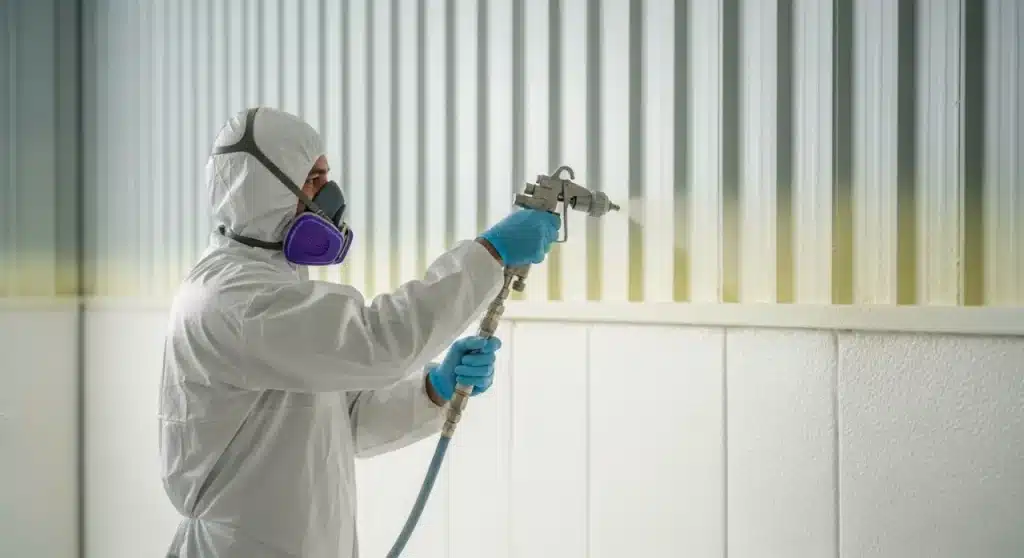
Things to Consider Before Making a Decision
Choosing the proper insulation involves evaluating several factors specific to the property. While the R-value benefits of closed cell foam are clear, there are practical considerations for Parlier property owners.
- Upfront Investment: Closed cell foam typically costs more per board foot than open cell foam or fiberglass. The decision is based on calculating the return on investment from lower monthly energy bills.
- Application Depth: Because the R-value is so high, installers do not need to spray as much thickness to achieve the desired result. However, there are limits to how thick it can be sprayed in one pass to avoid overheating during the curing process.
- Renovation vs. New Build: In new construction, walls are open and easy to access. In existing homes, drywall must be removed to apply spray foam, which adds to the renovation scope.
- Ventilation Requirements: Because the home becomes very airtight, mechanical ventilation might be necessary to ensure fresh air circulation. This is a standard requirement in modern energy-efficient building codes.
Bonus Tip: Check the local utility rebates. Many utility companies in the Central Valley offer incentives for upgrading insulation, which can help offset the initial cost of installation.
Summary of Key Takeaways
Closed cell spray foam in Parlier stands out as the superior insulation choice for demanding climate due to its high R-value of up to R-7.0 per inch. It provides a unique combination of thermal resistance, air sealing, and structural reinforcement that other materials cannot match. By preventing air leakage and moisture intrusion, it solves multiple building science problems simultaneously.
For property owners looking to maximize energy efficiency, this solution offers long-term performance that pays dividends through reduced utility costs and increased comfort. Assessing the specific needs of the building, including wall depth and budget, will help determine the best path forward. Focusing on quality installation ensures the material performs exactly as designed for decades to come.
Upgrade Your Insulation with Supreme Spray Foam- Fresno
Secure your property against the Parlier heat and reduce your energy expenses with professional insulation services. Supreme Spray Foam- Fresno delivers expert application of high-performance closed cell foam tailored to your specific building requirements.
Contact the team today at (559) 545-0800 or send an email to [email protected] to discuss your project. The right insulation strategy makes a measurable difference in comfort and savings.
Frequently Asked Questions
What constitutes a “good” R-value for walls in Parlier?
For 2×4 walls, aiming for R-13 to R-15 is standard, but closed cell foam can achieve up to R-21 in that same space. For 2×6 walls, R-20 or higher is the target. The California Title 24 standards dictate specific requirements based on the climate zone, and closed cell foam helps meet these targets efficiently.
Is closed cell foam waterproof?
Yes, closed cell foam is water-resistant and is considered a flood-damage-resistant material by FEMA. It does not absorb water, which helps prevent mold growth in wall cavities if a leak occurs.
How much energy can I save with closed cell foam?
According to the US Environmental Protection Agency, sealing air leaks and adding insulation can save homeowners an average of 15 percent on heating and cooling costs. In extreme climates like the Central Valley, savings can often be higher due to the heavy reliance on air conditioning.
Can I install closed cell spray foam myself?
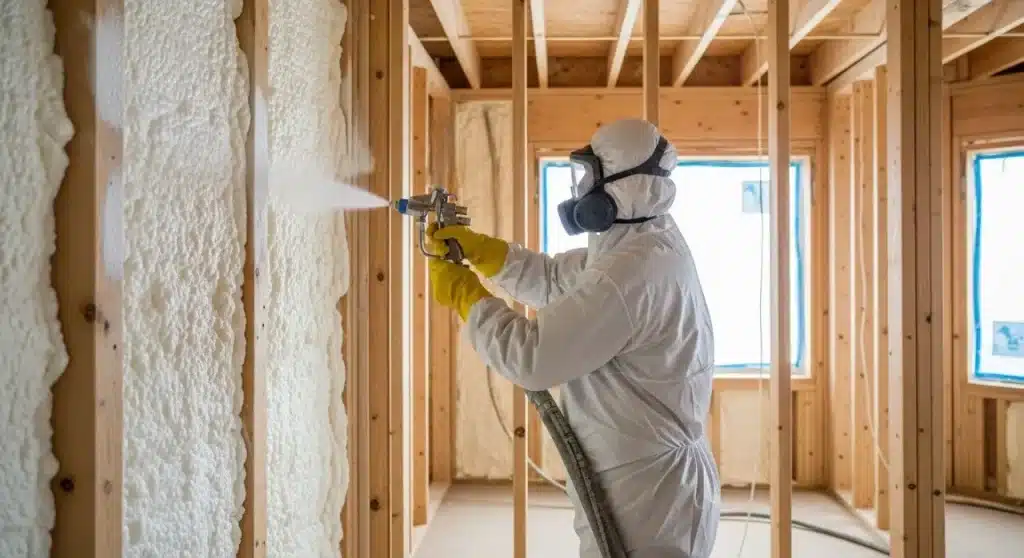
No. This material requires professional equipment to mix the chemicals at precise temperatures and pressures. Incorrect application can lead to off-ratio foam that does not cure properly, smells bad, or fails to adhere.
Does closed cell foam attract pests?
No. The foam is rigid and does not provide a food source for rodents or insects. Unlike soft fiberglass, which pests often use for nesting material, the hard density of closed cell foam deters burrowing.
Sources
- Department of Energy – Provides comprehensive data on different insulation materials and their respective thermal properties.
- California Energy Commission – Outlines the Building Energy Efficiency Standards (Title 24) relevant to California construction and renovation.
- US Environmental Protection Agency – Offers statistics and guides on energy efficiency savings related to air sealing and insulation.