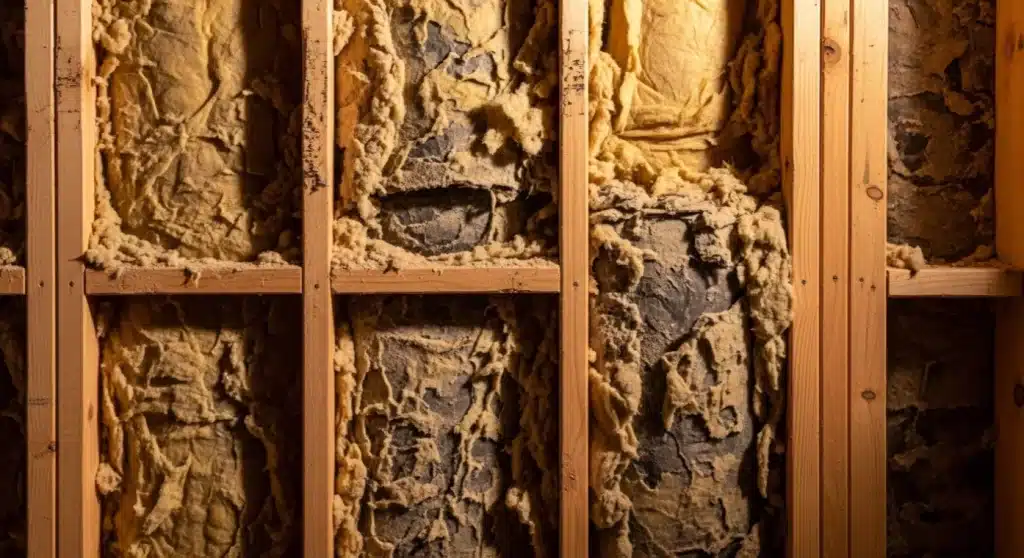

Walk through any old building that relies on traditional insulation, and you will often feel the stale, fluctuating temperatures that come with poor thermal performance. You might notice drafts, high humidity, and, inevitably, skyrocketing energy usage. For years, builders and homeowners accepted these problems as just part of the reality of heating and cooling a structure.
Today, that thinking is obsolete. Modern building science demands materials that do more than just slow down heat transfer; they must actively control air, moisture, and temperature. This is where closed cell spray polyurethane foam (CCSPF) steps in. It is a high-performance building envelope component that serves as an insulator, air sealant, and moisture barrier, addressing nearly every environmental control factor simultaneously.
Understanding closed cell foam insulation is essential if you are planning a new build, a serious renovation, or simply looking to improve your property’s performance dramatically. This material offers a distinct advantage over fiberglass, mineral wool, and even its cousin, open cell foam, particularly when maximum durability and superior energy savings are the goals. This unique triple-threat capability is why experts consider it one of the most effective solutions available for creating resilient, energy-efficient spaces.
This comprehensive guide is designed to serve as your definitive resource. Drawing on years of field experience in installation and performance analysis, we will walk you through the specifics of closed cell foam. You will learn about its physical makeup, the tangible benefits it delivers in terms of structural strength and long-term durability, and how it translates into verifiable reductions in your utility usage. By the time you finish, you will have a clear picture of why this material is the choice of high-performance builders and how you can apply these principles to your own project.
What Exactly is Closed Cell Spray Foam?
Closed cell spray foam is a rigid, polyurethane product created when two liquid components, an isocyanate and a polyol resin, mix at the tip of a spray gun. This rapid chemical reaction produces a foam that expands rapidly and sets hard, usually within seconds. But what truly defines it is its structure.
The Chemical Reaction and Cell Structure
Think of the foam as a sea of tiny, individual bubbles, or cells, packed tightly together. In closed cell foam, these cells are completely sealed. The blowing agent, typically an HFC or HFO, is permanently captured within these sealed cells. Because the gas is trapped, it cannot escape, which contributes significantly to the material’s resistance to heat flow and its high compressive strength.
This dense, sealed structure is why closed cell foam becomes so rigid. It is what gives the product its unique ability to provide structural support among common insulation materials. This robust internal structure directly translates into the material’s quantifiable performance metrics, namely its density and high R-value.
Key Properties: R-Value and Density Closed cell foam is measured by two primary technical specifications: R-value and density.
- Density: Density is the weight of the cured foam per cubic foot. Closed-cell foam typically ranges from 1.75 to 2.2 pounds per cubic foot (PCF). This high density is what makes the material durable, waterproof, and structurally sound.
- R-Value: R-value measures thermal resistance, or how well the material resists the flow of heat. Close cell foam boasts one of the highest R-values per inch of any mass-market insulation product, typically between R-6.0 and R-7.0. Because of this high thermal resistance, you can often achieve code-required insulation levels with less thickness, which is especially useful in confined spaces or where maximum insulation value is needed.
The Dual Power of Durability
When we talk about durability, we mean more than just how long the material lasts; we mean its ability to withstand physical stress and environmental threats over the building’s lifetime. Closed cell foam delivers on this front in two significant ways: structural enhancement and superior moisture control.
Structural Integrity and Racking Resistance
One of the most valuable benefits of closed cell foam, particularly in wall assemblies, is its ability to increase a structure’s overall strength. When applied between studs, joists, or rafters, the foam adheres firmly to the substrate, bonding the structural members together. This stiffening effect significantly increases the building’s racking resistance.
Studies from the National Association of Home Builders have demonstrated that spray foam insulation can increase the wind uplift resistance and overall structural stability of framed walls, making the entire building envelope more resilient against high winds and seismic activity. This structural benefit is especially valued in regions prone to extreme weather, offering an added layer of protection that traditional batt insulation simply cannot provide.
Moisture Barrier and Vapor Permeance
Water is the enemy of building materials. Mold, mildew, and rot thrive when moisture infiltrates the wall assembly. Closed cell foam is highly effective at managing moisture because of its impermeable cell structure.
The foam is classified as a low-vapor-permeance material, meaning it actively resists the passage of water vapor. In many climates, applying just 1.5 to 2 inches of closed cell foam is enough to function as a Class II vapor retarder. This eliminates the need to install a separate plastic vapor barrier, simplifying construction and significantly reducing the risk of hidden moisture damage in the walls or roof deck.
Expert Tip: In areas like crawl spaces, using closed cell foam on the walls creates a nearly perfect, seamless barrier against ground moisture intrusion. This not only keeps the space dry but also prevents radon gas from entering the home, thereby improving indoor air quality.
Achieving Peak Energy Efficiency
Energy efficiency is the most common reason people choose closed cell foam, and it is where the investment truly pays off. Its performance goes far beyond just its high R-value.
The Air Barrier Advantage Air leakage is responsible for a massive percentage of energy waste in most homes and commercial buildings. Even the best fiberglass batts cannot stop air movement, because they allow air to pass through and around them.
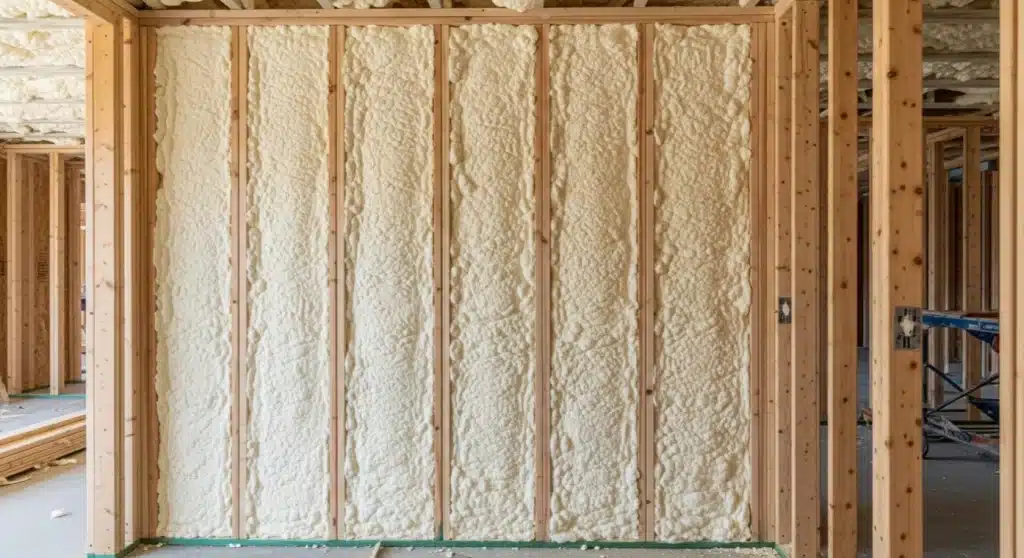
Closed cell foam seals the building envelope completely. When applied to walls, ceilings, and floors, it expands to fill every tiny crack, gap, and void, creating a continuous, airtight seal. This air barrier function is arguably more important than the R-value rating. By stopping uncontrolled air exchange, the foam prevents heated air from escaping in the winter and cooled air from being lost in the summer.
Thermal Performance and R-Value Retention While fiberglass insulation often degrades or settles over time, losing some of its effective R-value, closed cell foam maintains its thermal performance indefinitely. Because the blowing agent is trapped within the closed cells, it provides stable thermal resistance for the life of the building. The U.S. Department of Energy data confirms that effective air sealing, which is inherent to spray foam application, often reduces heating and cooling energy use by 15 percent to 40 percent compared to traditional insulation and sealing methods, particularly in older structures where air gaps are substantial. This reliability means that the energy savings you see in year one will continue for decades.
Minimizing Thermal Bridging Thermal bridging occurs when a highly conductive material, like a wood stud or steel beam, penetrates the insulation layer, allowing heat to bypass the insulation entirely. For example, wood studs only have an R-value of about R-1.25 per inch. In a wall insulated with R-13 batts, the studs create a network of low-resistance pathways for heat.
Closed cell foam minimizes this issue. When applied to the interior side of the wall, it fully encases the framing members, acting as a continuous thermal break. This creates a homogeneous layer of insulation that dramatically reduces overall heat flow through the entire wall assembly, ensuring the system’s rated R-value is much closer to the effective R-value experienced in the real world.
Closed Cell vs. Open Cell: Making the Right Choice
While both open cell and closed cell are spray foams, they are designed for very different purposes and applications. Understanding these differences is key to specifying the right material for your project. Closed cell foam is denser, heavier, and completely sealed, while open cell foam is lighter, less dense, and contains open air pockets.
- Density: Closed Cell is 1.75 to 2.2 PCF; Open Cell is 0.4 to 0.6 PCF.
- R-Value (per inch): Closed Cell is R-6.0 to R-7.0; Open Cell is R-3.5 to R-3.8.
- Vapor Permeance: Closed Cell is Low (Vapor Retarder); Open Cell is High (Vapor Open).
- Water Resistance: Closed Cell is Excellent (Hydrophobic); Open Cell is Poor (Absorbs Water).
- Structural Strength: Closed Cell adds significant racking strength; Open Cell adds no structural strength.
- Primary Use Cases: Closed Cell is for exterior walls, roofing, crawl spaces, cold storage, and extreme climates. Open Cell is for interior walls, sound dampening, and attics (vented or unvented).
Choosing closed cell foam often comes down to three main project requirements: structural reinforcement, moisture protection, and achieving a high R-value in minimal space. If you need a waterproof solution for a metal building or a tight envelope for a basement, closed cell is usually the clear winner.
The Installation Process: What to Expect
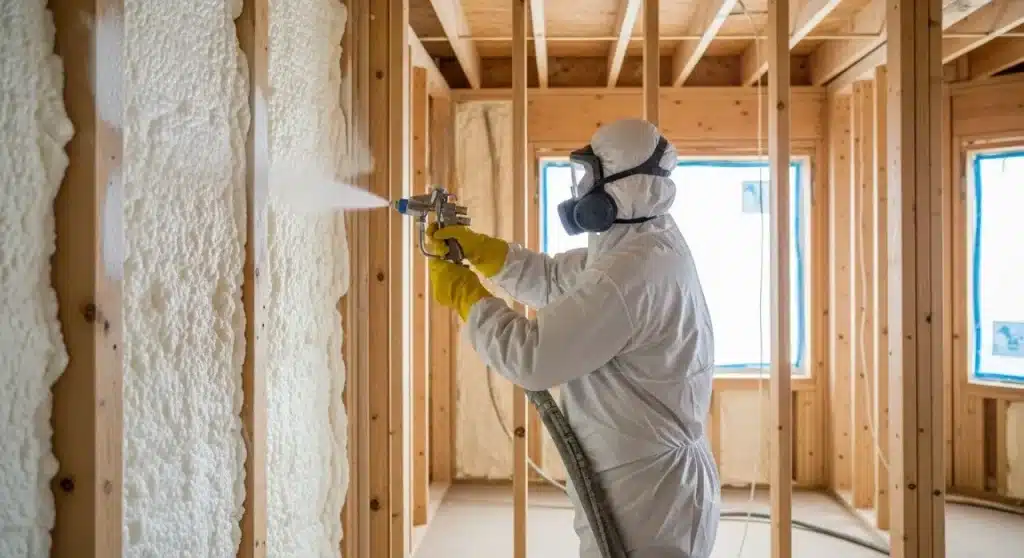
Applying closed cell foam is a precise, expert-driven process. Unlike rolling out batts, it requires specialized training and equipment to ensure proper chemical mixing, uniform application, and safety. This is a job best left to certified professionals.
Preparation and Safety Protocols Preparation is critical for a successful outcome. The installation site must be thoroughly cleaned, and all surfaces must be free of oil, dust, or moisture that could interfere with adhesion. Since the foam expands and adheres to everything it touches, meticulous masking is required to protect windows, doors, pipes, and electrical boxes.
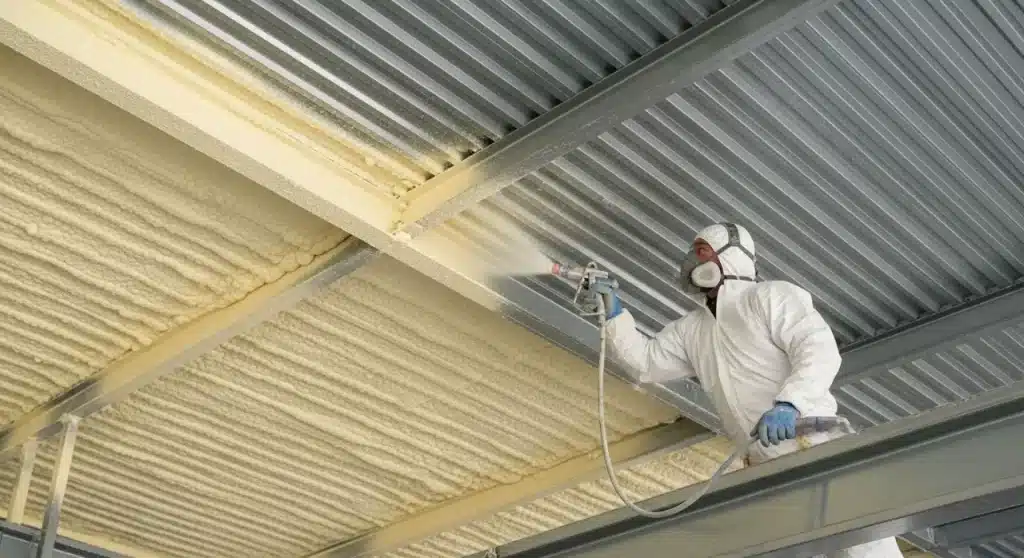
Due to the chemicals involved, strict safety protocols must be followed. Installers wear specialized protective equipment, including respirators and full-body suits, during the application. For homeowners or building occupants, it is typically necessary to vacate the premises during application and for a set period afterward, allowing the foam to cure and off-gas fully. The duration of this clearance depends on the size of the job and ventilation, but typically ranges from 12 to 24 hours.
Expert Tip: Always inspect the substrate temperature before application. The foam requires specific temperature conditions to cure correctly and achieve its maximum R-value and density. Applying foam outside of the manufacturer’s recommended temperature range can result in poor cell structure, significantly reducing its performance and durability.
Application Techniques and Cure Time Closed cell foam is applied in relatively thin passes, usually 1 to 2 inches at a time, to allow the material to cure properly. Professional applicators ensure that each layer reaches the required thickness uniformly across the entire surface. The material reacts almost instantly, adhering firmly to the substrate and expanding only slightly.
While the foam is tack-free almost immediately, the chemical curing process continues for several hours. This curing time is vital for developing the high strength and maximizing the R-value. After curing, any excess foam (overspray) is trimmed flush with the studs or framing members, creating a smooth surface for finishing materials like drywall or siding.
Long-Term Performance and Return on Investment (ROI)
The durability and energy performance of closed cell foam mean it offers a long and reliable service life, translating directly into a strong return on investment. While the upfront investment is higher than traditional insulation, the lifetime savings and benefits far outweigh the initial expenditure.
Lifespan and Degradation Factors Closed cell spray foam is designed to last the life of the structure. Unlike fiberglass, which sags, or cellulose, which can settle and compact, closed cell foam is a rigid, inert plastic. It does not compress, degrade, pay, or lose R-value over time. Because it forms a monolithic layer, it also prevents moisture and pests from compromising the building envelope, a common issue that causes other materials to fail prematurely.
This longevity is a key factor in its value proposition. A building insulated with closed cell foam today will still benefit from its airtight seal and high R-value several decades from now, assuming proper installation.
Calculating Energy Savings The ROI calculation for closed cell foam focuses primarily on energy savings. A report cited by the Sustainable Energy Authority of Ireland demonstrated that deep retrofit measures, often including high-performance insulation and air sealing such as CCSPF, can achieve primary energy savings exceeding 60 percent in existing residential properties, depending on the building’s starting condition. For commercial projects, the results are similarly dramatic, reducing HVAC loads and often allowing the installation of smaller, less expensive heating and cooling equipment.
Calculation Example: Consider a 2,000 sq ft home with significant monthly energy consumption. If CCSPF reduces this consumption by 35 percent (a conservative estimate for a comprehensive retrofit), the monthly savings would be substantial. Over 20 years, this translates to massive cumulative savings, not even factoring in utility rate inflation, reduced maintenance, or the ability to size down the HVAC unit.
Key Takeaway: Long-Term Value Closed cell foam is a capital improvement, not a maintenance expense. Its initial investment is offset by reliable, measurable energy savings, reduced wear and tear on HVAC systems, and the increased appraised value of the property due to superior energy efficiency ratings.
Practical Applications of Closed Cell Foam
The strength, moisture resistance, and high R-value of closed cell foam make it suitable for challenging or critical applications where other insulations struggle to perform.
Residential: Crawl Spaces and Attics For residential structures, closed cell foam is often the preferred choice for two notoriously troublesome areas: unvented crawl spaces and cathedral ceilings (or roof decks).
- Crawl Spaces: Spraying the rigid foam directly onto the crawl space walls seals the space against ground moisture and temperature fluctuations. This process effectively converts the crawl space into a conditioned area, protecting pipes and ductwork while improving air quality in the home. This method is frequently used to remediate damp, pest-prone crawl spaces.
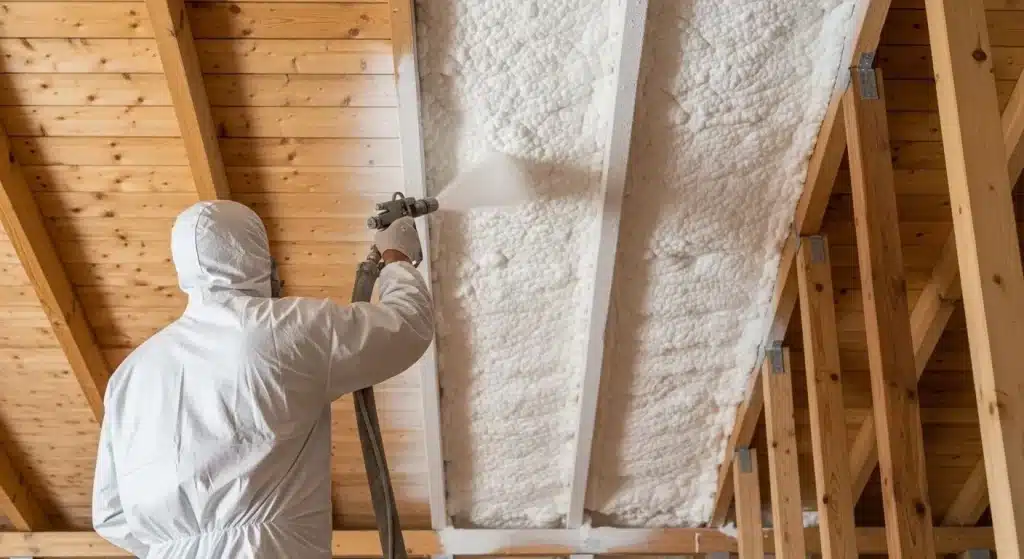
- Unvented Attics/Cathedral Ceilings: When insulating the roof deck instead of the attic floor, closed cell foam provides the necessary R-value in the limited space between rafters. Crucially, its moisture resistance prevents condensation and water infiltration that can damage the roof structure, making it ideal for creating ‘conditioned’ attics that stay cool in the summer.
- Commercial and Industrial Projects In commercial construction, closed cell foam’s ability to act as a durable, multi-functional material makes it indispensable.
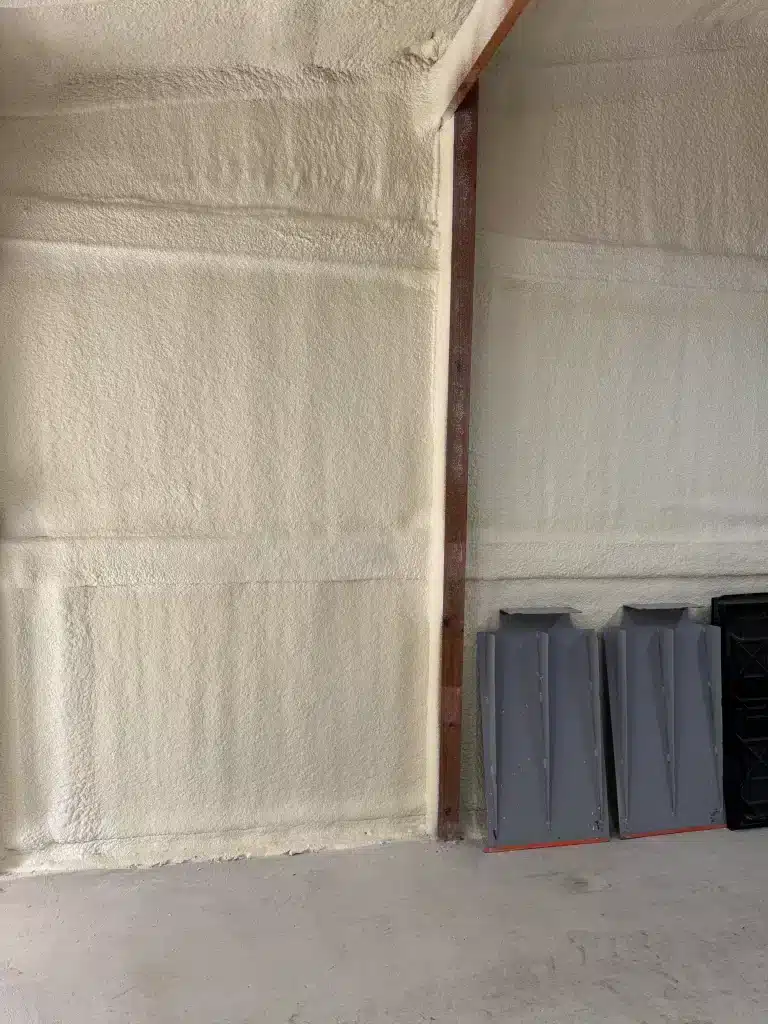
- Metal Buildings: Metal buildings are prone to severe thermal bridging and condensation. Applying closed cell foam directly to the metal skin eliminates thermal bridging, stops air leakage, and prevents surface condensation that can lead to rust and water damage.
- Cold Storage and Freezer Units: Given its high density and exceptional R-value, it is the standard material for insulating walk-in freezers and cold storage warehouses where temperature stability is critical. Its sealed nature prevents moisture migration that can lead to frost buildup.
- Below-Grade Applications: Its resistance to water absorption means closed cell foam can be used in foundation walls and slab applications, providing thermal protection where other materials would quickly fail due to ground moisture.
Expert Tip: When choosing an insulation contractor, verify their equipment. High-pressure proportioning equipment is required for closed cell application. If the equipment is substandard or poorly maintained, the resulting foam will have low density and inconsistent R-value. Look for applicators who prioritize equipment calibration and regular maintenance.
Putting Your High-Performance Strategy into Action
We have covered the fundamental structure, the immense benefits to durability and structural integrity, and the verifiable metrics of energy efficiency that closed cell spray foam offers. This material is truly a long-term investment that secures your building’s performance, resilience, and value for decades.
Remember, selecting closed cell foam means choosing a material that serves three functions: insulation, air sealing, and moisture control. It is a move toward modern, high-performance building standards that deliver substantial, measurable results. Use this guide as a reference as you plan your construction or renovation project, ensuring you make informed decisions that lead to lasting comfort and savings.
Need Expert Guidance?
Achieving the perfect, seamless building envelope requires precision, the right tools, and extensive experience. If you are in the Central Valley area and are ready to discuss how closed cell spray foam can protect your property and dramatically lower your energy consumption, we are here to help. Contact Supreme Spray Foam- Fresno today for a professional consultation. Reach out by phone at (559) 545-0800 or email [email protected] to start planning your high-efficiency project.
Frequently Asked Questions About Closed Cell Spray Foam
Does Closed Cell Foam Require a Thermal Barrier?
Yes, in almost all interior applications (such as walls, ceilings, and attics), building codes require that spray foam be covered with an approved ignition barrier or thermal barrier. This barrier, typically drywall (1/2-inch or 5/8-inch gypsum board), is necessary to protect the foam from ignition, even though the foam itself is fire-rated and usually self-extinguishing.
Is Closed Cell Foam Environmentally Friendly?
Modern closed cell foams have transitioned away from older, high-Global Warming Potential (GWP) blowing agents. Many manufacturers now use HFO (hydrofluoroolefin) blowing agents, which have extremely low GWP, making the foam a far more sustainable choice. Given its significant impact on reducing building energy consumption and associated emissions, it is widely regarded as a highly beneficial product for sustainable construction.
Can Closed Cell Foam Be Sprayed on Concrete or Masonry?
Absolutely. Closed cell foam adheres incredibly well to concrete, block, and masonry. This is a common application for insulating basement walls and the undersides of concrete slabs. It provides thermal resistance while also serving as a perfect moisture barrier for these inherently damp surfaces.
How Does Closed Cell Foam Affect Sound Transmission?
Closed cell foam provides excellent sound dampening by blocking air movement, which eliminates sound flanking paths. However, because it is rigid and dense, it transmits structural vibrations (sound) relatively easily compared to soft, open cell foam. For maximum sound absorption (like an interior bedroom wall), open cell foam is often a better choice, but closed cell still significantly improves sound control by sealing air gaps.
What is the Typical Return on Investment Timeline?
The timeline varies widely based on climate, existing insulation levels, utility costs, and the size of the project. However, in an older home receiving a comprehensive retrofit, homeowners often see the installation investment recouped through energy savings within 5 to 7 years. For new construction, where smaller HVAC units can be used, and utility costs are minimized from day one, the effective return can be much shorter.
Does Closed Cell Foam Attract Pests?
No, closed cell foam does not provide a food source for insects or rodents. In fact, due to its density and hardness, it makes an excellent barrier against pest intrusion. Rodents cannot easily chew through the rigid plastic, and the foam eliminates the voids and gaps where insects and small animals typically build nests.