
Insulation acts as a thermal barrier for your home. When you have thick layers in your attic, heat stays outside in the summer and remains inside during the winter. This balance reduces the strain on your heater and air conditioner, leading to lower monthly power bills.
Key Takeaways
- Thicker insulation increases R-value and stops heat loss.
- Air sealing is necessary before adding new layers of material.
- Spray foam provides a superior air barrier compared to fiberglass.
Impact of Insulation Thickness on Heating and Cooling Costs
Adding more material to your attic insulation changes how heat moves through your ceiling. If your insulation is thin, heat passes through easily, forcing your HVAC system to work much harder to keep you comfortable.
Understanding R-Value and Thermal Resistance
The R-value measures how well a material resists heat flow. According to the Department of Energy, higher R-values mean better thermal performance and more money saved on bills. Different materials have different ratings per inch of thickness, so the number of layers you need depends on the material you choose.
How Air Sealing Works with Insulation Layers
Layers alone cannot stop all energy loss if there are gaps in your attic floor. Small holes around pipes and wires let conditioned air escape into the attic space. Combining thick material with professional air sealing keeps your home at a steady temperature without wasting energy.
Comparing Performance Across Common Attic Materials
We see many homes using older materials that do not meet modern standards. Each type of insulation has a different way of handling heat, and choosing the right one affects your long-term savings.
Fiberglass Batts and Blown-In Cellulose
Fiberglass is a common choice because it is affordable and easy to install in open spaces. Cellulose is made from recycled paper and can be blown into tight corners where batts might leave gaps. Both work by trapping air, but they do not stop air movement as well as foam does.
Spray Foam Performance and Air Tightness
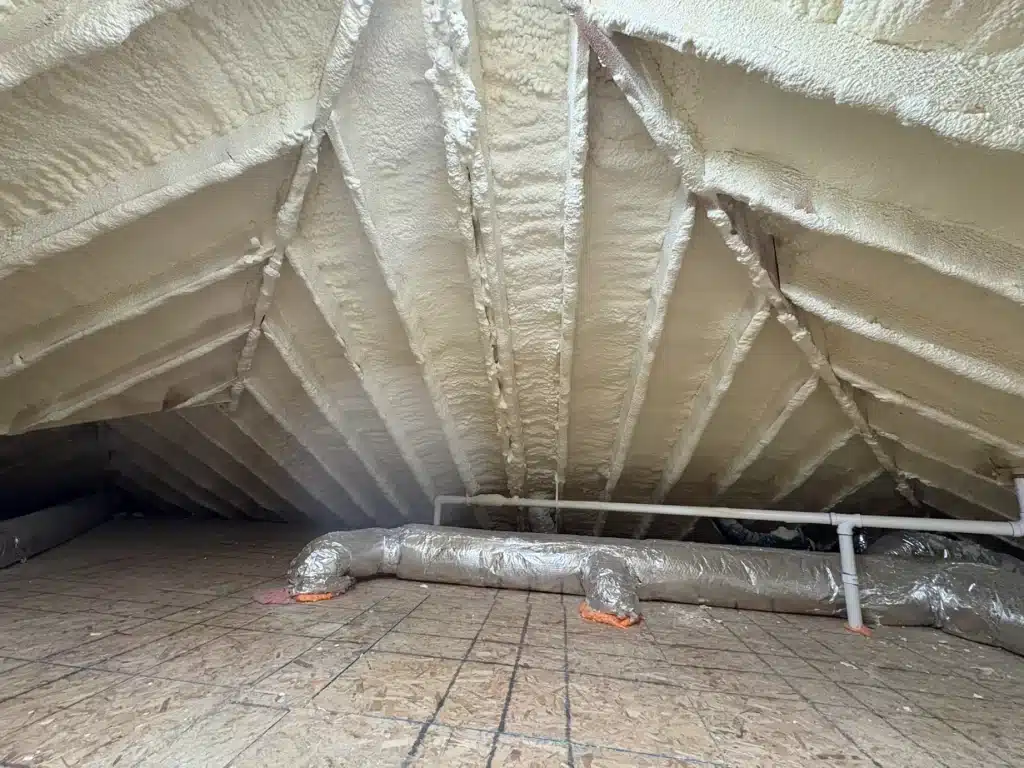
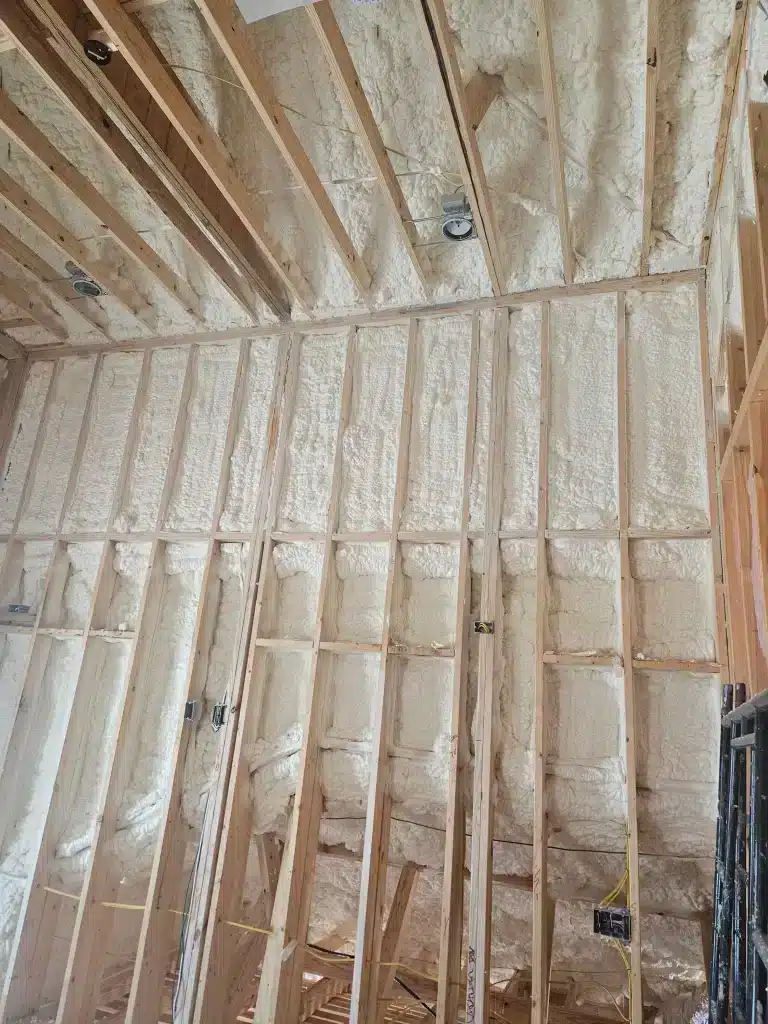
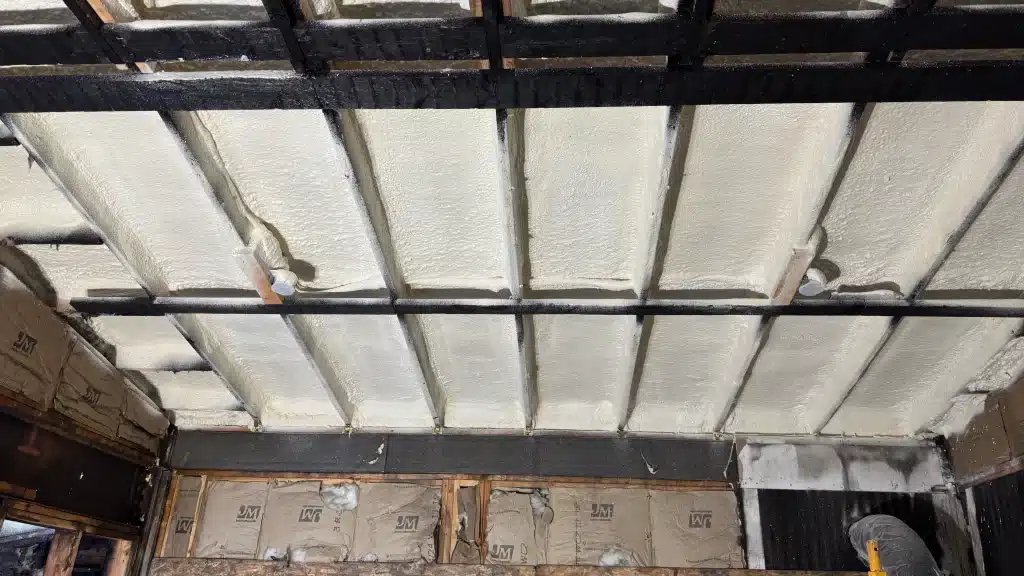
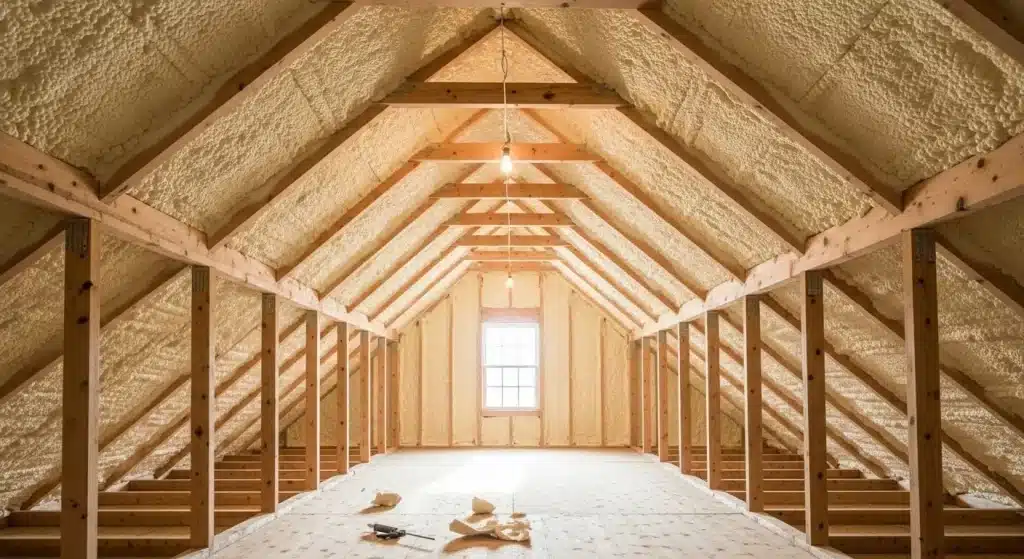
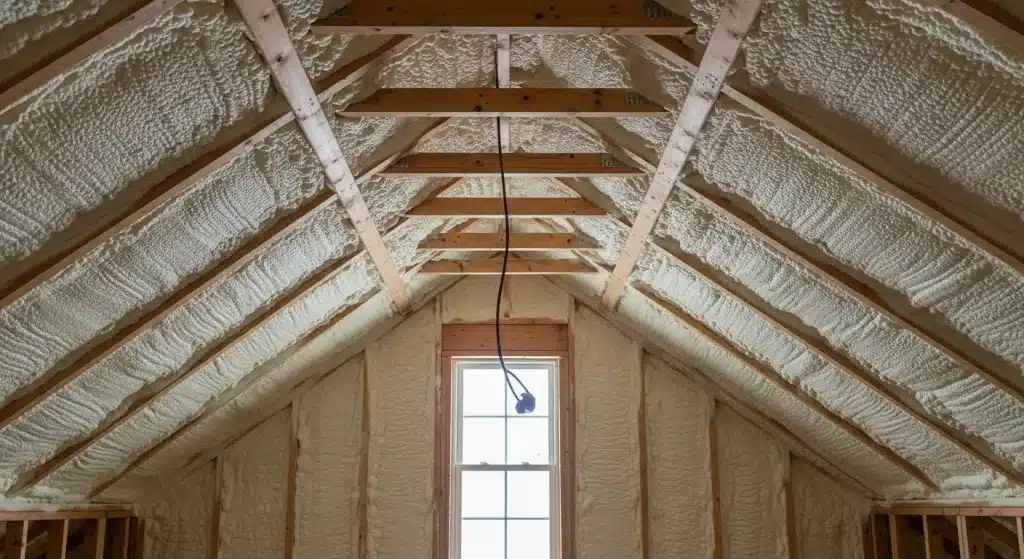
Spray foam expands to fill every crack, creating a seal that stops both heat and air. This dual action makes it a popular choice for homeowners who want the best performance. We often recommend this for Fresno houses because it stands up well to extreme summer heat and does not settle over time.
How Proper Attic Insulation Installation Improves Indoor Comfort
We focus on how different layering techniques change the temperature inside your home. Proper installation ensures that every square inch of your attic provides the protection you paid for.
Why Spray Foam Reduces Thermal Bridging
When we install spray foam, we create a continuous barrier that eliminates thermal bridging. Thermal bridging happens when heat travels through the wood studs in your attic, bypassing the insulation. Foam covers these studs to prevent that heat transfer from happening.
Detailed Breakdown or Comparison
In a typical attic, fiberglass might provide an R-value of 3.2 per inch, while closed-cell spray foam provides up to R-7 per inch. This means you can get more protection in a smaller space using foam. It allows for better storage space in the attic while still meeting energy codes.
Experience-Based Optimization Insight
Seal the attic hatch first. Many people forget that the door to the attic is a major source of air leaks. Even the best layers of insulation will not help if the door is wide open to heat.
Real-World Result or Industry Example
Supreme Spray Foam – Fresno helped a local homeowner reduce their summer cooling bills by 30% after replacing old, dusty fiberglass with closed-cell spray foam.
Signs Your Current Attic Layers are Failing
You can often tell if your insulation is not working just by looking at your bills. If your costs go up every year even though you are not using more power, your insulation might be settled or damaged.
Visual Indicators and Energy Bill Spikes
Check to see if your insulation is level with or below the attic floor joists. If you can see the wood beams, you likely need more layers to meet current standards. Research from Energy Star shows that most older homes are under-insulated, which leads to uncomfortable drafts and high costs.
Lowering Your Utility Bills with Supreme Spray Foam – Fresno
Attic insulation layers play a major role in how much you spend on energy each month. When insulation is thick, properly installed, and paired with air sealing, your home holds temperature more efficiently throughout the year. This reduces the workload on your HVAC system and leads to steady indoor comfort and lower utility bills. Choosing the right material and making sure your attic meets current spray foam insulation standards is one of the most effective upgrades for long-term energy savings and home performance.
We help Fresno residents find the best way to stop energy waste in their attics. Our team looks at your current setup and suggests the right materials to give you the best return on your investment.
Get an Estimate from Supreme Spray Foam – Fresno
Our team provides professional attic assessments to identify where you are losing money. We use high-quality materials to ensure your home stays comfortable all year. We take pride in helping our neighbors save money through better attic protection.
Contact us today: Phone: (559) 545-0800 Email: [email protected]
FAQs – For Spray Foam Professionals
What is the most energy-efficient attic insulation?
Closed-cell spray foam is the most efficient because it provides the highest R-value per inch. It also acts as an air barrier, stopping drafts that other materials like fiberglass or cellulose cannot block.
Will adding more insulation to an attic make a difference?
Yes, adding more insulation will make a difference if your current layers are below the recommended levels. Increasing the thickness reduces heat transfer, which makes your HVAC system more efficient and lowers your bills.
What is the 7 and 7 rule for attics?
The 7 and 7 rule is a guideline where homeowners aim for at least 7 inches of insulation while also checking for 7 common air leak areas. These areas include the attic hatch, plumbing stacks, recessed lights, and top plates of walls.
How do you know if an attic is poorly insulated?
You can tell an attic is poorly insulated if you see the floor joists, experience uneven temperatures between rooms, or notice ice dams on the roof in winter. High energy bills during peak summer or winter months are also a major sign.
Why remove attic insulation?
You should remove attic insulation if it has been damaged by water, mold, or pests. Old insulation can also hold onto allergens and dust, so replacing it with fresh layers improves the air quality in your home.
Sources
- Department of Energy – Provides data on R-values and thermal resistance.
- Energy Star – Offers guidance on identifying common attic insulation problems.